
Introduction
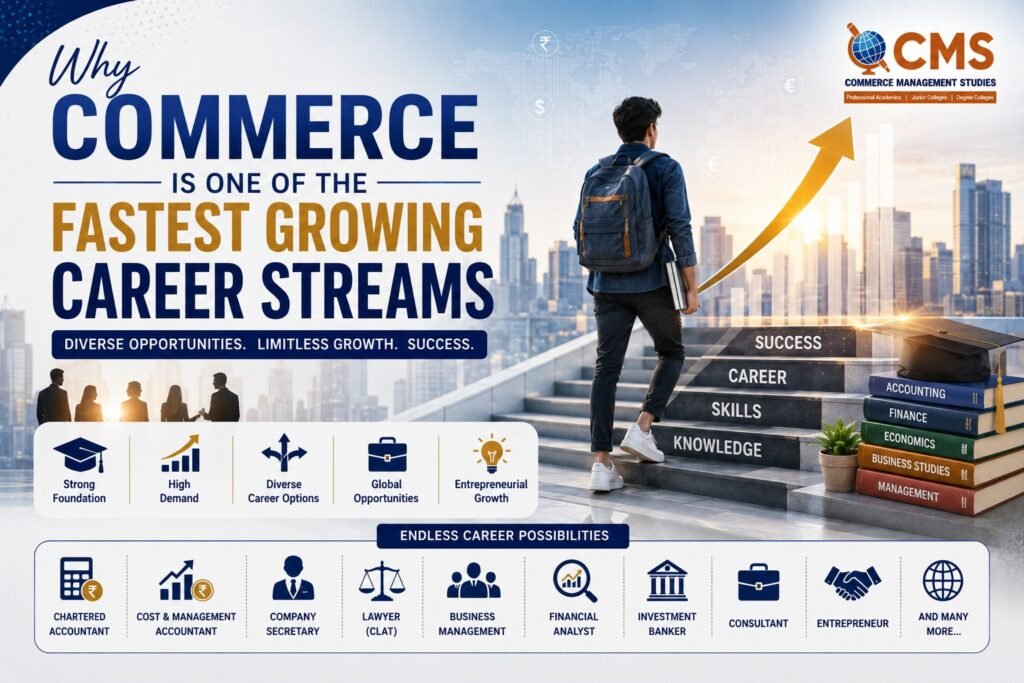
Commerce has emerged as one of the fastest-growing and most preferred career streams among students after Class 10. With rapid economic development, technological advancements, globalization, and the expansion of businesses across industries, the demand for skilled professionals in finance, accounting, business management, law, taxation, and entrepreneurship has increased significantly. Unlike the traditional perception that commerce is limited to accounting or banking, today’s commerce education opens doors to a wide range of dynamic and high-growth careers that cater to diverse interests and talents. As industries continue to evolve, commerce students are finding opportunities in sectors that were almost unimaginable a decade ago.
Another reason for the growing popularity of commerce is the flexibility it offers in career planning. Students can pursue professional qualifications such as Chartered Accountancy (CA), Cost and Management Accountancy (CMA), Company Secretary (CS), law through CLAT, management through IPMAT, finance, business analytics, economics, entrepreneurship, and many other specialized fields. This versatility allows students to explore multiple career paths while building a strong academic foundation. As a result, commerce is no longer viewed as just an alternative stream—it has become a preferred choice for students who aspire to build successful careers in the modern business world.
The Expanding Scope of Commerce Education
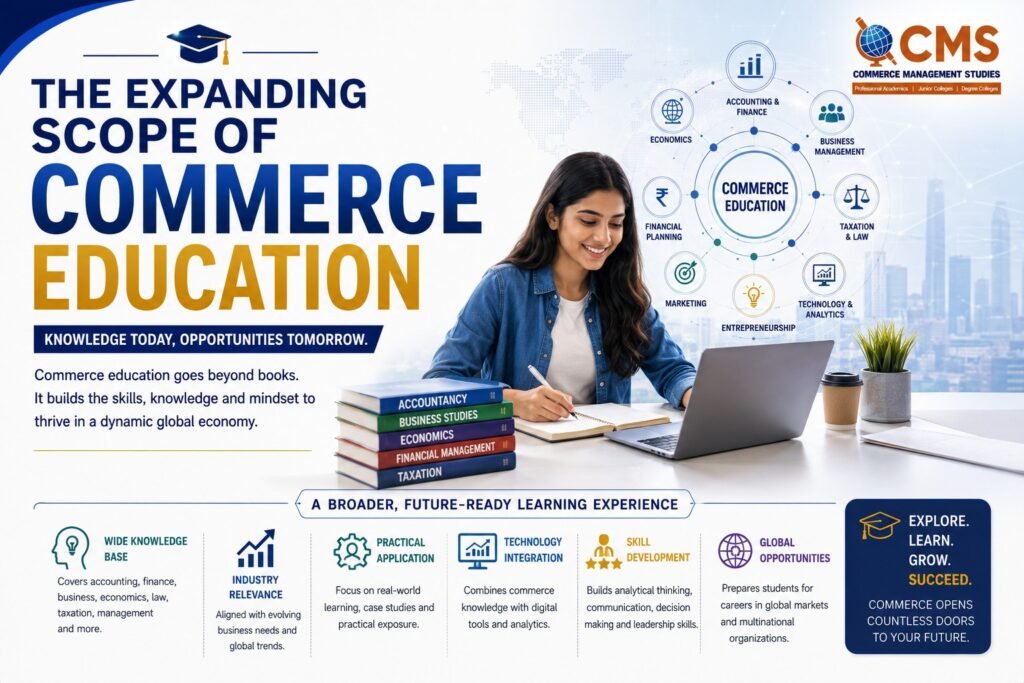
Commerce education has undergone a remarkable transformation over the years. Earlier, commerce graduates were primarily associated with banking, accounting, or clerical jobs. Today, however, the curriculum equips students with knowledge in economics, accounting, business studies, finance, taxation, management, entrepreneurship, and technology, enabling them to adapt to the changing needs of industries. This broad knowledge base prepares students for careers that combine financial expertise with business decision-making and strategic thinking.
As businesses become increasingly complex, employers seek professionals who understand markets, financial management, consumer behavior, and organizational operations. Commerce education develops these competencies through conceptual learning and practical application. Students gain valuable insights into how businesses function, how financial decisions influence growth, and how organizations respond to changing economic conditions, making them highly employable across multiple sectors.
Wide Range of Career Opportunities
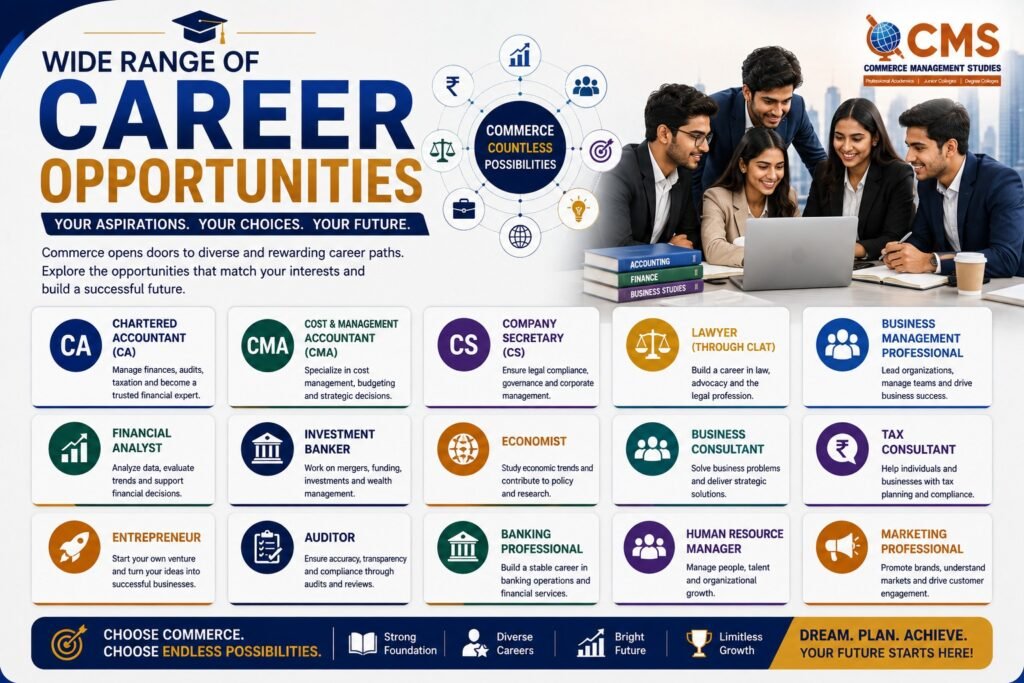
One of the biggest advantages of choosing commerce is the variety of career opportunities available after Intermediate and graduation. Students are not restricted to a single profession but can choose from numerous specialized fields depending on their interests, strengths, and long-term aspirations. Whether someone enjoys finance, law, management, taxation, analytics, or entrepreneurship, commerce offers suitable pathways for professional growth.
Some of the popular career options available for commerce students include:
- Chartered Accountant (CA)
- Cost and Management Accountant (CMA)
- Company Secretary (CS)
- Lawyer (through CLAT)
- Business Management Professional
- Financial Analyst
- Investment Banker
- Economist
- Business Consultant
- Tax Consultant
- Entrepreneur
- Auditor
- Banking Professional
- Human Resource Manager
- Marketing Professional
This diversity makes commerce one of the few academic streams that offers flexibility without limiting future career choices.
Growing Demand Across Industries
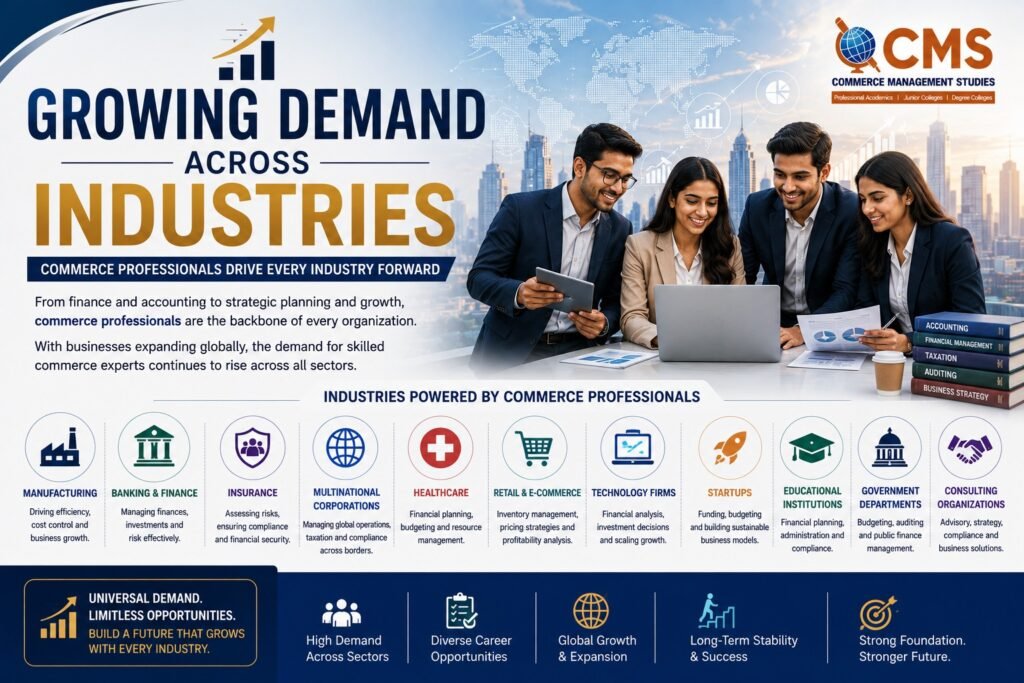
Almost every industry requires professionals with commerce knowledge. Manufacturing companies, banks, insurance organizations, multinational corporations, healthcare institutions, retail businesses, technology firms, startups, educational institutions, government departments, and consulting organizations all depend on finance and business professionals for smooth operations. This widespread demand creates consistent employment opportunities for qualified commerce graduates and professionals.
As organizations continue to expand globally, the need for experts in accounting, taxation, financial planning, budgeting, auditing, compliance, and strategic management has increased considerably. Even industries driven by technology require commerce professionals to manage financial resources, evaluate investments, and support business growth. This universal demand contributes significantly to the increasing popularity of commerce as a career stream.
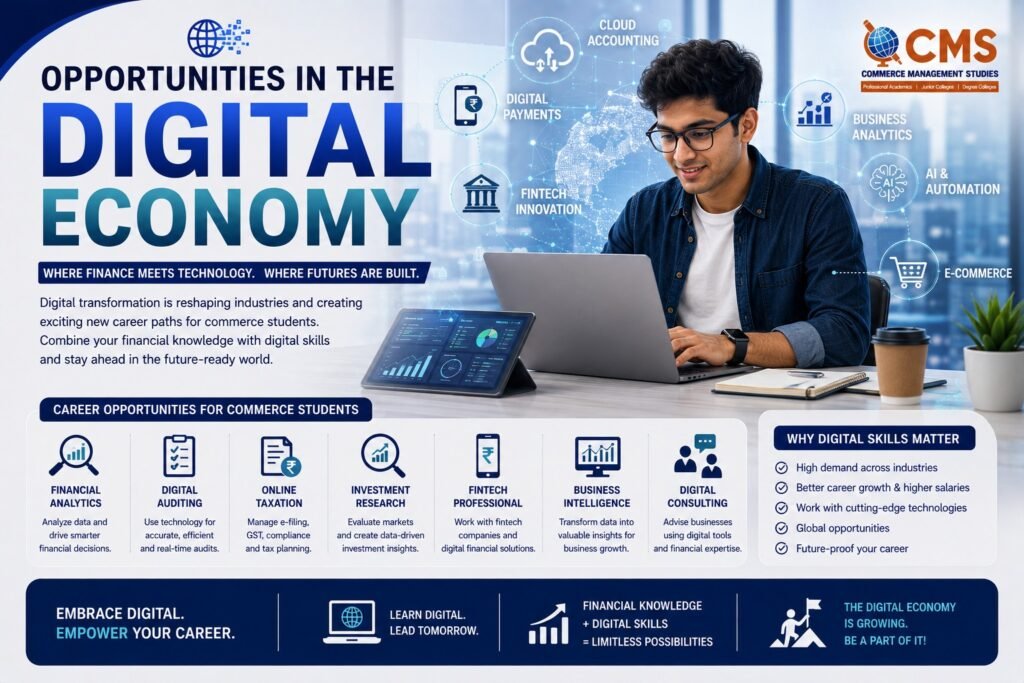
Opportunities in the Digital Economy
Digital transformation has created entirely new career opportunities for commerce students. Businesses now rely on digital payment systems, cloud accounting, financial technology (FinTech), e-commerce platforms, business analytics, and artificial intelligence to manage operations. These developments have increased the demand for professionals who can combine financial knowledge with technological understanding.
Commerce graduates today work in areas such as financial analytics, digital auditing, online taxation, investment research, fintech companies, business intelligence, and digital consulting. As technology continues to reshape industries, commerce professionals who develop digital skills alongside financial expertise will remain highly valuable in the evolving job market.
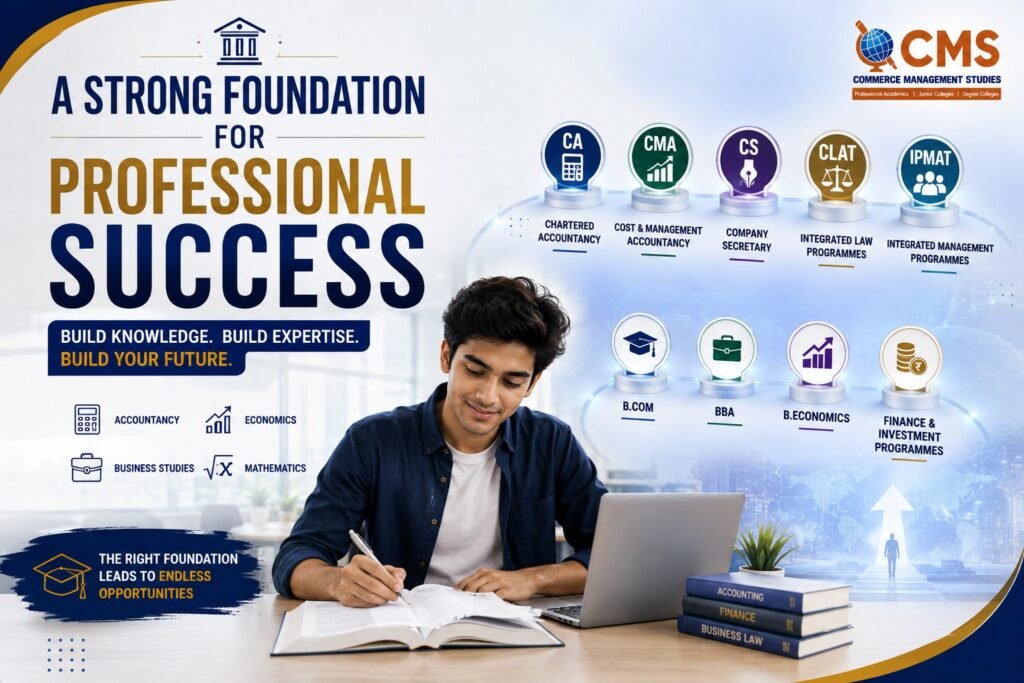
Strong Foundation for Professional Courses
Commerce serves as an excellent academic foundation for students who wish to pursue professional qualifications after Intermediate. Subjects such as Accountancy, Economics, Business Studies, and Mathematics provide the conceptual understanding required for advanced professional courses. Students who begin preparing early often find it easier to understand complex financial concepts during higher studies.
Professional courses that align well with commerce education include:
- Chartered Accountancy (CA)
- Cost and Management Accountancy (CMA)
- Company Secretary (CS)
- Integrated Law Programmes through CLAT
- Integrated Management Programmes through IPMAT
- Bachelor of Commerce (B.Com)
- Bachelor of Business Administration (BBA)
- Bachelor of Economics
- Finance and Investment Programmes
These courses help students develop specialized knowledge while improving their career prospects across multiple industries.

Encourages Entrepreneurial Thinking
Commerce education not only prepares students for employment but also encourages entrepreneurship. Students learn about business planning, financial management, marketing, taxation, accounting, and organizational operations, all of which are essential for starting and managing a successful business. Understanding these concepts enables aspiring entrepreneurs to make informed financial decisions and manage business growth effectively.
India’s rapidly growing startup ecosystem has further increased interest in commerce education. Many young entrepreneurs come from commerce backgrounds because they possess the financial literacy and business understanding needed to establish sustainable enterprises. Commerce therefore provides an excellent platform for students who aspire to become business owners and innovators.
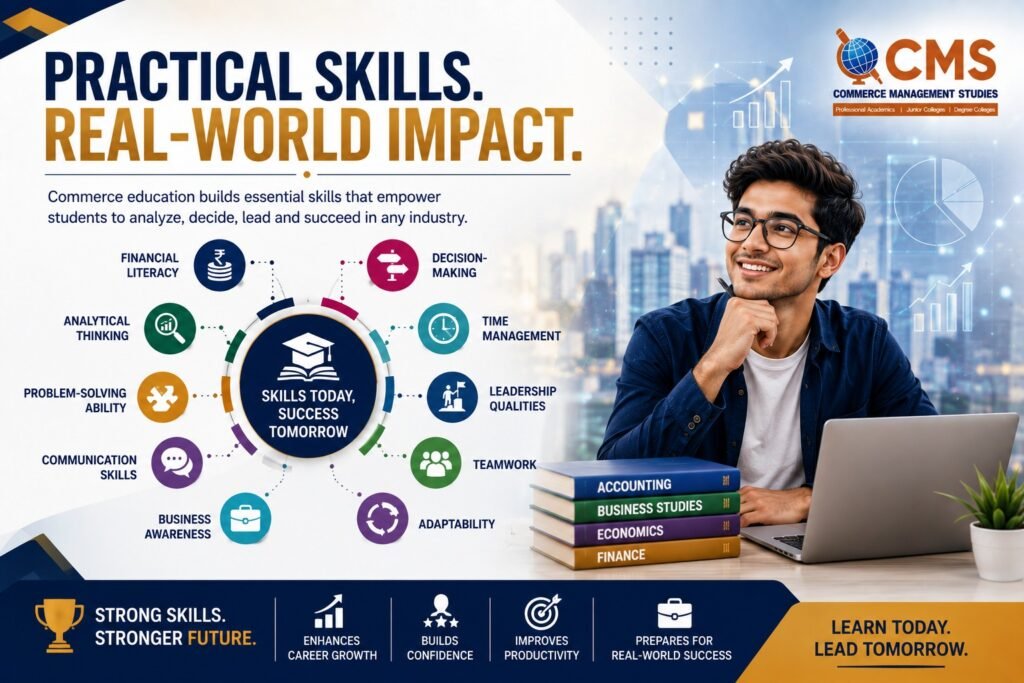
Development of Practical Skills
Commerce education focuses on developing practical skills that remain relevant across industries. Students learn to analyze financial information, solve business problems, communicate effectively, interpret economic trends, and make informed decisions. These transferable skills are highly valued by employers because they contribute directly to workplace productivity and organizational success.
Some important skills developed through commerce education include:
- Financial literacy
- Analytical thinking
- Problem-solving ability
- Communication skills
- Business awareness
- Decision-making
- Time management
- Leadership qualities
- Teamwork
- Adaptability
These competencies help students succeed not only during their academic journey but also throughout their professional careers.
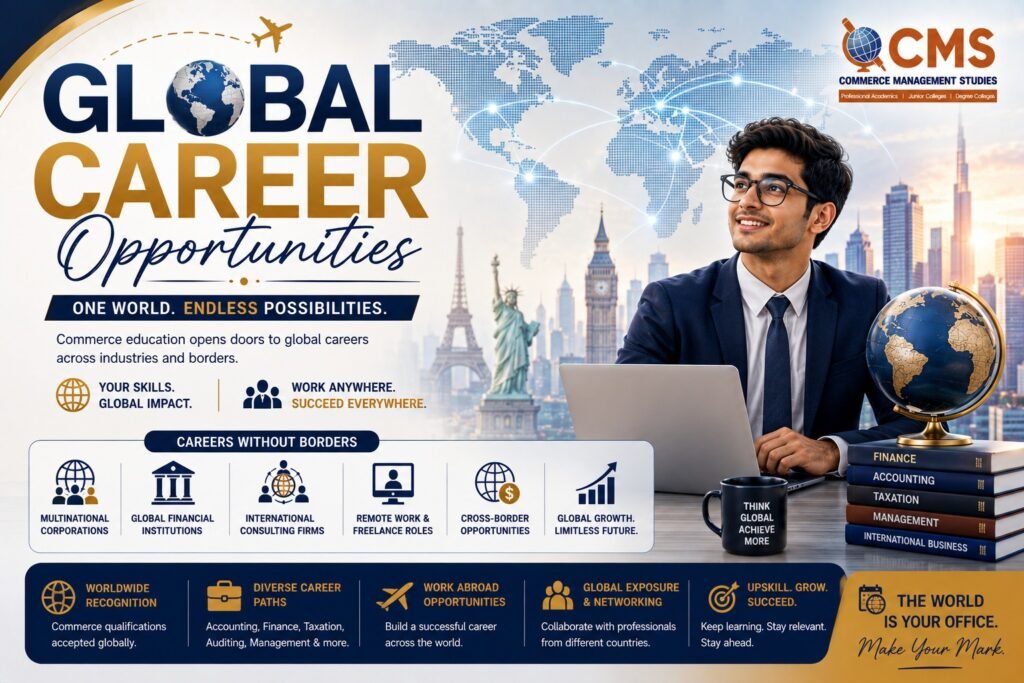
Global Career Opportunities
Commerce qualifications are recognized and respected across the world. As businesses expand internationally, professionals with expertise in accounting, finance, taxation, auditing, and management are increasingly required to support global operations. Many commerce graduates and professionally qualified individuals work with multinational corporations, international consulting firms, global financial institutions, and overseas organizations.
Globalization has also created opportunities for remote work, international consulting, cross-border taxation, financial reporting, and multinational business management. Commerce students who continuously update their knowledge and develop professional skills can build successful careers both within India and abroad.
Why Early Career Planning Matters
The journey toward a successful commerce career often begins during Intermediate education. Students who identify their interests early can choose professional courses that align with their career aspirations and begin building the required skills from the start. Early planning also allows students to strengthen conceptual understanding, improve academic performance, and prepare systematically for competitive examinations.
Many students choose integrated learning to balance Intermediate education with professional course preparation. CMS provides an integrated academic approach that enables students to pursue Intermediate studies like MEC Coaching in Hyderabad & CEC Coaching in Hyderabad while preparing for professional courses such as CA, CMA, CLAT, and IPMAT, helping them build strong fundamentals and progress confidently toward their career goals.
Conclusion
Commerce has evolved into one of the fastest-growing career streams because it offers flexibility, diverse career opportunities, professional growth, and long-term stability. From finance and accounting to law, management, entrepreneurship, consulting, and business analytics, commerce provides pathways to numerous rewarding professions that are essential for the functioning of modern organizations. The increasing demand for skilled professionals across industries further strengthens the value of commerce education in today’s competitive world.
For students looking to build successful careers in business, finance, law, or management, commerce provides an excellent foundation supported by practical knowledge, analytical skills, and professional opportunities. With early planning, continuous learning, and the right academic guidance, commerce students can prepare themselves for a future filled with exciting possibilities and meaningful career growth in an ever-evolving global economy.