

Introduction
Current Affairs is an important component of CLAT preparation because the examination evaluates not only a student’s academic abilities but also their awareness of significant events and developments taking place around the world. Law is closely connected with society, government, economics, international relations, public policy, and constitutional developments. As a result, aspiring law students are expected to have a broad understanding of important national and international events. Developing awareness of current affairs can therefore strengthen a student’s ability to understand passages, analyze issues, and connect real-world developments with legal and social concepts.
For many CLAT aspirants, keeping up with current affairs can initially seem difficult because of the enormous amount of information published every day. However, effective preparation does not require memorizing every news story. The key is to identify important developments, understand their background and significance, and regularly revise relevant information. A systematic approach to current affairs can improve examination readiness while also developing the awareness and analytical thinking skills that are valuable throughout legal education.

Why Current Affairs Matter in CLAT
CLAT tests a student’s ability to understand and analyze information rather than simply recall isolated facts. Current affairs preparation supports this objective by exposing students to important developments involving government policies, court judgments, international events, economic changes, environmental issues, and social developments. Understanding these topics helps students become comfortable with passages that discuss real-world issues and requires them to interpret information carefully.
Current affairs also help students develop a broader perspective on society and the functioning of institutions. Future law students need to understand how decisions made by governments, courts, international organizations, and other institutions can affect citizens and businesses. Regular exposure to such developments helps students gradually develop the awareness needed to approach CLAT questions with greater confidence and context.
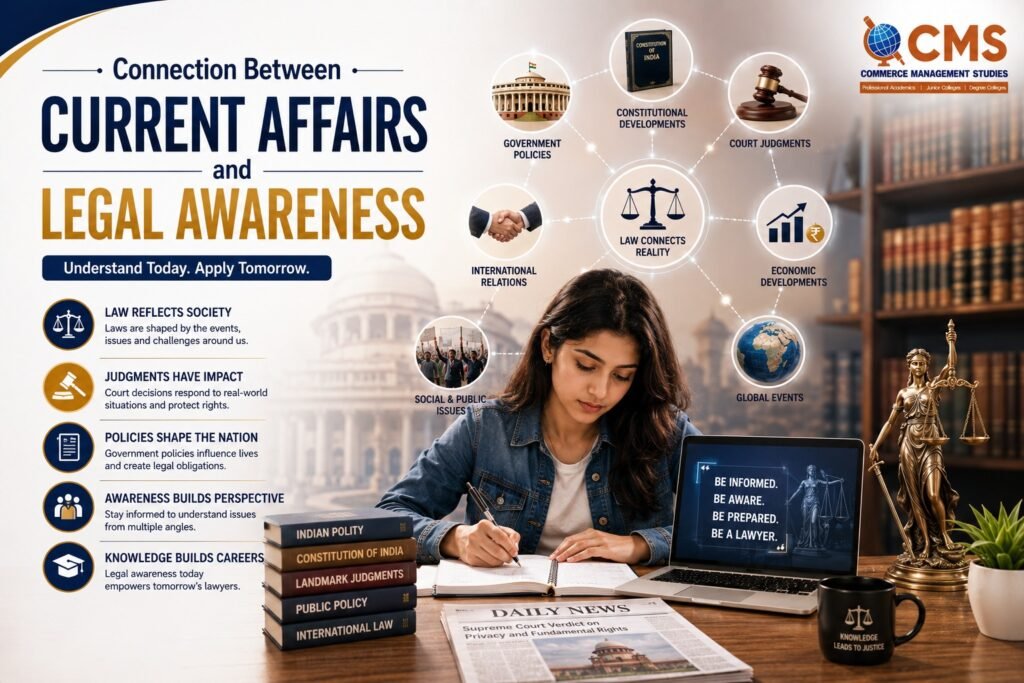
Connection Between Current Affairs and Legal Awareness
Law does not operate independently from society. Major legal developments often arise from important social, political, economic, or constitutional issues. Supreme Court judgments, changes in legislation, government policies, constitutional developments, and important regulatory decisions can therefore be relevant to students preparing for law entrance examinations. Understanding the background of such developments helps students appreciate how laws and legal institutions influence everyday life.
Current affairs preparation also introduces students to important legal terminology and concepts. By reading about major court decisions, constitutional questions, legislative developments, and public-interest issues, students become more familiar with the language used in legal discussions. This familiarity can make legal and current-affairs passages easier to understand and analyze during the examination.
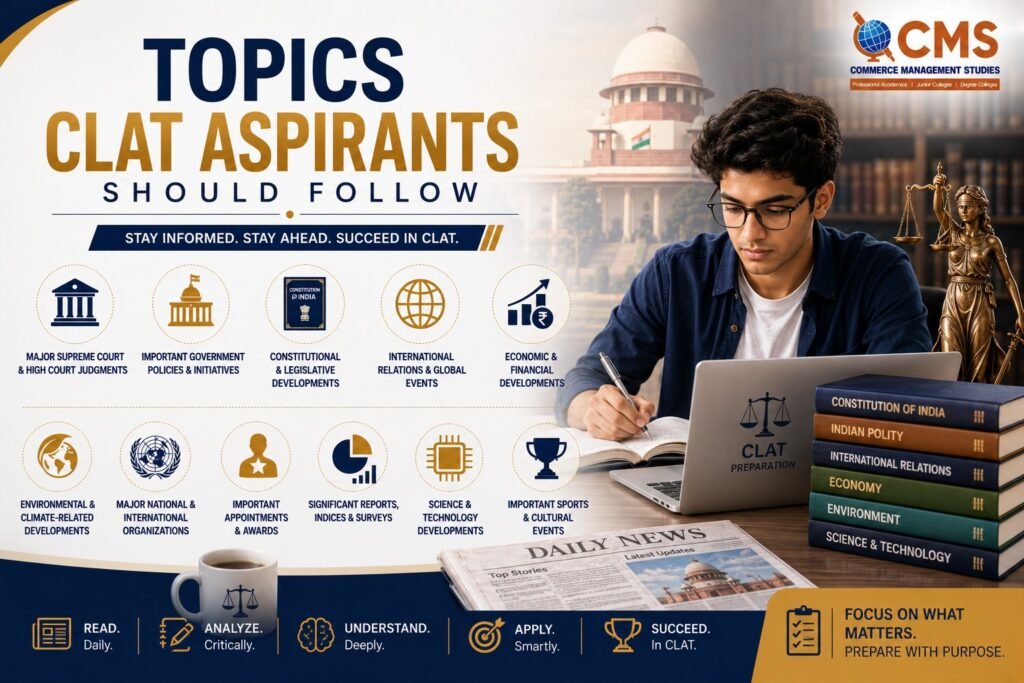
Topics CLAT Aspirants Should Follow
Students do not need to follow every piece of news published in newspapers or online platforms. Instead, they should focus on areas that are likely to contribute to their general awareness and understanding of important national and international developments. Selecting relevant topics makes preparation more manageable and allows students to spend more time understanding issues rather than simply collecting information.
Important areas to follow include:
- Major Supreme Court and significant High Court judgments
- Important national government policies and initiatives
- Constitutional and legislative developments
- International relations and major global events
- Important economic and financial developments
- Environmental and climate-related developments
- Major national and international organizations
- Important appointments and awards
- Significant reports, indices, and surveys
- Major developments in science and technology
- Important sports and cultural events
The objective should be to understand why an event is important rather than merely memorizing its name or date.

How Current Affairs Improve Reading Comprehension
Regular current-affairs reading can significantly improve reading comprehension, which is an important skill for CLAT aspirants. Newspapers, editorials, analytical articles, and reliable news reports expose students to different writing styles and complex subjects. Over time, students become more comfortable reading lengthy passages and identifying the central argument, supporting information, and important facts.
This habit is particularly useful when students encounter unfamiliar subjects during the examination. Instead of becoming overwhelmed by a passage discussing economics, international relations, government policy, or social issues, students with broad reading habits can use their existing background knowledge to understand the context more quickly. Better comprehension can ultimately contribute to improved speed and accuracy.
Current Affairs and Critical Thinking
Effective current-affairs preparation involves more than remembering information. Students should learn to ask why an event happened, what its consequences could be, and how different stakeholders may be affected. This approach turns current affairs into an exercise in critical thinking rather than simple memorization. Such analytical habits are particularly valuable for students aspiring to enter the legal profession.
For example, when reading about a new government policy, students can consider its purpose, potential benefits, possible challenges, and broader impact on society. Similarly, while studying an important court judgment, students can focus on the issue involved, the legal question considered, and the broader significance of the decision. This method develops the ability to examine issues from multiple perspectives.
How to Build a Current Affairs Study Routine
Consistency is more important than studying a large amount of current affairs at once. Students should establish a manageable daily routine and gradually build their knowledge over time. Spending a limited amount of time every day reading reliable news and making concise notes is generally more effective than attempting to cover several months of current affairs immediately before the examination.
A practical routine can include:
- Reading important national and international news regularly.
- Following major legal and constitutional developments.
- Making short notes on significant events.
- Recording important names, organizations, dates, and developments.
- Revising weekly rather than waiting until the end of the month.
- Solving current-affairs-based questions regularly.
- Reviewing mistakes after practice tests.
- Revising monthly current-affairs summaries before the examination.
This approach keeps preparation organized and reduces the pressure of last-minute revision.
The Importance of Revision
Reading current affairs once is rarely enough because students encounter a large amount of information during their preparation. Without regular revision, important facts and concepts can easily be forgotten. Revising notes at regular intervals helps transfer information into long-term memory and makes it easier to recall important developments during the examination.
Revision should focus particularly on major events and their significance rather than attempting to memorize every minor detail. Students can use short notes, topic-wise summaries, practice questions, and monthly revision sessions to reinforce what they have learned. Combining reading with active recall and regular testing can make current-affairs preparation considerably more effective.
Common Mistakes in Current Affairs Preparation
One of the most common mistakes students make is trying to read everything. Following multiple newspapers, websites, social media accounts, and news channels simultaneously can create information overload and make preparation unnecessarily stressful. Students may also spend too much time collecting information without actually understanding or revising it.
Other common mistakes include:
- Relying entirely on social media for news.
- Memorizing facts without understanding their context.
- Ignoring legal and constitutional developments.
- Failing to revise regularly.
- Spending excessive time on less relevant news.
- Not practicing current-affairs questions.
- Making extremely lengthy notes that are difficult to revise.
A focused and organized approach is much more effective than trying to consume every available news update.
How Current Affairs Benefit Future Law Students
The value of current-affairs knowledge extends beyond the CLAT examination. Law students regularly encounter subjects involving constitutional issues, public policy, social developments, economic regulations, international relations, and judicial decisions. Having a strong awareness of current events makes it easier to understand these topics and participate meaningfully in academic discussions.
Current affairs also contribute to the development of a well-rounded legal professional. Lawyers need to understand the society in which laws operate and remain aware of developments that can influence their clients, industries, and areas of specialization. Building this habit during CLAT preparation can therefore provide benefits that continue throughout law school and professional practice.
The Role of Structured Preparation
Developing current-affairs knowledge requires consistency, proper resources, regular revision, and continuous practice. Students can benefit from a structured preparation system that combines news analysis with classroom learning, practice questions, mock tests, and performance reviews. Such an approach helps students avoid information overload while ensuring that important topics are covered systematically.
At CMS CLAT Coaching in Hyderabad, students preparing for CLAT can strengthen their current-affairs awareness alongside their Intermediate education through an integrated learning approach. Regular practice, guidance, revision, and assessment can help students develop the reading and analytical skills required to approach current-affairs-based questions with greater confidence.
Conclusion
Current Affairs plays an important role in CLAT preparation because it connects examination skills with the real-world issues that future lawyers will encounter throughout their academic and professional journeys. Regular awareness of legal developments, government policies, economic events, international affairs, environmental issues, and significant social developments can improve reading comprehension, analytical thinking, and general awareness. More importantly, it helps students understand how law interacts with society and institutions.
Successful current-affairs preparation does not depend on reading the largest amount of news. It depends on selecting relevant information, understanding its significance, maintaining concise notes, revising consistently, and practicing questions regularly. By developing these habits early, CLAT aspirants can strengthen their examination preparation while building a broader understanding of the world that will continue to benefit them as they progress toward a career in law.