

Enroll Now

CEC Integrated with CMA Coaching in Hyderabad at CMS
CEC + CMA
A career in Cost and Management Accountancy offers students the opportunity to understand how businesses record financial information, manage expenditure and make informed financial decisions. At CMS, CEC Integrated with CMA Coaching in Hyderabad brings Intermediate education in Civics, Economics and Commerce together with preparation for the Cost and Management Accountancy qualification. The programme is intended for students who want to explore professional accountancy after Class 12 while continuing their Intermediate studies. Through academic instruction and CMA-focused learning, students can begin developing the knowledge and numerical skills required for this professional pathway.
Choosing the right academic environment is an important step towards preparing for a professional qualification. CMS supports students in understanding commerce-related concepts, strengthening their academic foundation and becoming familiar with the expectations of professional examinations. The emphasis extends beyond learning definitions to understanding accounting principles, interpreting business information and applying concepts to questions. For students interested in finance, costing and management accounting, this learning pathway provides an opportunity to start exploring their professional interests during Intermediate education.
Why CEC Students Can Choose CMA as a Professional Career Path
At CMS, students pursuing CEC can explore Cost and Management Accountancy as a professional pathway that connects their Intermediate education with accounting, finance and business decision-making. The CMA qualification helps students develop knowledge of how organisations record financial transactions, calculate costs, manage resources and evaluate financial performance. Students who enjoy Commerce, Economics, working with numbers and understanding business operations can begin building a foundation for this career during Intermediate. The CMA Foundation level introduces four papers: Paper 1, Fundamentals of Financial and Cost Accounting (FFCA); Paper 2, Fundamentals of Business Laws and Business Communication (FBLC); Paper 3, Fundamentals of Business Mathematics & Statistics (FBMS); and Paper 4, Fundamentals of Business Economics & Management (FBEM).
Through CEC Integrated with CMA Coaching in Hyderabad at CMS, students can connect their Intermediate learning with these introductory professional subjects. Commerce provides an introduction to business activities, Economics helps students understand markets and resource allocation, and CMA Foundation preparation develops knowledge of accounting principles, business laws, communication, numerical methods and management. This combination helps students understand what professional accountancy studies involve before progressing to more advanced subjects at the Intermediate and Final levels. With academic guidance and focused preparation at CMS, students can begin developing the subject knowledge and study habits needed to work towards a future in cost and management accountancy.
CEC Integrated with CMA Coaching in Hyderabad: Learning Beyond Intermediate Commerce
CMS offers students an opportunity to connect their CEC education with the requirements of professional accountancy preparation. Intermediate Commerce introduces business activities and commercial principles, Economics examines how resources and markets function, and Civics develops an understanding of government and public institutions. CMA preparation takes students further into the financial side of business, where accurate records, cost information and financial analysis play important roles. Understanding these connections can make commerce education more meaningful for students considering a professional qualification.
The learning experience at CMS focuses on building subject knowledge that students can apply to academic questions and professional examination topics. Students are encouraged to understand the logic behind accounting methods, recognise important business concepts and strengthen their numerical foundation. Faculty guidance helps learners approach unfamiliar topics with greater clarity and develop a more systematic way of studying. This combination of Intermediate education and professional preparation helps students begin working towards their longer-term accountancy goals.

CMA Course Structure: Foundation, Intermediate and Final Levels
At CMS, students pursuing CEC Integrated with CMA Coaching in Hyderabad can understand the CMA qualification through its three levels: Foundation, Intermediate and Final. The Foundation level consists of four papers: Paper 1, Fundamentals of Financial and Cost Accounting (FFCA); Paper 2, Fundamentals of Business Laws and Business Communication (FBLC); Paper 3, Fundamentals of Business Mathematics & Statistics (FBMS); and Paper 4, Fundamentals of Business Economics & Management (FBEM). These papers introduce students to accounting principles, business laws, communication, numerical methods, economics and management. At the Intermediate level, eight papers are divided into two groups. Group I includes Paper 1, Financial Accounting (FA); Paper 2, Business Laws and Ethics (BLE); Paper 3, Direct and Indirect Taxation (DITX); and Paper 4, Cost Accounting (CA). Group II includes Paper 5, Operations Management & Strategic Management (OMSM); Paper 6, Corporate Accounting & Auditing (CAA); Paper 7, Financial Management & Business Data Analytics (FMDA); and Paper 8, Management Accounting (MA).
The Final level covers advanced professional subjects, organised into two groups under the structure provided. Group I includes Paper 1, Corporate & Economic Laws (CEL); Paper 2, Strategic Financial Management (SFM); Paper 3, Direct Tax Laws & International Taxation (DIT); and Paper 4, Strategic Cost Management (SCM). Group II includes Paper 5, Cost & Management Audit (CMAD); Paper 6, Corporate Financial Reporting (CFR); and Paper 7, Indirect Tax Laws & Practice (ITLP). At CMS, students can build their understanding of these subject areas through academic guidance and focused CMA preparation. Progressing through the levels helps students move from foundational accounting and business concepts to advanced financial reporting, taxation, strategic cost management and professional decision-making. Students should refer to the latest official ICMAI syllabus for the current paper structure and examination requirements.
Financial Accounting: Understanding How Business Transactions Are Recorded
Financial accounting is a core area of professional accountancy preparation at CMS. At the CMA Foundation level, Paper 1: Fundamentals of Financial and Cost Accounting (FFCA) introduces students to basic accounting principles, transaction recording and the preparation of accounts. At the Intermediate level, Group I, Paper 1: Financial Accounting (FA) develops this knowledge further through advanced financial accounting, partnership accounts and company accounts. These subjects help students understand how financial transactions are recorded, classified and presented in business reports.
Developing accounting knowledge requires accuracy, attention to detail and regular practice. Students need to understand journal entries, ledger accounts, trial balances and financial statements, as relevant to their syllabus, and learn how individual transactions affect financial records. CMS supports students in strengthening their understanding of accounting concepts and applying them to numerical questions. This foundation prepares learners to progress from introductory accounting principles towards more advanced financial accounting topics.
Cost Accounting and the Importance of Cost Control
Cost accounting helps businesses identify, classify and analyse the expenses involved in producing goods or delivering services. At the CMA Foundation level, Paper 1: Fundamentals of Financial and Cost Accounting (FFCA) introduces the basic principles of costing alongside financial accounting. Students explore this area further at the Intermediate level through Group I, Paper 4: Cost Accounting (CA), which covers costing methods, costing techniques, cost control and decision-making. These subjects help learners understand how businesses calculate costs and evaluate the use of resources.
At CMS, students preparing for CMA can develop an understanding of material costs, labour costs, overheads and costing methods through subject-focused learning and practice. Cost accounting helps explain how organisations monitor expenditure, assess operational efficiency and make informed business decisions. As students progress from Foundation to Intermediate, they can build on their initial knowledge and develop a deeper understanding of cost analysis and cost management. These concepts also provide a foundation for advanced study in CMA Final, Group I, Paper 4: Strategic Cost Management (SCM).
Business Economics and Management Concepts at CMS
Business economics and management are important areas of CMA preparation at CMS. At the Foundation level, Paper 4: Fundamentals of Business Economics & Management (FBEM) introduces students to economic concepts, demand and supply, production, management functions and organisational behaviour. These topics help students understand how markets operate, how resources are allocated and how organisations plan their activities. They also connect with the Economics and Commerce knowledge students develop during their CEC Intermediate education.
As students progress through the CMA qualification, management-related concepts become more specialised. At the Intermediate level, Group II, Paper 5: Operations Management & Strategic Management (OMSM) covers production, operations and strategic planning. At the Final level, Group I, Paper 2: Strategic Financial Management (SFM) develops knowledge of areas such as capital markets, portfolio management, mergers and acquisitions. CMS helps students build their understanding progressively, from foundational business principles to the strategic concepts required at higher levels of professional study.
Business Mathematics, Statistics and Numerical Accuracy
Business mathematics and statistics help CMA students develop the numerical ability required to interpret information and solve business-related problems. At CMS, students preparing for the Foundation level study Paper 3: Fundamentals of Business Mathematics & Statistics (FBMS), which covers arithmetic, algebra, statistics and their applications in business decision-making. These subjects introduce methods for working with numerical information and interpreting data, providing a useful foundation for the accounting and analytical work involved in professional studies.
Regular practice is essential for improving calculation accuracy and understanding mathematical methods. Students need to learn how to select suitable approaches, interpret numerical information and apply formulas correctly. CMS encourages students to practise different question types and strengthen their understanding of the underlying concepts. These skills also support later professional subjects, including CMA Intermediate, Group II, Paper 7: Financial Management & Business Data Analytics (FMDA), which covers financial decision-making and business data analytics.
Business Laws and Communication for Aspiring CMA Professionals
Business laws and communication form an important part of the CMA Foundation curriculum at CMS. Paper 2: Fundamentals of Business Laws and Business Communication (FBLC) introduces students to basic Indian business laws, contracts and communication skills relevant to commerce and accounting. This subject helps students understand the legal framework surrounding commercial activities while developing the ability to interpret written information and communicate ideas clearly. These skills complement the accounting and business knowledge developed through CEC Intermediate education.
At the Intermediate level, students build on this foundation through Group I, Paper 2: Business Laws and Ethics (BLE), which covers the legal framework of business, corporate laws and professional ethics. Understanding these subjects helps aspiring CMA professionals appreciate the rules and responsibilities associated with commercial and corporate activities. CMS supports students in developing familiarity with important concepts and applying their knowledge to examination questions. This progression helps learners move from introductory business law and communication towards a broader understanding of legal compliance and ethical responsibilities in professional practice.
Faculty Guidance for CEC Integrated with CMA Coaching in Hyderabad
CMS supports students pursuing CEC Integrated with CMA Coaching in Hyderabad through academic guidance focused on understanding professional accountancy concepts. Students transitioning from Intermediate education to CMA studies may encounter new terminology, accounting procedures and numerical methods. Clear explanations and guided learning can help them understand these topics and recognise how different concepts connect. Faculty support is particularly valuable when students need to work through unfamiliar problems or clarify the principles behind a solution.
The academic focus at CMS encourages students to build understanding progressively rather than approaching every topic as a separate set of facts to memorise. Learners can strengthen their knowledge by revisiting difficult concepts, practising relevant questions and identifying the areas where they need more support. Guidance also helps students organise their study priorities and develop productive learning habits. This support can make the transition from school-level commerce subjects to professional accountancy preparation more manageable.
Academic Assessments and Progress Monitoring at CMS
CMS uses academic evaluation as an important part of supporting student development. For learners balancing CEC Intermediate subjects with professional accountancy preparation, assessments can help show whether they understand key concepts and can apply them correctly. Results can reveal difficulties with accounting procedures, numerical questions or theoretical topics. Identifying these challenges early gives students a better opportunity to revisit material and strengthen their preparation before important examinations.
Assessment results are most useful when students act on the feedback they receive. Learners can use their performance to decide which concepts need additional revision, which question types require more practice and how to organise their next study sessions. CMS encourages a learning mindset that treats mistakes as opportunities to improve understanding. Regular evaluation can help students become more aware of their progress and take greater responsibility for their academic development.
Managing CEC Intermediate Education Alongside CMA Studies
CMS helps students understand the importance of maintaining their Intermediate academic responsibilities while preparing for a professional qualification. CEC students need to keep up with Civics, Economics and Commerce while becoming familiar with the additional subjects involved in CMA preparation. These areas have different learning requirements, so students benefit from setting priorities and planning study sessions around their academic commitments. Consistent work can help prevent either Intermediate subjects or professional preparation from being neglected.
Students can make their workload more manageable by setting clear study goals, revising topics regularly and allowing sufficient time for numerical practice. Reviewing progress can help them identify subjects that need more attention and adjust their study plans accordingly. CMS encourages academic discipline and steady effort as students work towards their Intermediate examinations and professional ambitions. Developing these habits during Intermediate can also support the demands of further education.
Why Choose CMS for CEC Integrated with CMA Coaching in Hyderabad?
CMS provides an academic pathway for students who want to pursue CEC in Intermediate while preparing for the Cost and Management Accountancy qualification. The focus is on developing commerce knowledge, strengthening numerical understanding and introducing students to the subjects involved in professional accountancy. Faculty guidance and practice-oriented learning help students approach their academic responsibilities with greater clarity and work towards their future professional goals.
Students can benefit from:
- Intermediate education in Civics, Economics and Commerce
- Preparation support for CMA-related subjects
- Guidance in financial and cost accounting concepts
- Practice with business mathematics and statistics
- Learning support for business economics and management
- Academic guidance and subject clarification
- Practice activities and revision support
- Assessments to review subject understanding and progress
- An emphasis on academic achievement and consistent learning
For students interested in finance, costing and management accounting, CMS offers a pathway to begin developing relevant academic knowledge during Intermediate. The aim is to help students establish a strong foundation and approach their professional studies with greater preparation and purpose.
Begin Your CEC Integrated with CMA Coaching Journey at CMS
Students considering a professional accountancy career can use their Intermediate years to develop a foundation in commerce and explore the subjects required for CMA. At CMS, CEC Integrated with CMA Coaching in Hyderabad brings these academic interests together through Intermediate education, professional preparation and subject-focused guidance. Students can work towards understanding accounting, costing, business economics and numerical concepts while continuing their regular academic studies.
CMS supports students as they prepare for the next stage of their education, with an emphasis on academic development, consistent practice and a clear understanding of professional study requirements. If your goal is to explore a future in cost and management accountancy, choosing the right learning environment is an important first step.
Complete Information about CMA Course (ICMAI)
1. Levels
There are three main levels in the CMA course under the Syllabus 2022:
- Foundation Course
- Intermediate Course
- Final Course
(ICMAI also has entry/other qualification-based exemptions, and practical training requirement.)
2. Qualification Required (Eligibility)
Level | What you must have / prerequisites |
Foundation | You must have passed Class 10 (or equivalent). To appear for the Foundation exam, you need to have passed 10+2 or its equivalent. Provisional registration is allowed even while waiting for 10+2 results. |
Intermediate | One of: • Passed the ICMAI Foundation exam. • Graduates in any discipline (or awaiting final results) from a recognised university. • Qualified Engineers. • Qualified CAT Level I of ICMAI. • CA Intermediate. Etc as per detailed qualifying exams list. |
Final | Must have passed the Intermediate Course. |
3. Who Can Write?
- Foundation exam: Someone who has passed 10+2 (or equivalent), or has registered provisionally after Class 10 while awaiting 10+2 results.
- Intermediate exam: Those who satisfy the Intermediate eligibility (Foundation / Degree / other qualifying) and have enrolled/registered. Provisional registration for final year students allowed.
- Final exam: Only those who have passed Intermediate.
4. How to Register / Admission
- Admission (Registration / Enrollment): Must apply to ICMAI via their Students’ Portal / Directorates. The admission (registration/enrollment) is open throughout the year, but deadline cut-offs apply for those wishing to appear in a particular term (June / December).
- For Foundation, Intermediate, Final levels, submit required documents (mark-sheets, photographs etc.).
- For Intermediate, provisional registration is allowed if awaiting results. For Final, registration after passing Intermediate.
5. Registration / Tuition / Course Fee
From the ICMAI Prospectus (Syllabus 2022, Fees Structure) the fees (Inland / Foreign) are:
Level | Tuition / Coaching / Postal / Oral Fees (Inland) |
Foundation | Postal / Oral Tuition fee ~ ₹ 6,000 for Inland students. |
Intermediate | For both groups: ₹ 23,100 (Inland) |
Final | For both groups: ₹ 25,000 (Inland) |
Also there are additional fees:
- Prospectus cost: ₹ 250
- Registration / enrollment / tuition / oral/postal coaching fees as above. (Some fees are for coaching/oral/postal options)
- Exemption fees for subjects in certain cases.
6. Coaching Type
ICMAI offers / allows:
- Postal Tuition (E-learning materials, workbooks, etc.)
- Oral Coaching (face-to-face classes through recognized chapters / ROCCs)
- Tutorial Workshops, Model / Sample / Mock Test Papers under the Syllabus 2022.
- Practical (Training) requirement for Intermediate students as per New Practical Training Scheme 2020.
7. Examination for Each Level
- Exam Frequency: Twice a year, for all levels (Foundation, Intermediate, Final). Exams terms are June & December.
- Exam form submission / deadlines: There are deadlines for exam forms (via online modes / bank challans) before each term. Check ICMAI’s exam notification.
- Medium: Option to answer Intermediate & Final papers in Hindi or English.
8. Subjects for Each Level with Brief Introduction (Syllabus 2022)
Foundation (4 Papers)
Paper 1: Fundamentals of Financial and Cost Accounting (FFCA)
Introductory financial and cost accounting principles, preparation of accounts.
Paper 2: Fundamentals of Business Laws and Business Communication (FBLC)
Basics of Indian business laws, contracts, and communication skills relevant for commerce & accounting.
Paper 3: Fundamentals of Business Mathematics & Statistics (FBMS)
Arithmetic, algebra, statistics, and their applications in business decision-making.
Paper 4: Fundamentals of Business Economics & Management (FBEM)
Economic concepts, demand & supply, production, management functions, and organisation behaviour.
Intermediate (8 Papers – 2 Groups)
Group I
Paper 1: Financial Accounting (FA) – Advanced financial accounting, partnership, company accounts.
Paper 2: Business Laws and Ethics (BLE) – Legal framework of business & corporate laws, professional ethics.
Paper 3: Direct and Indirect Taxation (DITX) – Income tax, GST basics, tax planning & compliance.
Paper 4: Cost Accounting (CA) – Costing methods, costing techniques, cost control & decision-making.
Group II
Paper 5: Operations Management & Strategic Management (OMSM) – Production, operations, and strategic planning.
Paper 6: Corporate Accounting & Auditing (CAA) – Company accounts, auditing standards, and assurance.
Paper 7: Financial Management & Business Data Analytics (FMDA) – Financial decision-making, data analytics for business.
Paper 8: Management Accounting (MA) – Budgeting, variance analysis, management decision-making.
Final (8 Papers – 2 Groups + Elective)
Group I
Paper 1: Corporate & Economic Laws (CEL) – Advanced corporate governance, company law, and economic legislation.
Paper 2: Strategic Financial Management (SFM) – Capital markets, portfolio management, mergers & acquisitions.
Paper 3: Direct Tax Laws & International Taxation (DIT) – Advanced direct taxes, transfer pricing, international taxation.
Paper 4: Strategic Cost Management (SCM) – Cost strategy, performance evaluation, decision-making models.
Group II
Paper 5: Cost & Management Audit (CMAD) – Principles and practices of cost audit, management audit, reporting.
Paper 6: Corporate Financial Reporting (CFR) – Ind AS, consolidation, business combination, valuation, corporate reporting.
Paper 7: Indirect Tax Laws & Practice (ITLP) – Advanced GST, customs, indirect tax compliance and practice.
Paper 8: Elective (choose any one):
- 20A: Strategic Performance Management & Business Valuation (SPMBV) – Business valuation, corporate strategy & performance.
- 20B: Risk Management in Banking & Insurance (RMBI) – Risk frameworks, banking/insurance regulations & practices.
- 20C: Entrepreneurship & Start-Up (ENTS) – Innovation, venture creation, start-up ecosystem, entrepreneurial finance.
9. Exam Qualifications / Passing Criteria
- Passing a paper: Minimum 40% marks in each paper.
- Passing a group: If paper-wise pass (≥ 40%) and aggregate (across non-exempted papers in that group) 50% or more.
- To pass the exam level: All groups must be passed (i.e. all papers / groups). For Intermediate and Final levels.
- Exemptions: If you score 60% or more in a paper, you may get exemption in that subject (for certain terms / non-exempted papers) under Syllabus 2022.
10. Other Important Details
- Practical Training Requirement: Students who register for Intermediate on or after 11 Feb 2020 must undergo practical training for 15 months in recognized organisations/areas before final exam.
- Exam results / marksheets: Foundation result marksheet is downloadable (no physical hard copy sent). Intermediate / Final get Pass Certificates; Foundation does not issue rank certs or pass certificate.
- Verification / Photocopy of answer scripts: Students can apply for verification / photocopy of answer scripts within certain time windows, for a fee. For example, verification of answer papers costs ₹ 250 per paper, photocopying is ₹ 500 etc.
- Exemptions based on prior qualification: There exist subject-exemptions for certain degrees, CA / CS / CAT / engineering etc under certain conditions.
- Admission deadlines / Cut-off Dates: To appear in a term (June / December), you must have your registration done before cut-off (e.g., 31 January for June term, 31 July for December).
- Exemptions & fee of exemption: Exemption fee per subject is applicable.
Frequently Asked Questions
CEC Integrated with CMA Coaching in Hyderabad
1. What is CEC Integrated with CMA Coaching in Hyderabad?
CEC Integrated with CMA Coaching combines Intermediate education in Civics, Economics and Commerce with preparation for the Cost and Management Accountancy (CMA) qualification. At CMS, students can pursue their Intermediate studies while building a foundation in accounting, costing, financial management and business concepts relevant to a future CMA career.
2. What does CEC stand for in Intermediate education?
CEC stands for Civics, Economics and Commerce. These subjects introduce students to government and political systems, economic principles, business activities and commercial concepts. This foundation can support students interested in accounting, finance, management and professional commerce qualifications.
3. What is CMA, and why should students consider it?
CMA stands for Cost and Management Accountancy. The qualification focuses on areas such as cost accounting, management accounting, financial management, taxation and business decision-making. Students interested in analysing financial information, managing costs and supporting business performance can consider CMA as a professional pathway.
4. Why choose CEC with CMA Coaching in Hyderabad at CMS?
CMS combines CEC Intermediate education with professional CMA exam preparation in an academic environment focused on learning and progress. Students benefit from faculty guidance, subject-focused teaching, practice activities and academic assessments that help them build their knowledge while preparing for professional accountancy studies.
5. What are the benefits of integrated CEC and CMA coaching?
Integrated coaching helps students organise Intermediate studies and professional examination preparation within a structured learning routine. It encourages consistent study, regular revision and effective time management while helping students develop a foundation for accounting and management accounting concepts.
6. Can CEC students pursue CMA after Intermediate?
Yes. CEC students can explore the CMA qualification pathway after Intermediate, subject to the applicable registration and eligibility requirements. Students should review the current rules of the relevant professional body and understand the available entry routes before beginning their CMA journey.
7. What subjects are covered in CMA preparation?
CMA Foundation preparation under the Institute of Cost Accountants of India (ICMAI) includes subjects covering business laws and communication, financial and cost accounting, business mathematics and statistics, and business economics and management. The applicable syllabus depends on the level and current examination scheme.
8. Is Mathematics compulsory for students pursuing CMA after CEC?
The CMA Foundation syllabus includes business mathematics and statistics, so students should be prepared to develop their numerical and analytical skills even if Mathematics was not one of their Intermediate subjects.
9. How does CMS help CEC students prepare for CMA?
CMS supports students through academic guidance, structured learning, practice and assessments. The preparation approach helps students strengthen their understanding of relevant commerce and accounting concepts, identify challenging topics and develop effective study habits for professional examinations.
10. Are practice tests important for CEC Integrated with CMA Coaching?
Yes. Practice tests help students apply concepts, understand examination-style questions and assess their preparation. Reviewing incorrect answers helps identify knowledge gaps, improve accuracy and determine which topics need additional revision.
11. How can CEC students balance Intermediate studies with CMA preparation?
Students can follow a study timetable that allocates time for Civics, Economics, Commerce and CMA subjects. Regular revision, planned practice and periodic performance reviews can help students manage both academic responsibilities and professional examination preparation more effectively.
12. What skills can students develop through CMA coaching?
CMA preparation helps students develop accounting knowledge, numerical ability, analytical thinking, cost analysis, financial interpretation and business decision-making skills. These capabilities are valuable for professional accountancy studies and can support future work in finance and management accounting.
13. What is the eligibility criteria for CMA Foundation?
Under the ICMAI pathway, candidates who have passed or are appearing for the recognised Class 12 or equivalent qualifying examination may be eligible to register for CMA Foundation, subject to current rules. Students should verify the latest eligibility conditions, registration deadlines and examination requirements directly with ICMAI.
14. What is the difference between CMA and CA?
CMA focuses strongly on cost and management accounting, cost control, financial planning and business performance. CA covers a broader range of professional areas, including accounting, auditing, taxation and financial reporting. Students should compare the course structures and professional roles to decide which qualification best matches their interests.
15. Can students pursue CMA and a degree after Intermediate?
Yes. Students can explore degree programmes alongside their professional studies, provided they meet the eligibility requirements and can manage the academic workload. Planning their schedules carefully can help them balance university education with CMA preparation.
16. How important are accounting and financial concepts for CMA students?
Accounting and financial concepts form an important foundation for CMA preparation. Understanding transactions, financial statements, costing principles and numerical relationships helps students approach professional subjects more confidently. Regular problem-solving and revision can strengthen this foundation.
17. How do assessments help students improve their CMA preparation?
Assessments help students monitor their understanding, identify weak areas and recognise recurring mistakes. By reviewing performance and revisiting difficult concepts, students can make better use of their study time and prepare more systematically for professional examinations.
18. What makes CMS a suitable choice for CEC Integrated with CMA Coaching in Hyderabad?
CMS focuses on academic guidance, subject learning, practice activities and student progress. Its integrated approach helps CEC students continue their Intermediate education while developing the foundational knowledge and study discipline needed for professional CMA preparation.
19. What career opportunities are available after completing CMA?
CMA-qualified professionals can explore career opportunities in cost accounting, management accounting, financial planning, budgeting, cost control, business analysis and financial management. Opportunities depend on professional qualification requirements, experience, additional skills and employer expectations.
20. How can students join CEC Integrated with CMA Coaching at CMS in Hyderabad?
Students interested in combining CEC Intermediate education with CMA preparation can contact our CMS for current admission information, programme details and available campus options. An integrated academic pathway can help students organise their Intermediate studies while working towards a professional career in cost and management accountancy.
Our Branches Which Offer CEC + CMA

BACHUPALLY
(Exclusive Residential Campus for Boys)

JNTU Metro
(Day Scholar Campus)

KPHB (SONY Campus)
(Exclusive Residential Campus for Girls)

SR Nagar
(Day Scholar Campus)
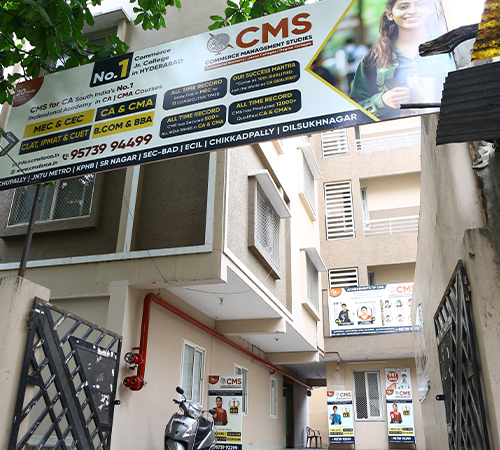
Secunderabad
(Day Scholar Campus)
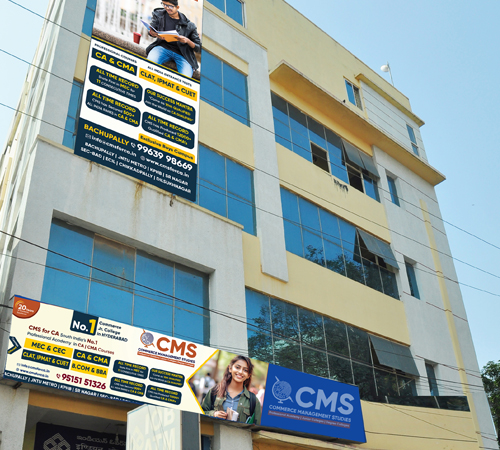
ECIL
(Day Scholar Campus)

Chikkadpally
(Day Scholar Campus)
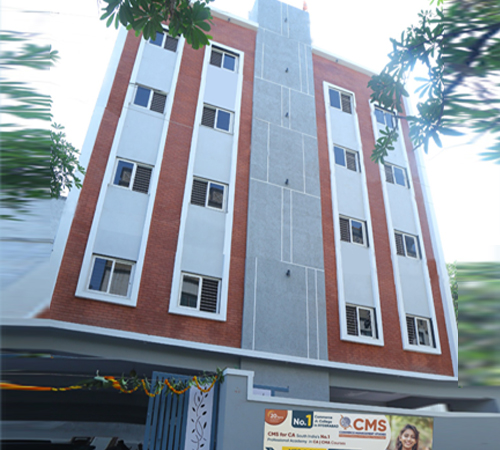
Dilsukhnagar
(Day Scholar Campus)

Chandanagar
(Day Scholar Campus)
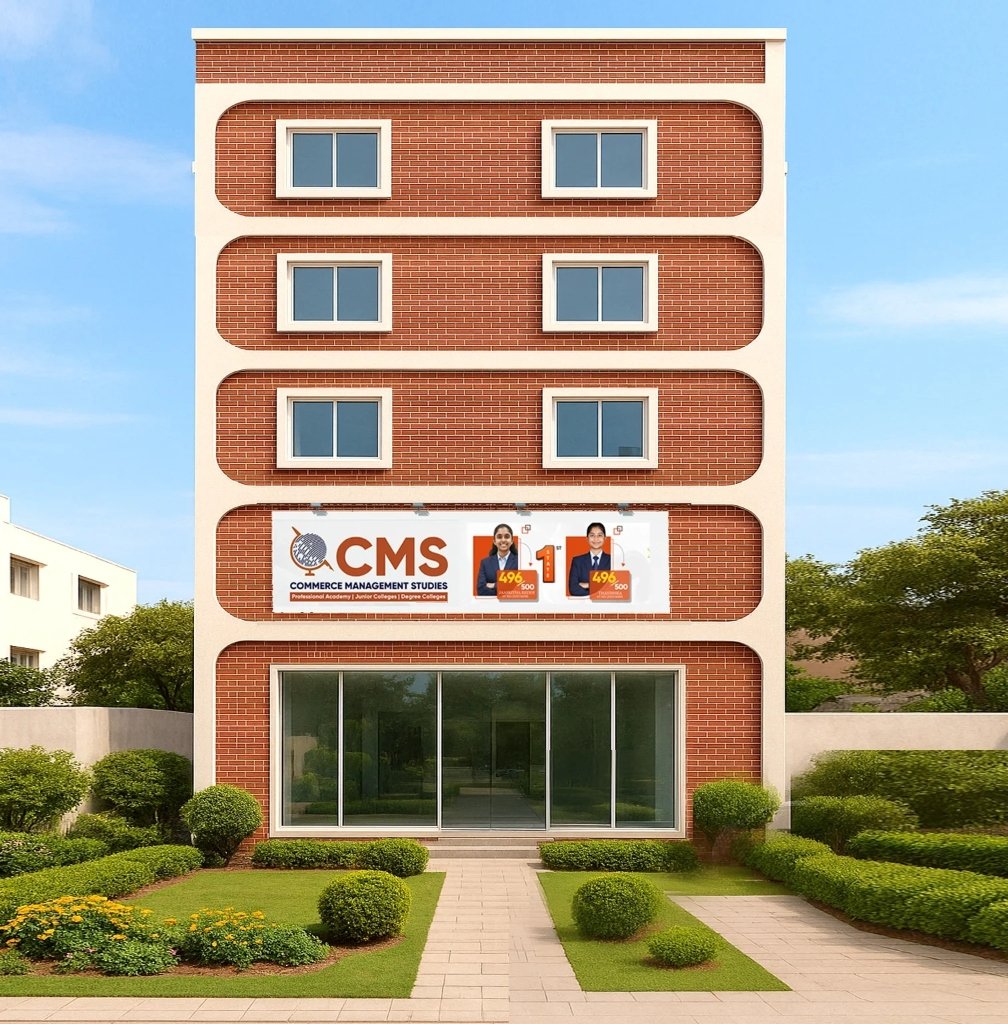
Kompally
(Day Scholar Campus )
Enquire about admissions at CMS today and take the first step towards your professional accountancy goals.