
Introduction
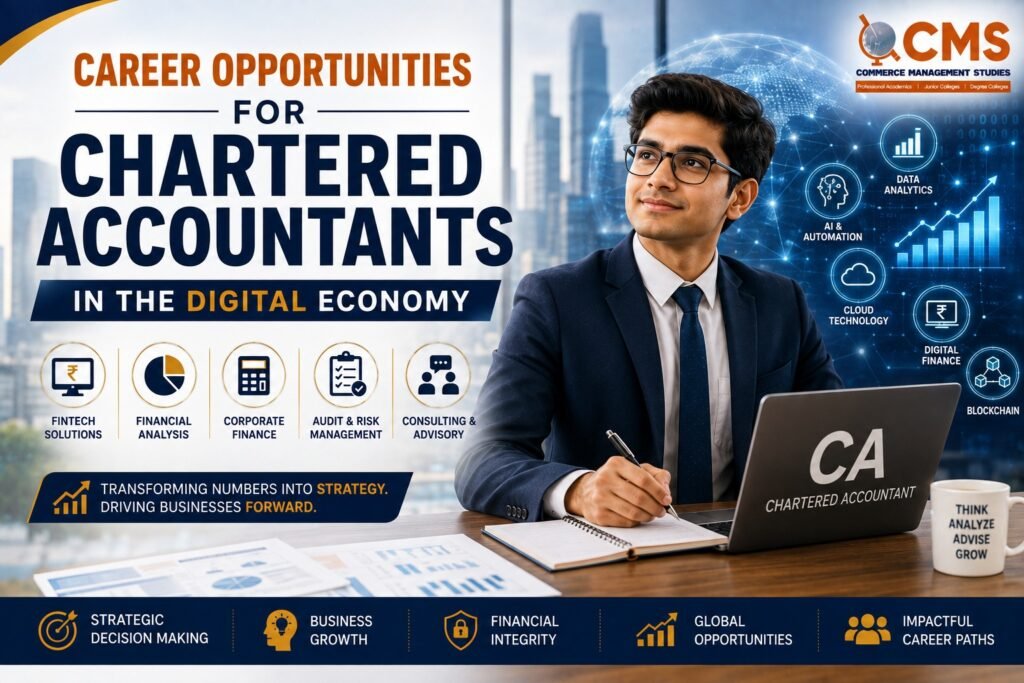
The rapid growth of digital technologies has transformed the way businesses operate across the world. Organizations are increasingly adopting cloud computing, artificial intelligence, automation, data analytics, blockchain, and digital payment systems to improve efficiency and remain competitive. As companies embrace digital transformation, the role of Chartered Accountants (CAs) has also evolved significantly. Today, Chartered Accountants are no longer limited to maintaining financial records, conducting audits, or filing tax returns. They are becoming strategic advisors who help businesses navigate complex financial decisions in an increasingly technology-driven environment.
The digital economy has created new opportunities for finance professionals who can combine strong accounting knowledge with an understanding of modern technologies and business processes. Chartered Accountants are now expected to interpret financial data, evaluate digital business models, manage financial risks, ensure regulatory compliance, and support organizations in making informed strategic decisions. This shift has expanded the career landscape for CAs, making the profession more dynamic and rewarding than ever before.
Understanding the Digital Economy
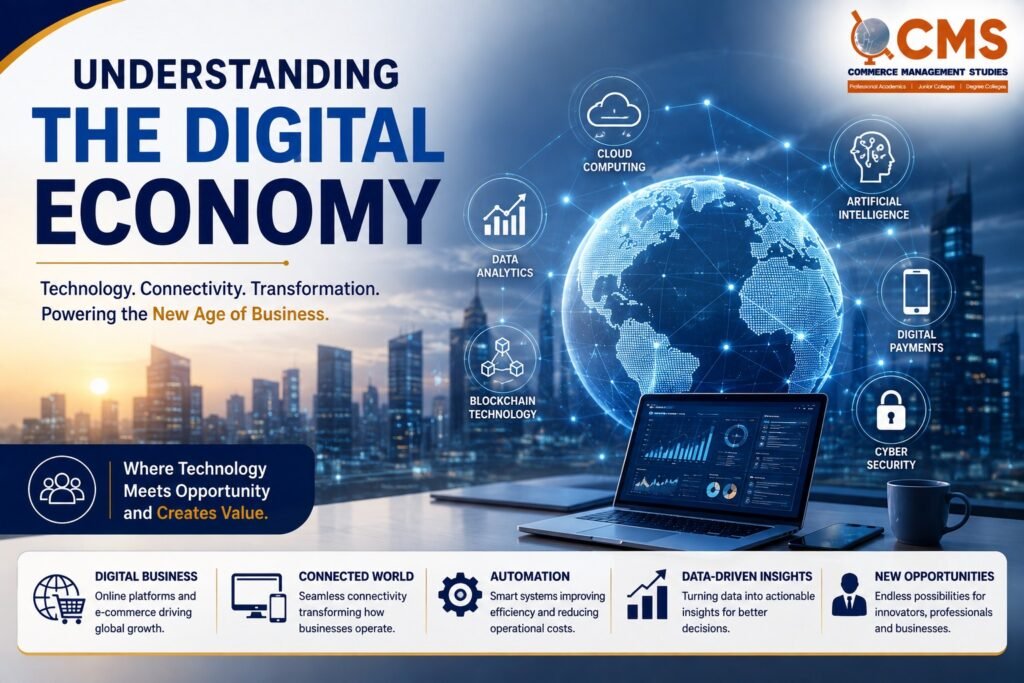
The digital economy refers to economic activities that are driven by digital technologies, internet-based platforms, electronic transactions, cloud services, and data-driven business models. From e-commerce and fintech to digital banking and online consulting, businesses today rely heavily on technology to manage operations, serve customers, and generate revenue. This transformation has changed not only how companies conduct business but also how financial information is recorded, analyzed, and reported.
As organizations generate vast amounts of financial and operational data, there is an increasing need for professionals who can interpret this information accurately and provide valuable business insights. Chartered Accountants play a vital role in ensuring financial transparency, regulatory compliance, and strategic financial planning in this technology-driven environment. Their expertise helps businesses make sound financial decisions while adapting to rapidly changing market conditions.
The Expanding Role of Chartered Accountants
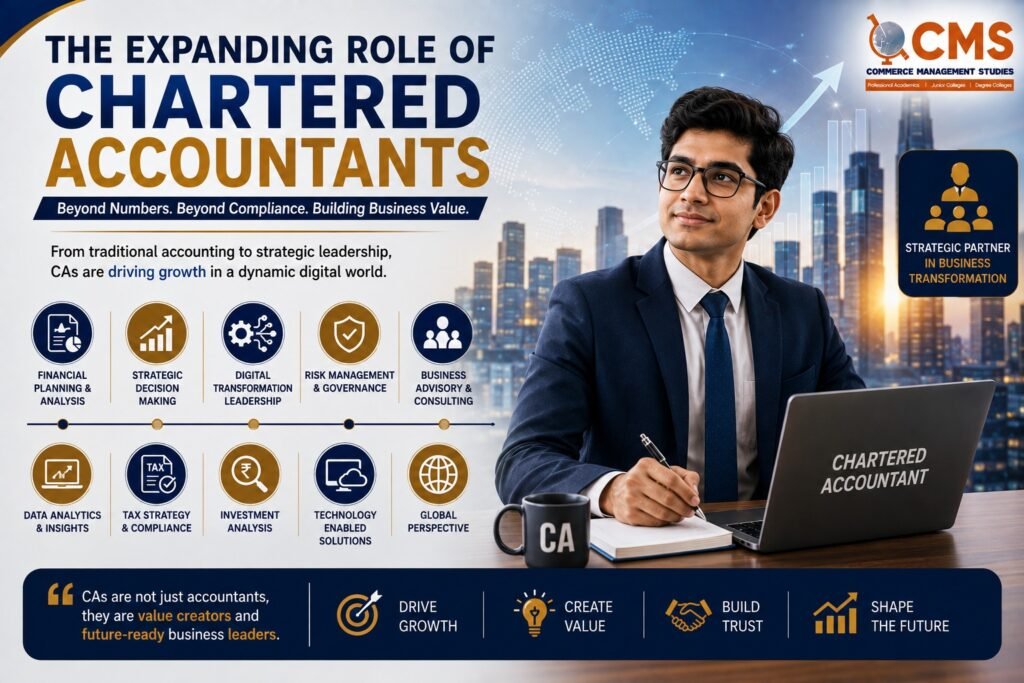
Traditionally, Chartered Accountants were primarily associated with accounting, auditing, taxation, and financial reporting. While these responsibilities continue to remain important, today’s business environment demands a broader skill set. Modern CAs actively participate in financial planning, business strategy, investment analysis, corporate governance, risk management, and digital transformation initiatives. They work closely with senior management to support decision-making and improve organizational performance.
Digital tools have automated many routine accounting functions, allowing Chartered Accountants to focus more on analysis, forecasting, and strategic advisory services. Instead of spending most of their time on manual bookkeeping, professionals now use advanced accounting software and analytical tools to evaluate financial performance, identify business opportunities, and recommend strategies that drive sustainable growth.
Career Opportunities in Financial Technology (FinTech)
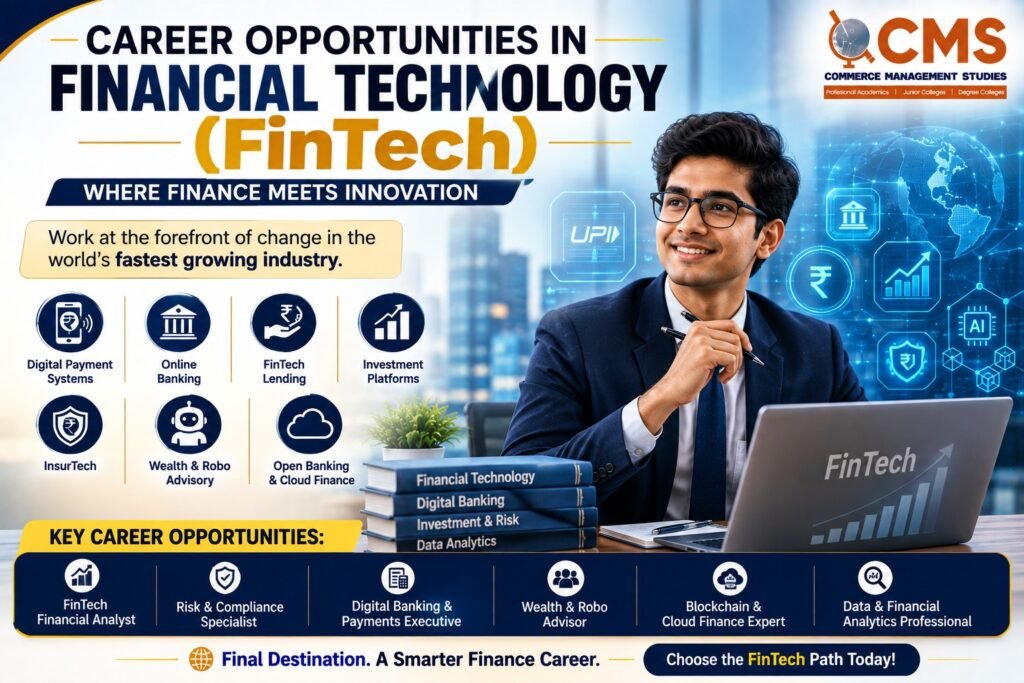
The rise of financial technology has opened exciting career opportunities for Chartered Accountants. FinTech companies develop innovative financial solutions such as digital payment systems, online lending platforms, mobile banking applications, investment platforms, and financial management software. These organizations require finance professionals who understand both accounting principles and emerging financial technologies.
Chartered Accountants working in the FinTech sector contribute to financial planning, regulatory compliance, risk assessment, budgeting, internal controls, and financial reporting. They also help companies design efficient financial processes while ensuring compliance with evolving financial regulations. As digital financial services continue to expand, demand for CAs with technology awareness is expected to increase significantly.
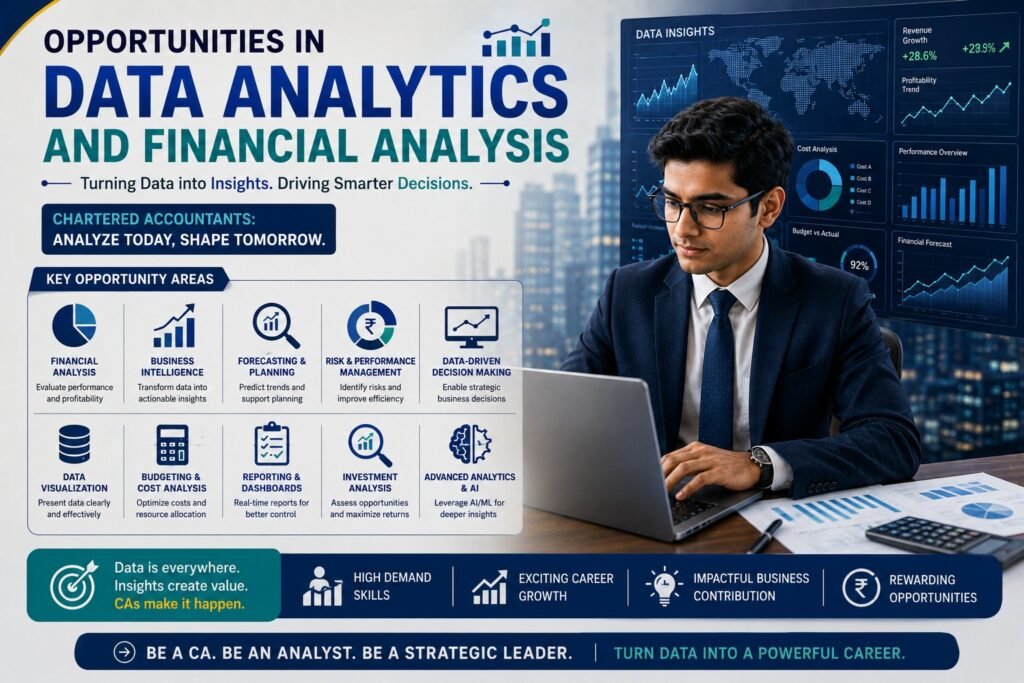
Opportunities in Data Analytics and Financial Analysis
Data has become one of the most valuable assets for modern businesses. Organizations collect enormous volumes of financial and operational information every day, creating a growing need for professionals who can analyze this data and convert it into meaningful business insights. Chartered Accountants possess strong analytical abilities that enable them to interpret financial trends, evaluate organizational performance, and support strategic planning.
Professionals working in financial analytics help management forecast revenues, analyze profitability, monitor expenses, identify financial risks, and improve resource allocation. Their ability to combine accounting knowledge with data interpretation allows organizations to make informed decisions that improve efficiency and long-term profitability. As businesses increasingly adopt data-driven decision-making, financial analytics has become an attractive career path for CAs.
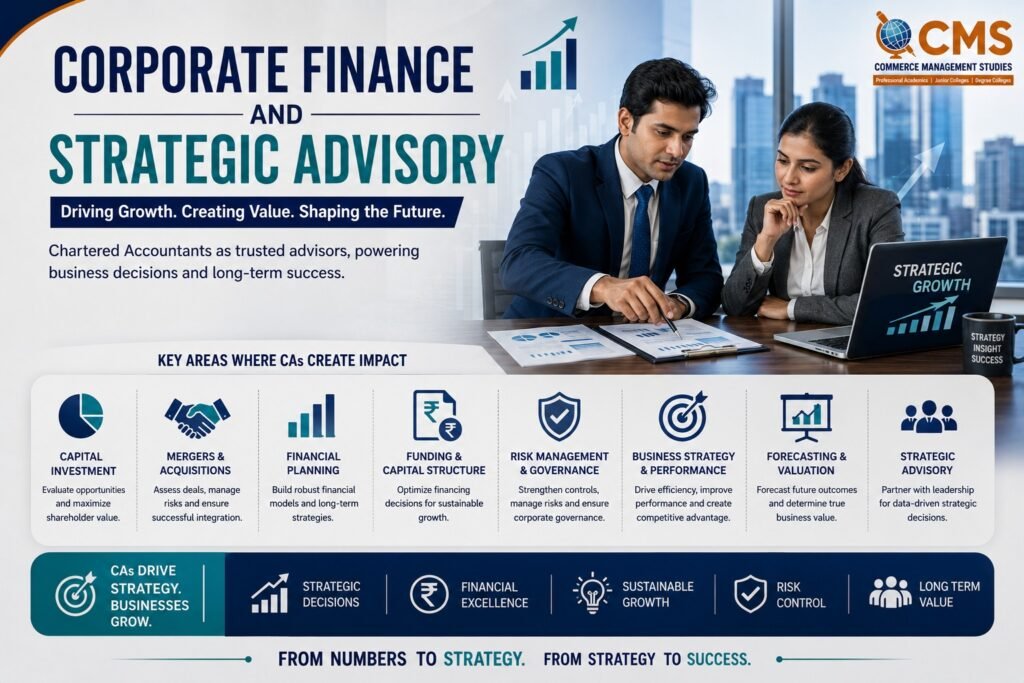
Corporate Finance and Strategic Advisory
Corporate finance continues to be one of the most rewarding career options for Chartered Accountants in the digital economy. Companies require experienced professionals to manage capital investments, evaluate mergers and acquisitions, prepare financial forecasts, assess business expansion opportunities, and develop long-term financial strategies. Chartered Accountants provide valuable financial expertise that supports these important business decisions.
Strategic advisory roles involve working closely with company leadership to identify growth opportunities, improve operational efficiency, manage financial risks, and evaluate market conditions. As organizations compete in rapidly changing digital markets, CAs who understand both finance and business strategy are becoming increasingly valuable members of executive decision-making teams.
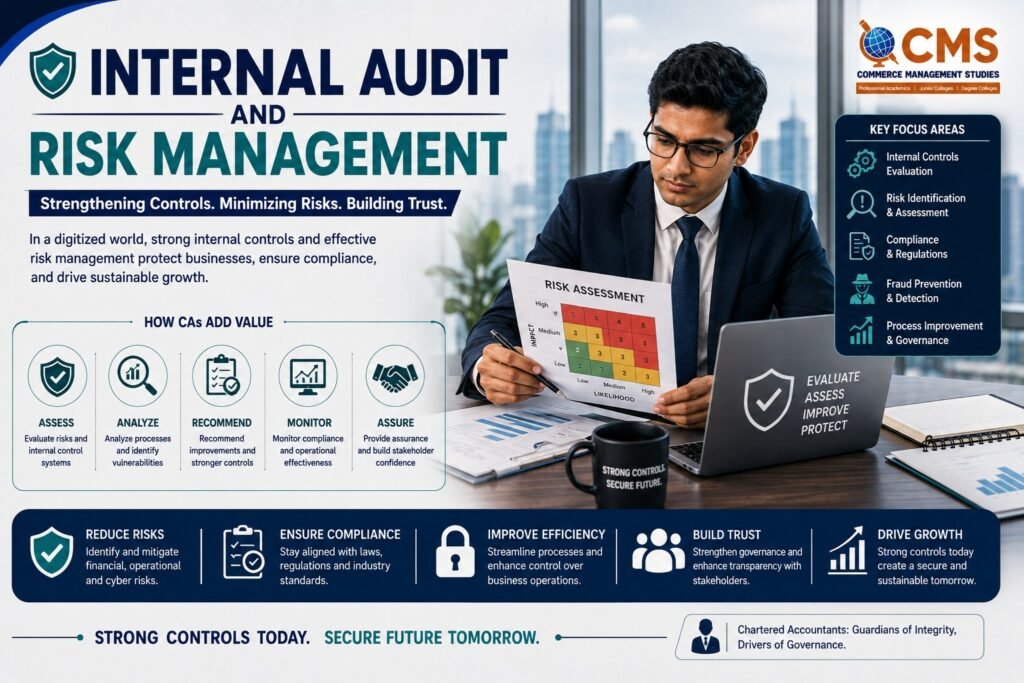
Internal Audit and Risk Management
As businesses become more technology-dependent, managing financial and operational risks has become increasingly important. Cybersecurity risks, digital fraud, data privacy regulations, and evolving compliance requirements require organizations to strengthen their internal control systems. Chartered Accountants play a critical role in evaluating these controls and ensuring that businesses operate in a secure and compliant manner.
Professionals working in internal audit and risk management examine financial processes, assess operational risks, review compliance procedures, and recommend improvements that enhance organizational governance. Their expertise helps companies minimize financial losses, strengthen internal controls, and maintain stakeholder confidence in an increasingly digital business environment.
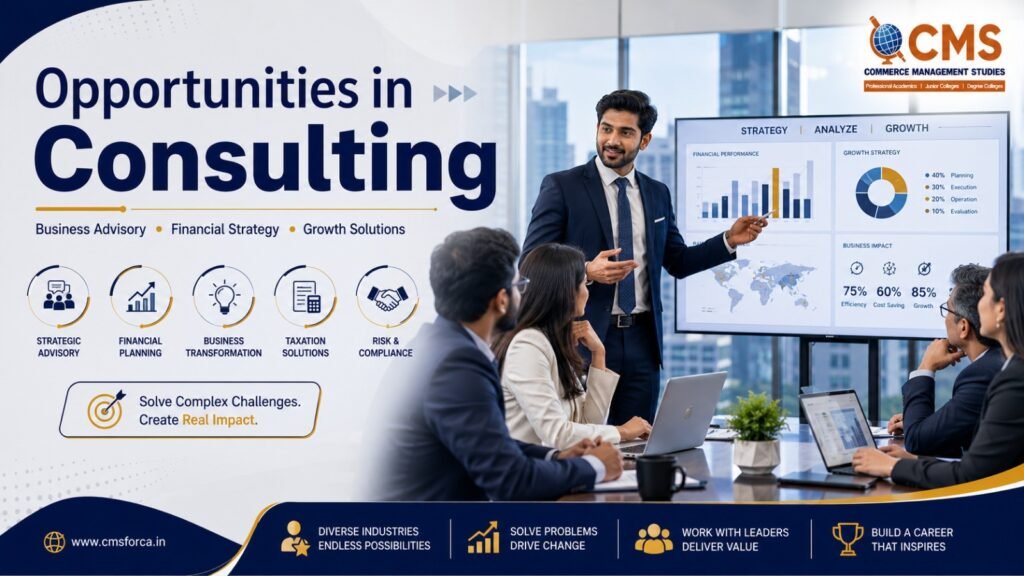
Opportunities in Consulting
Business consulting has experienced remarkable growth as organizations seek expert guidance to improve financial performance and adapt to technological change. Chartered Accountants working as consultants advise businesses on taxation, financial restructuring, digital transformation, budgeting, business process improvement, and regulatory compliance. Their ability to combine financial expertise with strategic thinking makes them valuable advisors across industries.
Consulting also offers exposure to a wide variety of industries, allowing professionals to solve diverse business challenges and continuously expand their knowledge. This dynamic work environment enables Chartered Accountants to develop specialized expertise while helping organizations improve efficiency and achieve sustainable growth.

Entrepreneurship and Independent Practice
The digital economy has made entrepreneurship more accessible than ever before. Chartered Accountants now have opportunities to establish independent consulting firms, virtual accounting practices, tax advisory services, financial planning businesses, and business consulting organizations. Cloud-based accounting software and digital communication platforms allow professionals to serve clients across different locations efficiently.
Entrepreneurship provides Chartered Accountants with the flexibility to specialize in areas such as taxation, financial consulting, business advisory, startup consulting, forensic accounting, or virtual CFO services. As more businesses seek specialized financial expertise, independent practice continues to emerge as a highly rewarding career option.
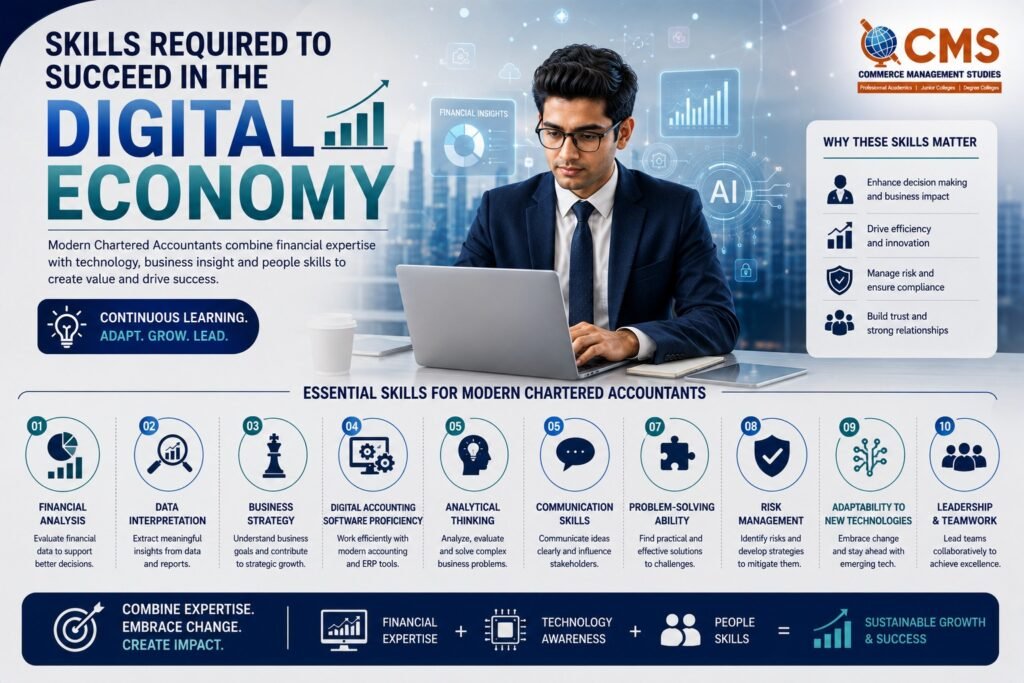
Skills Required to Succeed in the Digital Economy
Technical accounting knowledge remains the foundation of the Chartered Accountancy profession, but succeeding in today’s digital economy requires additional competencies. Employers increasingly value professionals who can combine financial expertise with technology awareness, communication skills, business understanding, and analytical thinking. Continuous learning is essential because both technology and financial regulations continue to evolve rapidly.
Some important skills for modern Chartered Accountants include:
- Financial analysis
- Data interpretation
- Business strategy
- Digital accounting software proficiency
- Analytical thinking
- Communication skills
- Problem-solving ability
- Risk management
- Adaptability to new technologies
- Leadership and teamwork
Developing these skills enables Chartered Accountants to remain competitive and contribute effectively in technology-driven business environments.
Preparing Early for a Successful CA Career
Building a successful career in Chartered Accountancy begins with developing strong academic fundamentals during Intermediate education. A solid understanding of accounting, mathematics, economics, and business concepts makes professional studies more manageable and prepares students for future challenges. Early preparation also allows students to strengthen analytical thinking, problem-solving abilities, and time management skills that are essential for professional success.
Many aspiring Chartered Accountants prefer integrated learning that combines Intermediate education with professional coaching. CMS institutes CA Coaching in Hyderabad provides students with an integrated learning approach that helps them build conceptual clarity, strengthen accounting fundamentals, and prepare systematically for CA while continuing their Intermediate studies through expert guidance and continuous academic support.
Conclusion
The digital economy has significantly expanded the scope of Chartered Accountancy by creating exciting opportunities beyond traditional accounting and auditing roles. Today’s Chartered Accountants contribute to financial technology, business consulting, corporate finance, risk management, financial analytics, entrepreneurship, and strategic decision-making. Their ability to combine financial expertise with technology and business knowledge makes them indispensable to organizations navigating digital transformation.
For students considering a career in Chartered Accountancy, the future offers diverse and rewarding opportunities across multiple industries. By developing strong conceptual knowledge, embracing technological advancements, and continuously enhancing professional skills, aspiring Chartered Accountants can build successful careers that remain relevant in an increasingly digital world. As businesses continue to evolve, the demand for adaptable, knowledgeable, and forward-thinking Chartered Accountants is expected to grow, making this profession an excellent choice for ambitious commerce students.