
Introduction
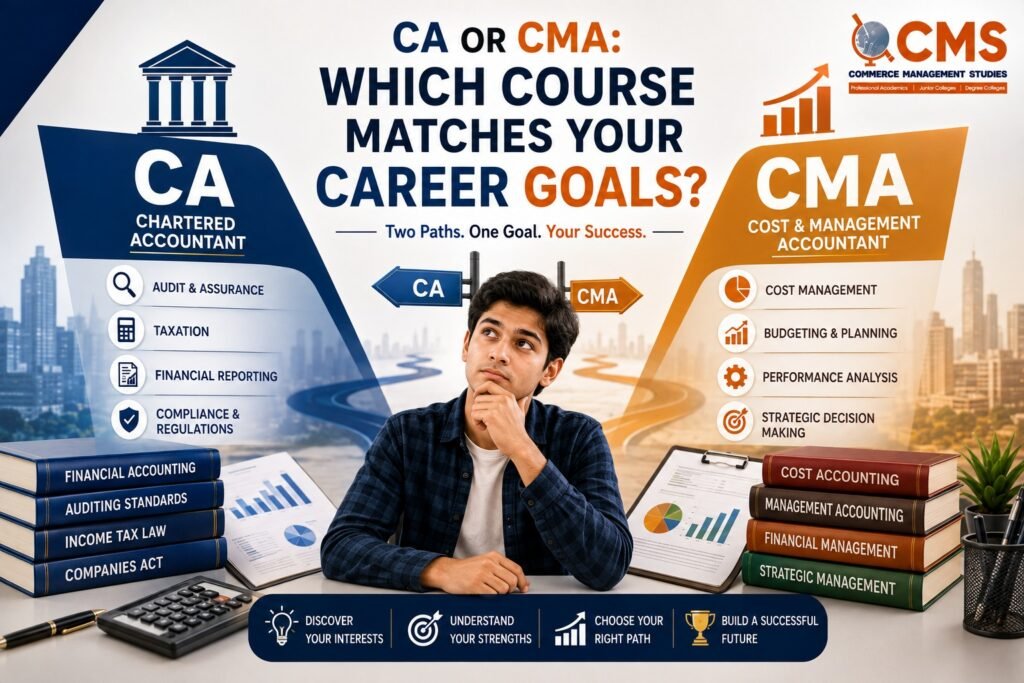
Choosing the right professional course after Class 10 or Intermediate is one of the most important decisions for commerce students. Among the various career options available, Chartered Accountancy (CA) and Cost and Management Accountancy (CMA) have consistently remained two of the most respected and rewarding professional qualifications in India. Both courses offer excellent career opportunities, professional recognition, and long-term growth, making it common for students and parents to compare them before making a decision. Although both qualifications belong to the commerce and finance domain, they focus on different aspects of business and finance, making it essential to understand their scope before choosing one.
Many students assume that CA and CMA are almost identical because both involve accounting and finance. However, their career paths, areas of specialization, work responsibilities, and professional roles differ significantly. Chartered Accountants generally specialize in auditing, taxation, financial reporting, and regulatory compliance, while Cost and Management Accountants focus on cost optimization, budgeting, financial planning, and strategic business decision-making. This guide explains the differences between the two qualifications and helps students determine which course best matches their interests, strengths, and long-term career goals.
Understanding Chartered Accountancy (CA)
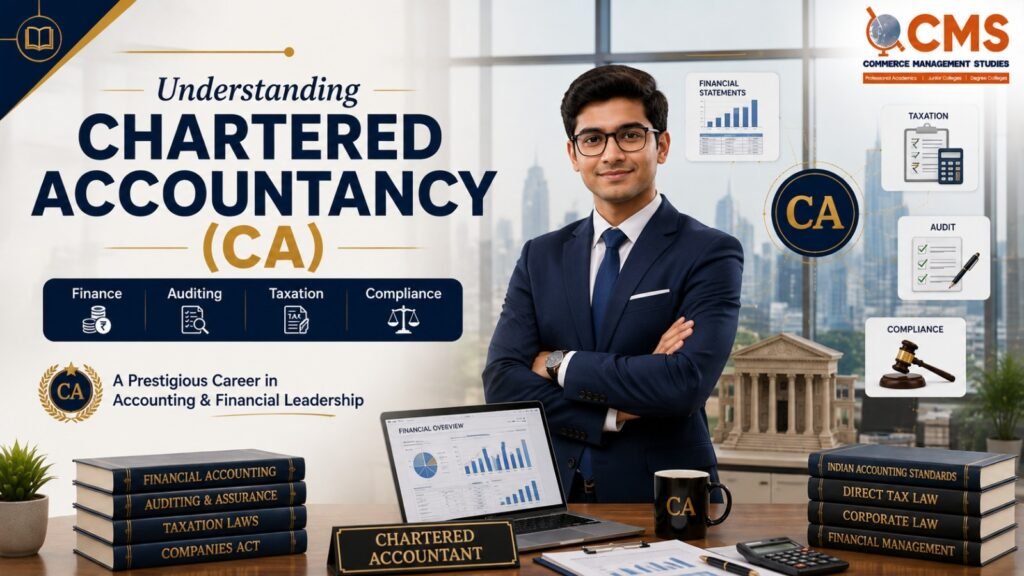
Chartered Accountancy is one of the most prestigious professional qualifications in the field of finance and accounting. A Chartered Accountant is responsible for maintaining financial records, preparing financial statements, conducting statutory audits, managing taxation, ensuring regulatory compliance, and advising organizations on financial matters. The qualification is awarded by the Institute of Chartered Accountants of India (ICAI), and qualified professionals are employed across industries including banking, consulting, manufacturing, healthcare, information technology, and multinational corporations.
The CA curriculum emphasizes financial accounting, auditing, corporate laws, taxation, financial management, and accounting standards. Students pursuing this qualification develop strong analytical abilities and gain expertise in financial reporting and legal compliance. The profession is ideal for individuals who enjoy working with numbers, interpreting financial information, solving taxation-related issues, and ensuring that organizations maintain transparency and compliance with financial regulations.
Understanding Cost and Management Accountancy (CMA)
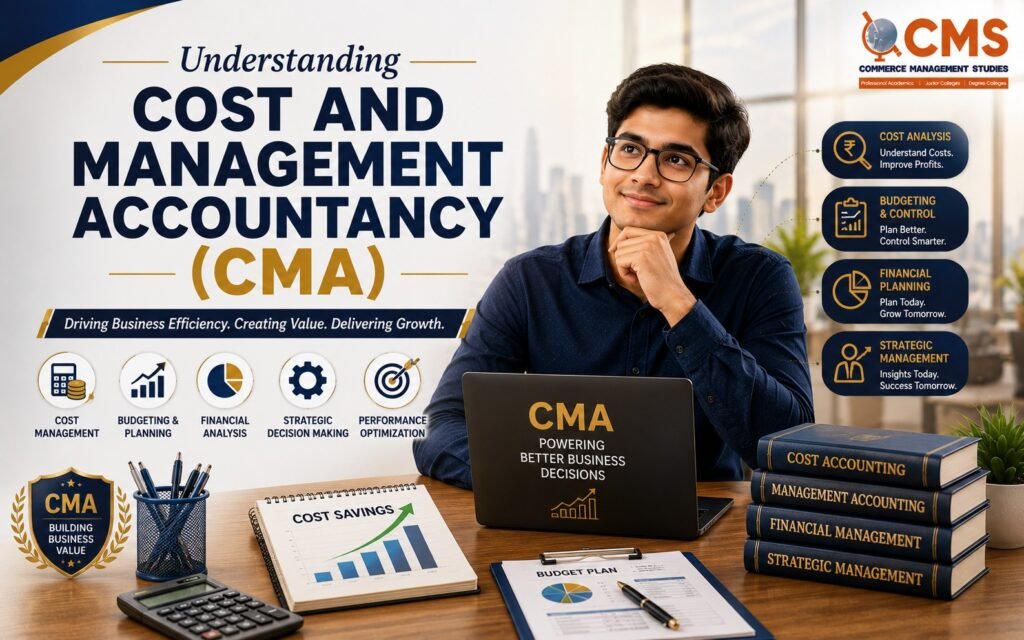
Cost and Management Accountancy is a professional qualification that focuses on helping businesses improve efficiency, control costs, maximize profitability, and support strategic decision-making. Awarded by the Institute of Cost Accountants of India (ICMAI), the CMA qualification prepares students to analyze production costs, prepare budgets, evaluate investments, monitor financial performance, and provide management with valuable financial insights for business growth.
Unlike Chartered Accountants, who primarily deal with external financial reporting and compliance, CMAs work extensively with internal business operations. They help organizations understand where resources are being utilized, identify opportunities to reduce expenses, improve operational efficiency, and develop long-term financial strategies. As businesses increasingly prioritize cost management and profitability, the demand for qualified CMA professionals continues to grow across both manufacturing and service industries.
Key Differences Between CA and CMA
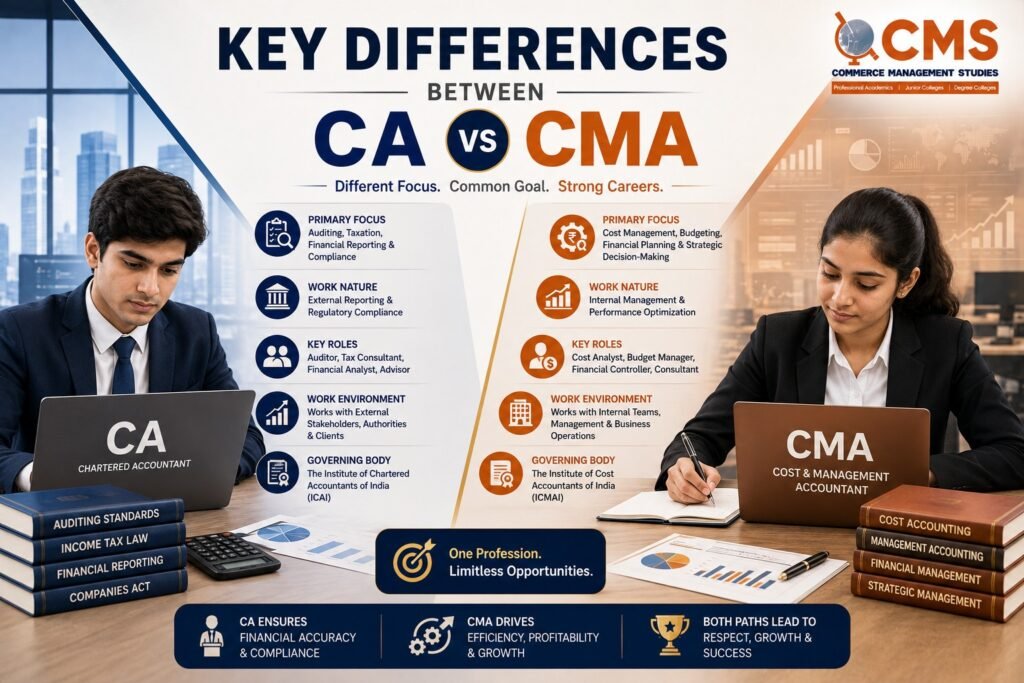
Although both qualifications belong to the commerce stream and share certain common subjects, their professional focus differs considerably. Chartered Accountants concentrate on auditing, taxation, accounting standards, financial reporting, and statutory compliance. Their primary responsibility is to ensure that financial records are accurate and that organizations comply with applicable laws and regulations.
Cost and Management Accountants, on the other hand, focus on internal financial management. They analyze costs, prepare budgets, support pricing decisions, evaluate financial performance, and help businesses improve profitability through strategic planning. While CAs often work closely with regulatory authorities and external stakeholders, CMAs primarily assist organizational management in making informed business decisions based on financial analysis.
Course Structure and Learning Approach
Both CA and CMA follow a structured progression that includes multiple examination levels and practical training. Students begin with foundational concepts before advancing to more specialized subjects that develop technical knowledge and professional competence. Success in either qualification requires conceptual understanding, disciplined preparation, and continuous practice over several years.
The learning approach in both courses encourages analytical thinking rather than rote memorization. Students gradually develop practical skills through case studies, numerical problem-solving, practical training, and real-world applications. Regardless of the qualification chosen, consistent learning and conceptual clarity remain the key factors that contribute to long-term success.
Skills Required for CA Aspirants
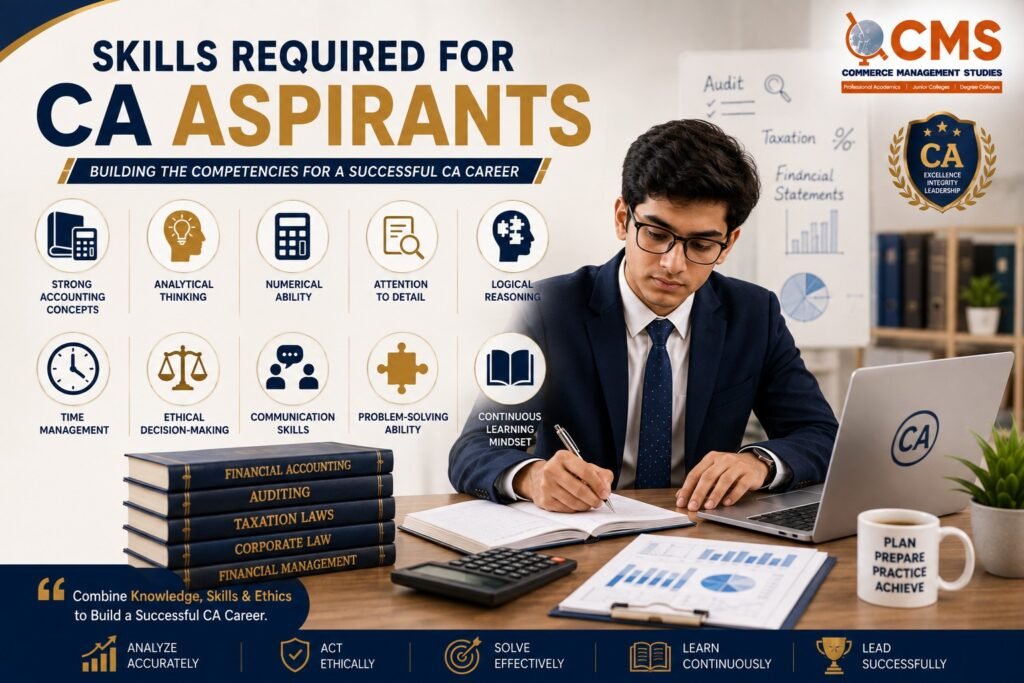
Students who aspire to become Chartered Accountants should possess a combination of analytical ability, numerical aptitude, attention to detail, and strong problem-solving skills. Since the profession involves handling financial statements, audits, taxation, and legal compliance, professionals must be capable of interpreting financial information accurately and applying accounting principles effectively in different business situations.
Some important skills for CA aspirants include:
- Strong accounting concepts
- Analytical thinking
- Numerical ability
- Attention to detail
- Logical reasoning
- Time management
- Ethical decision-making
- Communication skills
- Problem-solving ability
- Continuous learning mindset
Developing these skills during Intermediate education provides students with a strong foundation for professional success.
Skills Required for CMA Aspirants
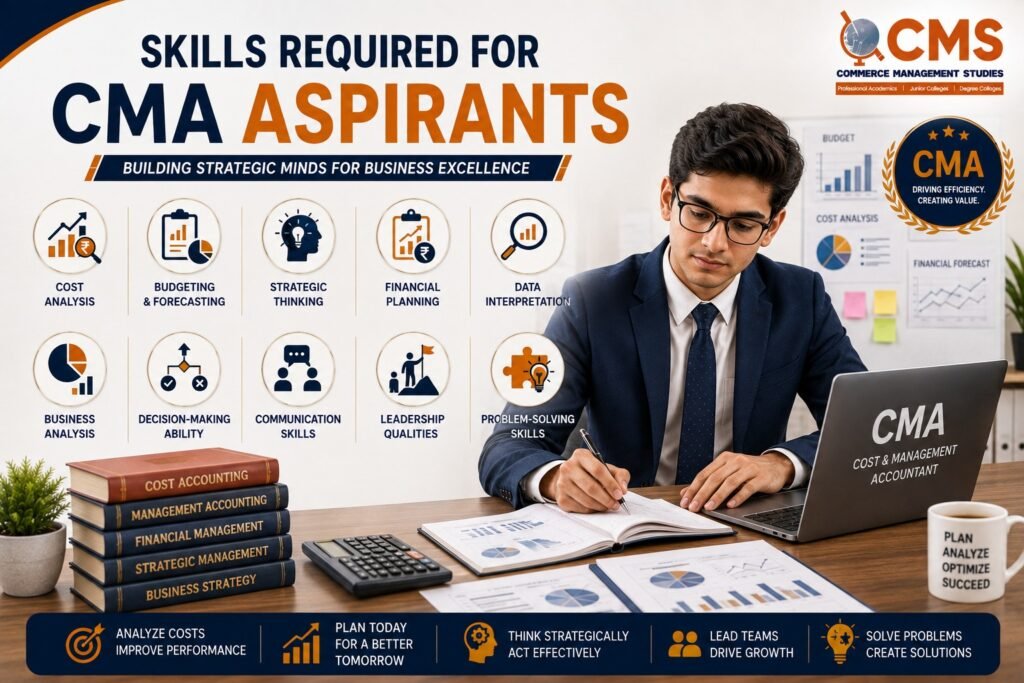
Cost and Management Accountants play a strategic role in helping businesses improve financial performance. Therefore, students interested in CMA should possess analytical thinking, business awareness, strategic decision-making abilities, and an interest in cost management. Since the profession focuses on improving organizational efficiency, professionals must be capable of evaluating financial information and recommending practical solutions to business challenges.
Some essential skills for CMA aspirants include:
- Cost analysis
- Budgeting and forecasting
- Strategic thinking
- Financial planning
- Data interpretation
- Business analysis
- Decision-making ability
- Communication skills
- Leadership qualities
- Problem-solving skills
These competencies enable CMA professionals to contribute significantly to organizational growth and long-term business success.
Career Opportunities After CA and CMA
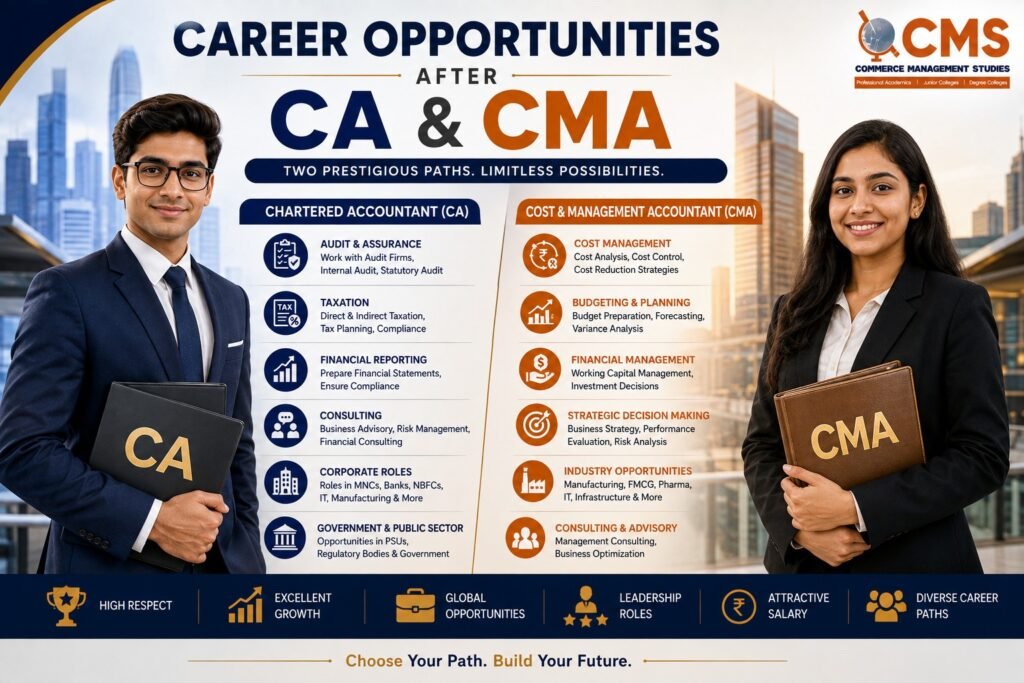
Both CA and CMA qualifications provide access to rewarding career opportunities across multiple industries. Chartered Accountants are highly sought after for roles involving auditing, taxation, financial reporting, consulting, corporate finance, and compliance. They may work in public practice, multinational corporations, financial institutions, consulting firms, or government organizations.
Cost and Management Accountants enjoy opportunities in manufacturing companies, corporate finance departments, public sector organizations, consulting firms, banking institutions, and business advisory services. They specialize in budgeting, financial planning, cost management, pricing strategies, performance analysis, and strategic financial decision-making. While the nature of work differs, both professions offer excellent career stability, professional respect, and opportunities for leadership roles.
Which Course Should You Choose?
Choosing between CA and CMA depends entirely on your interests, strengths, and long-term career aspirations rather than on which qualification is considered more popular. Students who enjoy auditing, taxation, accounting standards, financial reporting, and regulatory compliance may find Chartered Accountancy more suitable. Those who are interested in budgeting, cost analysis, financial planning, business strategy, and helping organizations improve profitability may find Cost and Management Accountancy a better fit.
Instead of comparing the two qualifications solely based on salary or perceived difficulty, students should carefully evaluate the type of work they would enjoy performing throughout their professional careers. Understanding your aptitude, preferred work environment, and future career objectives will help you make a confident and informed decision that supports long-term professional satisfaction.
Why Early Preparation Makes a Difference
Professional courses such as CA and CMA require strong conceptual understanding and disciplined preparation over an extended period. Students who begin preparing during their Intermediate education often develop stronger fundamentals in accounting, economics, mathematics, and business concepts, making professional studies more manageable. Early preparation also provides sufficient time for revision, practice, and gradual improvement without unnecessary pressure.
Many commerce students choose integrated learning to balance their Intermediate education with professional course preparation. CMS provides integrated CA Coaching in Hyderabad and CMA Coaching in Hyderabad that helps students prepare systematically for CA and CMA while continuing their Intermediate studies, enabling them to build conceptual clarity, improve problem-solving skills, and develop confidence through regular assessments and expert academic guidance.
Conclusion
Both Chartered Accountancy and Cost and Management Accountancy are highly respected professional qualifications that offer excellent career opportunities in the fields of finance, accounting, and business management. While Chartered Accountants focus primarily on auditing, taxation, financial reporting, and compliance, Cost and Management Accountants specialize in cost optimization, budgeting, strategic planning, and improving organizational efficiency. Each qualification serves a unique purpose in the business world and offers rewarding career prospects for dedicated professionals.
The right choice ultimately depends on your interests, strengths, and long-term career goals. Rather than selecting a course based on trends or external opinions, students should understand the responsibilities, learning approach, and career opportunities associated with each qualification. With consistent preparation, quality education, and a clear understanding of your aspirations, either CA or CMA can become the foundation of a successful and fulfilling professional career.