
Introduction
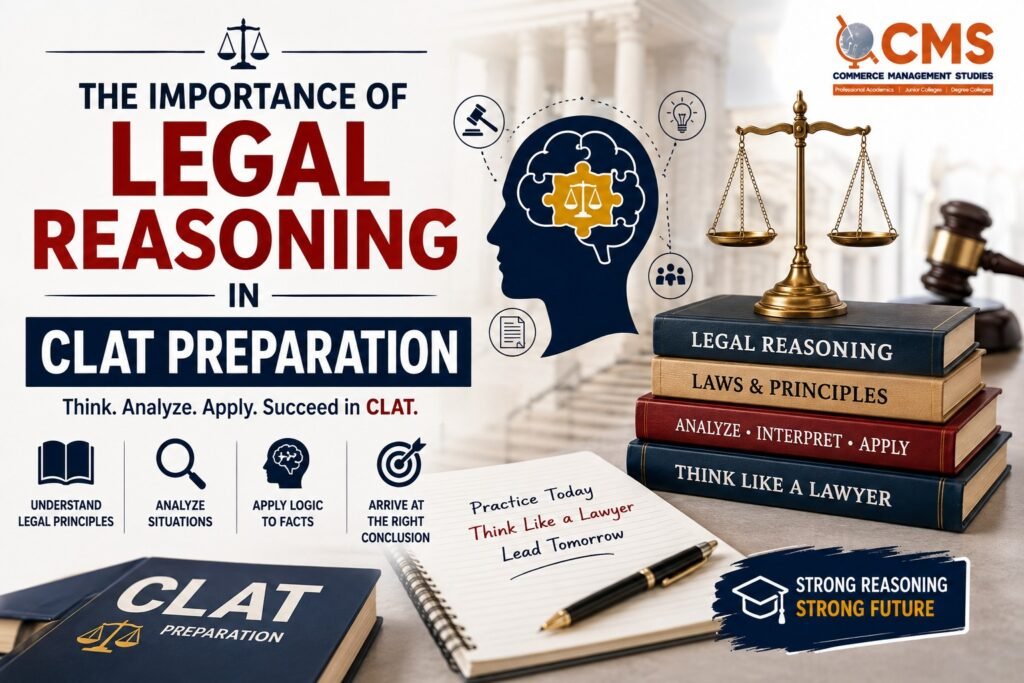
Legal Reasoning is one of the most important sections of the Common Law Admission Test (CLAT) and often plays a decisive role in determining a student’s overall performance. Unlike many traditional academic subjects that focus on memorization, Legal Reasoning evaluates a student’s ability to understand legal principles, analyze situations, interpret information, and apply logical thinking to arrive at the correct conclusion. It is designed to assess whether a student possesses the aptitude required to study law and solve legal problems systematically. As the legal profession increasingly values analytical thinking and sound judgment, developing strong legal reasoning skills has become essential for every CLAT aspirant.
Many students initially assume that Legal Reasoning requires extensive knowledge of laws or prior legal education. However, this is one of the biggest misconceptions about CLAT. The examination primarily tests a candidate’s ability to read passages carefully, understand the legal principles provided within them, and apply those principles to different situations. Students who develop logical thinking, strong reading habits, and analytical skills during their preparation often perform exceptionally well in this section. Understanding the importance of Legal Reasoning helps students prepare more effectively while building skills that remain valuable throughout their legal education and professional careers.
What is Legal Reasoning in CLAT?
Legal Reasoning is a section of CLAT that evaluates a student’s ability to interpret legal principles and apply them to factual situations. Instead of testing prior legal knowledge, the examination presents passages describing legal concepts or principles, followed by questions that require students to analyze different scenarios using the information provided. This approach measures analytical ability, logical thinking, and comprehension rather than memorized legal facts.
The questions are designed to assess how well students can identify relevant legal principles, distinguish important facts from unnecessary information, and make logical conclusions based on the given passage. Since every question requires careful reading and thoughtful analysis, success depends more on reasoning ability than on previous exposure to legal studies. This makes Legal Reasoning an accessible yet challenging section for students from diverse academic backgrounds.
Why Legal Reasoning is a High-Scoring Section
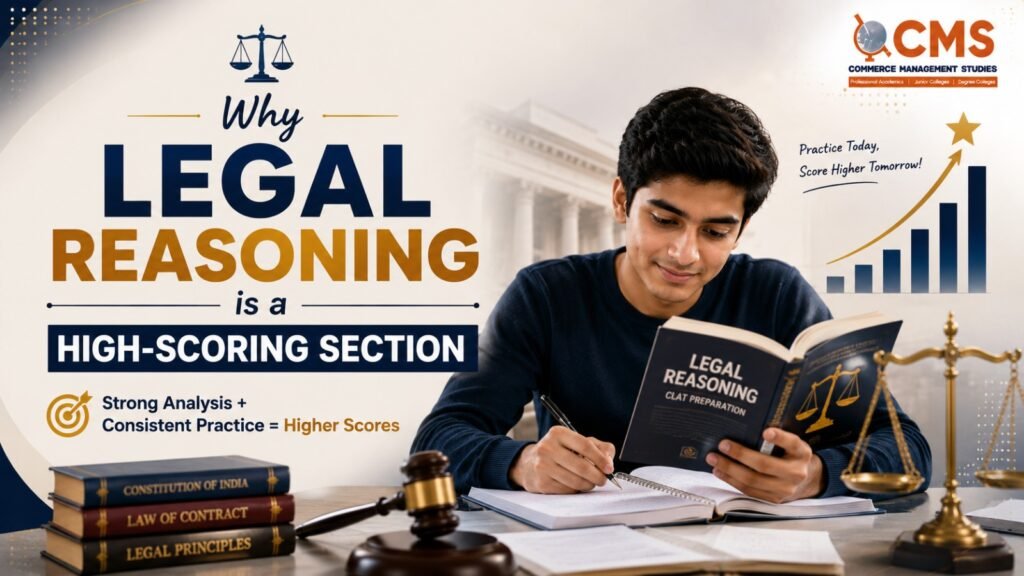
Legal Reasoning offers students an excellent opportunity to improve their overall CLAT score because the questions primarily depend on analytical thinking rather than factual memorization. Students who understand the legal principle described in the passage and carefully apply it to each situation often achieve high accuracy. Unlike sections that rely heavily on current affairs or vocabulary, consistent practice can significantly improve performance in Legal Reasoning over time.
Regular practice also helps students become familiar with different question formats and legal scenarios. As they solve more passage-based questions, they gradually develop confidence in identifying relevant facts, eliminating incorrect options, and selecting logically sound answers. With disciplined preparation, Legal Reasoning can become one of the most scoring sections of the examination.
Develops Analytical and Critical Thinking Skills
One of the greatest benefits of preparing for Legal Reasoning is the development of analytical and critical thinking abilities. Every legal problem requires students to carefully evaluate information, recognize relationships between facts, identify applicable principles, and draw logical conclusions. These skills are not only useful for CLAT but also form the foundation of legal education and professional legal practice.
Critical thinking enables students to examine situations from multiple perspectives before making decisions. Instead of accepting information at face value, they learn to question assumptions, evaluate evidence objectively, and arrive at reasoned conclusions. These intellectual abilities remain valuable throughout law school and later help professionals solve complex legal and business problems effectively.
Improves Reading Comprehension
Legal Reasoning passages are often detailed and require careful reading to understand the facts and legal principles presented. Students who regularly practice this section naturally improve their reading speed, comprehension, and ability to identify key information within lengthy passages. Strong reading skills become increasingly important because almost every section of CLAT involves passage-based questions.
Improved reading comprehension also enhances overall examination performance by reducing misunderstandings and careless mistakes. Students learn to distinguish between relevant and irrelevant information, identify subtle differences in answer choices, and interpret complex passages more efficiently. These improvements contribute not only to CLAT success but also to future academic performance in law school.
Strengthens Decision-Making Ability
Lawyers are expected to make informed decisions based on facts, legal principles, and logical reasoning. Legal Reasoning preparation introduces students to this way of thinking from the very beginning of their journey. Every question requires candidates to evaluate multiple options, analyze consequences, and choose the answer that best aligns with the legal principle provided.
Repeated exposure to such problem-solving exercises gradually strengthens decision-making skills under time constraints. Students become more confident in evaluating different perspectives and selecting the most appropriate solution without relying on guesswork. This ability proves beneficial not only during CLAT but also throughout legal education and professional practice.
Helps Students Think Like Future Lawyers
One of the primary objectives of Legal Reasoning is to introduce students to the analytical approach followed by legal professionals. Lawyers rarely rely solely on memorized information; instead, they carefully examine facts, interpret laws, evaluate arguments, and apply legal principles to resolve disputes. Legal Reasoning encourages students to develop this structured method of thinking long before they enter law school.
As students practice regularly, they begin approaching problems more systematically. They learn to separate facts from opinions, recognize logical inconsistencies, and evaluate situations objectively. This gradual development of legal thinking prepares them for the academic challenges of legal education while strengthening the intellectual skills expected from future lawyers.
Effective Strategies to Improve Legal Reasoning
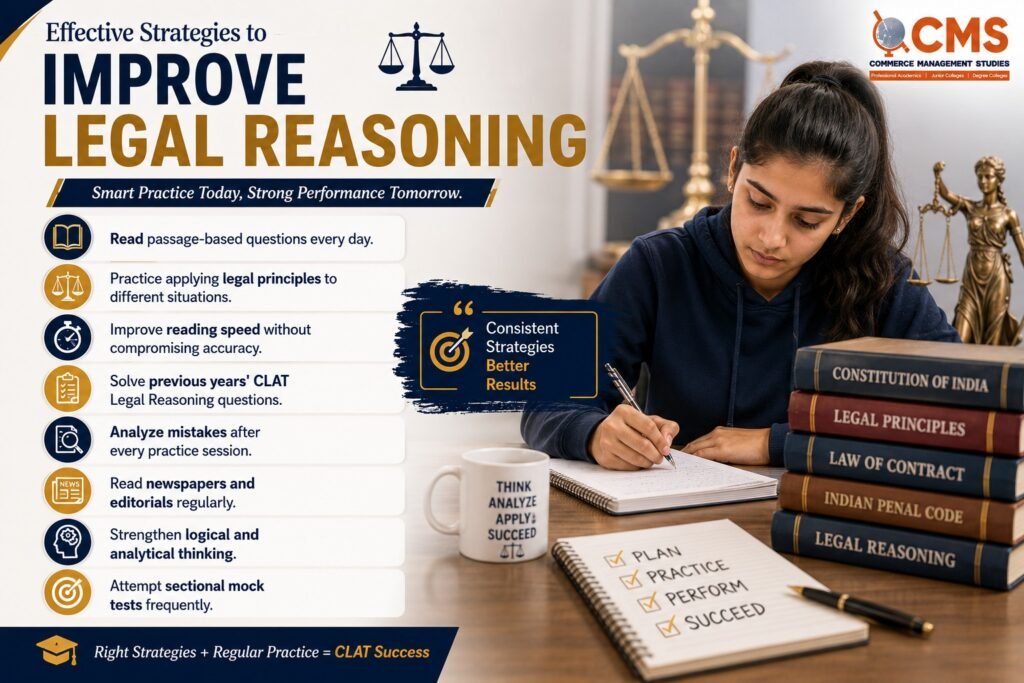
Although Legal Reasoning may initially appear challenging, consistent practice and the right preparation strategy can significantly improve performance. Students should focus on understanding the logic behind each question instead of attempting to memorize legal terminology. Developing reading habits, solving previous years’ questions, and reviewing mistakes regularly contribute greatly to improvement.
Some effective preparation strategies include:
- Read passage-based questions every day.
- Practice applying legal principles to different situations.
- Improve reading speed without compromising accuracy.
- Solve previous years’ CLAT Legal Reasoning questions.
- Analyze mistakes after every practice session.
- Read newspapers and editorials regularly.
- Strengthen logical and analytical thinking.
- Attempt sectional mock tests frequently.
Following these strategies consistently helps students build confidence and gradually improve both speed and accuracy.
Common Mistakes Students Should Avoid
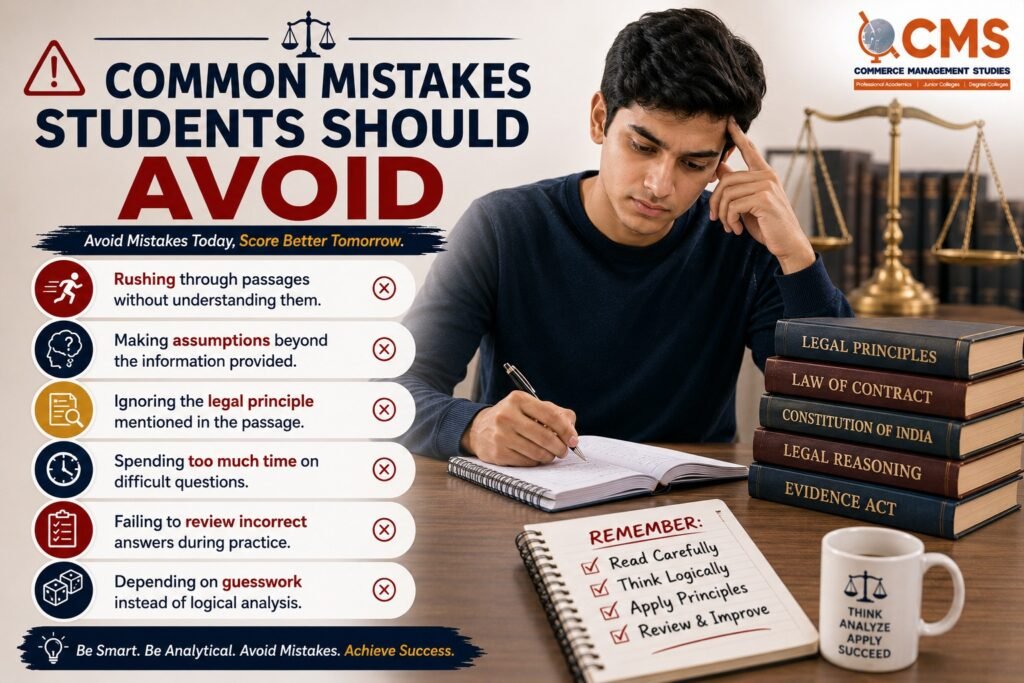
Many students lose marks in Legal Reasoning not because they lack ability but because they make avoidable mistakes during preparation or while attempting the examination. Some focus excessively on memorizing legal terms instead of understanding reasoning patterns, while others read passages too quickly and overlook important details. Such mistakes can reduce accuracy even among well-prepared candidates.
Some common mistakes include:
- Rushing through passages without understanding them.
- Making assumptions beyond the information provided.
- Ignoring the legal principle mentioned in the passage.
- Spending too much time on difficult questions.
- Failing to review incorrect answers during practice.
- Depending on guesswork instead of logical analysis.
Recognizing these mistakes early allows students to improve their preparation and avoid repeating them during the actual examination.
The Role of Consistent Practice
Legal Reasoning is a skill that develops gradually through continuous practice rather than overnight learning. Students who solve a variety of passage-based questions over several months become more comfortable analyzing legal situations and applying principles correctly. Regular practice also improves confidence, reduces examination anxiety, and enhances overall problem-solving ability.
Students preparing for CLAT often benefit from structured academic guidance that combines conceptual learning with regular practice tests and detailed performance analysis. At CMS CLAT Coaching in Hyderabad, aspiring law students receive integrated preparation that helps them strengthen Legal Reasoning through systematic practice, expert mentoring, mock tests, and continuous evaluation alongside their Intermediate education.
Conclusion
Legal Reasoning is much more than a section of the CLAT examination—it is the foundation upon which legal education and professional legal practice are built. By developing analytical thinking, logical reasoning, reading comprehension, and decision-making skills, this section prepares students not only to perform well in the entrance examination but also to succeed throughout their journey in law school and beyond. Students who understand legal principles rather than relying on memorization often find this section both manageable and rewarding.
Success in Legal Reasoning comes through consistent practice, careful reading, thoughtful analysis, and a disciplined approach to preparation. By strengthening these skills early and following a structured study plan, aspiring law students can significantly improve their CLAT performance while building the intellectual foundation required for a successful and fulfilling career in the legal profession.