
Introduction
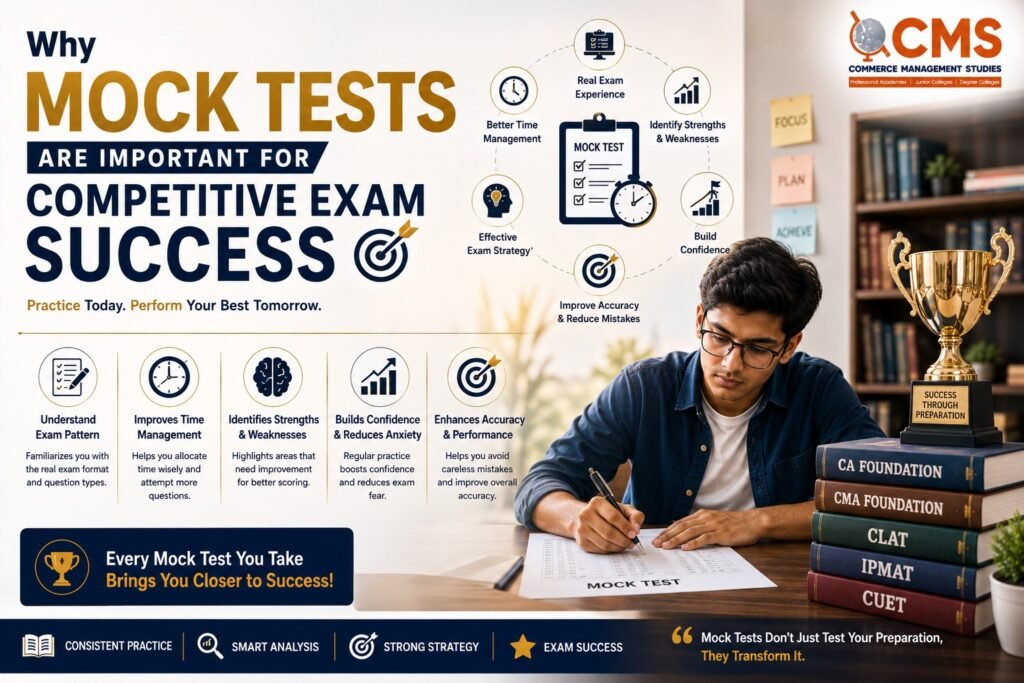
Preparing for a competitive examination requires much more than simply completing the syllabus. Whether students are preparing for entrance exams like CA Foundation, CMA Foundation, CLAT, IPMAT, CUET, or other competitive examinations, success depends on a combination of conceptual understanding, consistent practice, effective time management, and strategic exam preparation. Among the many tools available to students, mock tests have become one of the most effective methods for evaluating preparation and improving examination performance. They provide students with an opportunity to experience the actual exam environment before the final examination, helping them identify strengths and areas that require improvement.
Many students focus primarily on learning new concepts but overlook the importance of testing their knowledge under exam-like conditions. This often leads to unnecessary stress, poor time management, and avoidable mistakes during the actual examination. Mock tests bridge this gap by allowing students to apply what they have learned in a structured and timed setting. Regular practice through mock tests not only improves confidence but also develops the practical skills required to perform well in competitive examinations.
What Are Mock Tests?
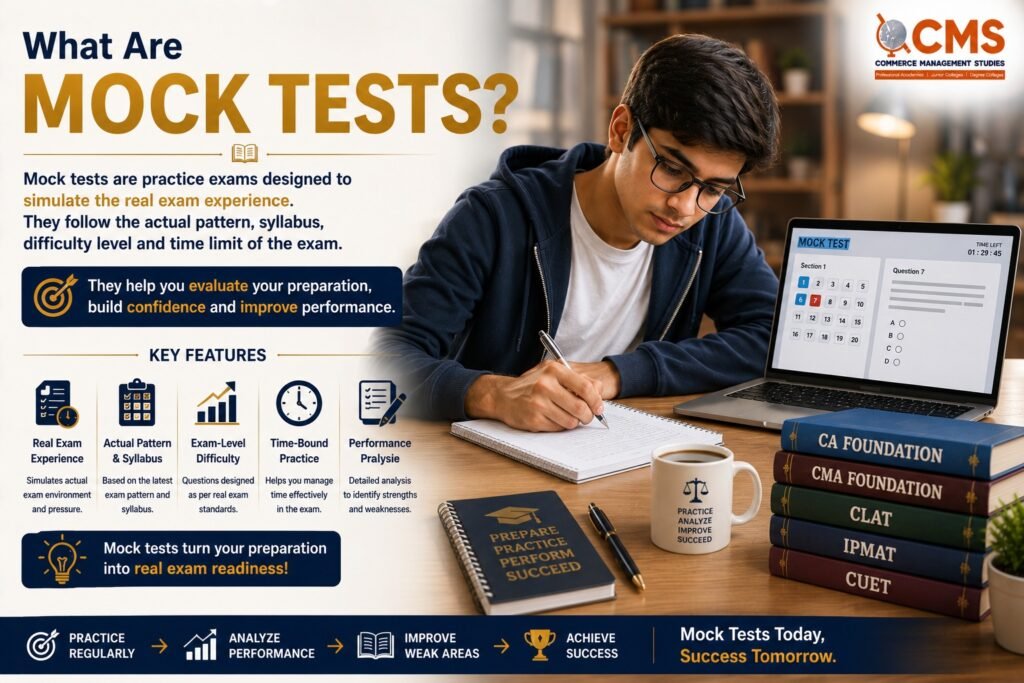
Mock tests are practice examinations designed to closely resemble the actual competitive exam in terms of syllabus, question pattern, difficulty level, marking scheme, and time duration. They simulate real examination conditions, allowing students to experience the pressure of completing an exam within a fixed time while maintaining accuracy. By attempting mock tests regularly, students become familiar with the examination format, reducing uncertainty and increasing confidence.
Unlike regular classroom assignments or chapter-wise practice questions, mock tests evaluate a student’s overall preparation. They require candidates to apply concepts from multiple topics simultaneously, just as they would in the actual examination. This comprehensive assessment helps students understand how well they can perform when faced with a complete question paper rather than isolated topics.
Helps Students Understand the Actual Exam Pattern
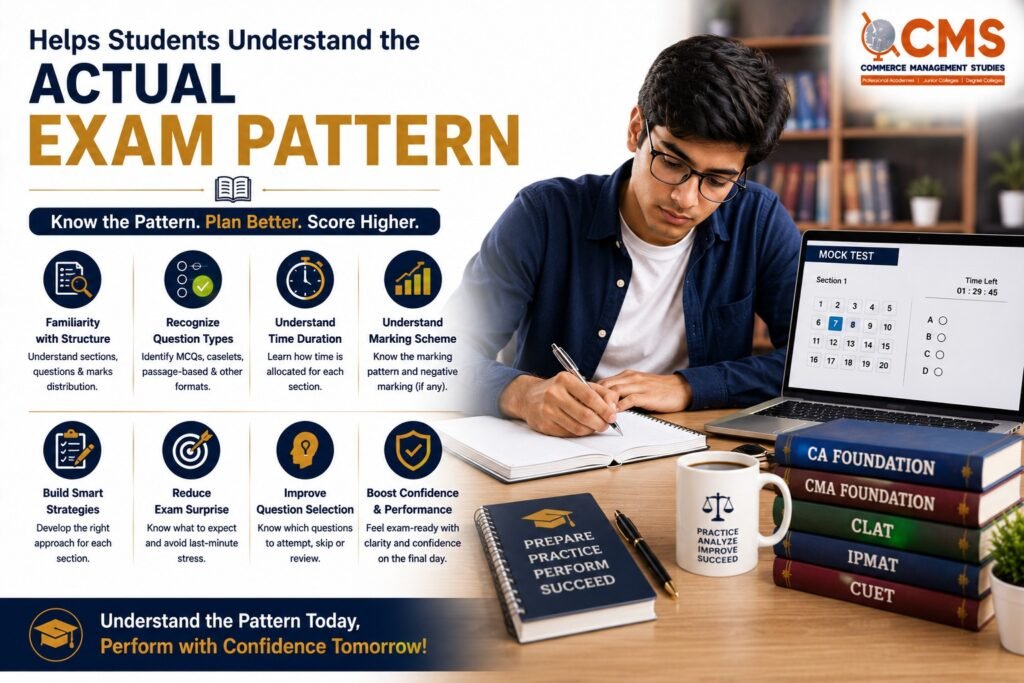
One of the greatest advantages of taking mock tests is that they familiarize students with the structure of the examination. Every competitive exam follows a specific pattern that includes different sections, varying question types, marking schemes, and time limits. Students who regularly practice mock tests gradually become comfortable with these patterns, making the actual examination feel more familiar and less intimidating.
Repeated exposure to the exam format also helps students develop effective answering strategies. They learn which sections require more attention, which questions can be solved quickly, and how to approach difficult questions without wasting valuable time. This familiarity minimizes confusion during the final examination and allows students to focus entirely on answering questions accurately.
Improves Time Management Skills
Time management is one of the most important factors that determine success in competitive examinations. Many students possess adequate knowledge but struggle to complete the paper within the allotted time because they spend too much time on difficult questions or fail to distribute their time effectively across different sections.
Regular mock tests teach students how to manage their time wisely under examination conditions. By practicing within a fixed duration, they gradually learn to balance speed and accuracy, prioritize questions, and allocate appropriate time to each section. Over time, students develop a strategy that enables them to maximize their scores while completing the examination comfortably.
Identifies Strengths and Weaknesses
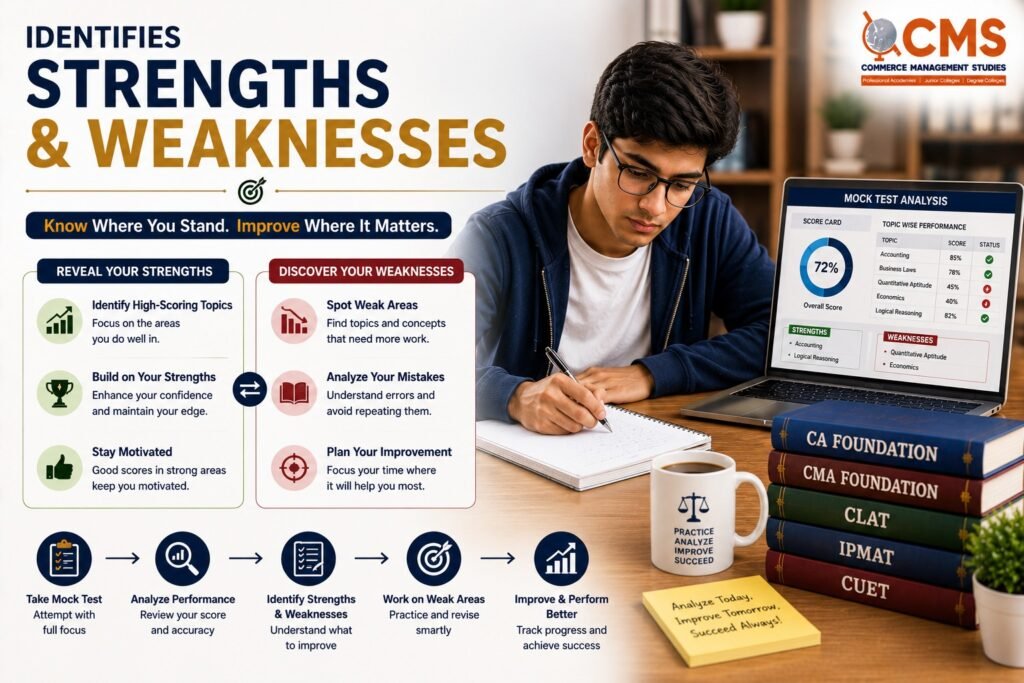
Mock tests provide valuable insights into a student’s preparation by highlighting both strong and weak areas. Instead of relying on assumptions about their performance, students receive objective feedback based on their test results. This allows them to identify topics where they consistently perform well and areas that require additional attention before the final examination.
Analyzing mock test performance also helps students recognize recurring mistakes, such as calculation errors, misunderstanding questions, or overlooking important details. Correcting these mistakes during the preparation phase significantly reduces the chances of repeating them in the actual examination. Continuous assessment and improvement make preparation more focused and productive.
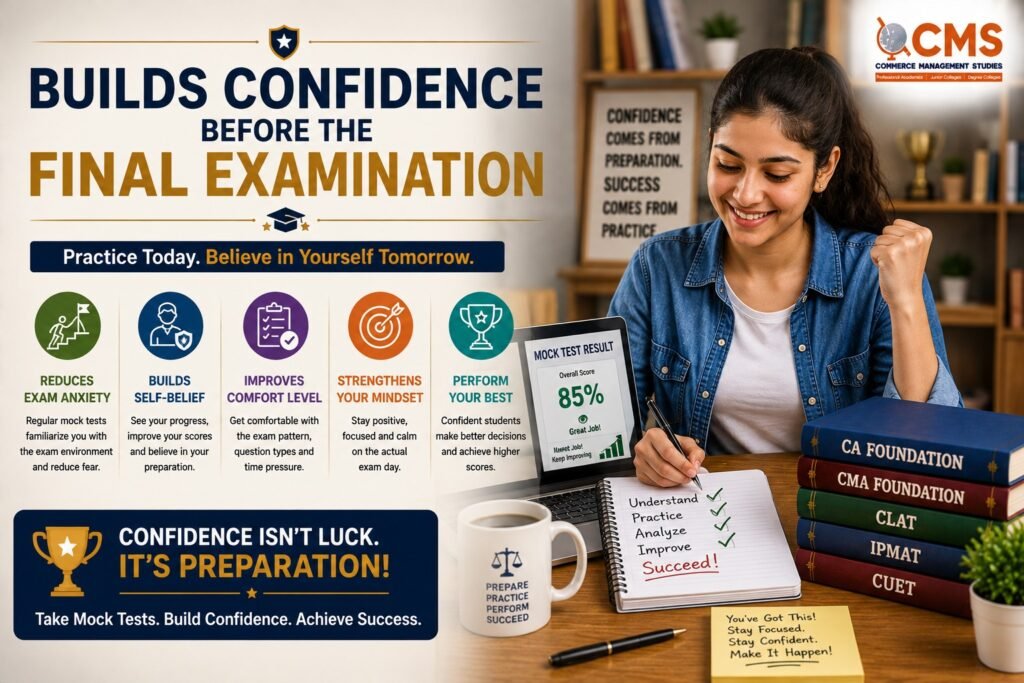
Builds Confidence Before the Final Examination
Examination anxiety is common among students preparing for competitive exams. Even well-prepared candidates may experience nervousness when facing an unfamiliar examination environment. Mock tests help reduce this anxiety by providing repeated exposure to exam-like situations, allowing students to become comfortable with the process long before the actual examination.
As students observe gradual improvements in their scores and performance, their confidence naturally increases. They gain assurance in their preparation, become more comfortable solving different types of questions, and develop a positive mindset toward the examination. This confidence often translates into better performance on the final exam day.
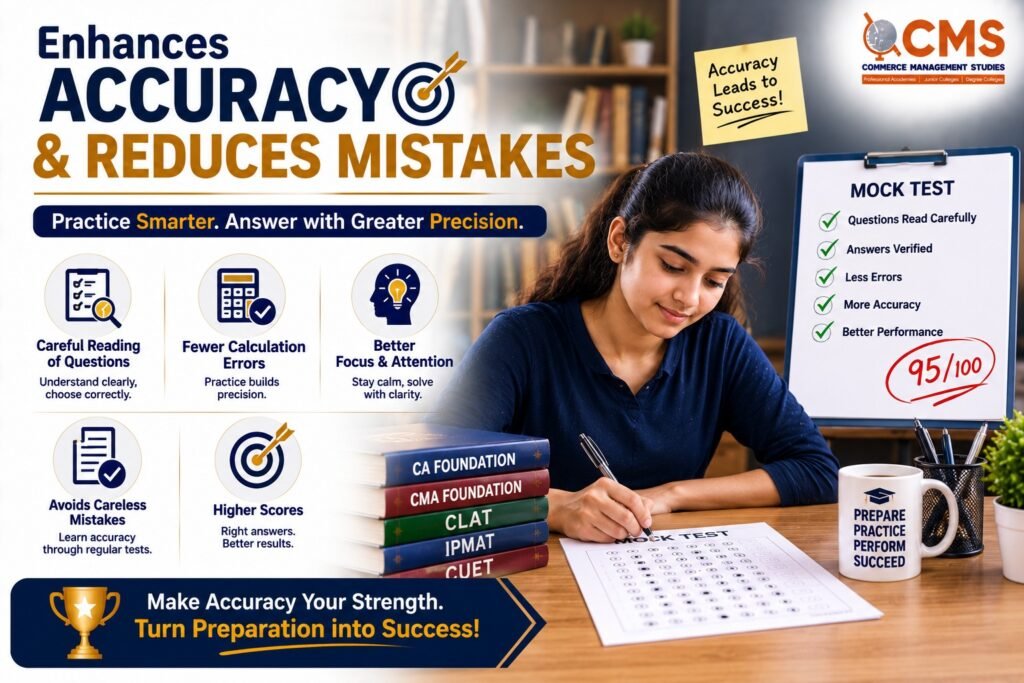
Enhances Accuracy and Reduces Mistakes
Competitive examinations reward not only knowledge but also accuracy. In many exams, incorrect answers may lead to negative marking, making careless mistakes particularly costly. Mock tests provide an excellent opportunity for students to improve their accuracy by practicing under realistic conditions and carefully reviewing their performance after each test.
Students gradually become more attentive while reading questions, verifying calculations, and selecting answers. They also learn to avoid common errors such as misinterpreting instructions, rushing through questions, or making avoidable calculation mistakes. Over time, this improvement in accuracy contributes significantly to higher examination scores.
Develops Effective Exam Strategies
Every successful student eventually develops a personalized examination strategy based on their strengths and preferences. Mock tests provide the ideal platform for experimenting with different approaches to determine what works best. Students can try various methods of attempting questions, changing section order, or managing difficult questions without any risk to their actual examination results.
Some effective strategies that students often develop through regular mock test practice include:
- Attempting easier questions first.
- Allocating fixed time for each section.
- Reviewing answers before submission.
- Avoiding excessive time on difficult questions.
- Maintaining a balance between speed and accuracy.
- Using elimination techniques for objective questions.
- Tracking performance after every mock test.
These strategies help students approach the actual examination with greater confidence and efficiency.
Encourages Consistent Revision
Mock tests naturally encourage students to revise previously learned topics because each test covers multiple chapters or the complete syllabus. Instead of focusing only on recently studied material, students regularly revisit older concepts, strengthening long-term retention and improving conceptual clarity.
This continuous revision process helps students identify topics they may have forgotten and reinforces important concepts before the examination. As the exam approaches, students who consistently take mock tests often require less last-minute revision because they have already reviewed the syllabus multiple times through practice.
Improves Decision-Making Under Pressure
Competitive examinations require students to make quick decisions while working within strict time limits. They must decide which questions to attempt first, when to skip difficult problems, and how to allocate their remaining time effectively. These decisions can significantly influence overall performance and final scores.
Mock tests help students develop this decision-making ability by repeatedly exposing them to timed examination scenarios. With regular practice, students become more comfortable making strategic choices under pressure without feeling anxious or overwhelmed. This ability proves invaluable during the actual examination when every minute matters.
The Importance of Regular Performance Analysis
Taking mock tests alone is not enough; analyzing performance after each test is equally important. Reviewing incorrect answers, understanding the reasons behind mistakes, and identifying patterns in performance allow students to improve continuously. This reflective approach transforms every mock test into a valuable learning experience rather than simply another practice session.
Students preparing for competitive examinations often benefit from structured academic guidance that combines regular mock tests with detailed performance analysis. At CMS, as a part of our CA Coaching in Hyderabad and other programs, mock tests are designed not only to assess students’ knowledge but also to help them understand their strengths, improve weaker areas, and develop effective examination strategies through continuous evaluation and expert feedback.
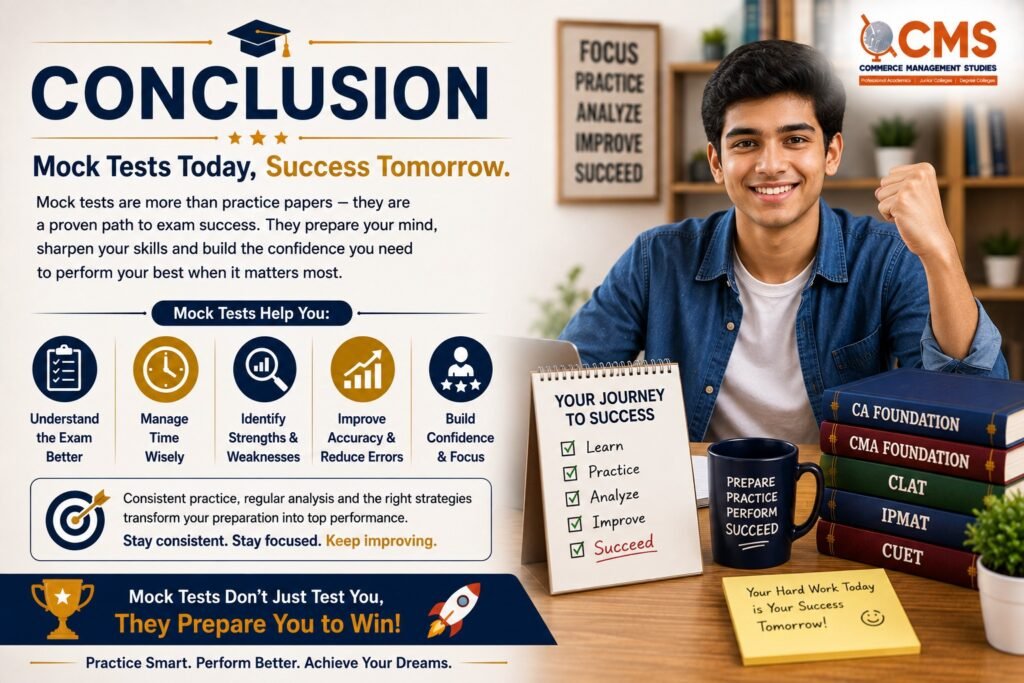
Conclusion
Mock tests are much more than practice examinations—they are powerful learning tools that help students transform their preparation into examination success. By simulating real exam conditions, improving time management, building confidence, enhancing accuracy, identifying weaknesses, and encouraging consistent revision, mock tests prepare students both academically and mentally for competitive examinations. They provide valuable insights that enable students to refine their preparation and approach the final examination with greater confidence.
Regardless of the competitive exam a student is preparing for, incorporating regular mock tests into the study plan can make a significant difference in overall performance. Combined with conceptual learning, disciplined revision, and continuous self-assessment, mock tests help students maximize their potential and perform to the best of their abilities when it matters most. Consistent practice, careful analysis, and a positive mindset remain the foundation of success in every competitive examination.