
Introduction
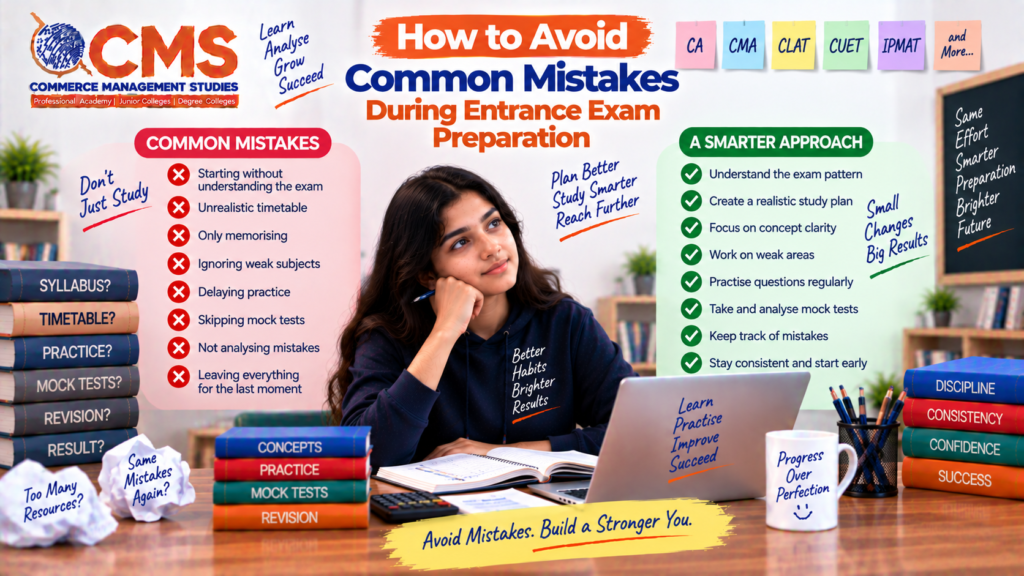
Preparing for an entrance examination requires more than completing a syllabus. Students also need to manage their time, practise questions, revise regularly, understand the examination pattern, and learn how to perform under time constraints. Whether a student is preparing for examinations related to CA, CMA, CLAT, CUET, IPMAT, or another competitive pathway, the preparation process can become challenging when study habits are not planned carefully.
Many preparation mistakes are not related to a lack of ability. They can happen because students use ineffective study methods, postpone revision, rely on too many resources, avoid practice tests, or create unrealistic schedules. Recognising these mistakes early can help students make their preparation more organised and use their available time more effectively.
Mistake 1: Starting Without Understanding the Exam
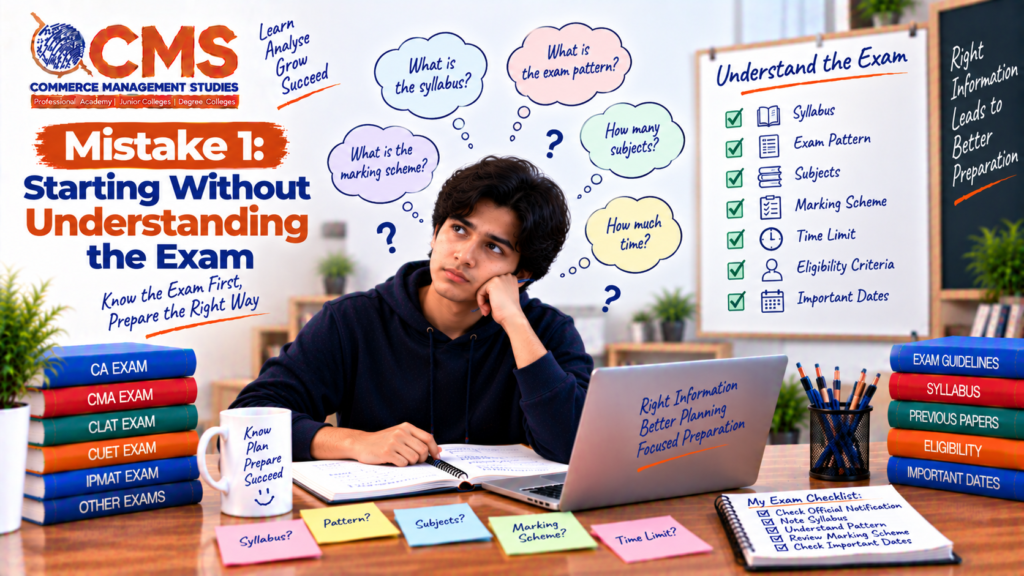
One of the first mistakes students can make is beginning preparation without understanding what the examination actually requires. Different entrance examinations can have different subjects, question formats, eligibility conditions, marking schemes, and time limits.
Before starting serious preparation, students should review the official examination information and understand the syllabus and structure. Knowing what needs to be prepared allows students to divide their time appropriately instead of spending excessive effort on topics that may have limited relevance to the examination.
Mistake 2: Creating an Unrealistic Timetable
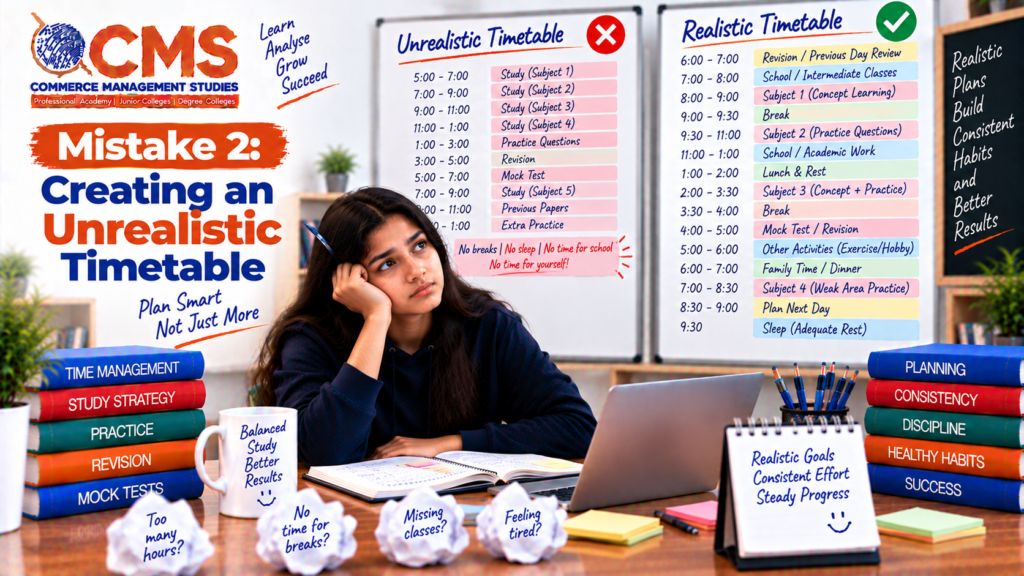
Students often create highly ambitious schedules when they begin preparing. A timetable may allocate many hours to studying every day without considering school or Intermediate classes, assignments, travel, breaks, sleep, and other responsibilities.
Such schedules can be difficult to maintain for long periods. A more useful approach is to create a realistic routine that can be followed consistently. Students can begin with achievable study blocks and gradually increase their preparation time when they become comfortable with the routine.
Mistake 3: Focusing Only on Long Study Hours
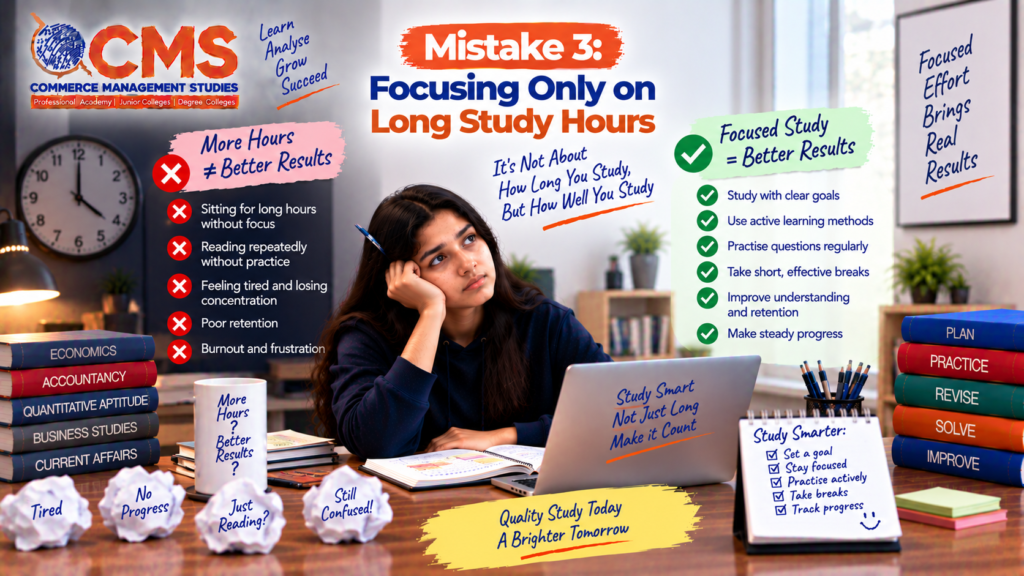
The number of hours spent studying does not always reflect the quality of preparation. A student may spend several hours reading without actively recalling information or solving questions, while another student may accomplish more through shorter but focused sessions.
Effective preparation involves deciding what needs to be learned during each study period. Students can combine concept learning, question practice, revision, and testing rather than measuring progress only by the number of hours spent at a desk.
Mistake 4: Relying Only on Memorisation
Memorising information can be useful for certain portions of an examination, but many competitive and professional examinations require students to understand and apply concepts. Simply remembering a formula, definition, or rule may not be enough when a question presents the concept in an unfamiliar form.
Students should therefore try to understand the reasoning behind what they study. After learning a concept, they can practise different types of questions to check whether they can apply it in different situations. This can help develop deeper understanding rather than short-term recall.
Mistake 5: Ignoring Weak Subjects
Students naturally prefer studying subjects or topics that they find comfortable. While maintaining strengths is important, spending most of the preparation time on familiar areas can leave weaknesses unresolved.
Students can identify weaker areas through practice questions, tests, and self-assessment. Once these areas are identified, they can be divided into smaller topics and addressed systematically. Regular attention to weak areas can prevent them from becoming a major problem closer to the examination.
Mistake 6: Using Too Many Study Resources
The internet provides access to textbooks, videos, notes, question banks, online classes, test series, and other educational resources. While having access to multiple resources can be useful, using too many at the same time can create confusion.
Students may repeatedly switch between different explanations without completing any one source properly. It is generally more productive to select reliable primary resources and use additional materials only when a particular concept requires further clarification.
Mistake 7: Delaying Question Practice
Some students spend a large part of their preparation reading concepts and postpone question-solving until they believe the syllabus is complete. This can make it difficult to identify gaps in understanding early.
Question practice should begin soon after learning a topic. It helps students determine whether they can apply the concept and reveals mistakes while there is still enough time to correct them. Regular practice also makes students more familiar with different question patterns.
Mistake 8: Avoiding Mock Tests
Mock tests can sometimes feel uncomfortable, especially when students are not fully prepared. As a result, some students avoid them until the final stage.
However, mock tests can provide useful information about preparation. They can reveal problems with time management, question selection, accuracy, concentration, and application of concepts. Students do not need to wait until they are completely confident before beginning testing. The frequency and difficulty of tests can gradually increase as preparation develops.
Mistake 9: Taking Tests Without Analysing Them
Completing a mock test and checking the final score is only one part of the process. The more valuable information often comes from analysing why questions were answered incorrectly or took too much time.
After a test, students can identify whether mistakes occurred because of a conceptual gap, calculation error, misunderstanding, lack of time, or careless reading. This analysis can guide subsequent revision and make future practice more targeted.
Mistake 10: Ignoring Time Management
Knowing the answer to a question is not always enough in a timed examination. Students may lose valuable time by spending too long on difficult questions or repeatedly changing answers without sufficient reason.
Timed practice can help students understand their natural pace. During mock tests, they can experiment with different approaches to section order, question selection, and time allocation. Reviewing the results afterward can help them develop a more practical examination strategy.
Mistake 11: Neglecting Revision
Students sometimes focus heavily on completing new topics and leave revision until the final weeks. This can result in forgetting material that was studied earlier.
Revision should be incorporated into the preparation schedule from the beginning. Short periodic reviews can help students retain important concepts and identify areas that need additional practice. As the examination approaches, revision can gradually become more comprehensive.
Mistake 12: Not Keeping Track of Mistakes
Repeatedly making the same mistake can indicate that a student has not identified the underlying problem. A simple error log can help students recognise patterns in their performance.
Students can record the topic, question type, mistake made, correct approach, and reason for the error. Reviewing this record regularly can turn mistakes into learning opportunities and help students focus their revision on areas that genuinely require attention.
Mistake 13: Ignoring the Official Exam Information
Students sometimes rely on old preparation material or information shared by others without checking the current official examination details. Examination patterns, dates, eligibility conditions, syllabi, and other requirements can change.
Students should therefore refer to the official website or official notification of the relevant examination for current information. This is particularly important when planning preparation around eligibility requirements, application deadlines, examination structure, or changes in the syllabus.
Mistake 14: Comparing Preparation With Other Students
Every student begins preparation with different levels of subject knowledge, study habits, and available time. Comparing the number of hours studied or the scores achieved by different students can create unnecessary pressure.
A more useful approach is to track individual progress. Students can compare their current performance with their previous test results and identify whether their accuracy, speed, understanding, and consistency are improving. Personal progress provides more meaningful information than comparing preparation schedules with others.
Mistake 15: Neglecting Current Affairs Where Required
For examinations that include current affairs or general awareness components, students may postpone preparation until shortly before the examination. This can create a large amount of information to cover at once.
A better approach is to develop a regular habit of following reliable news sources and reviewing important developments over time. For examinations such as CLAT, where current affairs can form part of preparation, consistent reading and revision can make the process more manageable.
Mistake 16: Ignoring Reading and Comprehension Skills
Students sometimes focus heavily on numerical or subject-specific preparation while overlooking reading ability. However, many entrance examinations involve passages, instructions, analytical questions, or lengthy problem statements.
Regular reading can help students become more comfortable with unfamiliar topics and complex sentences. Summarising what they read, identifying the main idea, and learning vocabulary through context can gradually strengthen comprehension and support preparation for language-based sections.
Mistake 17: Studying Without Taking Breaks
Long, uninterrupted study sessions can make concentration difficult. Students may continue studying simply because their timetable says they should, even when their attention has significantly declined.
Short breaks between focused study sessions can help students return to their work with better concentration. A healthy routine should also include adequate sleep, regular meals, physical activity, and sufficient rest. Sustainable preparation is generally easier to maintain than an extreme routine.
Mistake 18: Neglecting School or Intermediate Academics
Students preparing for entrance examinations alongside Intermediate studies may sometimes focus so heavily on competitive preparation that they overlook their regular academic responsibilities.
A balanced approach is important because Intermediate subjects can also provide useful foundations for professional and entrance pathways. Students can create a schedule that gives appropriate time to academic coursework while adding focused preparation for examinations such as CA, CMA, CLAT, CUET, or IPMAT.
Mistake 19: Changing the Study Strategy Too Frequently
After receiving a low test score, students may immediately change their books, teachers, timetable, or preparation method. Constantly changing strategies can prevent them from developing consistency.
Instead, students should first analyse why the score was low. If the issue is conceptual understanding, they may need more revision. If the problem is speed, timed practice may help. If the issue is careless mistakes, they may need a more careful checking strategy. Changes should be based on evidence rather than a single disappointing result.
Mistake 20: Leaving Everything Until the Final Stage
Perhaps one of the most common preparation problems is postponing difficult topics, revision, mock tests, and application-based practice until the final weeks. This can create unnecessary pressure and leave little time to address weaknesses.
A better approach is to divide preparation into stages. Students can first build conceptual understanding, then strengthen it through practice, followed by revision and progressively more comprehensive testing. This creates a gradual preparation cycle rather than a last-minute rush.
Creating a Better Preparation Routine
Avoiding common mistakes becomes easier when students have a clear structure for their preparation. A practical routine can include learning new concepts, practising questions, revising previous topics, taking periodic tests, and analysing performance.
Students can also review their progress every week. They can identify what was completed, what remains unfinished, which areas are improving, and where additional time is required. This allows the study plan to evolve according to actual performance rather than remaining fixed throughout the preparation period.
Using Different Strategies for Different Exams
Although many preparation principles are common, each examination requires its own approach. CA and CMA preparation may involve strong conceptual and numerical foundations, while CLAT requires attention to areas such as reading comprehension, legal reasoning, logical reasoning, and current affairs. CUET preparation can vary according to the selected subjects and university requirements, while IPMAT preparation can involve quantitative ability, verbal ability, and other aptitude components depending on the examination.
Students should therefore avoid using one identical strategy for every examination. The basic habits of planning, practice, revision, and testing can remain consistent, but the specific preparation methods should reflect the requirements of the examination being attempted.
For students preparing for professional and entrance examinations alongside Intermediate studies, a structured learning environment can help bring different aspects of preparation together. CMS offers MEC, CEC and ACE programmes with integrated preparation for pathways such as CA, CMA, CLAT, CUET, and IPMAT Coaching in Hyderabad, allowing students to continue their Intermediate education while developing relevant subject knowledge and examination skills. A planned approach combining classroom learning, regular practice, revision, assessments, and guidance can help students manage their academic and entrance-exam preparation in a more organised manner.
Conclusion
Entrance exam preparation becomes more manageable when students recognise that success depends not only on studying the syllabus but also on how they study. Unrealistic schedules, excessive reliance on memorisation, avoiding weak areas, using too many resources, delaying practice, and neglecting mock-test analysis can all make preparation less effective.
A structured approach can help students avoid these problems. Understanding the examination, creating realistic goals, practising regularly, revising consistently, analysing mistakes, and maintaining a healthy routine can make preparation more organised. Whether the goal is CA, CMA, CLAT, CUET, IPMAT, or another entrance pathway, developing effective study habits early can help students approach their preparation with greater clarity and consistency.