
Introduction
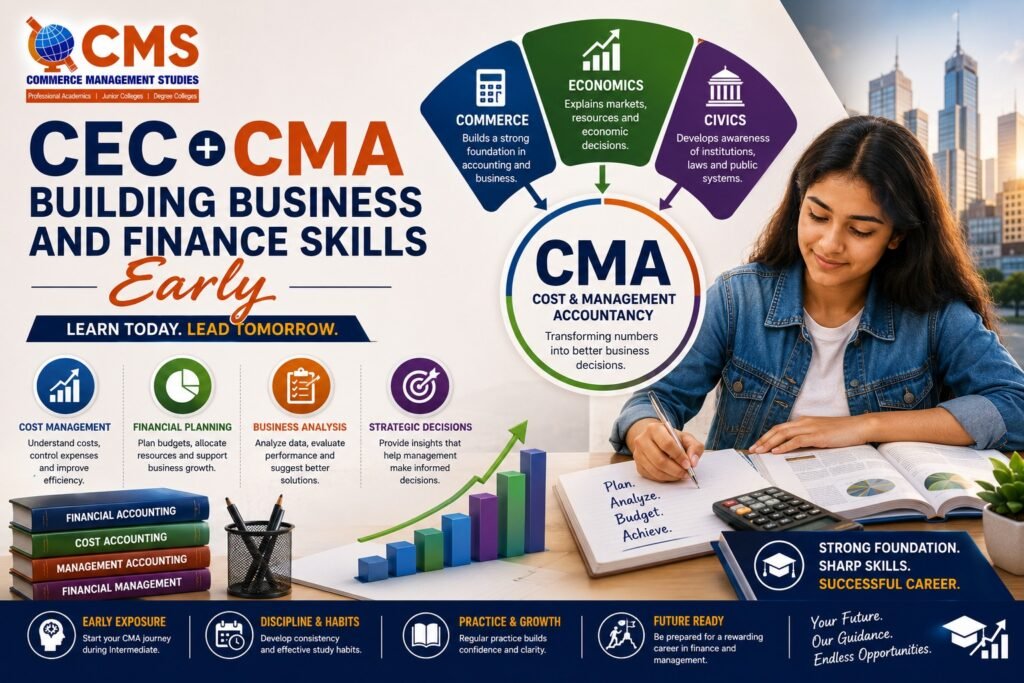
Choosing the right Intermediate stream can give students a valuable foundation for their future professional education. CEC, which combines Civics, Economics, and Commerce, is a suitable option for students who are interested in business, accounting, economics, finance, and related career fields. The combination introduces students to commercial concepts while also helping them understand economic systems and the role of institutions in society. For students considering Cost and Management Accountancy (CMA), these subjects can provide useful knowledge to build upon.
CMA is a professional qualification that focuses on areas such as cost management, management accounting, budgeting, financial planning, performance analysis, and business decision-making. Since these areas involve understanding both financial information and how businesses operate, developing business and finance awareness during Intermediate can be beneficial. CEC + CMA can therefore allow students to gradually build relevant academic and analytical skills before entering advanced professional education.
Understanding the CEC Stream
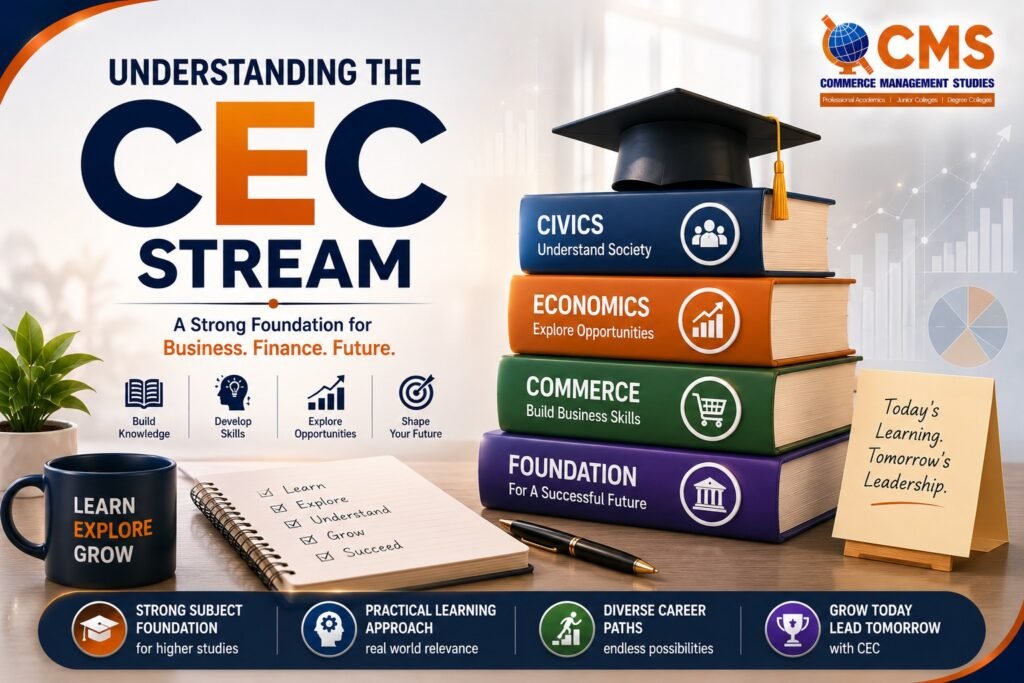
CEC stands for Civics, Economics, and Commerce. Each subject provides students with a different perspective that can contribute to a broader understanding of business and society. Commerce introduces students to accounting and business fundamentals, Economics explains how markets and resources function, while Civics helps students understand government institutions, public systems, and the relationship between citizens and governance.
This combination can be useful for students who want to pursue careers that involve business, finance, management, accounting, or economics. Rather than focusing on one area alone, CEC exposes students to several interconnected subjects. This can encourage them to understand how financial decisions, economic conditions, business activities, and government policies can influence one another.
What is CMA?
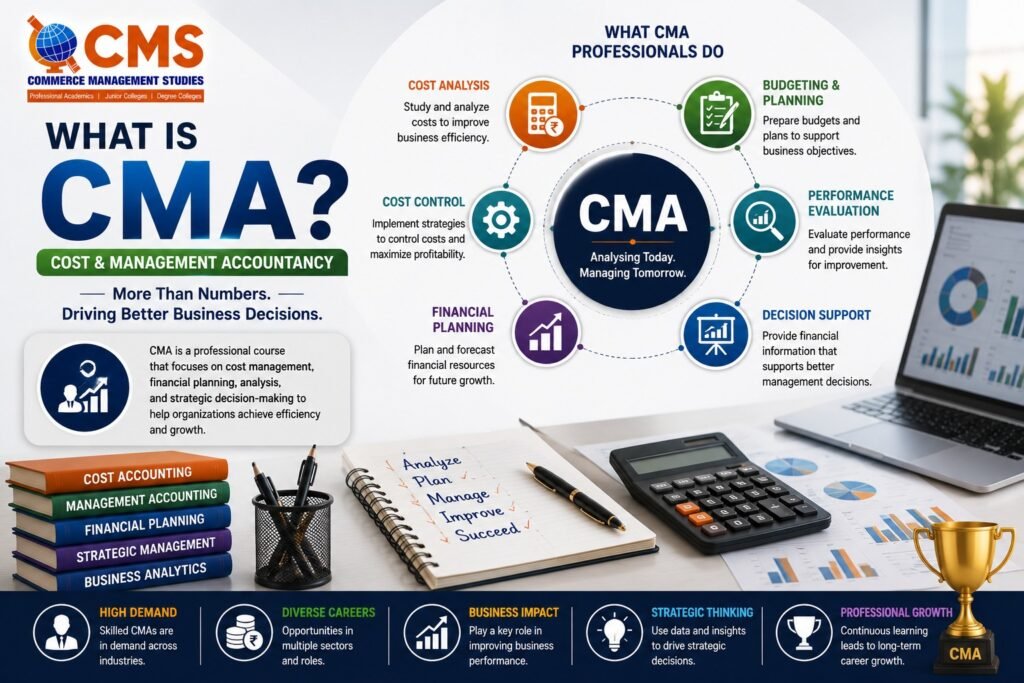
Cost and Management Accountancy is a professional field that focuses on using financial and cost information to support business decisions. Cost and Management Accountants analyze expenses, prepare budgets, evaluate performance, assist with financial planning, and help organizations make informed decisions about the use of resources.
The profession goes beyond recording financial transactions. A CMA may study why costs are increasing, evaluate the financial impact of a business decision, compare different alternatives, and provide management with information that can support better planning. This combination of accounting knowledge and business analysis makes CMA an interesting pathway for students who want to understand the financial side of organizational decision-making.
How Commerce Builds a Foundation for CMA
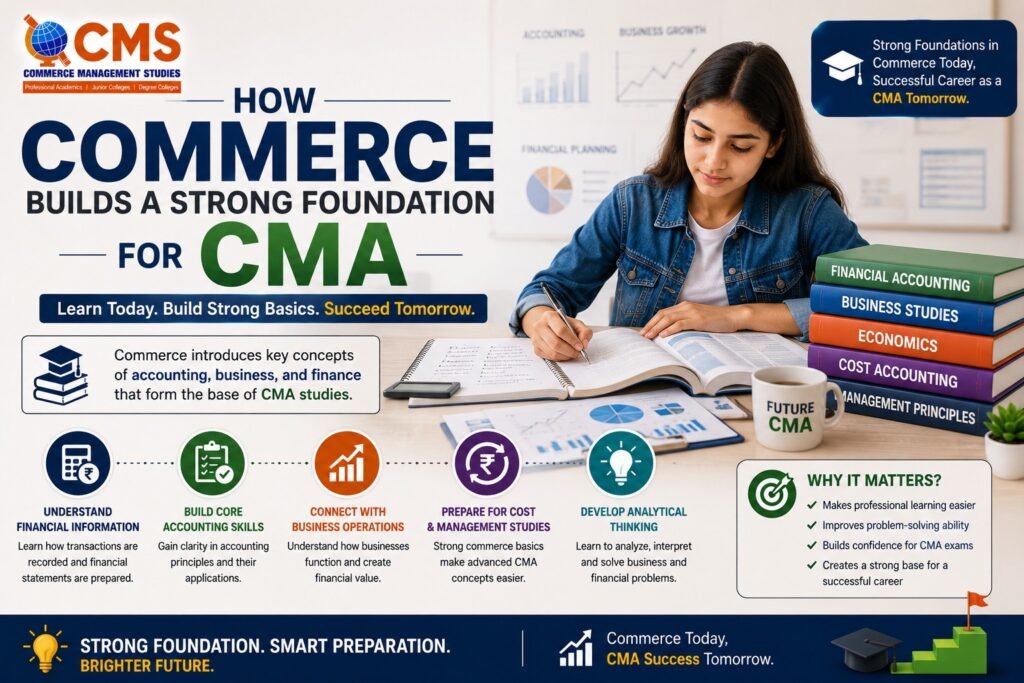
Commerce provides students with an introduction to accounting and business concepts that can become useful during professional studies. Students learn about transactions, accounting principles, financial statements, business activities, and other fundamental concepts that help explain how organizations record and manage financial information.
For future CMA students, understanding these fundamentals can make it easier to approach advanced concepts later. Cost and management accounting requires students to understand financial information and analyze how costs are generated and managed. Building a strong foundation in Commerce during Intermediate can therefore help students develop familiarity with the terminology and concepts used in professional education.
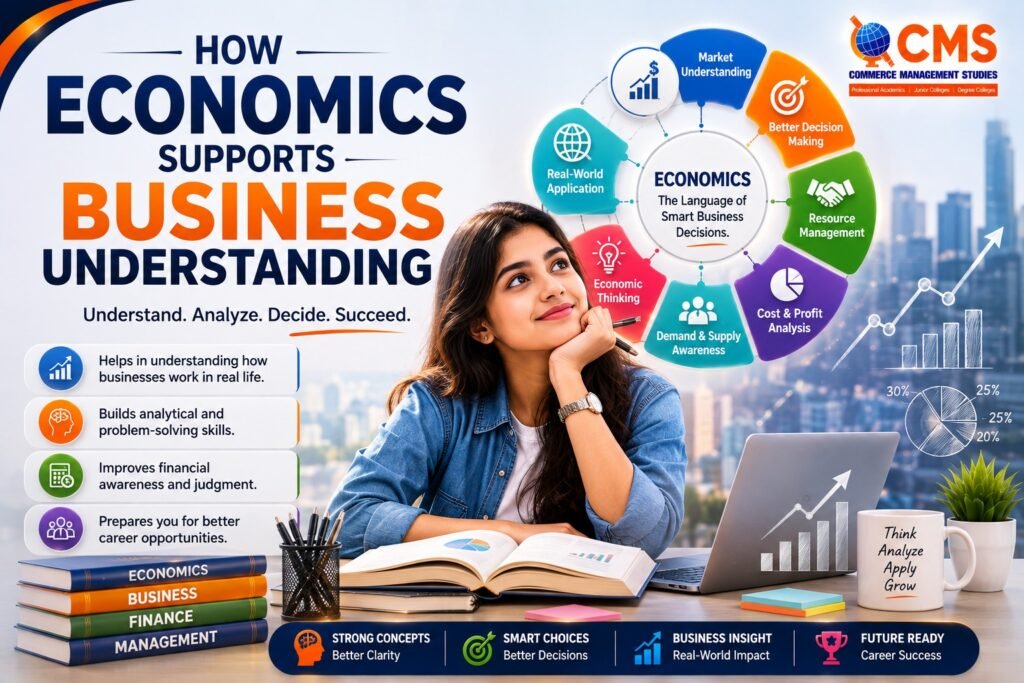
How Economics Supports Business Understanding
Economics helps students understand how businesses operate within larger markets and economic systems. Concepts such as demand and supply, production, inflation, market structures, economic growth, and resource allocation provide students with an understanding of the factors that influence business decisions.
This knowledge can be useful for future CMAs because cost and financial decisions are affected by economic conditions. Changes in input prices, consumer demand, inflation, interest rates, and government policies can influence the cost of running a business. Understanding these factors allows students to view financial information in a broader context rather than considering individual figures in isolation.
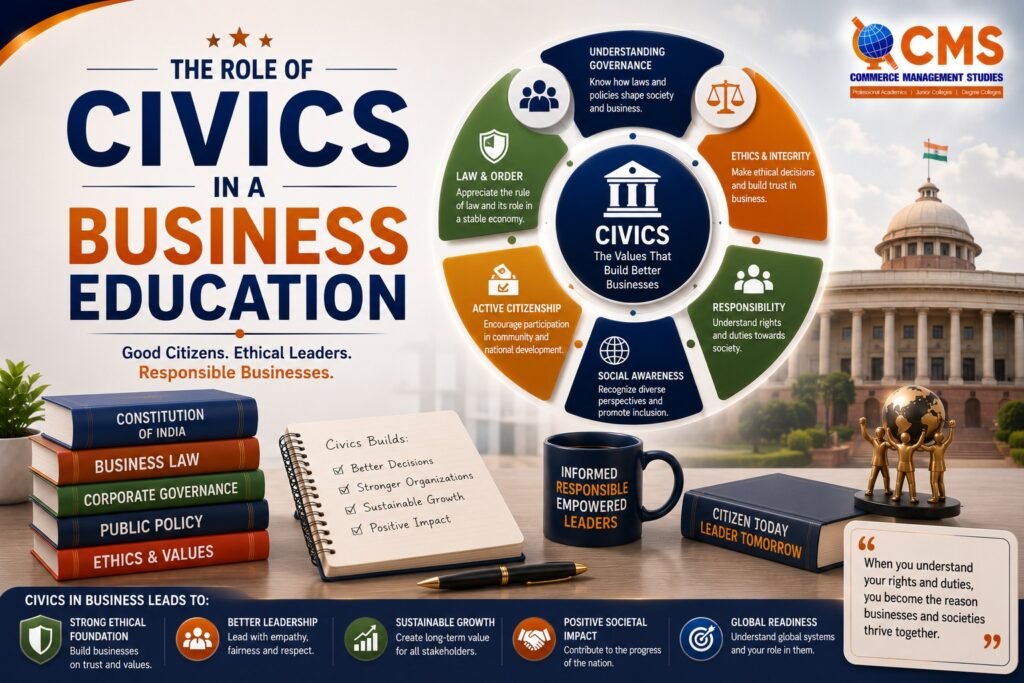
The Role of Civics in a Business Education
Civics provides students with knowledge about government institutions, public administration, laws, and the functioning of society. Although it is not directly focused on accounting or cost management, it can help students understand the environment in which businesses operate.
Government policies, regulations, taxation systems, and economic decisions can have a significant influence on organizations. Developing awareness of how institutions function can therefore complement the business and financial knowledge students gain through Commerce and Economics. It can also encourage students to think about how businesses interact with government and society.
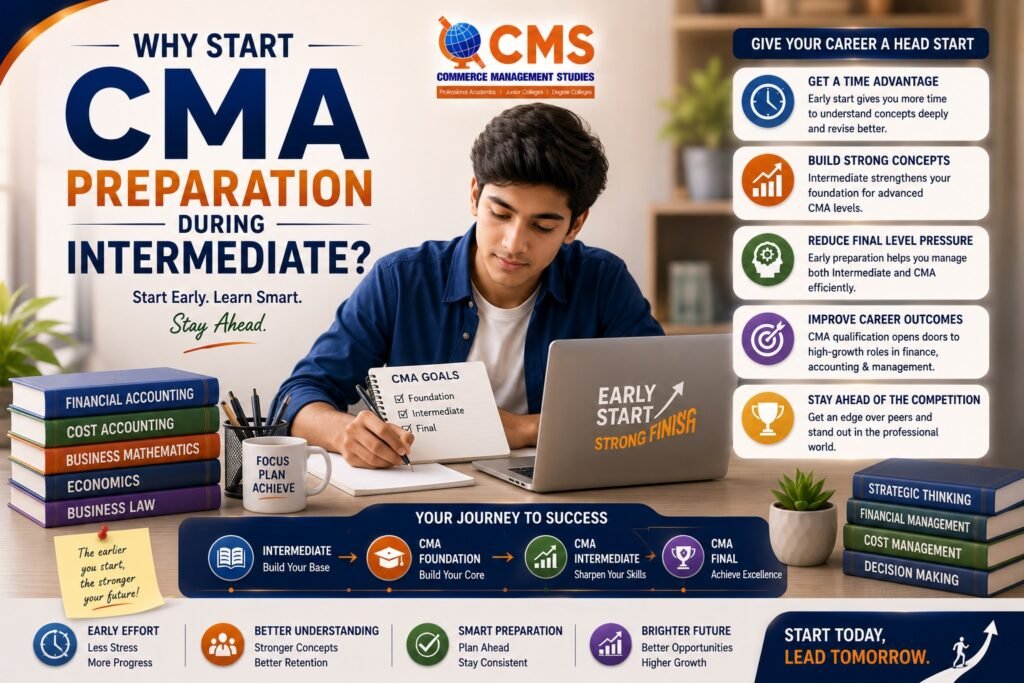
Why Start CMA Preparation During Intermediate?
Beginning to explore CMA during Intermediate can help students understand the professional pathway before they reach the advanced stages of their education. Early preparation can involve strengthening Commerce fundamentals, improving numerical and analytical skills, developing study discipline, and becoming familiar with the areas covered in professional education.
Starting early also gives students more time to understand whether the profession genuinely interests them. Instead of making a decision based only on general perceptions, students can explore subjects such as cost management, financial planning, budgeting, and business analysis and determine whether these areas match their interests and career goals.
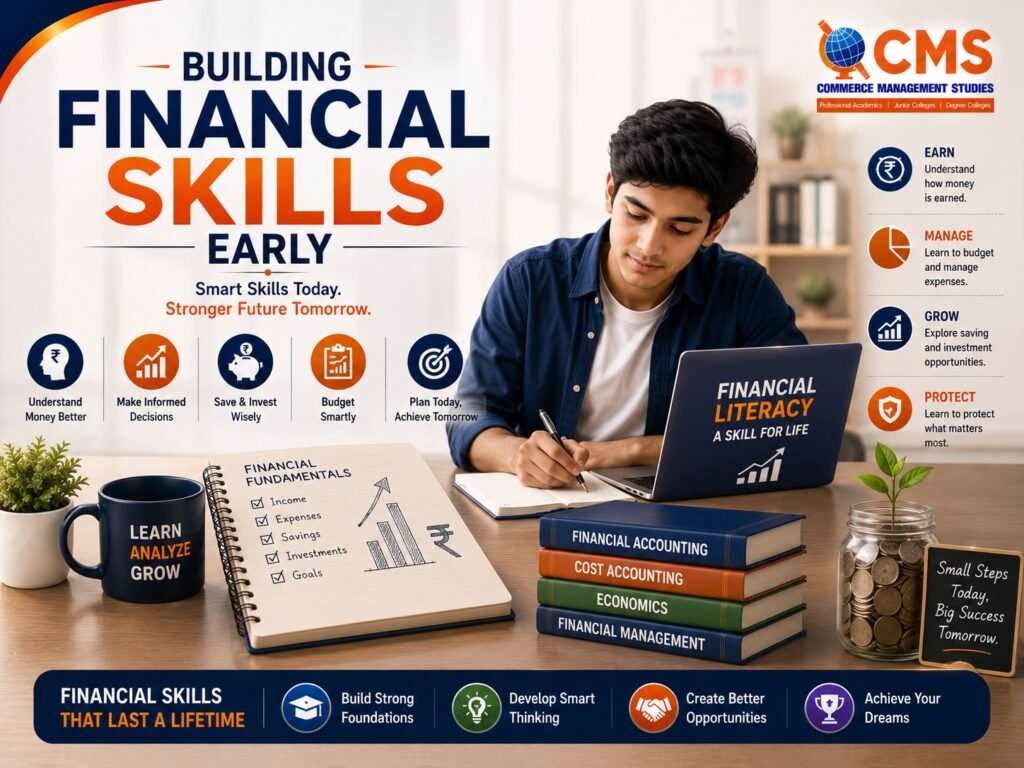
Building Financial Skills Early
Financial understanding is useful across almost every modern business environment. Students who develop financial awareness early can learn to interpret numbers, understand costs, recognize the relationship between revenue and expenditure, and appreciate how financial decisions affect an organization’s performance.
CEC can provide opportunities to develop this awareness through Commerce and Economics. Students can strengthen their understanding by connecting classroom concepts with real-world examples, such as how businesses determine prices, manage expenses, respond to changing markets, and plan their financial resources. These habits can help build a stronger foundation for future professional studies.
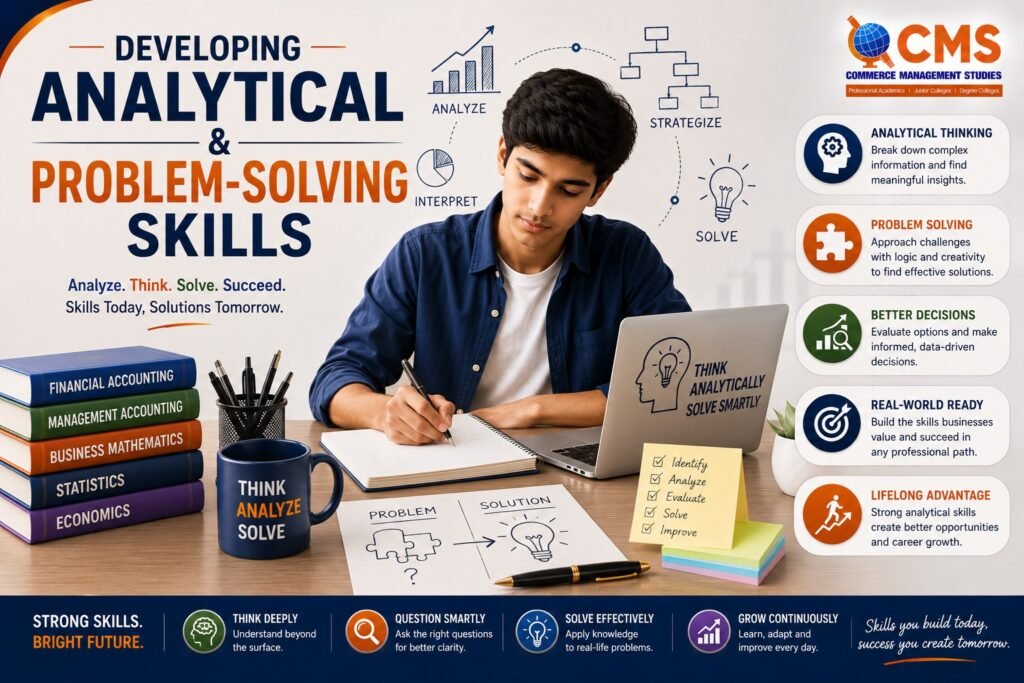
Developing Analytical and Problem-Solving Skills
CMA involves analyzing financial information and using it to support decisions. Students therefore need to develop the ability to examine information, identify patterns, compare alternatives, and reach logical conclusions. These skills can be developed gradually during Intermediate through academic study and regular practice.
Students can improve their analytical ability by solving numerical problems, interpreting economic information, studying business situations, and reviewing their mistakes. Instead of simply memorizing information, they can focus on understanding why a particular result occurs and how different factors are connected. This approach can be useful throughout professional education.
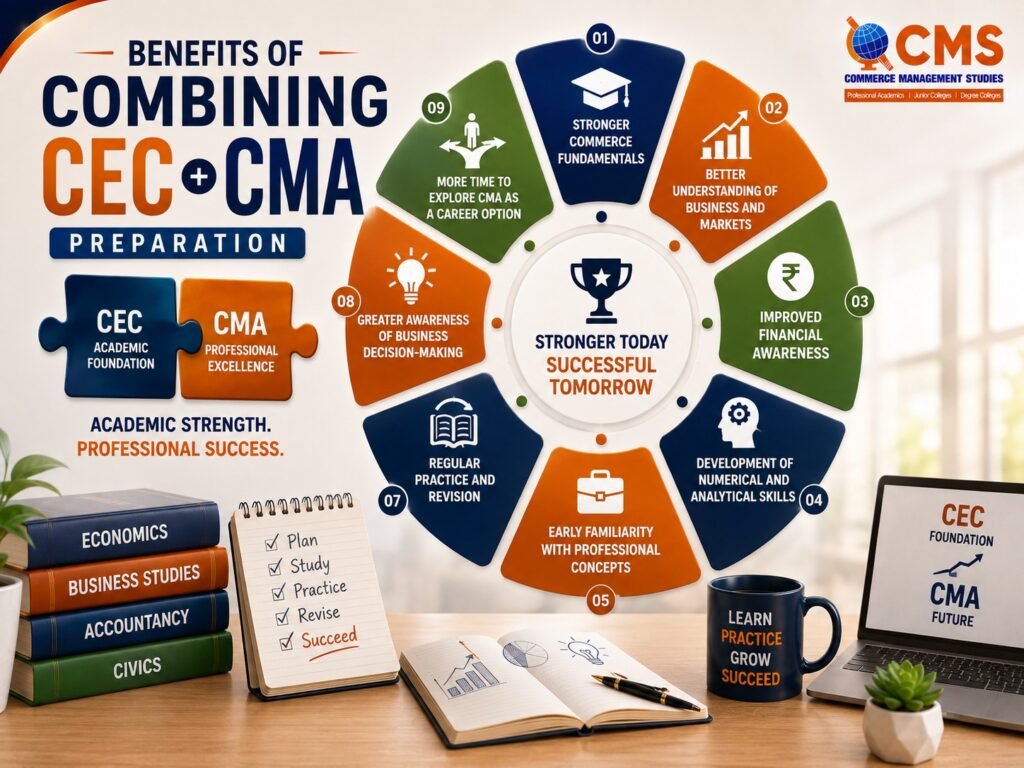
Benefits of Combining CEC with CMA Preparation
CEC and CMA preparation can complement each other by bringing academic and professional learning together. Students can use their Intermediate subjects as a foundation while gradually developing the skills required for professional studies.
Some potential benefits include:
- Stronger Commerce fundamentals
- Better understanding of business and markets
- Improved financial awareness
- Development of numerical and analytical skills
- Early familiarity with professional concepts
- Better time-management habits
- Regular practice and revision
- Greater awareness of business decision-making
- More time to explore CMA as a career option
The benefits ultimately depend on consistent effort and how effectively students balance their academic and professional preparation.

Career Opportunities After CMA
CMA professionals can work in a variety of industries because organizations need people who understand costs, financial performance, budgeting, and resource allocation. The qualification can lead to opportunities in manufacturing, financial services, consulting, technology, healthcare, retail, infrastructure, and other sectors.
Possible career areas include:
- Cost accounting
- Management accounting
- Financial planning and analysis
- Budgeting and forecasting
- Cost control
- Business analysis
- Performance management
- Strategic financial planning
- Financial consulting
- Management decision support
The career direction can depend on an individual’s interests, experience, specialization, and additional skills developed during their professional journey.
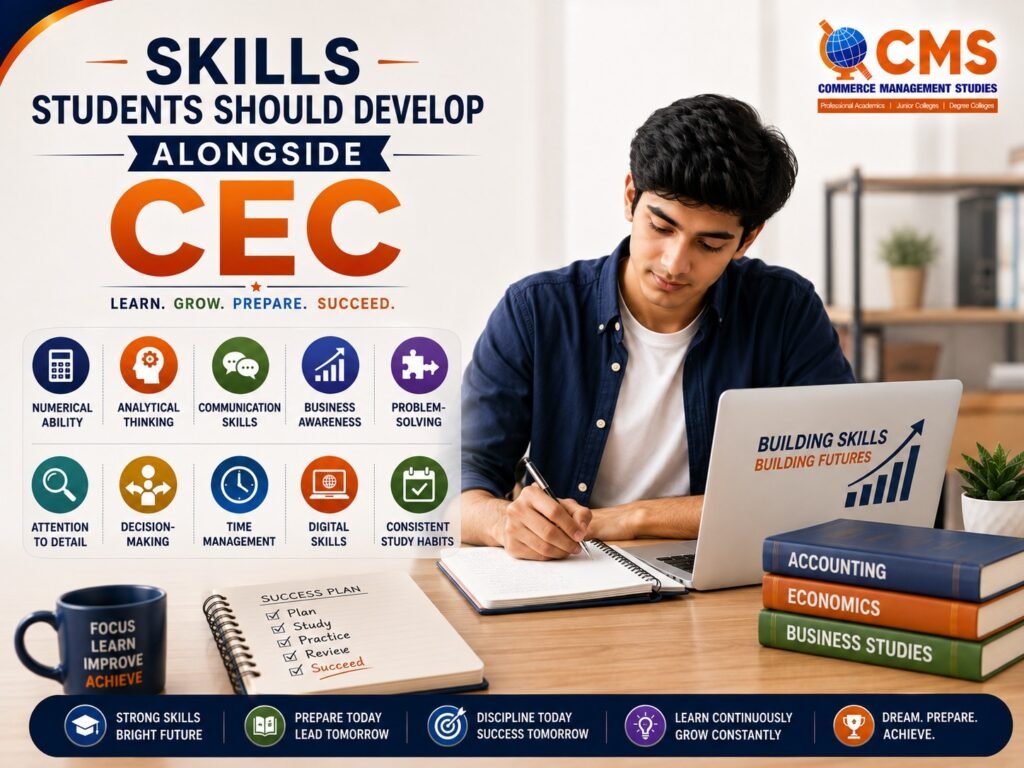
Skills Students Should Develop Alongside CEC
Academic knowledge is only one part of preparing for a professional career. Students interested in CMA can also use their Intermediate years to develop communication, analytical thinking, problem-solving, and time-management skills. These abilities can support both professional examinations and future workplace responsibilities.
Students can focus on developing:
- Numerical ability
- Analytical thinking
- Communication skills
- Business awareness
- Problem-solving
- Attention to detail
- Decision-making
- Time management
- Digital skills
- Consistent study habits
Developing these skills gradually can make students better prepared for the changing demands of finance and business careers.
Balancing Intermediate and CMA Preparation
Students preparing for CMA alongside Intermediate should maintain a balanced approach. Their regular academic studies remain important because strong fundamentals in Commerce and Economics can support their professional learning. At the same time, they can gradually introduce professional preparation through additional study, practice, assessments, and revision.
A structured timetable can help students manage these responsibilities. Dividing time between academic subjects, professional preparation, revision, practice, and rest can make the process more sustainable. The goal should be consistent progress rather than attempting to cover large amounts of material in a short period.
CEC with Integrated CMA Preparation
An integrated approach can help students connect their Intermediate education with their professional career goals. Concepts learned through Commerce and Economics can be reinforced through CMA-oriented preparation, allowing students to understand how academic knowledge is applied to financial and business situations.
At CMS CEC Coaching in Hyderabad, students can pursue CEC with integrated CMA coaching, enabling them to strengthen their Intermediate concepts while developing a foundation for their future professional qualification. Structured learning, regular assessments, and consistent practice can help students gradually build the academic and analytical skills required for CMA.
Who Should Consider CEC + CMA?
CEC + CMA can be worth considering for students who have an interest in Commerce, finance, business operations, cost management, and economic concepts. Students who enjoy understanding how businesses earn revenue, control costs, allocate resources, and make financial decisions may find CMA particularly interesting.
However, students should choose CMA based on their own interests and career aspirations rather than simply following a popular career path. Understanding the nature of the profession, exploring its subjects, and learning about potential career roles can help students decide whether CMA is the right professional qualification for them.
Conclusion
CEC + CMA can provide students with an opportunity to build business and finance skills from an early stage. Commerce introduces important accounting and business fundamentals, Economics develops an understanding of markets and economic conditions, and Civics provides broader awareness of institutions and governance. Together, these subjects can help students develop a well-rounded understanding of the environment in which businesses operate.
When combined with structured CMA preparation, CEC can become a useful foundation for students interested in cost management, financial planning, business analysis, and strategic decision-making. The journey still requires consistent preparation, conceptual clarity, analytical thinking, and discipline. By developing these skills during Intermediate, students can approach their future professional education with stronger fundamentals and a clearer understanding of their career direction.