
Introduction
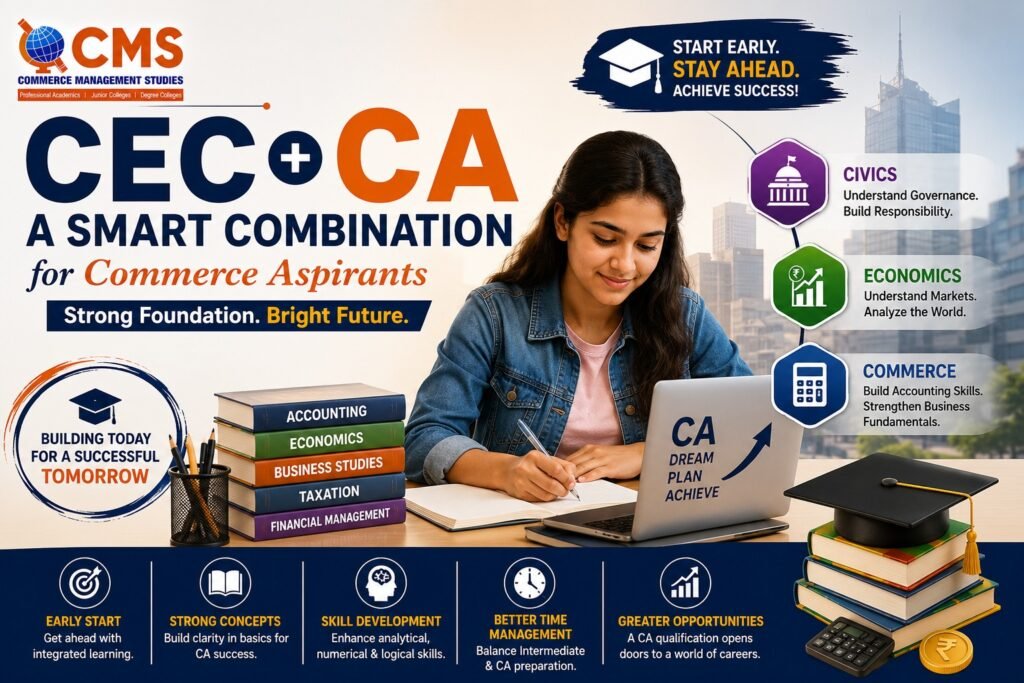
Choosing the right Intermediate stream can help students build a strong academic foundation for their future professional studies. CEC, which combines Civics, Economics, and Commerce, is an option for students who are interested in accounting, business, economics, finance, and related career fields. For students who are considering Chartered Accountancy (CA), CEC can provide valuable exposure to Commerce and Economics while also developing an understanding of business and the broader economic environment.
Combining CEC with CA preparation can help students begin developing their professional foundation during Intermediate itself. Instead of waiting until after Class 12 to become familiar with professional-level concepts, students can gradually strengthen their Commerce fundamentals, develop effective study habits, and understand how their academic subjects connect with the CA pathway. This makes CEC + CA an option worth considering for students who have an interest in accounting and finance.
Understanding the CEC Stream
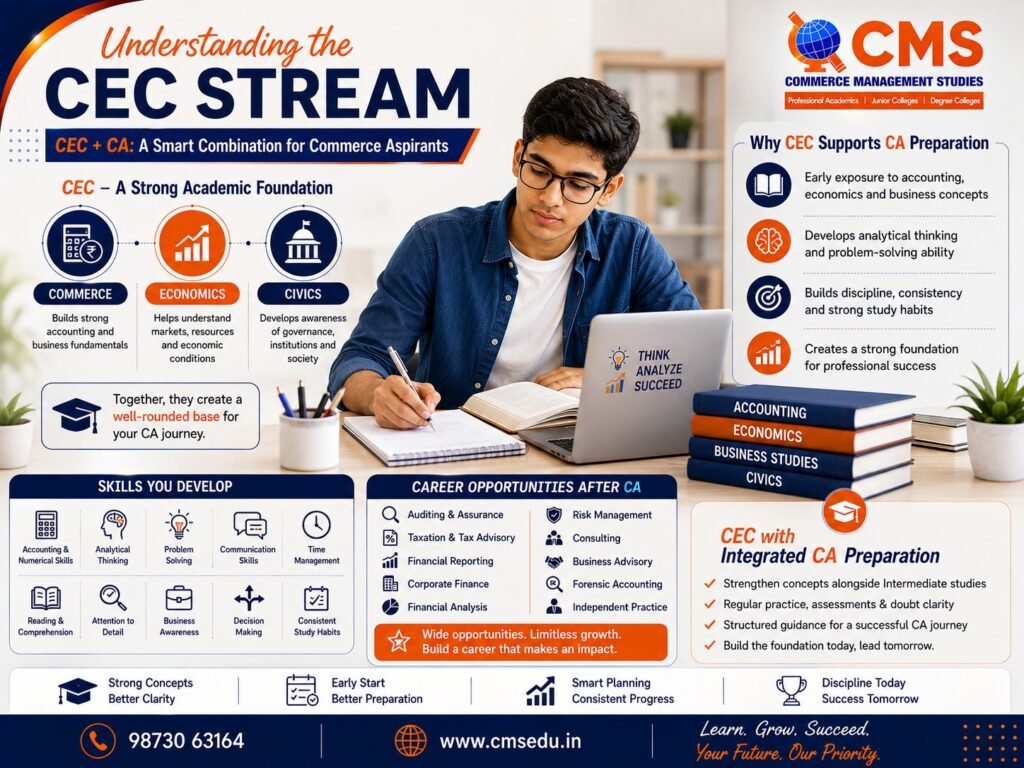
CEC stands for Civics, Economics, and Commerce. The combination gives students exposure to business and accounting concepts through Commerce, economic principles through Economics, and knowledge of government, institutions, and society through Civics. Together, these subjects provide students with a broad understanding of how businesses and economic systems operate.
For students interested in professional courses, CEC can provide a useful academic foundation. Commerce introduces students to accounting and business terminology, while Economics helps them understand markets and economic conditions. Civics can also encourage students to understand how government policies, institutions, and regulations can influence society and the business environment.
Why CEC Can Support CA Preparation
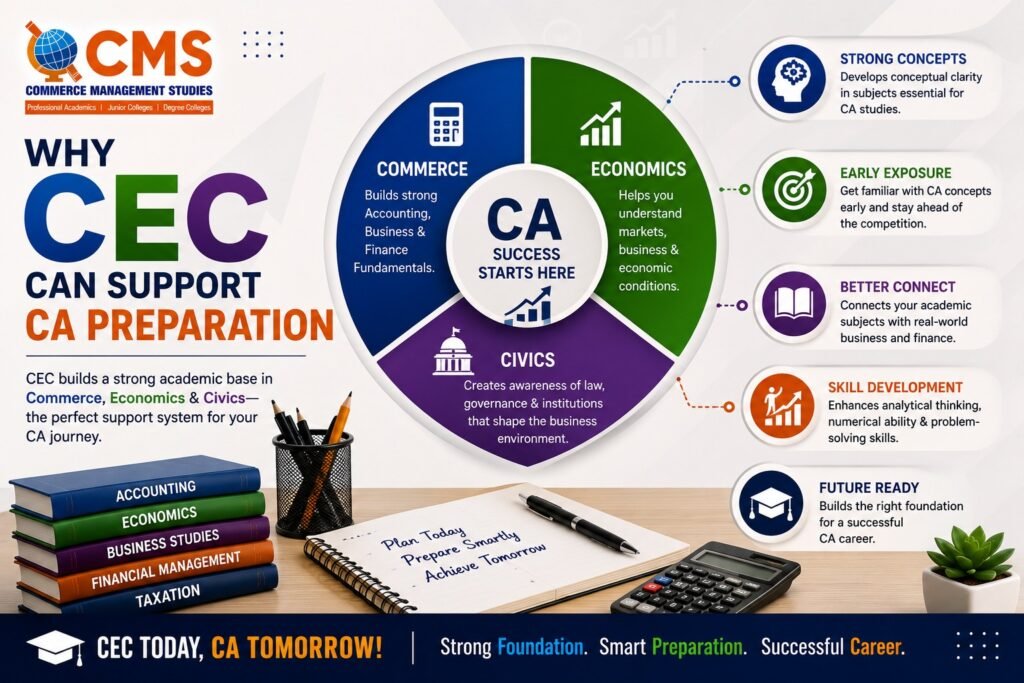
Chartered Accountancy involves areas such as accounting, taxation, auditing, financial management, and business-related laws. Commerce education gives students an early introduction to several fundamental concepts that they may encounter again at a more advanced level during their professional studies.
CEC can also help students develop an understanding of business from multiple perspectives. While Commerce focuses on financial and business fundamentals, Economics explains how markets and resources function, and Civics introduces students to governance and institutions. This broader understanding can be useful as students progress toward professional education and eventually enter the business and financial world.
The Importance of Commerce for CA Aspirants
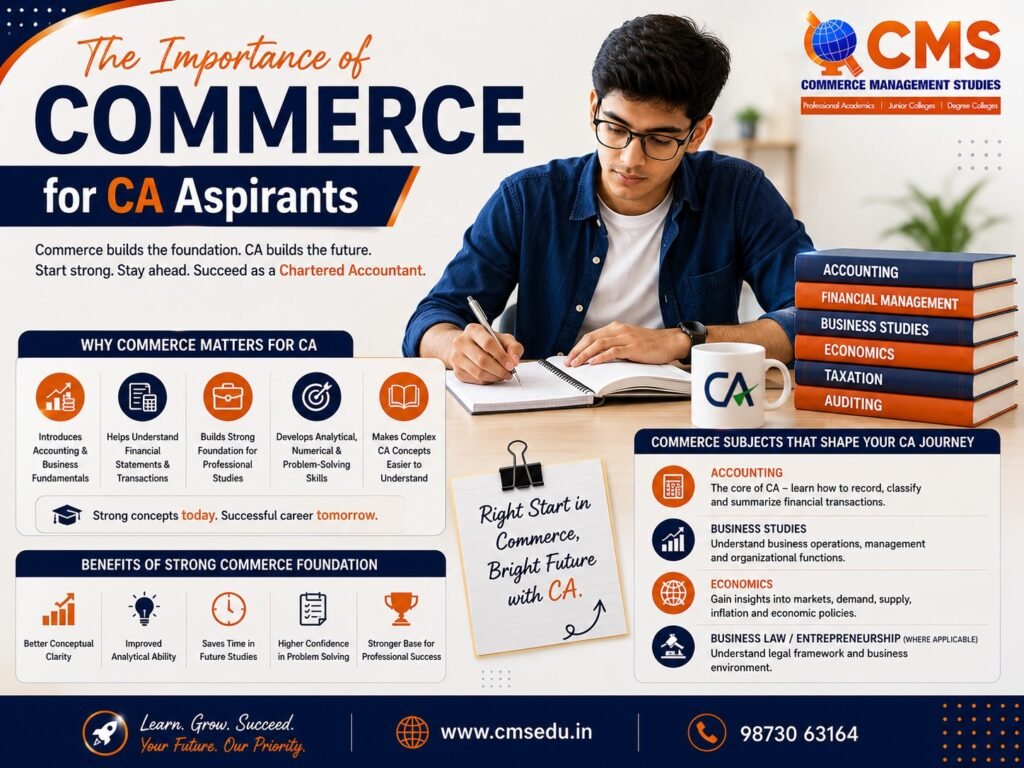
Commerce is particularly relevant for students considering CA because it introduces fundamental accounting and business concepts during Intermediate. Students can learn about transactions, accounting principles, financial statements, business activities, and other foundational areas that help them understand how financial information is recorded and interpreted.
Building these fundamentals early can make the transition to professional studies more comfortable. Students who understand the basic logic behind accounting concepts can gradually move toward more complex applications. Regular practice is important because CA requires students to apply concepts rather than simply memorize them.
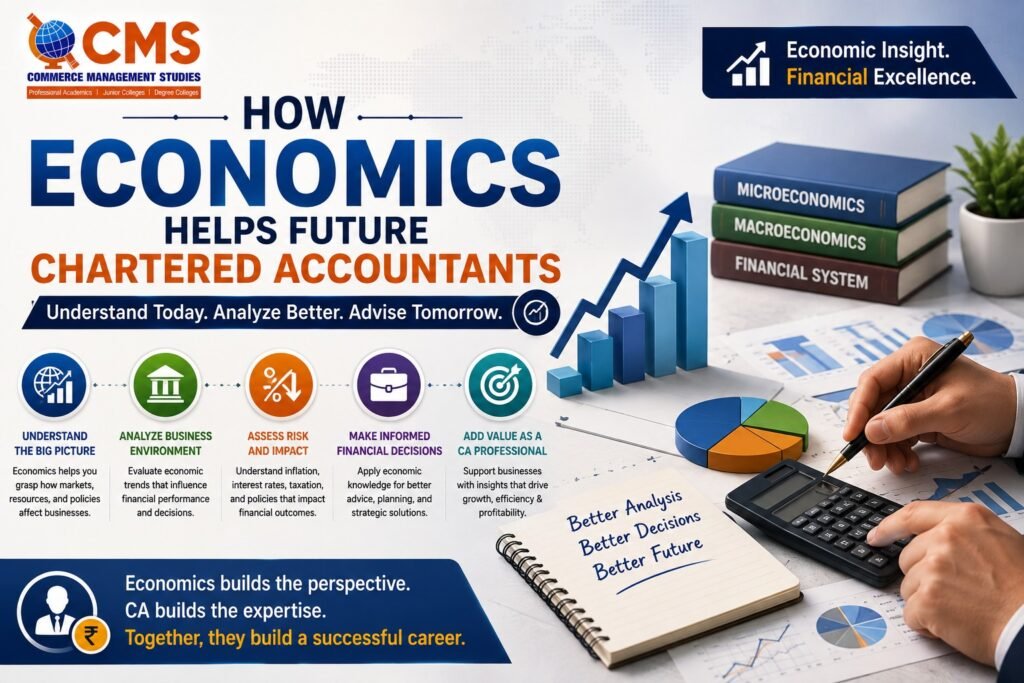
How Economics Helps Future Chartered Accountants
Economics helps students understand the relationship between consumers, businesses, markets, and governments. Concepts such as demand and supply, inflation, production, market structures, and economic policies can help students understand the environment in which businesses operate.
This knowledge can be useful for future Chartered Accountants because financial decisions are influenced by wider economic conditions. Changes in taxation, interest rates, inflation, government policies, and consumer demand can affect businesses and their financial performance. Understanding these relationships can help students develop a broader perspective beyond accounting alone.
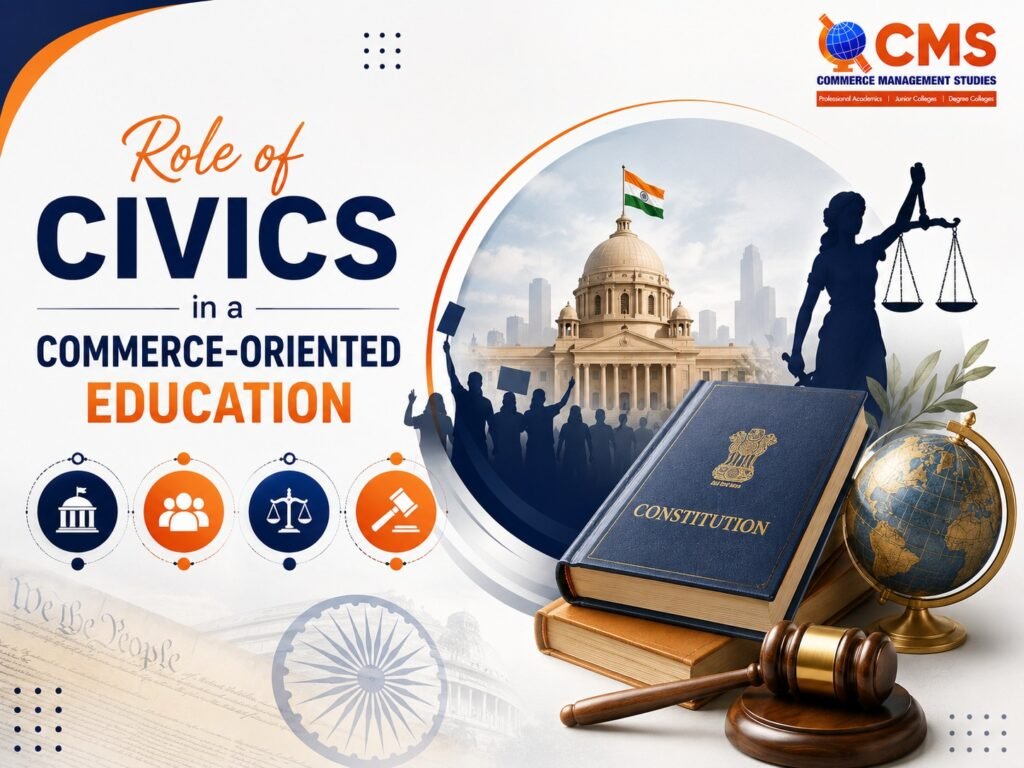
Role of Civics in a Commerce-Oriented Education
Civics introduces students to government institutions, public administration, constitutional principles, and the functioning of society. While it may not have the same direct connection to accounting as Commerce, it can help students develop awareness of how governments and institutions operate.
Understanding the relationship between businesses, government policies, and regulatory systems can be useful for students planning professional careers. Chartered Accountants often work in environments where taxation, regulations, compliance, and government policies influence business decisions. A broader understanding of these systems can therefore complement the knowledge gained through Commerce and Economics.
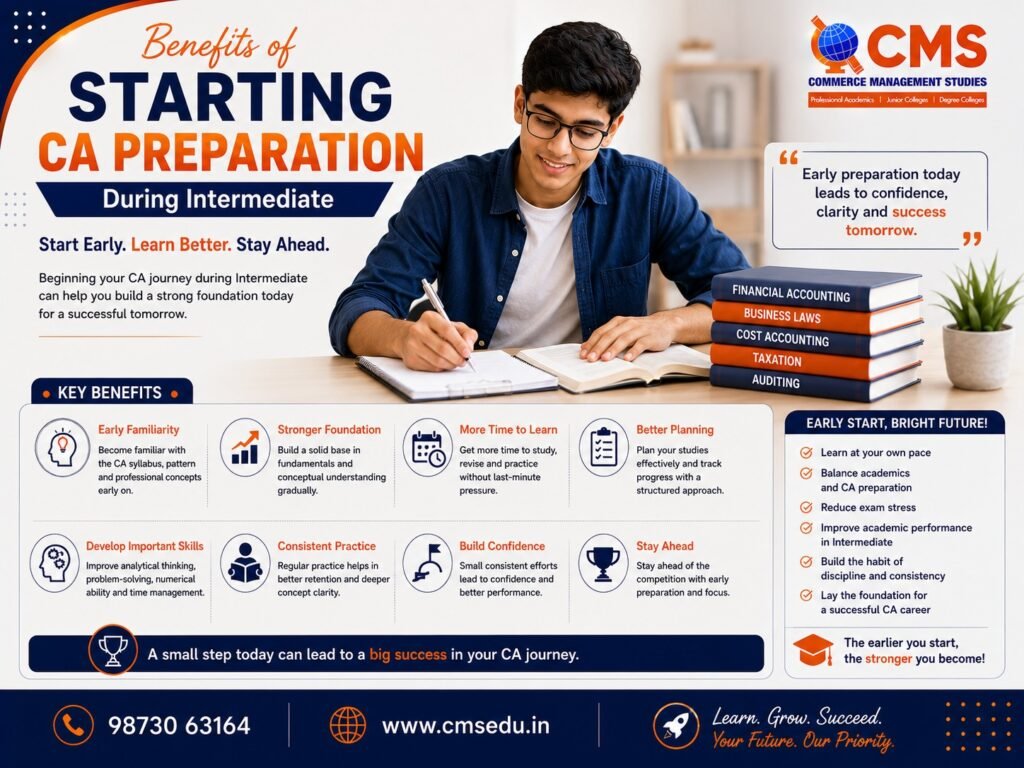
Benefits of Starting CA Preparation During Intermediate
Beginning CA-oriented preparation during Intermediate can help students become familiar with professional education at an early stage. Students can gradually develop conceptual clarity, improve numerical and analytical abilities, and understand the level of discipline required for professional examinations.
Early preparation also provides more time to identify strengths and weaknesses. Instead of trying to learn everything immediately before an examination, students can build their knowledge progressively through regular practice, revision, assessments, and doubt clarification. This can make preparation more structured and manageable.
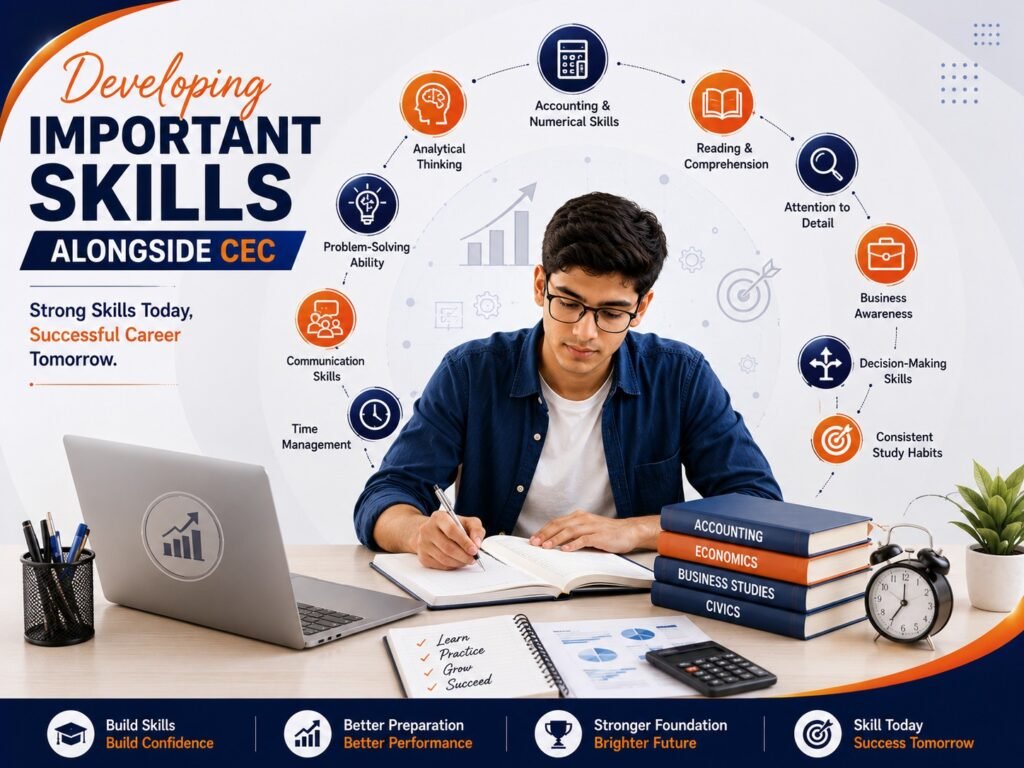
Developing Important Skills Alongside CEC
Academic subjects provide the foundation, but students preparing for a professional qualification also need to develop skills that can support their future studies and careers. Regular learning can help students become more disciplined and comfortable with solving problems, interpreting information, and communicating ideas.
Students can focus on developing:
- Accounting and numerical skills
- Analytical thinking
- Problem-solving ability
- Communication skills
- Time management
- Reading and comprehension
- Attention to detail
- Business awareness
- Decision-making skills
- Consistent study habits
These skills can support students throughout their CA preparation and can also be useful in other professional and academic environments.
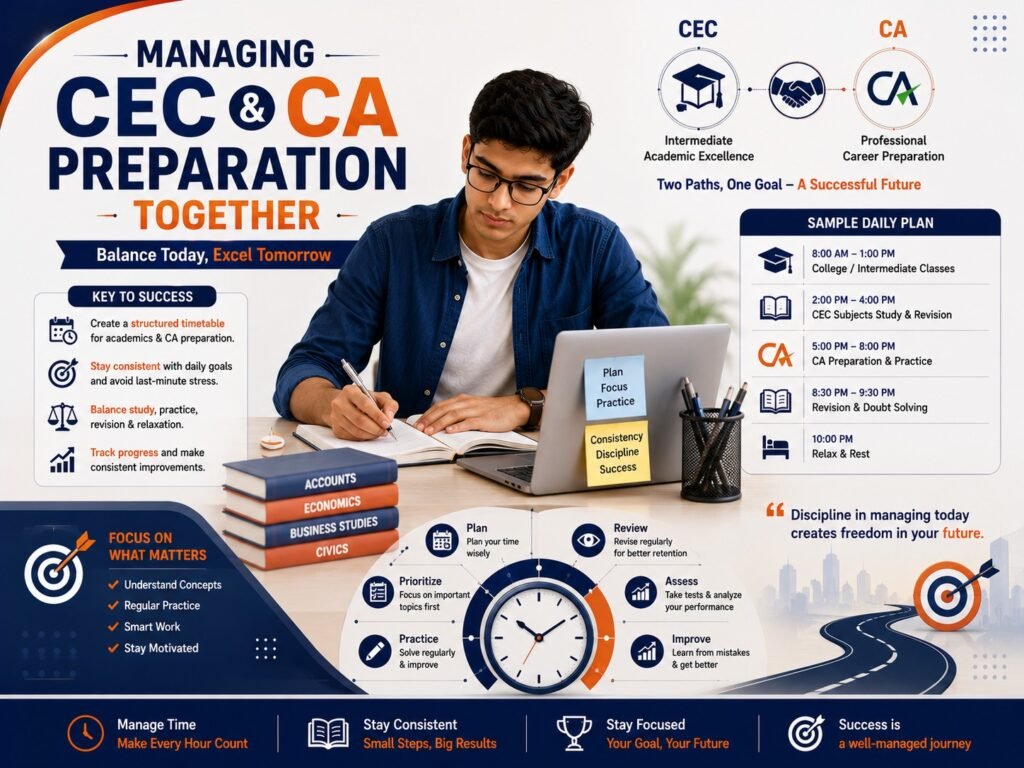
Managing CEC and CA Preparation Together
One of the key aspects of an integrated approach is maintaining a healthy balance between Intermediate academics and professional preparation. Students should understand their Intermediate syllabus thoroughly while gradually developing familiarity with CA-oriented concepts and examination requirements.
A structured timetable can make this easier. Students can divide their time between classroom learning, revision, practice questions, CA preparation, assessments, and adequate rest. The objective should be consistent progress rather than attempting to complete large amounts of material in a short period.
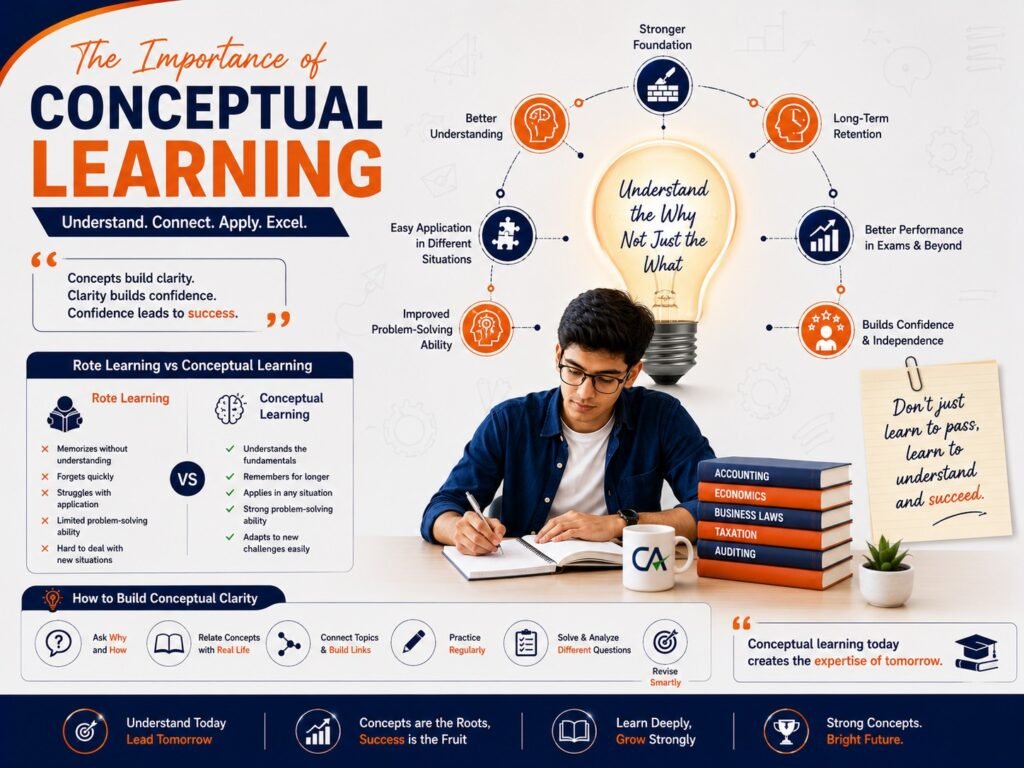
The Importance of Conceptual Learning
CA preparation requires students to understand concepts and apply them to different situations. Memorizing information without understanding the underlying principles may make it difficult to handle application-based questions. Developing conceptual clarity during Intermediate can therefore provide a strong foundation for future professional studies.
Students should make it a habit to ask why a particular accounting treatment is used, how an economic principle affects a business situation, or how different concepts are connected. This type of learning encourages deeper understanding and can make revision more effective in the long term.
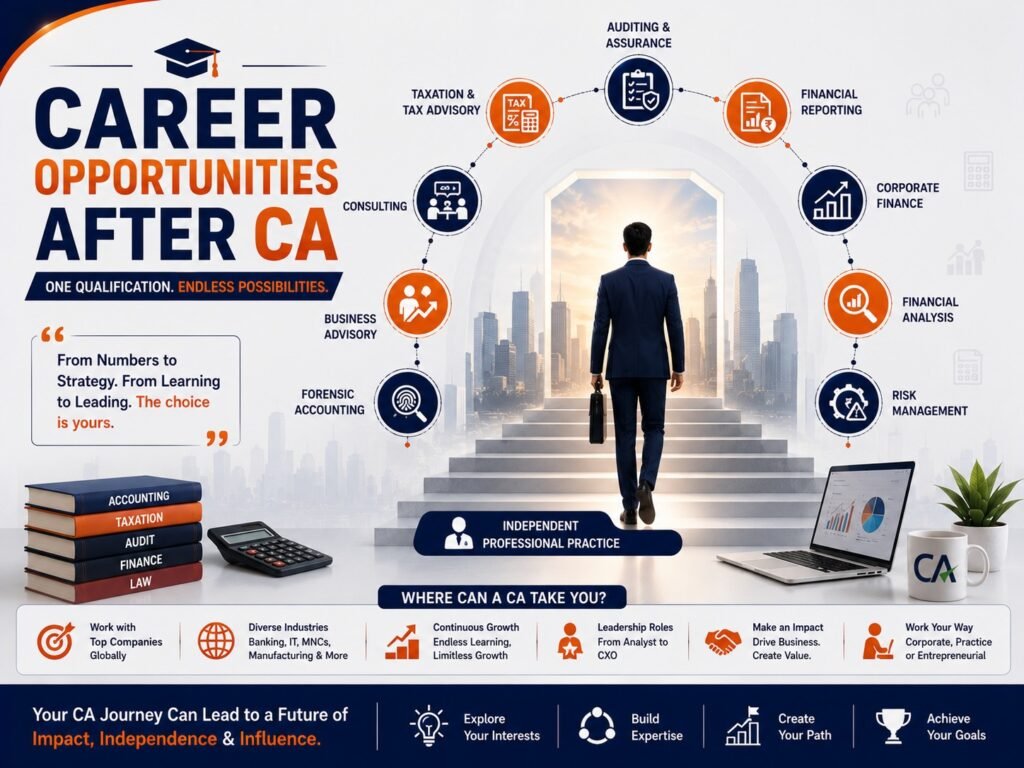
Career Opportunities After CA
A Chartered Accountant can explore a wide range of professional opportunities after completing the required qualification and training. The career can extend beyond traditional accounting into auditing, taxation, financial analysis, consulting, corporate finance, risk management, and business advisory.
Some potential career areas include:
- Auditing and assurance
- Taxation and tax advisory
- Financial reporting
- Corporate finance
- Financial analysis
- Risk management
- Consulting
- Business advisory
- Forensic accounting
- Independent professional practice
The career direction can depend on an individual’s interests, specialization, experience, and additional professional skills.
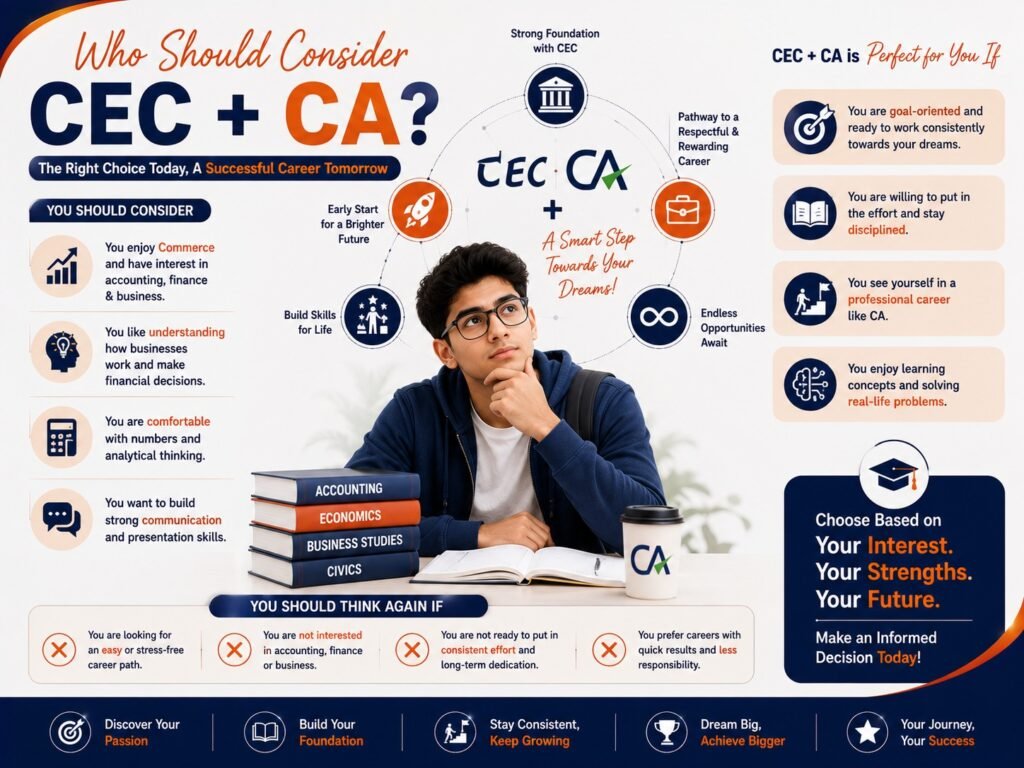
Who Should Consider CEC + CA?
CEC + CA can be worth considering for students who enjoy Commerce and are interested in accounting, finance, economics, business, and professional careers. Students who prefer understanding how businesses function and are willing to develop their numerical, analytical, and communication abilities may find this combination suitable.
However, students should choose a professional course based on their own interests rather than simply following a popular career trend. Understanding what Chartered Accountants actually do, exploring different career opportunities, and considering personal strengths can help students make a more informed decision.
CEC with Integrated CA Preparation
An integrated approach can help students connect their Intermediate education with their future professional goals. Concepts studied through Commerce and Economics can be reinforced through CA-oriented learning, while regular assessments and practice can help students gradually become familiar with professional examination requirements.
At CMS, students can pursue CEC Coaching in Hyderabad with integrated CA coaching, allowing them to work on their Intermediate academics while developing a foundation for their future CA journey. This structured approach can help students strengthen conceptual understanding, practice consistently, and develop the study habits required for professional education.
Conclusion
CEC + CA can be a strong combination for commerce students who are interested in accounting, finance, business, and professional careers. Commerce provides important accounting and business fundamentals, Economics develops an understanding of markets and economic conditions, and Civics gives students a broader awareness of government and institutions. Together, these subjects can provide a well-rounded academic foundation.
Preparing for CA alongside Intermediate can also give students more time to build conceptual clarity, develop effective study habits, and become familiar with professional education. Ultimately, success depends on consistent effort, genuine interest, disciplined preparation, and a willingness to keep learning. For students who see Chartered Accountancy as a possible career goal, CEC can provide a meaningful foundation on which to build their professional journey.