
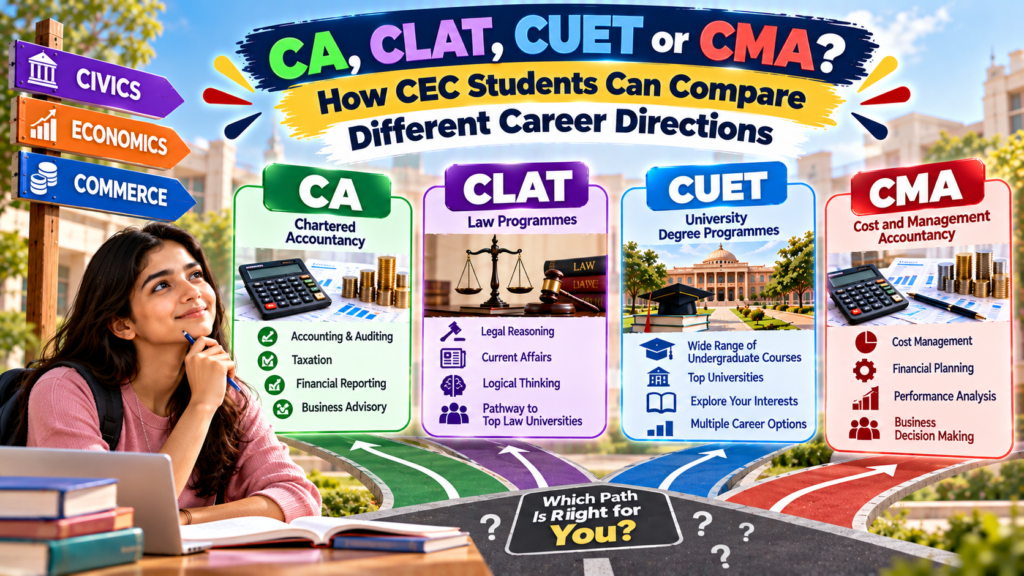
Choosing a career direction after Class 10 can feel challenging, especially for students who are interested in several subjects and professional opportunities. For students pursuing CEC (Civics, Economics and Commerce) in Intermediate, there are multiple pathways to explore, including Chartered Accountancy (CA), law through CLAT, undergraduate degree programmes through CUET and Cost and Management Accountancy (CMA). Each option offers a different learning experience and leads towards different academic or professional opportunities, making it important to understand what each pathway involves before making a decision.
CEC provides students with exposure to commerce, economics, governance and social institutions. These subjects can help students explore interests in finance, accounting, law, business and higher education. However, selecting the right pathway requires more than choosing a course based on its popularity or future earning potential. Students should consider the subjects they enjoy, the skills they are willing to develop, the qualifications required and the kind of work they may want to pursue in the future. Comparing CA, CLAT, CUET and CMA can help CEC students make a more informed decision.
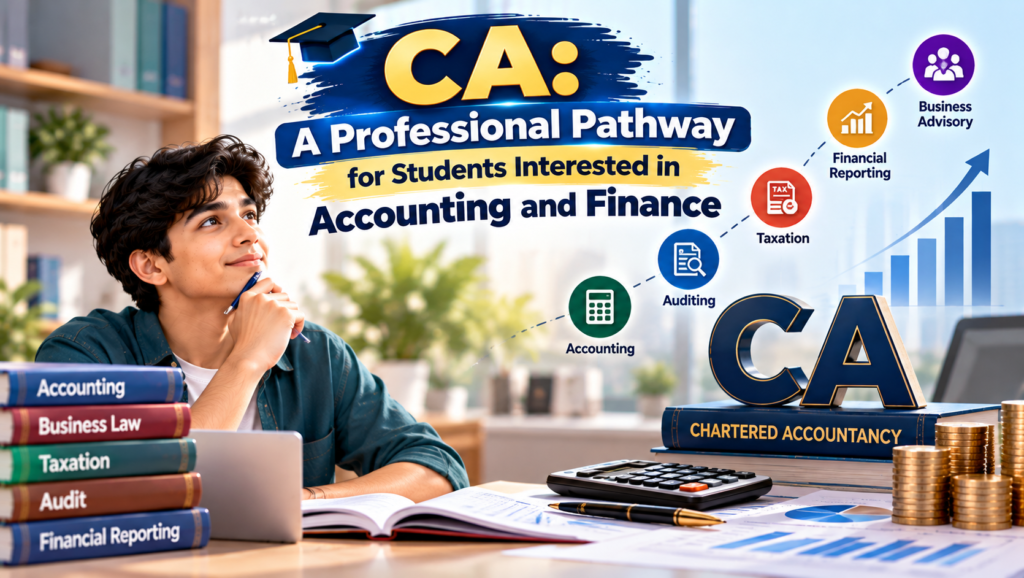
CA: A Professional Pathway for Students Interested in Accounting and Finance
Chartered Accountancy is a professional qualification for students who want to develop expertise in areas such as accounting, auditing, taxation, financial reporting and business advisory services. Students who enjoy working with financial information, understanding business transactions and analysing numerical details may find CA worth exploring. The qualification involves structured examinations and practical training requirements under the applicable ICAI scheme, so students should understand the commitment involved before beginning their preparation.
CEC students can explore CA after checking the applicable entry requirements and understanding the CA Foundation route. Their Commerce and Economics subjects can provide a useful introduction to business and economic concepts, but CA preparation requires dedicated study beyond the Intermediate syllabus. Students need to develop conceptual clarity, practise accounting problems, understand business laws and build the quantitative and analytical skills required by the course. A consistent study routine and realistic expectations are important for students balancing Intermediate examinations with professional-course preparation.
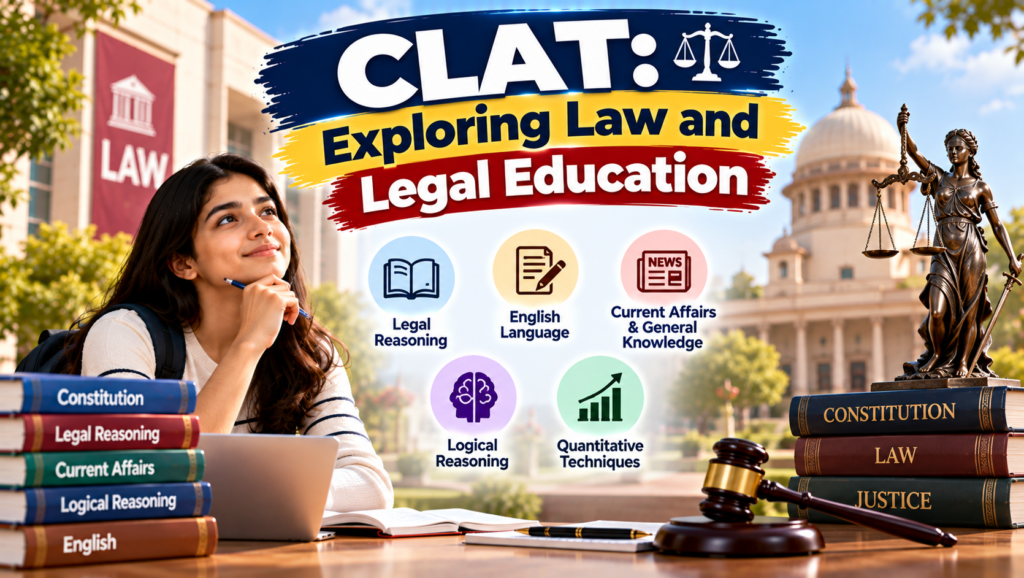
CLAT: Exploring Law and Legal Education
The Common Law Admission Test (CLAT) is an entrance examination used by participating National Law Universities for admission to undergraduate law programmes, subject to the applicable admission rules. It can be relevant for CEC students who are interested in legal systems, public affairs, constitutional issues, social developments and the role of law in business and society. Law education can open pathways into legal practice and other law-related fields, depending on a student’s qualifications, further studies and career choices.
CEC students may find their Civics background useful when developing an interest in government, institutions and public policy. Economics and Commerce can also help them understand some of the social and business contexts in which legal issues arise. However, CLAT requires specific preparation in areas such as English Language, Current Affairs including General Knowledge, Legal Reasoning, Logical Reasoning and Quantitative Techniques under the applicable examination pattern. Students should build reading habits, practise passage-based questions and strengthen reasoning skills rather than relying only on their Intermediate subjects.

CUET: Exploring Undergraduate Courses at Universities
The Common University Entrance Test for undergraduate admissions (CUET-UG) provides an admission route to participating universities and their undergraduate programmes. Unlike CA and CMA, which are professional qualifications, CUET is an entrance examination that can help students pursue a degree aligned with their academic interests. Depending on the university, course availability and eligibility criteria, CEC students may explore programmes in commerce, economics, humanities, social sciences and other disciplines.
CUET can be worth considering for students who want to compare different degree options before deciding on a long-term professional direction. Students should first identify the courses and universities they are interested in and then check the required CUET subjects, eligibility criteria and admission procedures. The subjects a student studied in Intermediate do not automatically determine eligibility for every undergraduate programme. Researching these requirements early helps students select the appropriate examination papers and prepare with a clear academic goal.
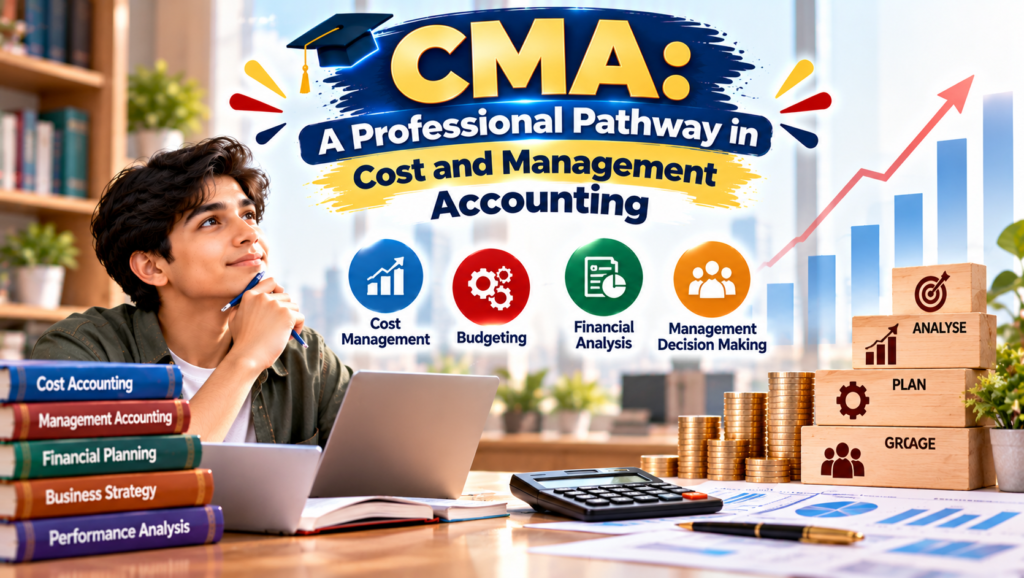
CMA: A Professional Pathway in Cost and Management Accounting
Cost and Management Accountancy is a professional pathway focused on areas such as cost accounting, budgeting, financial planning, performance analysis and management decision-making. CMA professionals can help organisations understand costs, use resources efficiently, evaluate financial information and support business planning. Students who are interested in how businesses manage expenses, assess performance and make financial decisions may find this pathway appealing.
CEC students can explore CMA by reviewing the applicable course structure and entry requirements under the relevant professional institute. Their Commerce and Economics subjects can introduce them to business operations and economic principles, while professional preparation develops the specialised knowledge required for the qualification. Like CA, CMA involves dedicated study and examinations, so students should consider their interest in accounting, numerical analysis and business problem-solving before choosing it. Understanding the difference between CA and CMA can help students decide which professional direction better matches their interests.
CA vs CMA: Understanding the Difference Before Choosing
Although CA and CMA both relate to finance and business, their primary areas of emphasis differ. CA preparation covers a broad range of professional areas, including accounting, auditing, taxation and financial reporting. CMA focuses strongly on cost management, budgeting, financial analysis and supporting internal business decisions. There can be overlap between the two qualifications, but they are not interchangeable, and each follows its own examination and qualification requirements.
CEC students should compare the actual work associated with these careers rather than relying only on course names. Students interested in auditing, taxation and financial reporting may wish to investigate CA in greater detail. Those attracted to cost analysis, budgeting and performance management may want to learn more about CMA. Both require discipline and strong conceptual understanding, and neither should be selected solely because someone claims it is easier or guarantees a particular salary. Reviewing official course information and speaking with qualified educators can help students develop realistic expectations.
How CEC Students Can Identify Their Strengths
The first step in choosing a pathway is to reflect on the subjects and activities that hold your interest. If you enjoy accounting concepts, financial information and detailed numerical work, CA or CMA may be worth exploring. If you are interested in reading, public affairs, legal questions and analysing arguments, CLAT may suit your interests. If you want to pursue a university degree and are still comparing academic fields, CUET can help you explore eligible programmes at participating institutions.
Your current strengths should guide your research, but they should not limit your future choices. A student who initially struggles with quantitative aptitude can improve through regular practice, while someone who finds reading comprehension difficult can develop those skills gradually. Try introductory questions, review the subjects involved and learn about the daily work and study commitments connected with each pathway. Discussing your interests with teachers and parents can also help you consider your options from different perspectives before making a decision.
Managing Intermediate Studies Alongside Career Preparation
Preparing for Intermediate examinations while exploring CA, CLAT, CUET or CMA requires a realistic study plan. Students should continue to prioritise their board syllabus, classroom learning and regular revision while allocating dedicated time to their chosen professional course or entrance examination. The amount of time required will depend on the student’s current preparation level, target examination, school schedule and the subjects that need additional attention.
A practical routine may include daily revision of Intermediate subjects, scheduled sessions for entrance or professional-course preparation, weekly practice questions and a review of completed topics. CLAT aspirants can include reading comprehension and current-affairs practice, while CUET aspirants should prepare according to the requirements of their target courses. Students considering CA or CMA can gradually develop subject knowledge and practise questions aligned with the relevant official syllabus. Reviewing progress every week helps students identify gaps and adjust their routine without becoming overwhelmed.
How CMS Can Help CEC Students Explore Their Options
At CMS CEC Junior Colleges in Hyderabad, CEC students can explore academic and career pathways connected with CA, CMA, CLAT and CUET alongside their Intermediate studies. Understanding these options early can help students connect classroom learning with their future interests and identify the preparation required for their chosen direction. Rather than making a rushed decision, students can compare professional qualifications, law entrance preparation and university admission opportunities before setting their priorities.
A structured approach to learning can help students develop consistency, strengthen their subject knowledge and prepare for the demands of their selected pathway. Students should discuss their interests, review official eligibility requirements and understand the commitment associated with each option. With suitable guidance and a clear preparation plan, CEC students can make more informed decisions about their next steps while continuing to build a strong foundation during Intermediate.
Conclusion
CA, CLAT, CUET and CMA offer different directions for CEC students, and the right choice depends on their interests, abilities and future goals. CA and CMA are professional qualifications connected with accounting, finance and business, while CLAT offers an entrance route to participating law universities and CUET-UG provides access to undergraduate programmes at participating universities. Understanding these differences can help students choose a pathway based on its actual requirements rather than popularity or assumptions.
Students do not need to know every detail of their future career immediately after Class 10. They can begin by understanding their strengths, researching relevant courses, checking eligibility criteria and developing good study habits during Intermediate. With thoughtful planning and consistent preparation, CEC students can explore the pathway that best matches their interests and work towards their higher-education and professional goals with greater confidence.