
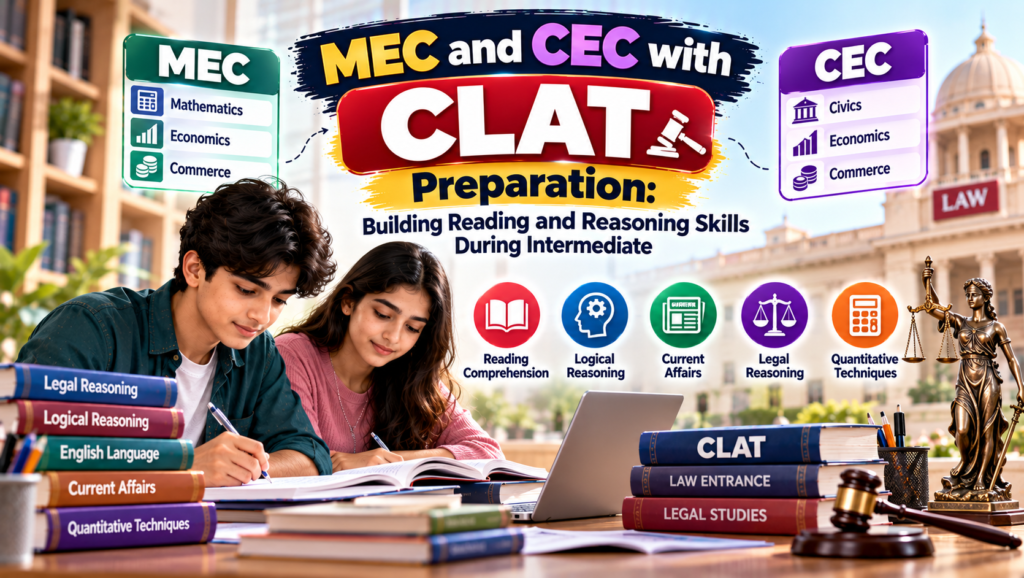
Students choosing MEC or CEC after Class 10 often begin exploring professional courses and entrance examinations that can shape their future education. While MEC combines Mathematics, Economics and Commerce, CEC includes Civics, Economics and Commerce. Both streams introduce students to concepts that can help them understand business, society and the wider world. For students interested in studying law, CLAT offers a pathway worth exploring alongside Intermediate education.
The Common Law Admission Test (CLAT) is an entrance examination used by participating National Law Universities for admission to undergraduate law programmes, subject to the applicable admission requirements. Preparing for CLAT involves more than memorising facts or studying legal terminology. Students need to develop reading comprehension, logical reasoning, awareness of current affairs and the ability to analyse information accurately. By beginning these skills during Intermediate, MEC and CEC students can build a stronger foundation while continuing to work towards their board examinations.
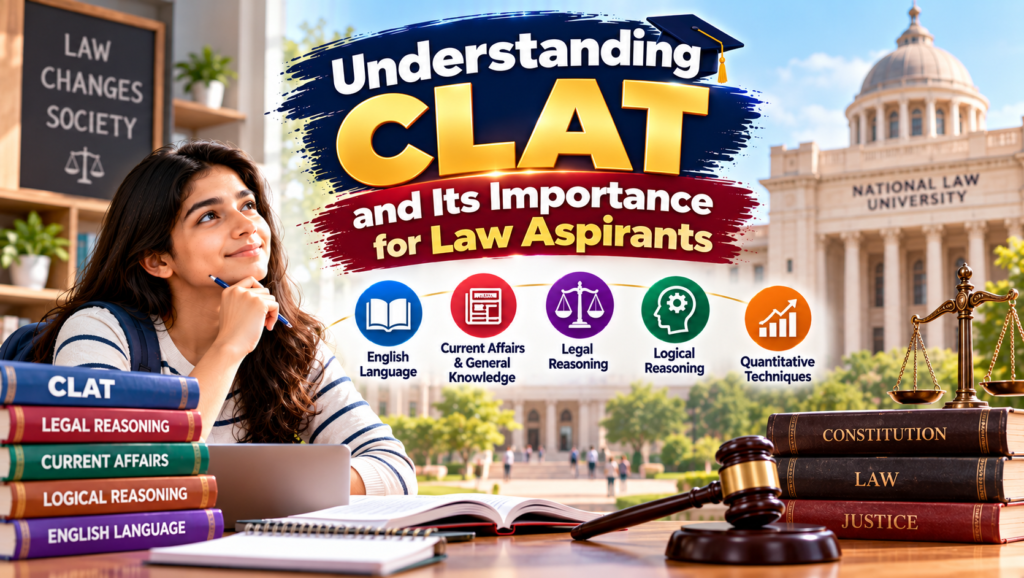
Understanding CLAT and Its Importance for Law Aspirants
CLAT is designed to assess skills that are relevant to undergraduate legal education. Its undergraduate examination generally covers English Language, Current Affairs including General Knowledge, Legal Reasoning, Logical Reasoning and Quantitative Techniques. Students are expected to read passages, understand information, evaluate arguments and select answers based on evidence and reasoning. The current official examination notification should always be checked for the applicable pattern, eligibility criteria and admission rules.
Students do not need to have studied law during Intermediate to begin preparing for CLAT. Instead, they can develop the reading and reasoning skills required to understand legal passages and evaluate different viewpoints. Regular practice can help students become comfortable with unfamiliar topics, identify the central idea of a passage and distinguish relevant information from unnecessary details. Starting early also gives students time to discover which areas need improvement before moving towards more intensive examination preparation.
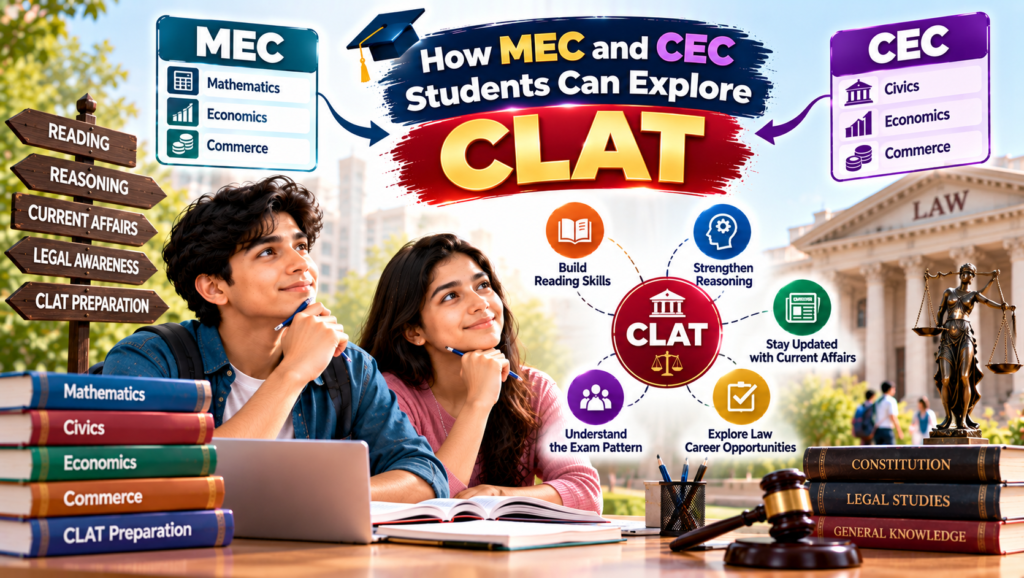
How MEC and CEC Students Can Explore CLAT
MEC and CEC students can both explore CLAT as a possible route to undergraduate law education, subject to the current eligibility criteria. CEC students may find Civics particularly interesting because it introduces ideas related to government, institutions and public affairs. Economics and Commerce can also help students understand issues involving markets, businesses and society. These subjects can provide useful background knowledge, although CLAT preparation requires dedicated practice beyond the Intermediate syllabus.
MEC students can also prepare for CLAT while studying Mathematics, Economics and Commerce. Economics can encourage an understanding of public policy and economic developments, while Mathematics may help students practise numerical reasoning for the quantitative component of the examination. However, CLAT preparation also requires reading comprehension, current-affairs awareness and legal and logical reasoning. Students from both streams should therefore build a balanced preparation plan rather than assuming their Intermediate subjects alone will cover the examination requirements.
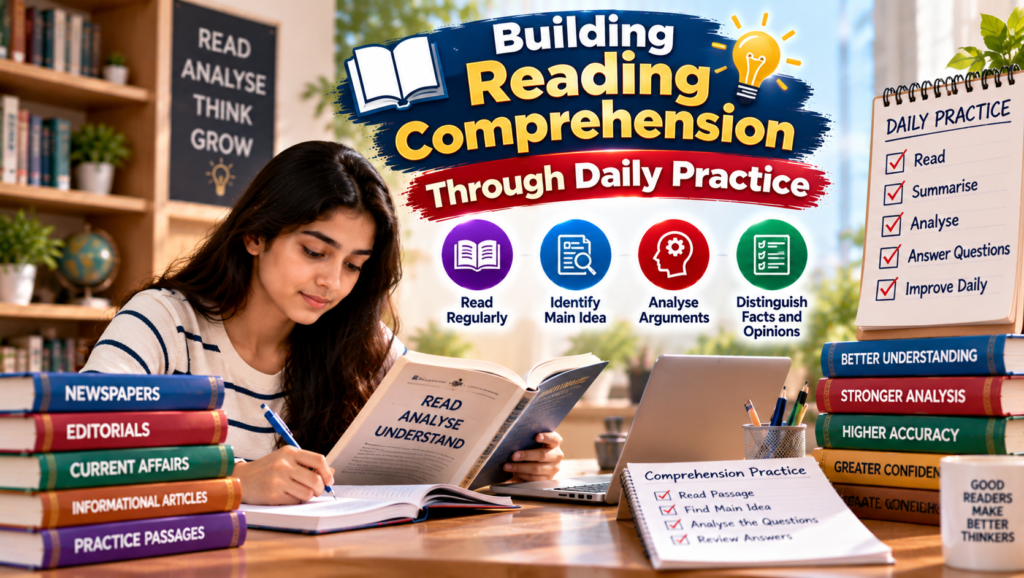
Building Reading Comprehension Through Daily Practice
Reading comprehension is an important skill for CLAT aspirants because students must understand passages, recognise the writer’s argument and answer questions using the information provided. A useful way to develop this skill is to read regularly instead of depending entirely on practice questions close to the examination. Students can begin with newspaper articles, editorials, explanatory reports and other well-written informational passages that cover a range of subjects.
After reading an article, students should try to summarise its central idea in a few sentences, identify the author’s main argument and distinguish facts from opinions. They can then practise answering questions about the passage without immediately looking at the answers. This process helps improve concentration and encourages students to read for meaning rather than simply moving through the words. As their confidence grows, they can practise longer passages under timed conditions and review the questions they answered incorrectly.
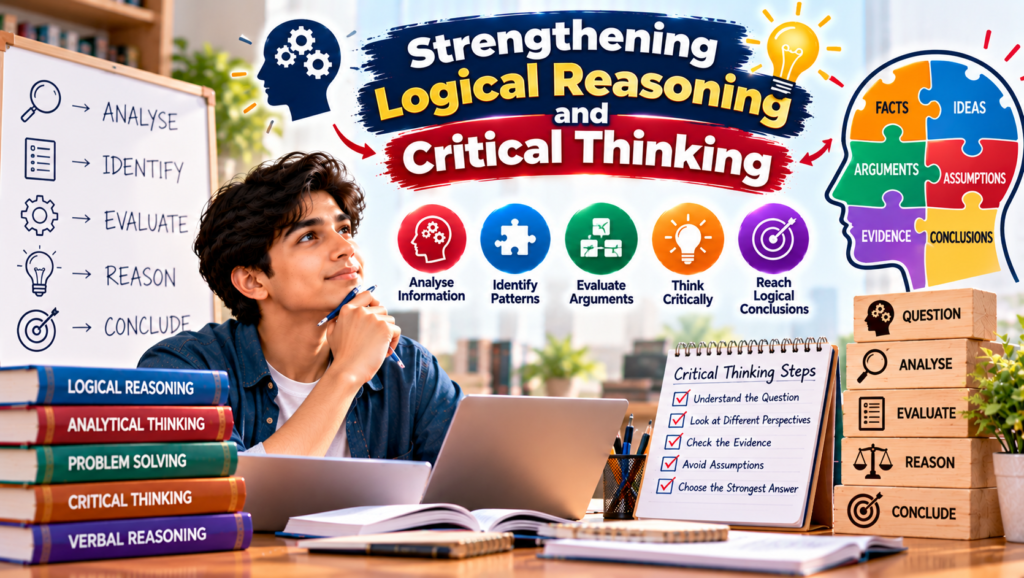
Strengthening Logical Reasoning and Critical Thinking
Logical reasoning requires students to examine information carefully, identify relationships between ideas and determine whether a conclusion is supported by the available evidence. CLAT preparation can involve evaluating arguments, identifying assumptions and understanding how different statements connect. Students who practise these skills regularly may become better at approaching unfamiliar questions systematically instead of selecting answers based on instinct alone.
MEC and CEC students can develop logical reasoning through short, consistent practice sessions. They can begin by reading an argument and asking what conclusion the author is making, what evidence supports it and whether any assumptions are being made. Solving reasoning questions and reviewing the explanations can help students understand why one answer is stronger than another. The goal is not merely to finish questions quickly, but to develop a clear process for analysing information and eliminating unsupported conclusions.
Developing Current-Affairs Awareness Without Feeling Overwhelmed
Current affairs and general knowledge are important areas of CLAT preparation. Students should develop a regular habit of following significant national and international developments, public institutions, legal developments and other issues relevant to the examination. Trying to memorise every news item can become overwhelming, especially when students are also preparing for Intermediate examinations. A focused approach helps them stay informed without allowing current-affairs preparation to consume their entire study schedule.
Students can set aside a short period each day to read reliable news sources and keep brief notes on important developments. Instead of copying lengthy articles, they can record the key event, relevant background, important institutions involved and why the issue matters. Revisiting these notes weekly can improve retention and help students connect new information with earlier events. Students should also use suitable CLAT preparation materials and check the current examination guidance to understand the kinds of current-affairs knowledge they need to develop.
Balancing CLAT Preparation With Intermediate Studies
Intermediate students need to manage board examinations, assignments, classroom learning and entrance preparation without neglecting any major responsibility. The best timetable is one that reflects the student’s actual workload and gives sufficient attention to both academic and entrance-exam goals. Students can start with manageable daily sessions for reading and reasoning, then gradually add practice questions and topic revision as their familiarity with CLAT increases.
A weekly plan can include Intermediate subject revision, regular reading, logical reasoning exercises and current-affairs review. Students should also keep time for rest and revisit their schedule when school assessments or board examinations approach. During particularly busy academic periods, maintaining shorter practice sessions may be more realistic than attempting long entrance-preparation hours every day. After completing a practice test, students should review their errors, identify recurring weaknesses and adjust the following week’s plan accordingly.
Common Mistakes Students Should Avoid During CLAT Preparation
One common mistake is relying entirely on memorisation. Although current affairs requires knowledge of important events, CLAT also tests the ability to interpret passages and reason through information. Students who focus only on memorising facts may miss opportunities to develop comprehension and analytical skills. Another mistake is practising questions without reviewing incorrect answers. Understanding why an answer was wrong is essential for correcting misconceptions and improving performance over time.
Students should also avoid postponing preparation until the final months of Intermediate or attempting to follow an unrealistic study timetable. Building reading habits and reasoning skills takes time, so regular practice is more useful than occasional bursts of activity. Finally, students should not assume that every CLAT preparation resource follows the latest examination pattern. Checking official notifications and using relevant, updated practice materials can help students prepare more effectively and avoid confusion about syllabus or eligibility changes.
How CMS Can Support MEC and CEC Students Preparing for CLAT
At CMS Top CEC Colleges in Hyderabad along side MEC, students pursuing MEC and CEC can explore CLAT preparation alongside their Intermediate education. Understanding the examination’s requirements early can help students identify the skills they need to develop and plan their learning more effectively. Students can work towards improving reading comprehension, reasoning ability and current-affairs awareness while continuing to build their academic foundation through Intermediate subjects.
A structured preparation approach can help students organise their time, practise regularly and monitor their progress. Students should also research the law programmes they wish to pursue, review the current CLAT eligibility criteria and understand the admission requirements of their preferred institutions. By connecting their Intermediate studies with a clear preparation plan, MEC and CEC students can explore law as a future academic direction without losing sight of their board-examination responsibilities.
Conclusion
MEC and CEC students can consider CLAT as a pathway to undergraduate legal education, regardless of whether their Intermediate subjects include Mathematics or Civics, provided they meet the applicable eligibility requirements. Their streams offer different academic foundations, but success in CLAT preparation depends on developing the specific skills assessed by the examination. Reading comprehension, logical reasoning, current-affairs awareness and the ability to analyse information are all areas that benefit from regular practice.
The most effective way to begin is to build small, sustainable habits during Intermediate. Students can read informative articles daily, practise reasoning questions, review important current affairs and balance these activities with their board syllabus. With a realistic timetable, consistent effort and appropriate guidance, MEC and CEC students can strengthen their preparation and make a more informed decision about pursuing law after Intermediate.