
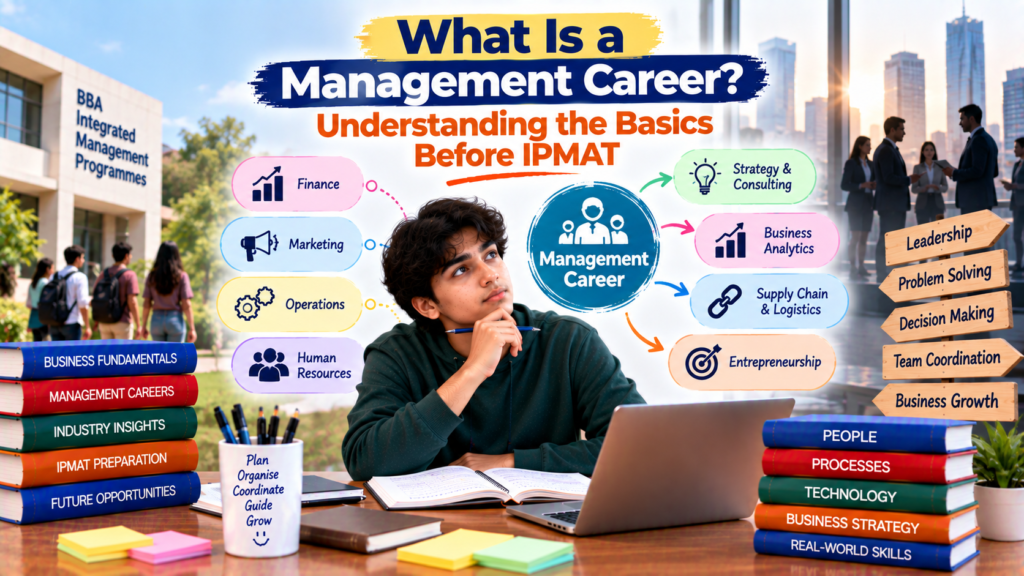
Introduction
Management is a broad career field that involves planning, organising, coordinating, and guiding different activities within an organisation. Almost every organisation, whether it operates in finance, technology, healthcare, retail, manufacturing, consulting, education, or another sector, requires people who can coordinate resources and help teams work towards specific objectives. Because of this wide application, management education can lead to a variety of professional roles rather than one fixed career.
For students considering management education after Intermediate, understanding what a management career actually involves can be useful before beginning preparation for examinations such as IPMAT. Management is not simply about holding a leadership position or supervising employees. It involves understanding business operations, customers, finances, people, markets, technology, and decision-making. Learning about these areas early can help students develop a clearer understanding of what they may encounter in management education and professional life.
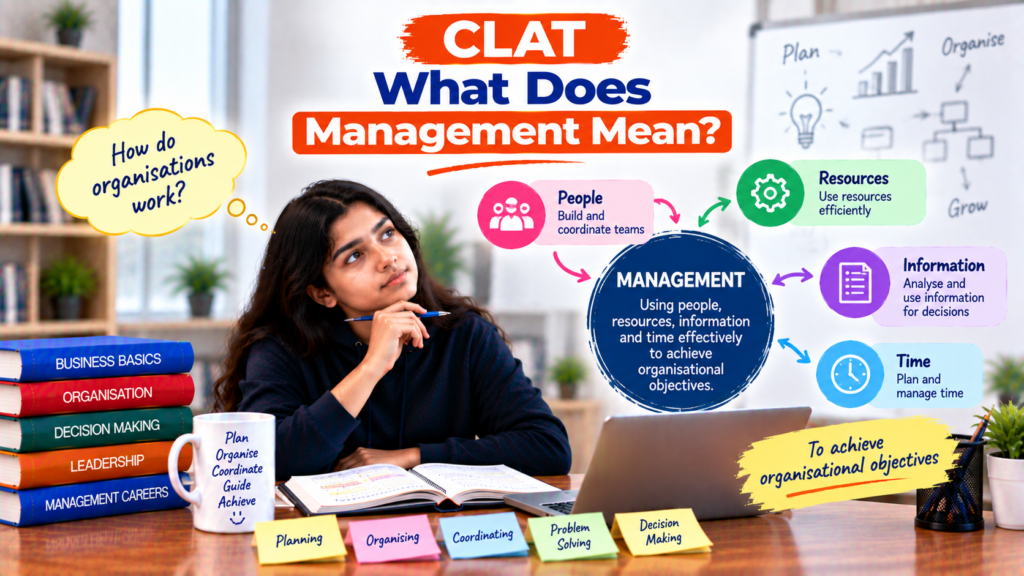
What Does Management Mean?
Management broadly refers to the process of using people, resources, information, and time effectively to achieve organisational objectives. Managers may be involved in planning activities, allocating resources, monitoring performance, solving problems, coordinating teams, and making decisions.
The nature of management can vary significantly depending on the organisation and role. A marketing manager may focus on customers and campaigns, while a finance manager may work with budgets and financial information. An operations manager may concentrate on processes and efficiency, whereas a human resources professional may focus on employees and organisational development. Management therefore covers a wide range of responsibilities.

What Is a Management Career?
A management career can involve working in areas where professionals help organisations plan activities, solve business problems, manage resources, and achieve their objectives. Some roles are specialised, while others involve coordinating several functions of an organisation.
Management professionals can work across industries because the underlying skills—such as communication, analysis, planning, problem-solving, and decision-making—are applicable in many environments. This makes management education relevant to students who want to understand how organisations function rather than limiting themselves to one particular industry from the beginning.
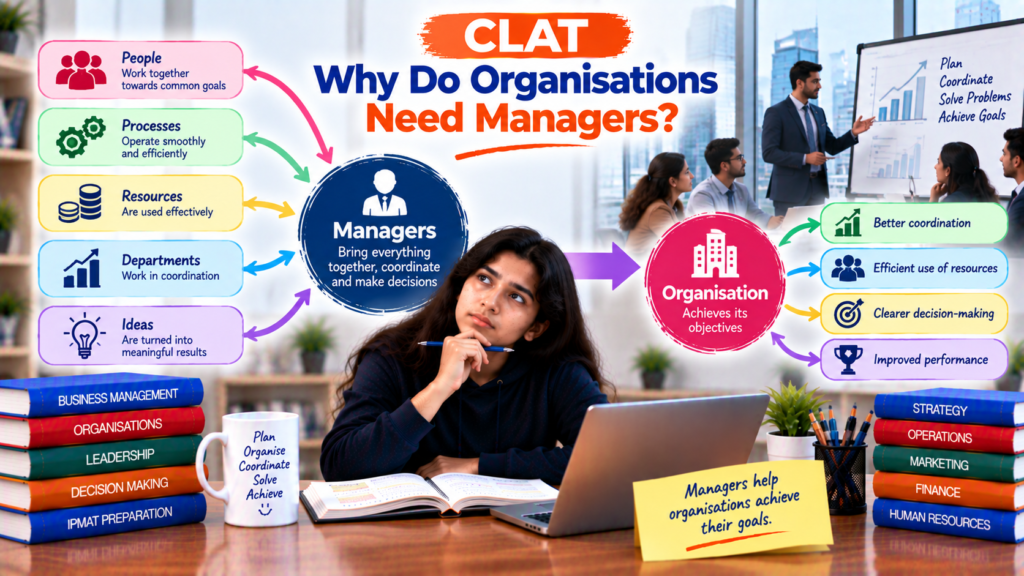
Why Do Organisations Need Managers?
Organisations involve multiple people, departments, processes, and resources. Without coordination, different parts of an organisation may work towards conflicting priorities or use resources inefficiently. Managers help bring these activities together and ensure that different teams understand their responsibilities.
For example, a company launching a new product may need coordination between marketing, finance, production, sales, technology, and customer service teams. Management involves understanding how these functions interact and helping different teams work towards a common objective. This makes coordination and decision-making important aspects of management.
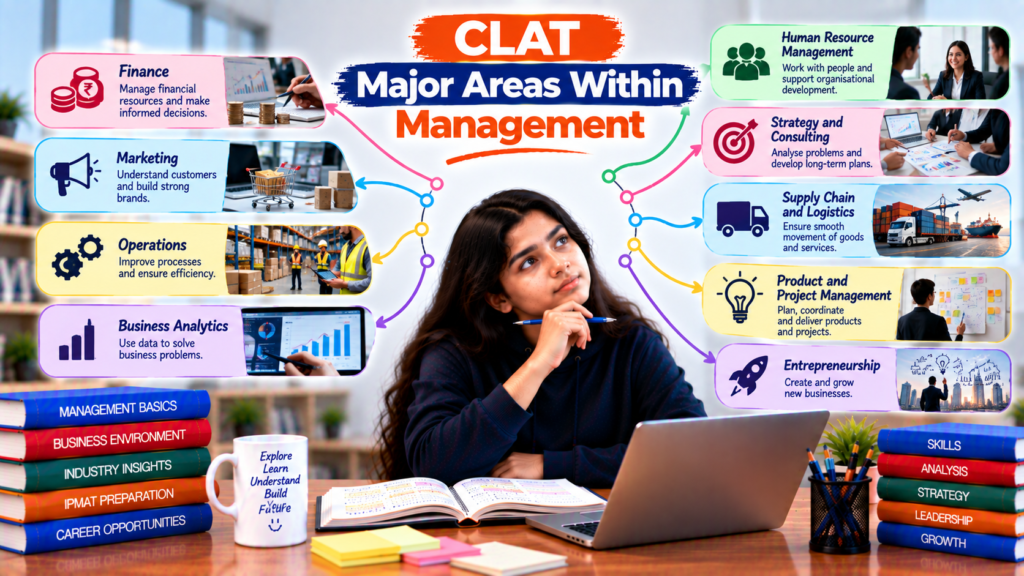
Major Areas Within Management
Management is not a single subject or profession. It includes several functional areas, each with its own responsibilities and knowledge requirements. Some commonly recognised areas include:
- Finance and financial management
- Marketing and sales
- Human resource management
- Operations management
- Business analytics
- Strategy and consulting
- Supply chain and logistics
- Product and project management
- Entrepreneurship
Students do not need to decide on a specific area immediately. Undergraduate management education can provide exposure to several business functions, allowing students to understand different areas before choosing a direction for further study or employment.
Understanding Finance in Management
Financial understanding is useful even for managers who do not work directly in finance. Business decisions often involve costs, revenue, budgets, investments, and financial risks.
A marketing manager, for example, may need to work within a campaign budget, while an operations manager may need to evaluate the financial impact of improving a process. Understanding basic financial concepts can therefore help managers evaluate the practical implications of their decisions and communicate more effectively with finance teams.
Understanding Marketing
Marketing involves understanding customers, identifying their needs, communicating the value of products or services, and building relationships with markets. Modern marketing can include traditional advertising as well as digital platforms, social media, data analysis, content, and customer research.
Management students may encounter marketing as one of several core business areas. Studying it can help them understand how organisations identify target customers, position products, analyse competition, and evaluate marketing activities.
Understanding Operations
Operations management focuses on how organisations produce goods or deliver services efficiently. It can involve processes, quality, inventory, supply chains, capacity, technology, and resource utilisation.
For example, a manufacturing company needs to ensure that raw materials are available, production processes operate efficiently, quality standards are maintained, and finished products reach customers. Similar principles apply to service organisations, although the processes may look different. Understanding operations helps students see the practical side of how businesses function.
The Role of Human Resources
Businesses depend on people, making human resource management another important area of management. HR professionals may be involved in recruitment, training, performance management, employee engagement, compensation, organisational policies, and workplace development.
Management education can help students understand that organisational performance is not determined only by financial resources or technology. The ability to attract, develop, coordinate, and retain people can also influence how effectively an organisation operates.
Technology and Modern Management
Technology has become deeply integrated into business operations. Organisations use digital platforms for communication, accounting, customer management, data analysis, operations, marketing, and decision-making.
Managers therefore increasingly need to understand how technology can affect business processes. They do not necessarily need to become software developers, but they should be able to understand how digital tools can improve efficiency, provide information, and change the way organisations interact with customers and employees.
Why Analytical Thinking Matters in Management
Managers regularly encounter information from different sources. Sales reports, customer feedback, financial statements, employee data, market research, and operational reports can all influence decisions.
Analytical thinking helps professionals examine this information systematically. Instead of relying only on intuition, managers can compare data, identify patterns, understand potential causes, and consider alternative solutions. Developing analytical ability can therefore be useful for students considering management education.
Communication Is Central to Management
Management involves working with people, which makes communication an important professional skill. Managers may need to explain plans, present information, provide feedback, negotiate with stakeholders, and coordinate teams.
Effective communication includes listening as well as speaking. A manager needs to understand different viewpoints and communicate information clearly enough for others to act on it. Students can begin developing these abilities through presentations, group discussions, writing exercises, and collaborative projects during their academic years.
Decision-Making in a Management Career
Managers often have to make decisions even when they do not have complete information. They may need to choose between different strategies, allocate limited resources, respond to customer problems, or adjust plans when market conditions change.
Good decision-making involves identifying the problem, collecting relevant information, considering alternatives, evaluating risks, and choosing an appropriate course of action. Management education provides opportunities for students to practise these skills through business cases, projects, simulations, and analytical exercises.
What Is IPMAT?
IPMAT refers to the Integrated Programme in Management Aptitude Test used for admission to certain integrated management programmes. The examination structure and participating institutions can vary, so students should always refer to the current official information for the specific IPMAT they intend to take.
The integrated management programmes associated with such examinations are designed to combine undergraduate and postgraduate-level management education over an extended programme. For students interested in management after Intermediate, this provides one route into formal management education without requiring them to complete a separate undergraduate degree before pursuing postgraduate management studies.
What Skills Are Useful for IPMAT Preparation?
IPMAT preparation generally requires students to work on areas such as quantitative ability and verbal ability, with the exact structure depending on the examination and institution. Students therefore benefit from developing mathematical fundamentals, reading comprehension, vocabulary, logical thinking, and the ability to work accurately within time limits.
These skills are not useful only for the examination. Quantitative ability can support financial and analytical understanding, while verbal ability and comprehension are relevant to communication and management education. Building these foundations can therefore serve both examination preparation and broader academic development.
Why Mathematics Can Be Useful
Students preparing for management entrance examinations may encounter quantitative questions involving arithmetic, algebra, geometry, data interpretation, and related concepts, depending on the examination pattern. A strong understanding of fundamental mathematics can make it easier to approach such questions.
For students studying MEC, Mathematics can provide regular exposure to numerical and logical problem-solving during Intermediate. However, management aptitude preparation requires more than solving textbook problems. Students also need to practise applying concepts quickly and accurately under examination conditions.
Why Reading Matters Before IPMAT
Management education involves reading case studies, reports, articles, research, business information, and other forms of written material. Developing strong reading habits before entering management education can therefore be useful.
Students preparing for IPMAT can read newspapers, magazines, analytical articles, business-related content, and other well-written material. The objective is not simply to increase vocabulary but to understand arguments, identify important information, recognise relationships between ideas, and summarise what has been read.
Management Is More Than Leadership
Popular discussions sometimes associate management mainly with leadership and authority. In reality, management involves many responsibilities that may not always be visible from the outside.
Planning, analysis, coordination, budgeting, communication, process improvement, customer understanding, and problem-solving are all part of management work. Leadership is relevant, but it is one component within a much broader set of management responsibilities.
What Students Can Learn Before Choosing Management
Students do not need to decide their exact career role before entering a management programme. However, they can begin exploring different business areas to understand what interests them.
Reading about companies, observing how businesses operate, following economic developments, analysing advertisements, understanding how products are priced, and discussing business decisions can all provide useful exposure. These activities can help students understand whether they enjoy thinking about business problems, organisations, markets, and decision-making.
Management Education and Commerce Students
Commerce students may already have exposure to subjects that connect naturally with management education. Economics can help students understand markets and economic activity, while Commerce can introduce accounting and business concepts. Mathematics in MEC can additionally support quantitative reasoning.
Students from CEC can also explore management pathways. Their exposure to Civics, Economics, and Commerce can provide knowledge of economic systems, institutions, business concepts, and society. Both streams can therefore serve as starting points for students interested in management, provided they meet the specific eligibility requirements of the programme they choose.
Preparing for Management Alongside Intermediate
Students interested in IPMAT do not necessarily need to separate their entrance preparation completely from their Intermediate studies. Many foundational skills can be developed alongside regular academic learning. CMS offers the best IPMAT Coaching in Hyderabad under the guidance of expert faculty.
At CMS , students pursuing MEC or CEC or ACE can combine their Intermediate education with integrated preparation options for pathways such as IPMAT, CA, CMA, CLAT, and CUET. A structured routine can help students continue developing their Intermediate subject knowledge while also working on areas such as quantitative ability, verbal ability, reasoning, reading, and examination practice.
Exploring Management Through Real-World Examples
One effective way to understand management is to observe businesses around you. A supermarket, bank, restaurant, online marketplace, technology company, or local business can demonstrate different aspects of management.
Students can ask simple questions: Who are the customers? How does the business earn revenue? What are its major costs? How does it attract customers? What makes it different from competitors? How does technology affect its operations? These questions can encourage students to connect academic concepts with real business situations.
Conclusion
A management career is not limited to one job title or industry. It involves a broad range of activities, including planning, financial understanding, marketing, operations, people management, technology, analysis, communication, and decision-making. Because organisations in almost every sector require these functions, management education can provide exposure to many different career areas.
For students considering IPMAT, understanding the basics of management before beginning preparation can make the goal more meaningful. Rather than viewing IPMAT only as an entrance examination, students can see it as one possible pathway toward learning how businesses and organisations work. Building quantitative ability, reading skills, analytical thinking, communication, and curiosity about business during Intermediate can provide a useful foundation for future management education.