
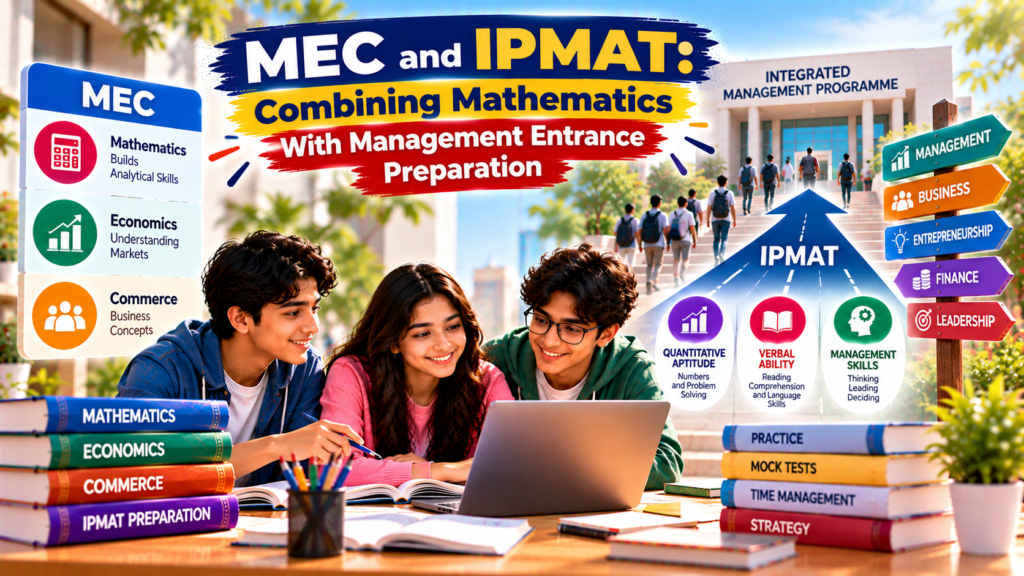
Choosing MEC (Mathematics, Economics and Commerce) after Class 10 can give students an opportunity to explore several professional and academic pathways. Along with careers in finance, accounting and economics, the stream can also be relevant for students interested in management education. For students who want to pursue an integrated management programme after Intermediate, understanding the relationship between MEC and IPMAT can help them plan their academic journey more effectively.
IPMAT, or the Integrated Programme in Management Aptitude Test, is an entrance examination used by participating institutions for admission to integrated management programmes. These programmes allow students to begin management education after Class 12. Since IPMAT preparation involves quantitative aptitude, verbal ability and, depending on the institution, other aptitude areas, students need to develop a broad range of skills. Studying MEC can help students build useful mathematical and analytical foundations while continuing to work towards their Intermediate examinations.
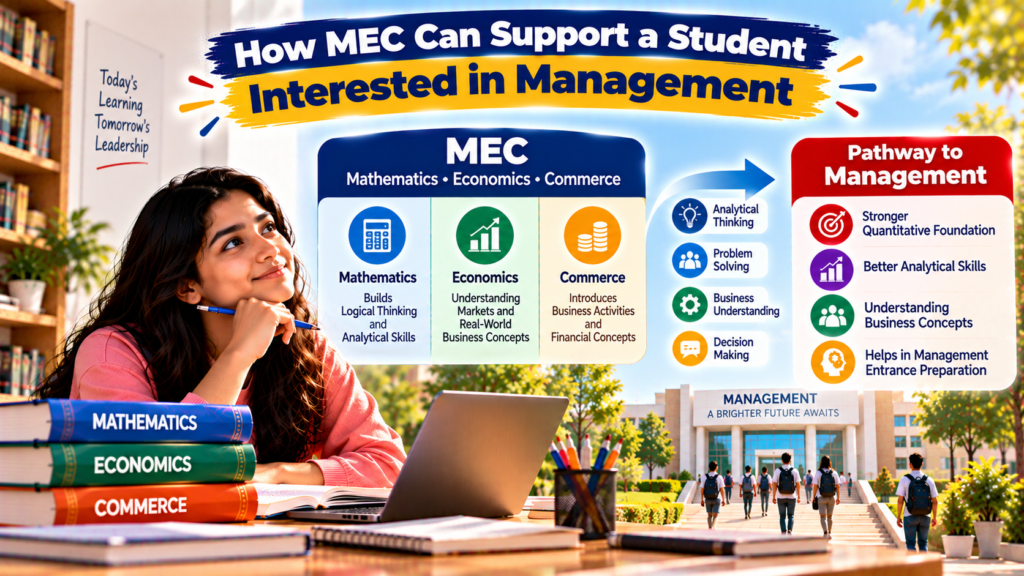
How MEC Can Support a Student Interested in Management
MEC brings together Mathematics, Economics and Commerce, three subjects that help students understand numbers, markets and business concepts. Mathematics encourages logical thinking, accuracy and a step-by-step approach to solving problems. Economics introduces students to ideas such as demand, supply, markets and resource allocation, while Commerce helps them understand business activities and financial transactions. Together, these subjects can help students develop an initial understanding of how organisations and markets function.
For students considering IPMAT, these foundations can be useful, particularly when they begin practising quantitative aptitude and interpreting numerical information. However, school-level Mathematics and IPMAT quantitative aptitude are not identical. Entrance examinations may test speed, application and problem-solving approaches in ways that require additional practice. Students should therefore use their MEC studies as a foundation and gradually develop the specific aptitude skills required by their target management entrance examination.
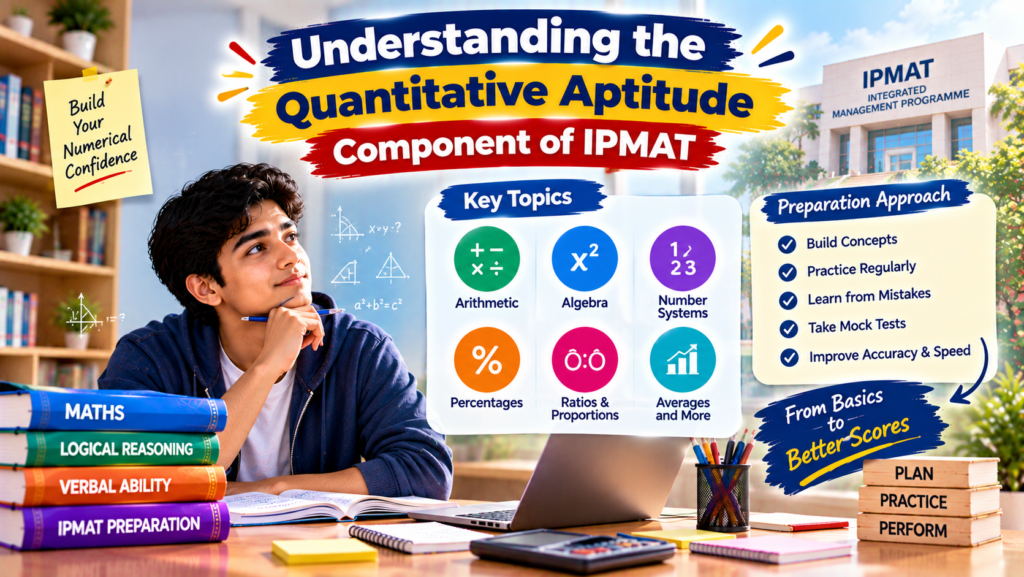
Understanding the Quantitative Aptitude Component of IPMAT
Quantitative aptitude is an important area of IPMAT preparation, although the exact sections, question patterns and selection process depend on the institution conducting the examination. Students may need to practise topics involving arithmetic, algebra, number systems, percentages, ratios, averages and other mathematical concepts, depending on the current syllabus. Developing a strong understanding of basic concepts before moving to timed questions can make preparation more systematic and help students identify areas that need improvement.
MEC students can use their regular Mathematics studies to strengthen numerical confidence, but they should avoid assuming that school examinations alone will cover every entrance-test requirement. IPMAT practice also involves recognising question patterns, selecting efficient methods and managing time. Beginning with untimed questions, reviewing mistakes and then progressing to timed practice can help students build both accuracy and speed. The aim is not simply to solve more questions, but to understand why a method works and when it can be applied effectively.
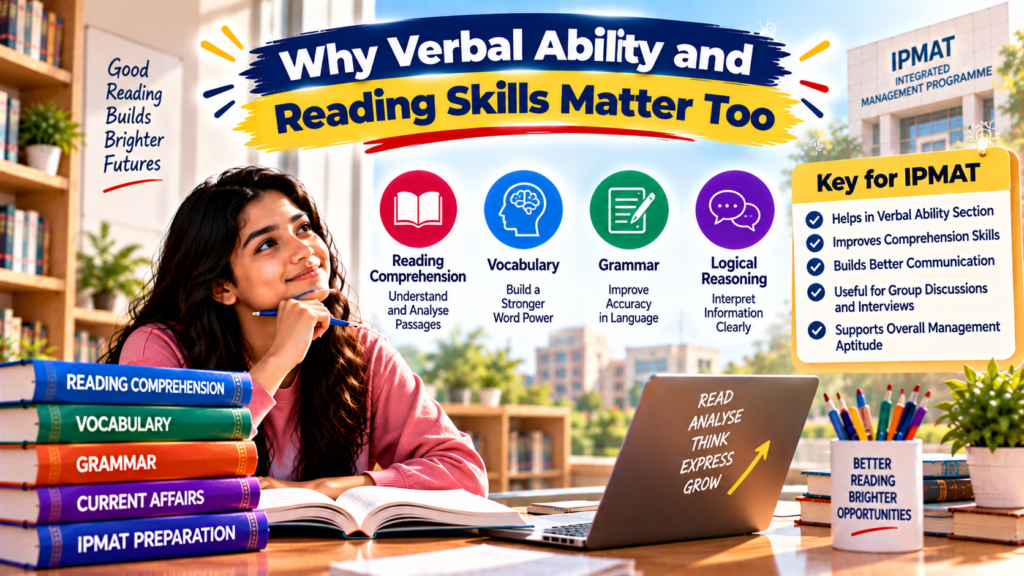
Why Verbal Ability and Reading Skills Matter Too
Although Mathematics can be a useful foundation for quantitative aptitude, students should not concentrate exclusively on numerical practice. IPMAT examinations may include verbal ability, which can assess skills such as reading comprehension, vocabulary, grammar and the ability to understand written information. The precise format varies by institution, so students should confirm the current examination structure for the programme they intend to apply to.
MEC students can strengthen verbal ability through regular reading and deliberate language practice. Reading editorials, informative articles and non-fiction passages can help students become more comfortable with different writing styles and improve their ability to identify a passage’s central idea. Practising comprehension questions, reviewing grammar concepts and learning unfamiliar words in context can further support preparation. A balanced routine that includes Mathematics, reading and verbal exercises helps students avoid developing an uneven preparation strategy.
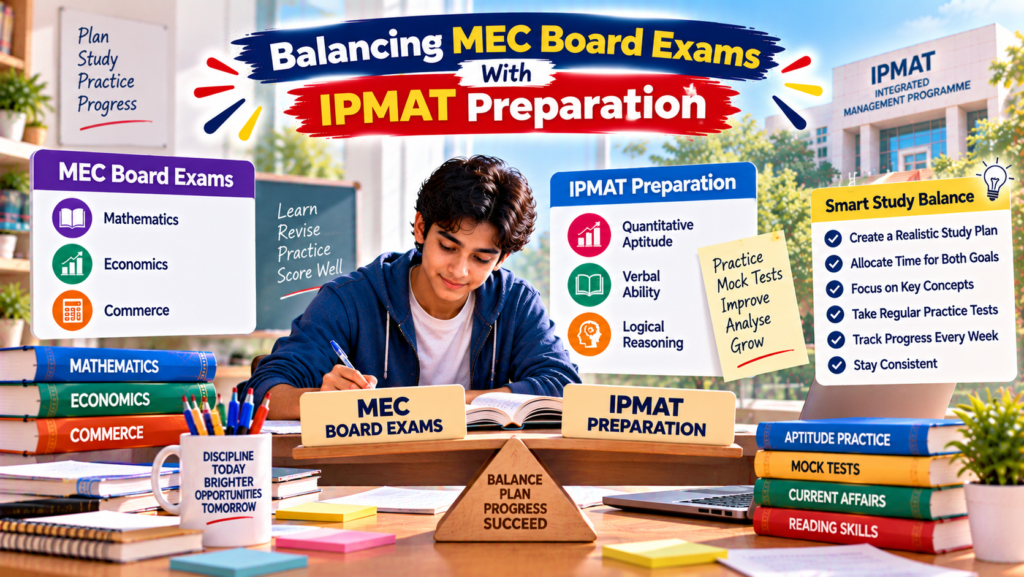
Balancing MEC Board Exams With IPMAT Preparation
Intermediate examinations remain an important priority for MEC students. While preparing for IPMAT, students need to understand their board syllabus, complete assignments, revise concepts and practise examination-style questions. Trying to prepare intensively for both goals without a realistic timetable can lead to stress and inconsistent progress. A planned approach helps students make room for entrance preparation without neglecting their regular academic responsibilities.
Students can begin by identifying their strongest and weakest subjects, setting weekly study targets and allocating short, consistent periods to IPMAT practice. During periods of heavy board-exam preparation, they can focus on revising Intermediate concepts and maintaining light aptitude practice. Once board examinations are approaching completion, they can adjust their schedule to include more mock tests and targeted revision, depending on their entrance-exam dates. Reviewing progress every week helps students change their plan when a topic requires additional attention.
Building the Skills Needed for Management Education
Management education involves more than mathematics or business knowledge. Students gradually need to develop communication, decision-making, teamwork, problem-solving and time-management skills. These abilities are useful when analysing a business situation, explaining an idea, working with others or making decisions based on available information. Students do not need to master every skill before entering a management programme, but developing them during Intermediate can provide a helpful starting point.
MEC students can build these skills through practical habits. Explaining a mathematical solution clearly can improve structured thinking, while discussing economic developments can encourage students to connect classroom concepts with real situations. Group discussions, presentations and reading about businesses can also help students practise communication and become more confident expressing their views. These activities complement entrance preparation by encouraging students to think beyond memorising answers and to understand the reasoning behind them.
Choosing the Right IPMAT Preparation Strategy
Before beginning intensive preparation, students should identify which integrated management programmes they want to consider. The term IPMAT is commonly associated with entrance examinations conducted by institutions such as IIM Indore and IIM Rohtak, but their examination patterns and admission criteria are not identical. Other institutions may use different admission routes. Students should check the official website of each target institution for its current eligibility rules, examination sections, marking scheme and selection process.
After identifying their target programmes, students can prepare a topic checklist based on the relevant official syllabus and take a diagnostic practice test to understand their current level. They can then divide preparation into concept learning, question practice, revision and mock tests. Mock-test scores are most useful when students analyse errors, identify recurring weaknesses and practise those areas again. A steady improvement plan is generally more productive than relying on last-minute preparation or comparing progress with other students.
How CMS Can Help MEC Students Plan for IPMAT
At CMS, MEC students can approach Intermediate learning and future career preparation with a clearer understanding of how their academic subjects relate to different opportunities. Mathematics, Economics and Commerce provide useful foundations for exploring careers in business, finance and management. Students interested in IPMAT Coaching in Hyderabad can benefit from connecting their classroom learning with the aptitude, reading and reasoning skills needed for entrance examinations, while continuing to give appropriate attention to their Intermediate syllabus.
An organised preparation approach can help students understand what they need to learn, monitor their progress and prepare more confidently for their chosen goals. By exploring MEC alongside management entrance preparation, students can start evaluating whether an integrated management programme matches their interests and strengths. They should also remain aware that admission requirements differ across institutions and that entrance preparation needs to be aligned with the latest official guidelines for each programme.
Conclusion
MEC and IPMAT can be a relevant combination for students who enjoy Mathematics and are interested in business, leadership or management education. Mathematics can support quantitative reasoning, Economics can encourage an understanding of markets and decision-making, and Commerce can introduce students to business and financial concepts. These foundations are useful starting points, but successful entrance preparation also requires verbal ability, consistent practice, time management and familiarity with the examination pattern of the institution a student wishes to join.
The most effective approach is to plan early without losing sight of Intermediate academic responsibilities. Students can strengthen their fundamentals, practise aptitude questions regularly, develop reading habits and use mock tests to identify areas for improvement. With realistic goals and a balanced study routine, MEC students can explore IPMAT as one possible route towards management education while keeping other academic and professional options open.