
Introduction
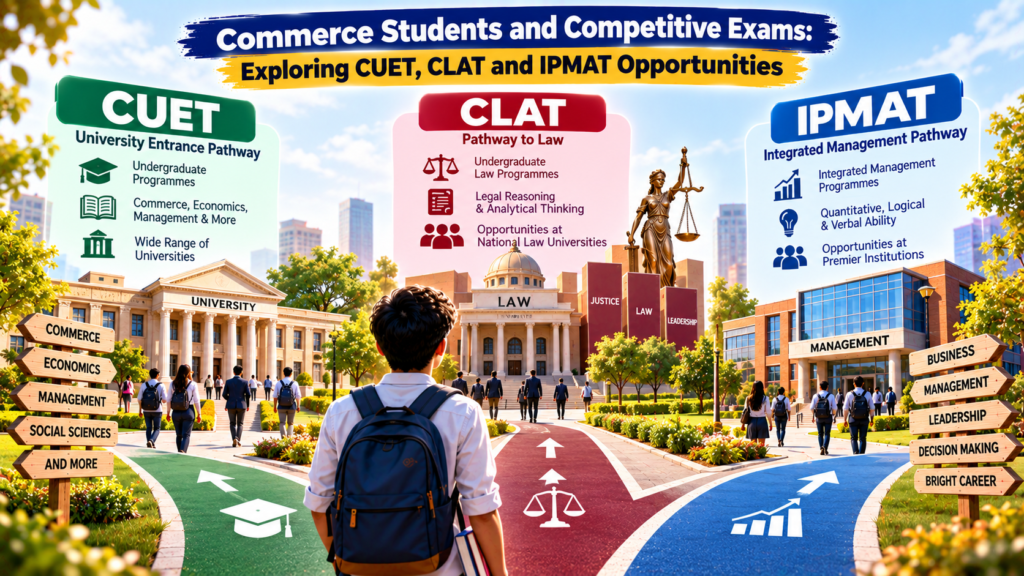
For students pursuing commerce-oriented Intermediate streams such as MEC, CEC and ACE, the years after 10th can open up a wide range of academic and career possibilities. While professional courses such as CA and CMA are popular choices, competitive entrance examinations can also provide pathways into university education, law and management. Among these, CUET, CLAT and IPMAT are important options for students who want to explore different directions after Intermediate.
Each examination serves a different purpose and requires a different preparation approach. CUET can provide access to undergraduate programmes at participating universities, CLAT is an important entrance route for undergraduate legal education, and IPMAT provides an admission pathway to integrated management programmes at participating institutions. Understanding these examinations early can help students identify which opportunities match their interests and strengths.
Understanding CUET as an Undergraduate Entrance Pathway
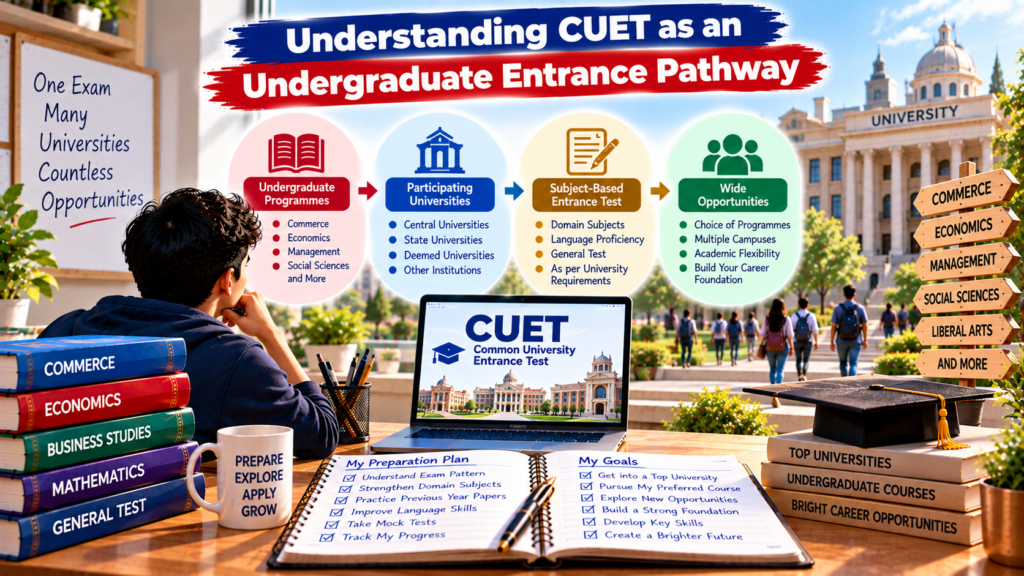
The Common University Entrance Test, or CUET, is an entrance examination through which students can apply to participating universities and their eligible undergraduate programmes. For commerce students, it can be relevant when considering programmes related to commerce, economics, management and other academic disciplines. However, the subjects required and eligibility conditions can vary depending on the university and programme.
Students from MEC, CEC and ACE can use their Intermediate learning as a foundation while preparing for relevant CUET subjects. Instead of treating entrance preparation as completely separate from Intermediate academics, students can identify areas of overlap and strengthen their conceptual understanding alongside regular studies. Checking the current requirements of individual universities and programmes is also an important part of planning CUET preparation.
Exploring CLAT and the Pathway to Law
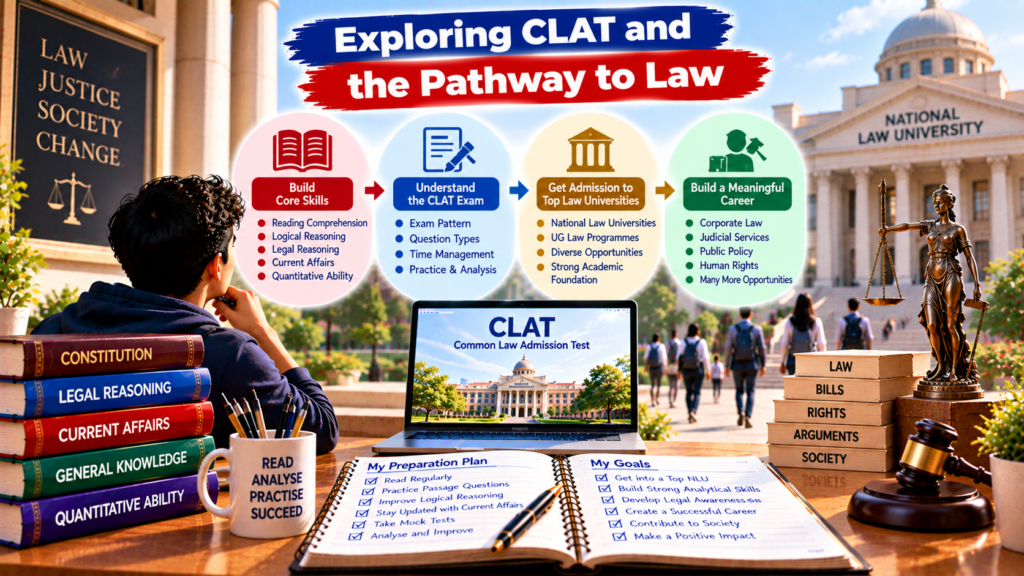
The Common Law Admission Test, commonly known as CLAT, provides an entrance route to undergraduate law programmes at participating National Law Universities. It is particularly relevant for students who are interested in areas such as law, legal systems, public policy, corporate law and related fields. A commerce background does not prevent students from exploring law, and students from different Intermediate streams can develop the skills required for the examination.
CLAT preparation involves more than memorising legal terminology. Students need to develop reading comprehension, logical reasoning, legal reasoning, current affairs awareness and quantitative ability. CEC students may already have exposure to civics and social institutions through their Intermediate subjects, while MEC and ACE students can bring their own strengths in mathematics, economics, commerce and analytical thinking. Regardless of stream, consistent reading and reasoning practice are important.
Understanding IPMAT and Management Education
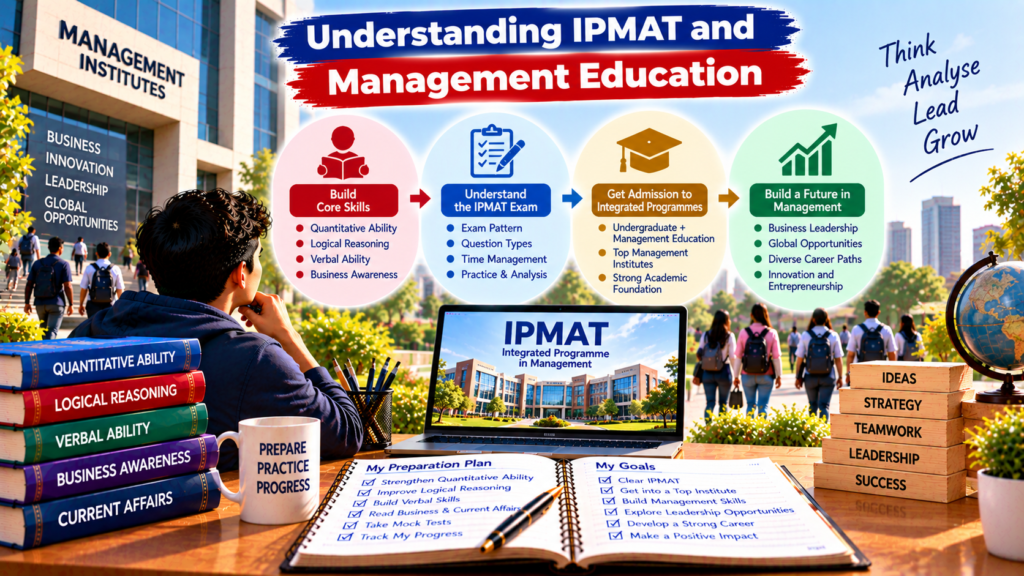
Students interested in business, management and organisational decision-making can explore IPMAT and other management entrance pathways. IPMAT is associated with admission to integrated management programmes offered by participating institutions, combining undergraduate education with management studies.
Preparation for IPMAT generally requires students to develop quantitative ability, logical reasoning and verbal ability. This can make it particularly interesting for students who enjoy mathematics, business concepts, problem-solving and communication. MEC students may find their mathematical background useful for quantitative preparation, while CEC and ACE students can also develop the necessary quantitative and verbal skills through structured practice.
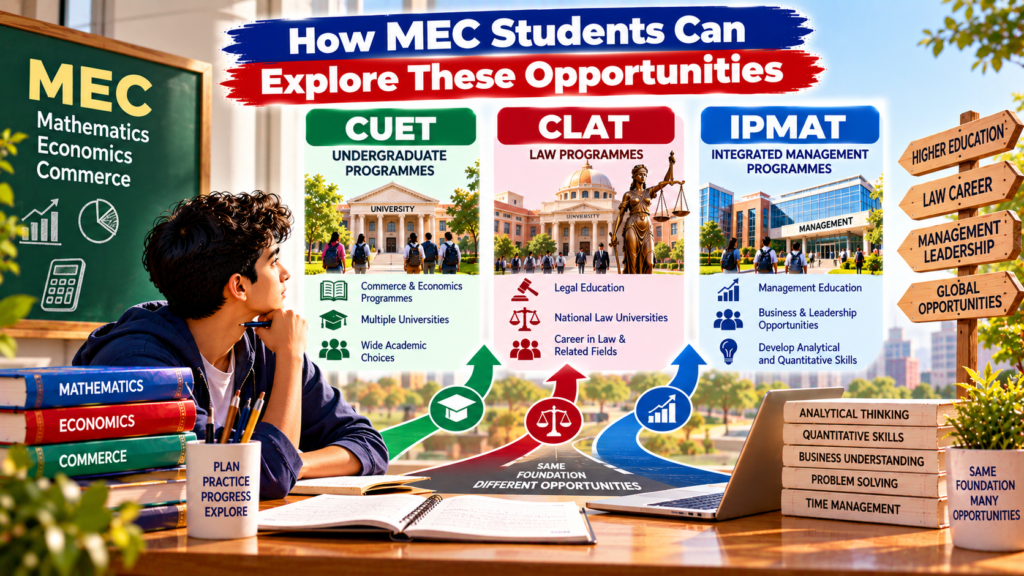
How MEC Students Can Explore These Opportunities
MEC, which combines Mathematics, Economics and Commerce, provides students with exposure to quantitative concepts, economic reasoning and business-related subjects. These areas can be useful foundations for students exploring several competitive examinations. Mathematics can support quantitative preparation, while Economics and Commerce can help students understand business and economic concepts.
For students considering CUET, CLAT or IPMAT, the important point is not simply the subjects they study in Intermediate but the skills they develop alongside those subjects. Regular problem-solving, reading, analysis and time management can strengthen preparation across multiple examination formats. Students can then gradually increase their focus on the specific requirements of the examination they intend to pursue.
How CEC Students Can Explore Different Career Directions
CEC combines Civics, Economics and Commerce, giving students exposure to government institutions, society, economics and business concepts. This combination can be particularly useful for students who enjoy understanding how institutions function and how economic and commercial activities influence society.
CEC students can explore CLAT if they are interested in law and related fields, while CUET can provide opportunities to pursue suitable undergraduate programmes. Students interested in management can also prepare for IPMAT by developing quantitative, logical and verbal abilities. The stream provides a foundation, but additional preparation is necessary for the specific requirements of each entrance examination.
How ACE Students Can Build a Foundation
ACE, comprising Accounts, Commerce and Economics, introduces students to financial concepts, business activities and economic principles. This combination can help students develop an understanding of how businesses operate and how financial and economic decisions influence organisations.
Students from ACE can explore CUET for suitable undergraduate programmes and can also consider CLAT or IPMAT depending on their interests. For competitive examinations, students should identify any additional skills they need to develop. For example, a student preparing for IPMAT may need to devote additional time to quantitative and reasoning practice, while a CLAT aspirant may need to focus more strongly on reading, reasoning and current affairs.
The Common Skills Behind Different Competitive Exams
Although CUET, CLAT and IPMAT have different objectives, several fundamental skills can support preparation for more than one examination. Reading comprehension is useful when students need to understand lengthy passages and questions. Logical thinking helps students analyse information and identify relationships between ideas. Quantitative ability can support examinations that include numerical reasoning, while communication skills are valuable across academic and professional environments.
Time management is another important skill. Students preparing alongside Intermediate academics need to balance classroom learning, revision, assignments, entrance preparation and practice tests. Developing a realistic study routine early can help students avoid leaving entrance preparation until the final stage of Intermediate.
Why Students Should Understand the Examination Before Preparing
Competitive examination preparation becomes more effective when students first understand what they are preparing for. Instead of beginning with random study materials, students can examine the structure of the examination, understand the areas tested and identify their own strengths and weaker areas.
This is particularly important because CUET, CLAT and IPMAT are not interchangeable examinations. Their purposes, eligibility requirements, tested areas and admission processes differ. Students should therefore refer to the latest official information for the examination and institution they are targeting before creating a detailed preparation plan.
Balancing Intermediate Studies With Entrance Preparation
Intermediate education remains important even when a student has a clear entrance-examination goal. Strong academic fundamentals can support competitive preparation while also keeping alternative higher-education options open. Students should therefore avoid treating Intermediate studies and entrance preparation as two completely unrelated responsibilities.
A practical approach is to identify overlapping areas and build them into the weekly schedule. Students can allocate specific periods for Intermediate subjects, entrance-oriented practice, reading, revision and mock tests. The exact balance can change as examinations approach, but maintaining consistency is generally more useful than relying on occasional long study sessions.
How CMS Can Support an Integrated Approach
At CMS, students pursuing MEC, CEC and ACE can explore integrated preparation options alongside their Intermediate education. Depending on their career interests, students can prepare for pathways such as CUET, CLAT and IPMAT while continuing their regular Intermediate studies.
An integrated approach can help students connect what they learn in Intermediate with the skills required for future entrance examinations. Rather than waiting until after Intermediate to begin understanding these opportunities, students can gradually develop relevant skills, understand examination requirements and identify the pathway that best matches their academic interests.
Choosing Between CUET, CLAT and IPMAT
The choice between CUET, CLAT and IPMAT ultimately depends on what a student wants to study after Intermediate. Students interested in a broad range of undergraduate programmes can explore CUET Coaching in Hyderabad and identify suitable universities and courses. Students who are specifically interested in legal education can investigate CLAT and undergraduate law programmes. Students interested in management education can explore IPMAT and integrated management programmes.
Students do not need to make the decision based only on the name of an examination. They should consider the subjects they enjoy, the skills they are willing to develop, the type of programme they want to enter and the kind of career direction they are considering. Understanding these factors can make the transition from Intermediate to higher education more purposeful.
Conclusion
Competitive examinations can expand the opportunities available to commerce students beyond the traditional career paths associated with Intermediate education. CUET, CLAT and IPMAT represent different routes into undergraduate education, law and management, and each requires its own preparation strategy. MEC, CEC and ACE students can explore these options based on their interests while developing the academic and analytical skills needed for their chosen pathway.
The most useful preparation begins with awareness. By understanding the purpose of each examination, identifying the required skills and balancing entrance preparation with Intermediate studies, students can make more informed decisions about their future. Whether the goal is university education through CUET, legal education through CLAT or management education through IPMAT, the Intermediate years can provide a strong foundation for the next stage of academic growth.