
Exploring CA and CMA After Class 10
Completing Class 10 is an important milestone for students who want to build a career in commerce, finance or business. As they prepare to enter Intermediate education, many begin exploring professional qualifications that can lead to specialised career opportunities. Chartered Accountancy (CA) and Cost and Management Accountancy (CMA) are two prominent options for students interested in accounting, financial management and business operations. Both qualifications offer opportunities to develop professional knowledge, but they focus on different aspects of finance and organisational management.
Students do not have to wait until they complete Intermediate to understand these courses. Exploring CA and CMA after Class 10 gives them time to learn about the subjects, examination pathways and career possibilities associated with each qualification. At CMS, students pursuing MEC, CEC and ACE can combine their Intermediate education with integrated CA and CMA coaching, helping them build an academic foundation while beginning their professional course preparation.
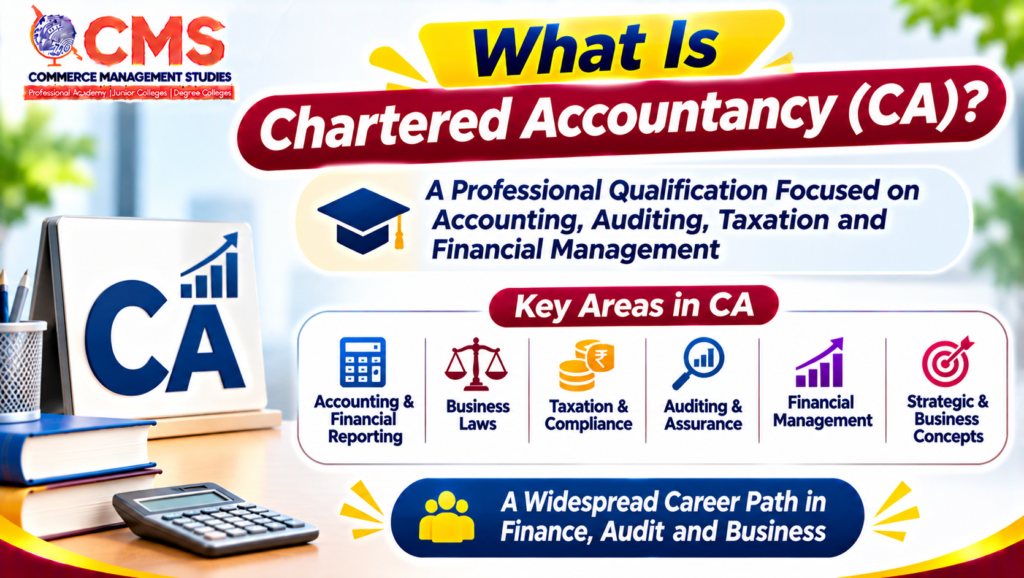
What Is Chartered Accountancy (CA)?
Chartered Accountancy is a professional qualification offered by the Institute of Chartered Accountants of India (ICAI). It prepares students for responsibilities related to accounting, auditing, taxation, financial reporting and financial management. Chartered Accountants work with businesses, individuals and organisations to support financial compliance, reporting and decision-making.
The CA qualification involves multiple stages of learning and assessment. Students generally progress through the Foundation, Intermediate and Final levels, along with the prescribed practical training and other requirements applicable under the current ICAI scheme.
Some important areas covered in the CA pathway include:
- Accounting and financial reporting.
- Business laws and related regulations.
- Taxation and tax compliance.
- Auditing and assurance.
- Financial management.
- Strategic and business-related concepts.
Students interested in understanding financial statements, interpreting financial information, taxation and regulatory requirements may find CA an interesting professional pathway.
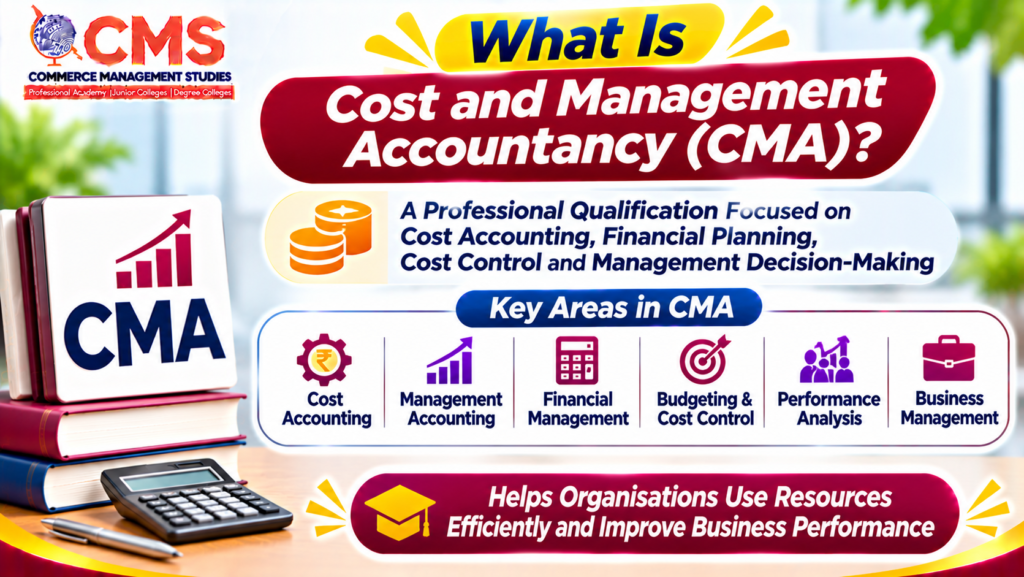
What Is Cost and Management Accountancy (CMA)?
Cost and Management Accountancy is a professional qualification offered by the Institute of Cost Accountants of India (ICMAI). It focuses on cost accounting, financial planning, cost control, performance evaluation and management decision-making. Cost and Management Accountants help organisations understand how resources are used, evaluate expenses and improve financial efficiency.
The CMA qualification also follows a structured examination pathway, generally consisting of Foundation, Intermediate and Final stages, along with applicable training and other requirements.
Some important areas associated with CMA include:
- Fundamentals of accounting.
- Cost and management accounting.
- Financial management.
- Business laws and ethics.
- Economics and management.
- Performance analysis and strategic decision-making.
Students who are interested in understanding business costs, budgeting, financial planning and improving organizational performance may find CMA worth exploring.
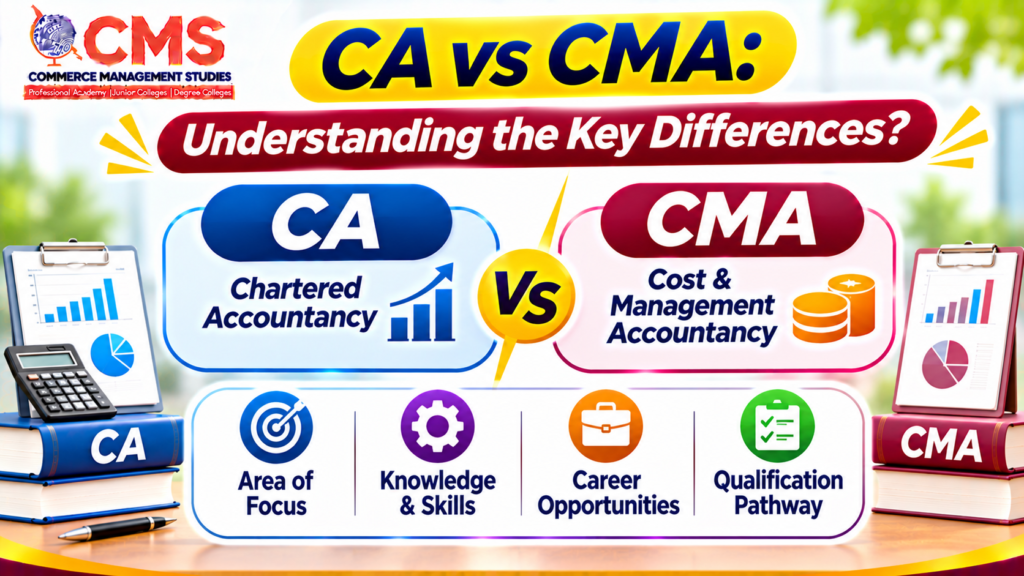
CA vs CMA: Understanding the Key Differences
Although CA and CMA share a foundation in accounting, finance and business concepts, their professional focus areas differ. Understanding these differences can help students identify which qualification better matches their interests.
1. Main Area of Focus
CA has a broad focus on accounting, auditing, taxation, financial reporting and compliance. It prepares professionals to examine financial records, support statutory requirements and provide financial and business-related services.
CMA focuses more specifically on cost management, financial planning, budgeting, performance measurement and management decision-making. It prepares professionals to analyse costs and support organisations in improving resource utilisation.
2. Professional Knowledge and Skills
CA students develop knowledge in financial accounting, taxation, auditing, laws and financial management. These areas help them understand how financial information is recorded, examined and reported.
CMA students develop knowledge in cost accounting, management accounting, budgeting, performance analysis and financial planning. These subjects help them understand how organisations monitor costs and use financial information for internal decisions.
3. Career Opportunities
CA professionals can explore opportunities in accounting, auditing, taxation, financial reporting, consulting and financial management. They may work in professional firms, companies, financial departments or establish their own professional practice subject to applicable regulations.
CMA professionals can explore roles in cost accounting, management accounting, budgeting, financial planning, cost control and business performance analysis. Opportunities are available across manufacturing, service industries, consulting and corporate finance functions.
4. Professional Qualification Pathway
Both qualifications have structured examination stages and practical requirements. CA is regulated through ICAI, while CMA is administered by ICMAI. Their registration procedures, examination schedules, training requirements and progression rules are different.
Students should review the latest regulations issued by the respective institutes before deciding on a registration or examination plan.
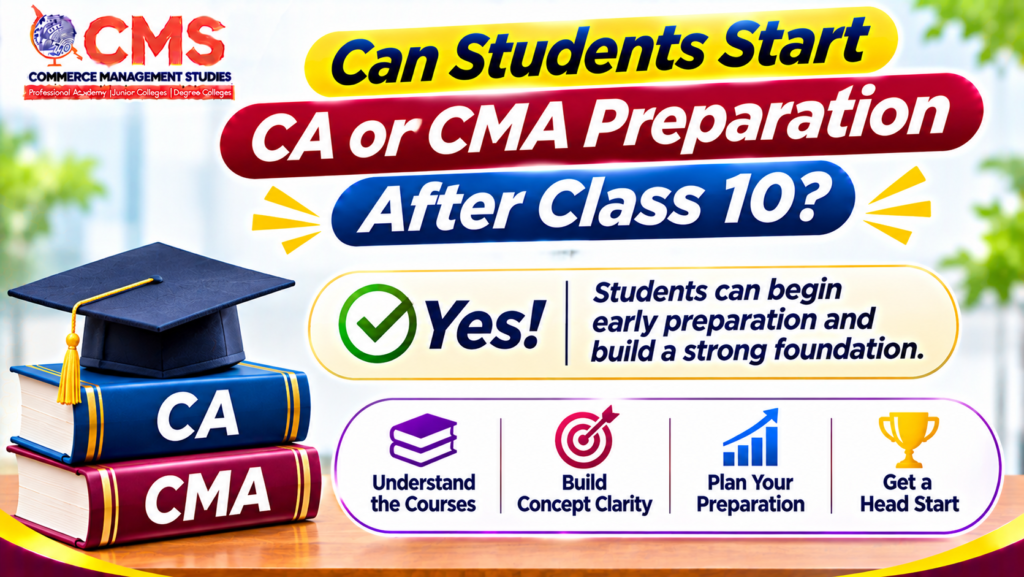
Can Students Start CA or CMA Preparation After Class 10?
Yes. Students can begin understanding the subjects and developing relevant academic skills after Class 10. However, joining a coaching programme during Intermediate is different from registering for a professional examination. Students must meet the respective institute’s eligibility and registration requirements before appearing for the applicable examinations.
Class 11 is a useful time to strengthen accounting fundamentals, mathematical ability, economics and business understanding. Students can also become familiar with the structure of CA and CMA Foundation preparation, practise relevant questions and develop a consistent study routine.
Starting early does not mean students need to rush through the professional qualification syllabus. Instead, they can build their knowledge gradually while completing their Intermediate education.
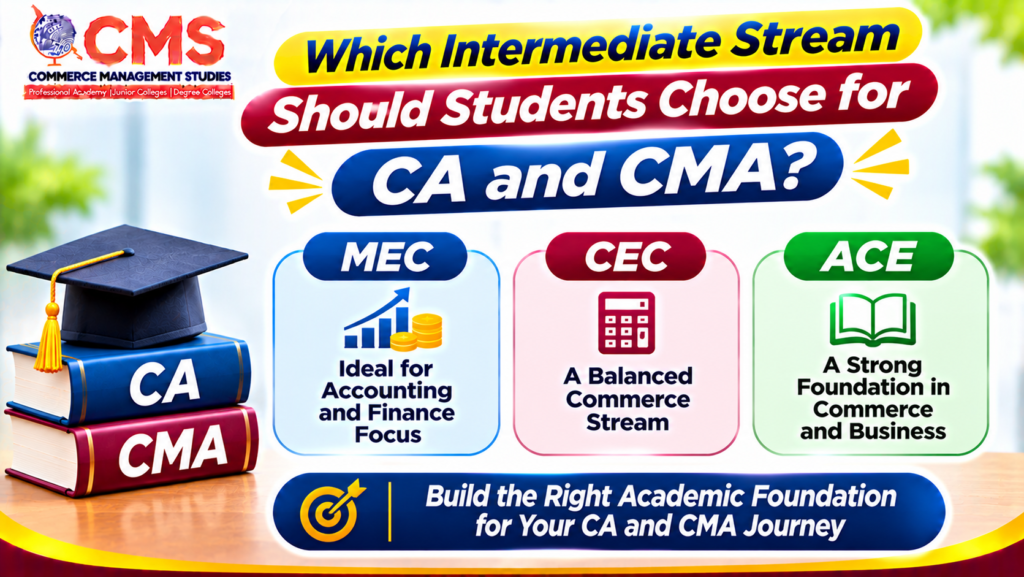
Which Intermediate Stream Should Students Choose for CA and CMA?
Students planning to explore CA or CMA can consider MEC, CEC or ACE based on their academic interests and learning preferences. Each stream offers a different combination of subjects, but students from these streams can explore both professional qualifications, subject to the relevant eligibility requirements.
MEC for CA and CMA Preparation
MEC includes Mathematics, Economics and Commerce. These subjects provide a foundation in numerical concepts, economic principles and business-related knowledge. Mathematics can help students develop calculation and analytical skills, while Economics and Commerce introduce concepts relevant to finance and business.
Students pursuing MEC can use their Intermediate years to strengthen accounting fundamentals and gradually prepare for CA or CMA Foundation-level subjects.
CEC for CA and CMA Preparation
CEC includes Civics, Economics and Commerce. The stream introduces students to economic systems, commerce-related concepts, governance and social institutions. Economics and Commerce provide useful academic exposure for students interested in accounting and financial management.
CEC students can explore CA and CMA preparation alongside their Intermediate education by focusing on accounting concepts, business understanding and the relevant professional course syllabus.
ACE for CA and CMA Preparation
ACE students can also explore CA and CMA as professional pathways while pursuing their Intermediate education. They can build the necessary foundation through subject-focused learning, accounting practice and preparation aligned with the requirements of their chosen qualification.
The decision should be based on the student’s academic interests, preferred subjects and future plans rather than assuming that one Intermediate stream automatically guarantees an advantage in a professional examination.
How to Decide Between CA and CMA
Choosing between CA and CMA requires more than comparing course names or career titles. Students should understand the nature of the work involved and consider which subjects and professional responsibilities interest them.
The following points can help students evaluate their options:
- Interest in financial reporting and auditing: Students who enjoy understanding financial statements, taxation, auditing and compliance may explore CA.
- Interest in cost management: Students who want to understand how businesses calculate costs, manage budgets and improve financial efficiency may explore CMA.
- Preferred career responsibilities: Consider whether you are more interested in external financial reporting and assurance or internal cost analysis and management support.
- Subject preferences: Review the subjects covered at different stages of both qualifications and identify which areas interest you.
- Long-term career goals: Explore the professional roles, work environments and responsibilities associated with each qualification.
- Preparation commitment: Both qualifications require consistent study, examination preparation and completion of prescribed requirements.
Students should also speak with teachers, academic mentors and professionals to gain a clearer understanding of the courses before making a decision.
Why Class 11 Is a Good Time to Begin CA and CMA Preparation
Class 11 gives students an opportunity to begin professional course preparation while they are still developing their Intermediate academic foundation. Rather than starting from scratch after Class 12, students can use these two years to improve subject knowledge, practise questions and understand examination expectations.
Some benefits of beginning early include:
- Conceptual clarity: Students get time to understand accounting, economics, mathematics and business concepts.
- Regular practice: Consistent exercises help improve numerical ability, accuracy and problem-solving skills.
- Examination awareness: Students can become familiar with the CA and CMA qualification pathways and Foundation-level subjects.
- Better study planning: Preparation can be distributed across the Intermediate years instead of being concentrated into a short period.
- Career understanding: Early exposure helps students compare the professional responsibilities and opportunities associated with both courses.
A balanced approach is important. Students should continue giving adequate attention to their Intermediate syllabus while preparing for their chosen professional course.
How CMS Supports CA and CMA Preparation Alongside Intermediate
Preparing for CA or CMA while pursuing Intermediate requires a coordinated approach to academic learning and professional course preparation. CMS Top CA Institutes in Hyderabad and the best CMA Colleges in Hyderabad offers integrated CA and CMA coaching alongside MEC, CEC and ACE Intermediate education, allowing students to work towards their board examinations and professional qualification goals together.
Through subject-focused teaching, regular assessments, practice sessions and examination preparation, students can strengthen their understanding of accounting and related concepts. Performance feedback can help them identify areas that require more attention and organise their revision accordingly.
For students who are still deciding between CA and CMA, understanding both qualification pathways during Intermediate can help them make a more informed choice. CMS provides an opportunity to explore these professional courses while continuing regular Intermediate education, helping students plan their academic and career goals with greater clarity.
Conclusion
CA and CMA are both valuable professional pathways for students interested in commerce, accounting and finance, but they focus on different areas of professional work. CA covers accounting, auditing, taxation and financial reporting, while CMA places greater emphasis on cost management, budgeting, financial planning and business performance. Understanding these differences after Class 10 can help students identify a course that aligns with their interests and long-term goals.
Students pursuing MEC, CEC and ACE can explore either qualification and begin building the required academic foundation during Intermediate. With integrated CA and CMA coaching alongside Intermediate education at CMS, students can start preparing early, strengthen their subject knowledge and make more informed decisions about their professional future.