
Introduction
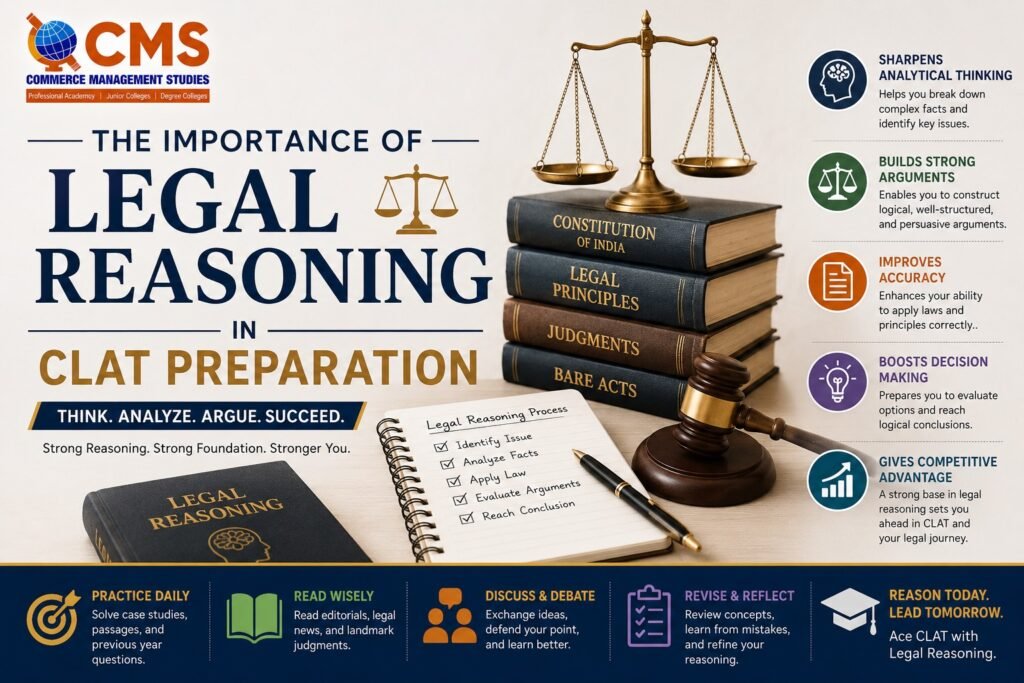
The Common Law Admission Test (CLAT) is one of the most sought-after entrance examinations for students aspiring to pursue a career in law. Among its various sections, Legal Reasoning plays an important role in testing a candidate’s ability to understand legal principles, analyse situations, and apply rules logically. Rather than simply testing a student’s knowledge of laws, this section focuses on reasoning and interpretation.
Developing strong legal reasoning skills can significantly improve a student’s overall performance in CLAT. With consistent practice, students can learn to identify relevant facts, understand principles, eliminate incorrect options, and arrive at the most appropriate answer. For students preparing with CMS, structured guidance and regular practice can make the process of developing these skills more systematic and effective.
Understanding Legal Reasoning in CLAT
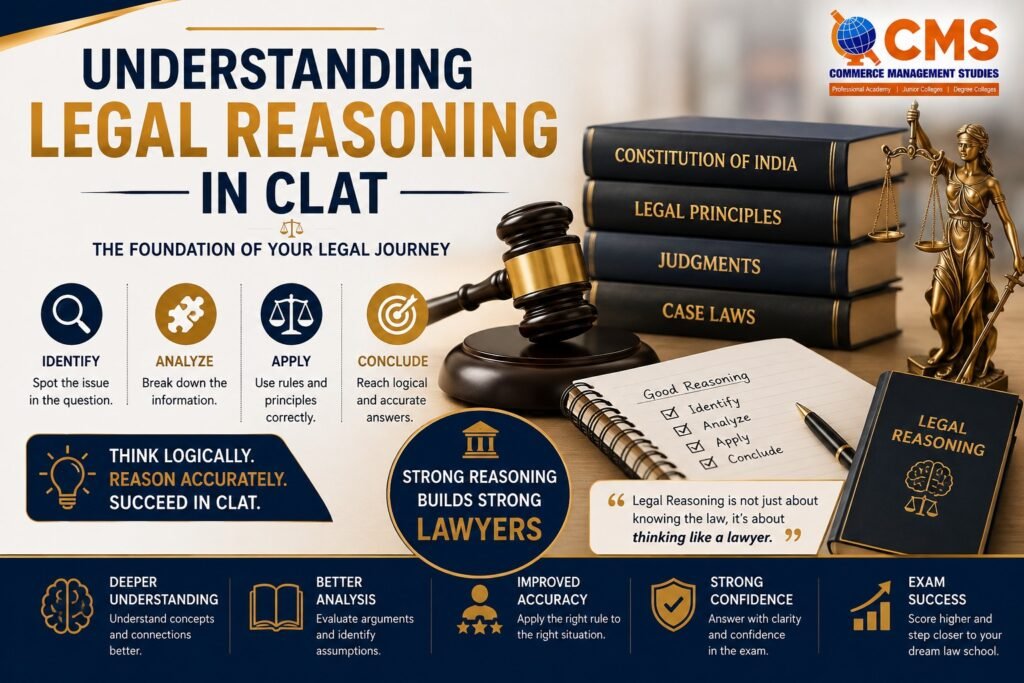
Legal Reasoning questions generally present candidates with a legal principle or rule followed by a factual situation. Students are expected to understand the given principle and apply it to the facts provided. The ability to read carefully and distinguish relevant information from unnecessary details is therefore essential.
An important aspect of this section is that students are not always expected to have extensive knowledge of legal provisions. Instead, they need to demonstrate logical thinking and the ability to apply a stated rule correctly. This makes Legal Reasoning a skill-based section that can improve considerably through regular practice and analysis.
Why Legal Reasoning Is Important for CLAT
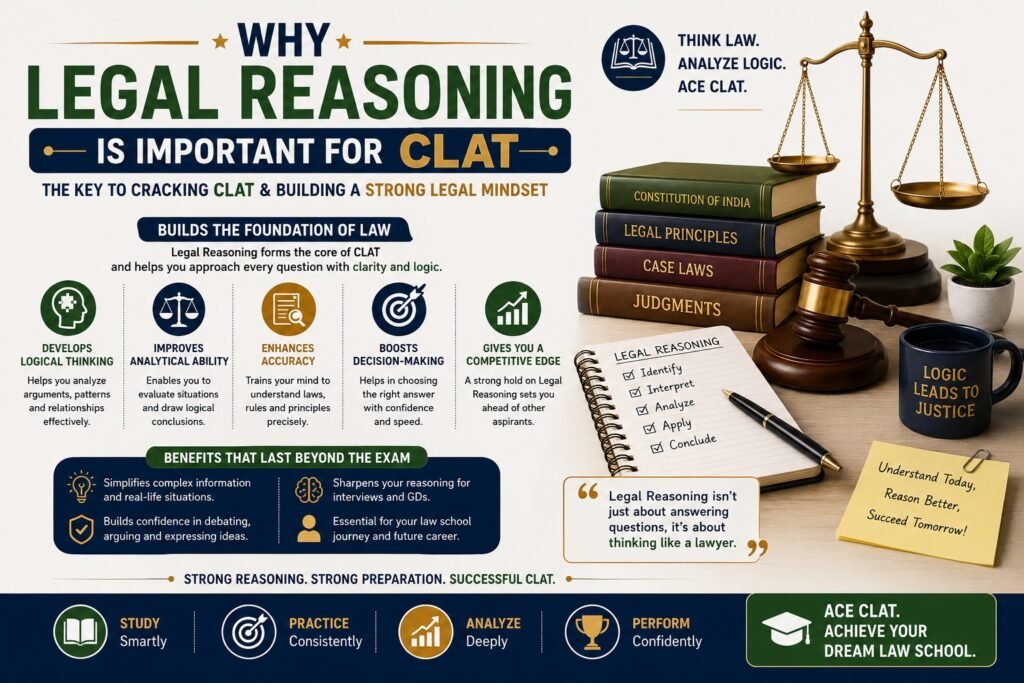
Legal Reasoning helps students develop analytical abilities that are useful not only for the entrance examination but also for their future legal education. Law involves interpreting information, examining arguments, understanding principles, and applying them to different circumstances.
For CLAT aspirants, strengthening this section can also improve reading accuracy and decision-making under time pressure. The major benefits include:
- Improved analytical thinking: Students learn to examine facts and principles systematically.
- Better application skills: Practice helps candidates understand how legal principles apply to practical situations.
- Enhanced reading comprehension: Legal passages often require careful reading and interpretation.
- Faster decision-making: Regular practice helps students solve questions more efficiently.
- Greater confidence: Familiarity with different question patterns reduces exam anxiety.
- Stronger logical reasoning: Students learn to identify relationships between principles, facts, and conclusions.
How to Develop Strong Legal Reasoning Skills
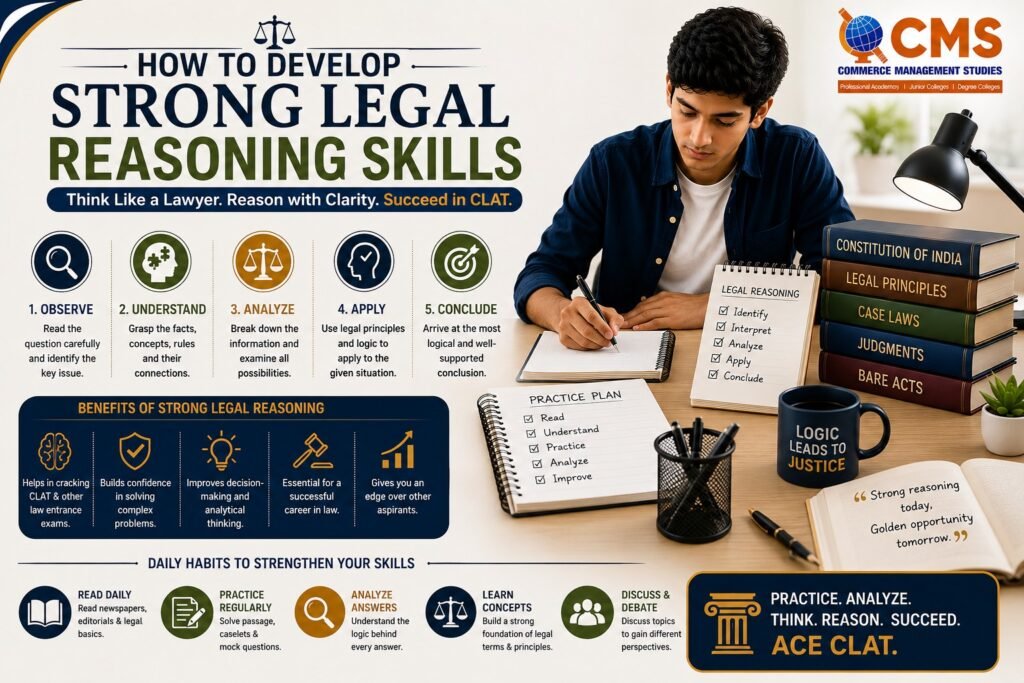
Building legal reasoning ability requires more than memorising legal terms. Students should focus on understanding how a principle works and practise applying it to different factual situations. Solving a variety of CLAT-style questions allows aspirants to recognise recurring patterns and identify the reasoning expected in each question.
A good preparation routine should combine conceptual understanding with timed practice. Students should also review incorrect answers carefully instead of simply moving on to the next question. Understanding why an answer was incorrect is often more valuable than merely checking the correct option.
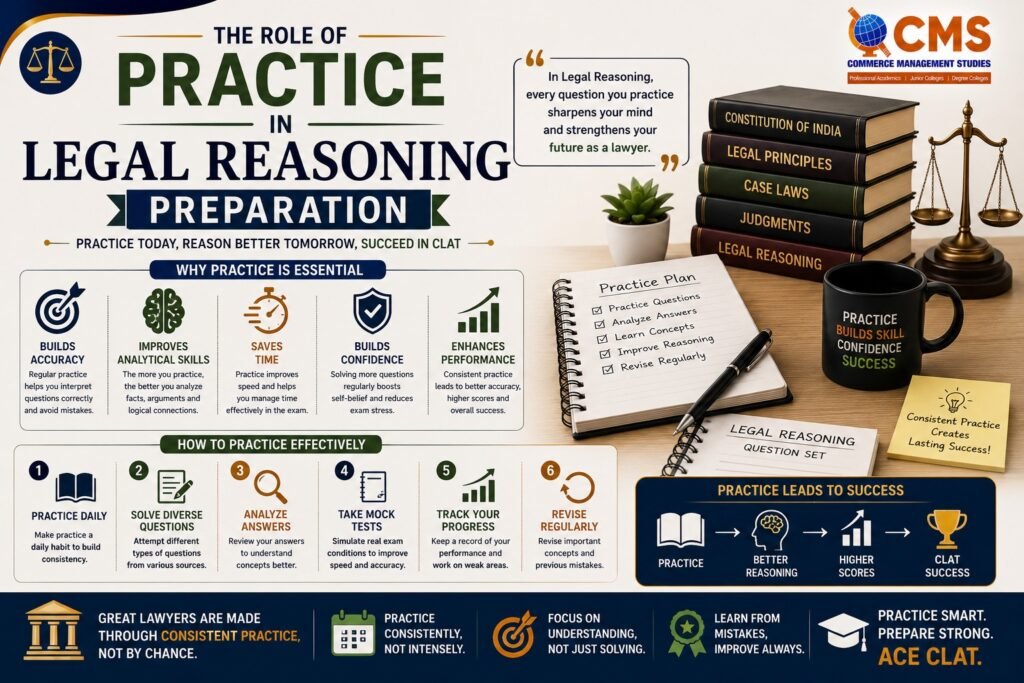
The Role of Practice in Legal Reasoning Preparation
Consistent practice is one of the most effective ways to improve Legal Reasoning. Initially, students may take more time to understand lengthy passages and identify the applicable principle. With regular exposure to questions, however, they can gradually improve both accuracy and speed.
Students preparing through CLAT Coaching in Hyderabad can benefit from a structured study environment where they receive guidance, practise mock questions, and analyse their performance. At CMS, regular preparation and focused practice can help aspirants build the confidence needed to approach Legal Reasoning questions strategically.
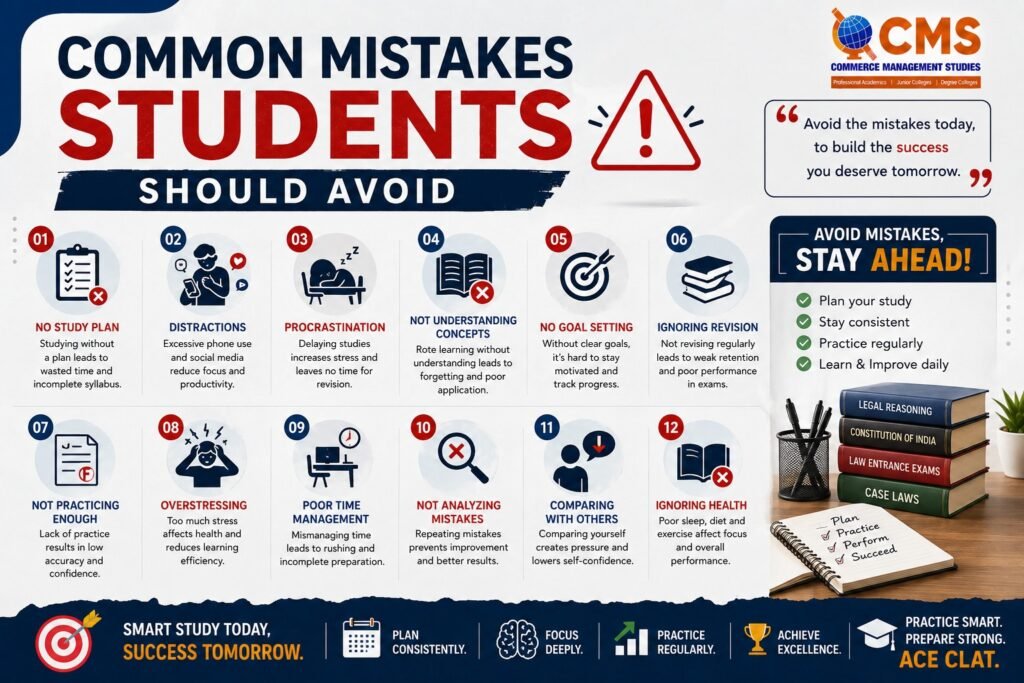
Common Mistakes Students Should Avoid
Many students make the mistake of relying too heavily on their assumptions or prior knowledge while answering Legal Reasoning questions. In most principle-based questions, the key is to apply the information provided in the question carefully rather than introduce unrelated interpretations.
Other common mistakes include:
- Reading the passage too quickly.
- Ignoring important facts in the question.
- Choosing an answer based on personal opinion.
- Overthinking a straightforward legal principle.
- Spending too much time on one difficult question.
- Failing to analyse mistakes after practice tests.
Avoiding these mistakes can help students improve both accuracy and time management.
How CMS Can Support CLAT Aspirants
A structured preparation strategy can make a significant difference when preparing for a competitive examination like CLAT. Students need a balance of conceptual learning, practice questions, mock tests, revision, and performance analysis to steadily improve their preparation.
CMS can provide aspirants with an organised learning environment focused on developing the skills required for entrance examinations. With consistent practice and proper guidance, students can work towards improving their Legal Reasoning abilities while strengthening other important areas of CLAT preparation.
Conclusion
Legal Reasoning is an important component of CLAT preparation because it tests a student’s ability to understand principles, analyse facts, and apply logic rather than simply recall information. Developing these skills takes time, but consistent practice, careful reading, and regular analysis of mistakes can lead to substantial improvement.
For aspiring law students, preparing strategically is just as important as studying hard. With the right guidance, disciplined practice, and a clear understanding of question patterns, students can approach the Legal Reasoning section with greater confidence. Choosing a reliable CLAT Coaching in Hyderabad such as CMS can further support aspirants in building the skills and exam readiness required to pursue their law-school ambitions.