
Introduction
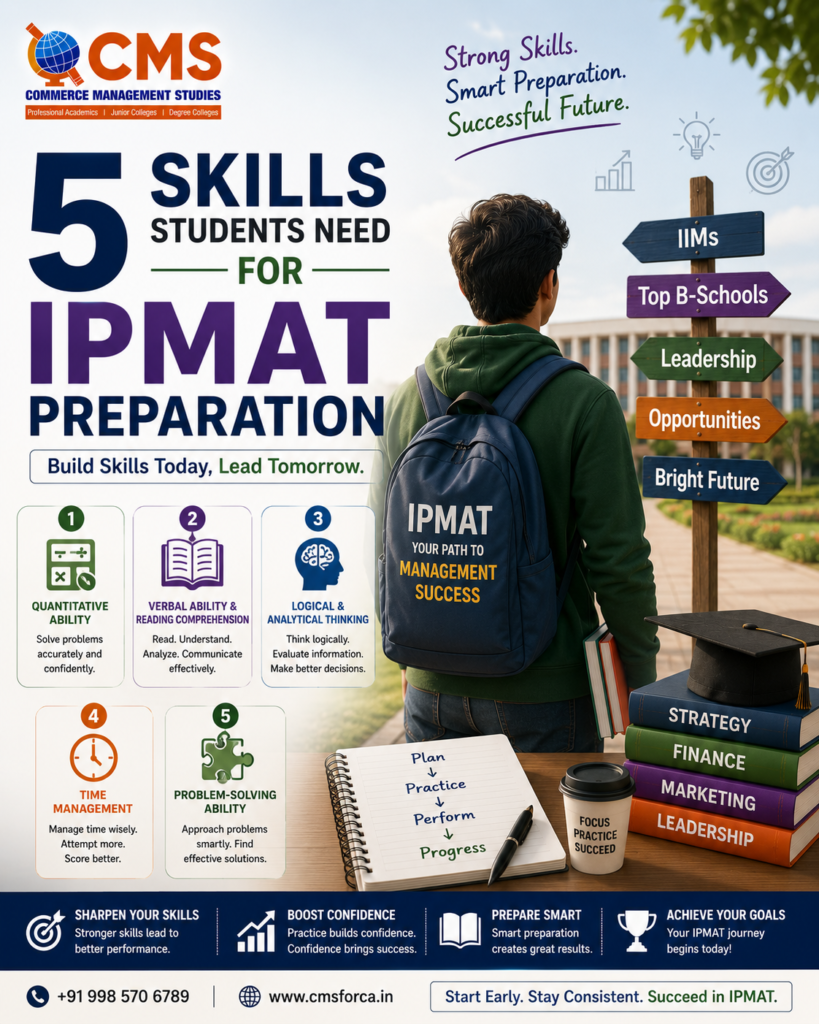
The Integrated Programme in Management Aptitude Test (IPMAT) is an important entrance examination for students who want to pursue integrated management education after completing Intermediate. The examination is designed to assess a combination of aptitude, reasoning, and language-related abilities rather than testing only textbook knowledge. This makes IPMAT preparation different from preparing solely for regular Intermediate examinations.
Students preparing for IPMAT can benefit from developing specific skills well before the examination. Strong quantitative ability, verbal proficiency, logical thinking, time management, and problem-solving skills can help students approach different sections of the examination with greater confidence. These skills do not develop overnight, which is why consistent practice during Intermediate can make preparation more effective.
1. Quantitative Ability
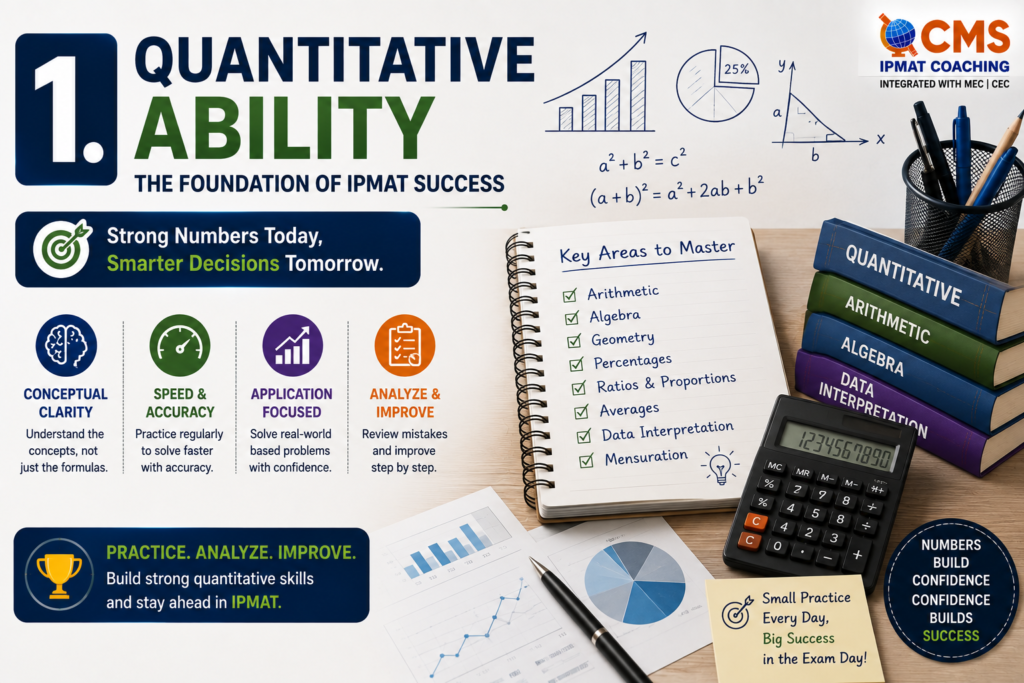
Quantitative ability is one of the most important skills for IPMAT preparation. Students need to be comfortable working with numbers, mathematical concepts, calculations, and application-based problems. A strong foundation in areas such as arithmetic, algebra, geometry, percentages, ratios, averages, and data interpretation can help students approach quantitative questions more confidently.
The focus should not only be on memorizing formulas. Students should understand the concepts behind different methods and practice applying them to unfamiliar questions. Regular numerical practice can gradually improve calculation accuracy and speed, while reviewing mistakes can help identify topics that require additional attention.
2. Verbal Ability and Reading Comprehension
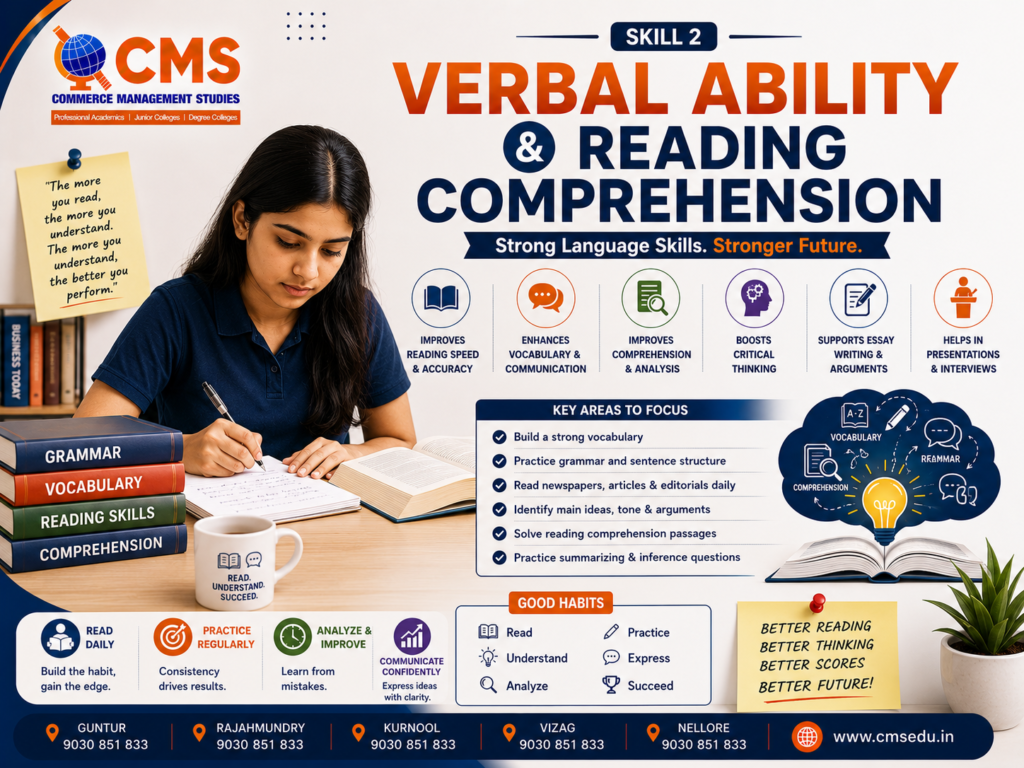
Strong language skills are valuable for IPMAT because management education involves reading, communication, presentations, reports, and analysis of written information. Students preparing for the examination should therefore work on vocabulary, grammar, sentence structure, reading comprehension, and the ability to understand written arguments.
A regular reading habit can make a significant difference. Students can read newspapers, quality articles, essays, business-related content, and other informative material. While reading, they should try to identify the main idea, supporting information, tone, and conclusions. This can gradually improve both comprehension and reading speed.
3. Logical and Analytical Thinking
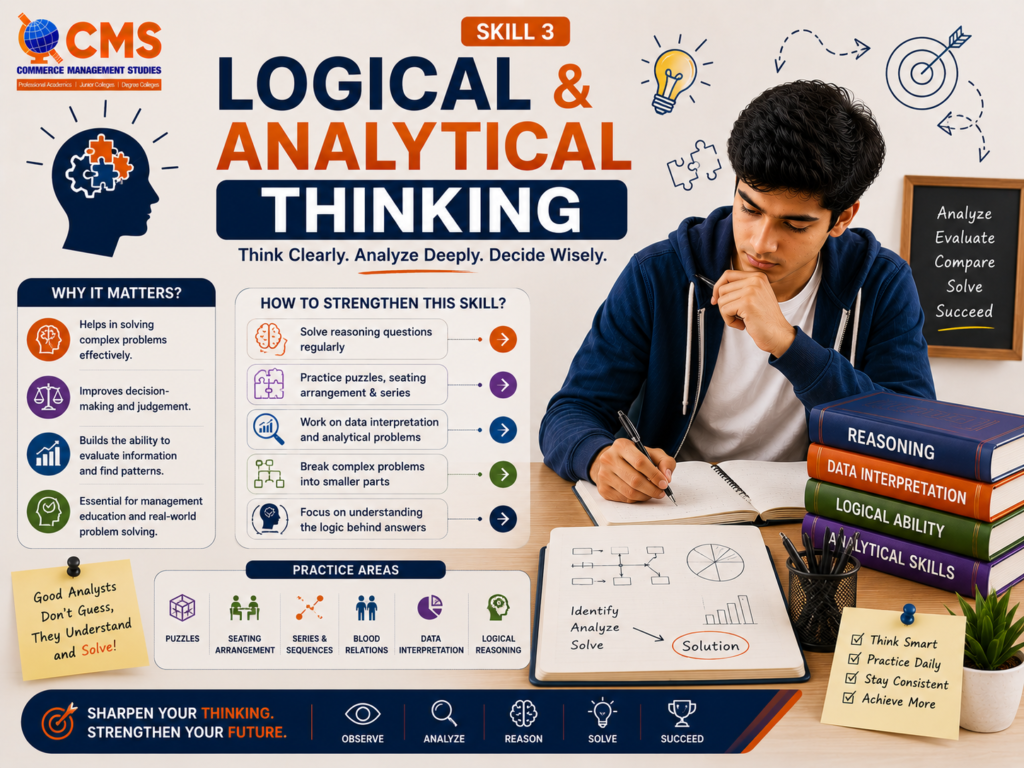
Management education requires students to evaluate information, identify relationships, compare alternatives, and make reasoned decisions. Developing logical and analytical thinking can therefore support both IPMAT preparation and future management studies.
Students can strengthen this skill by solving reasoning problems, puzzles, data-based questions, and analytical exercises. Instead of simply looking for the correct answer, they should understand the reasoning process behind it. Learning to break a complex question into smaller parts can make unfamiliar problems easier to approach.
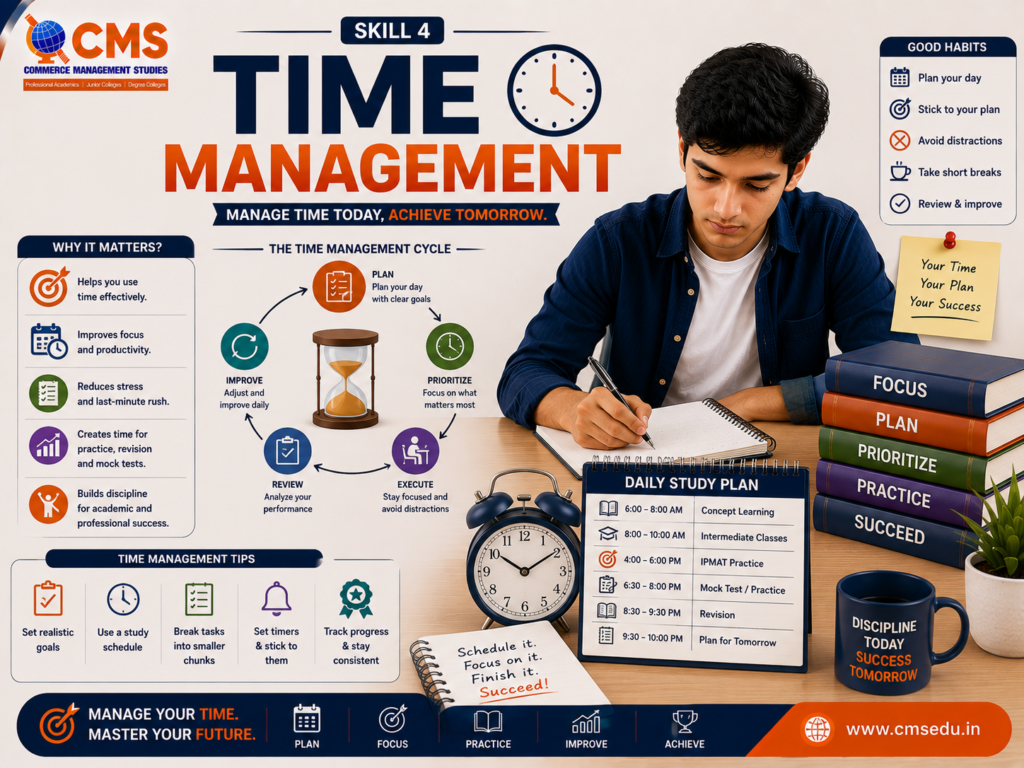
4. Time Management
Time management is particularly important in competitive entrance examinations because students need to answer questions accurately within a limited amount of time. Knowing the concept is not always enough if too much time is spent on a single difficult question.
Students can gradually develop this skill through timed practice. They can begin by setting reasonable time limits for individual topics and later move toward section-wise and full-length practice tests. With experience, students can learn when to continue working on a question and when it is more efficient to move to another one.
Good time management also applies to preparation itself. Students need to balance Intermediate studies, IPMAT preparation, revision, practice, mock tests, and personal time. A realistic routine can help maintain consistency without creating unnecessary academic pressure.
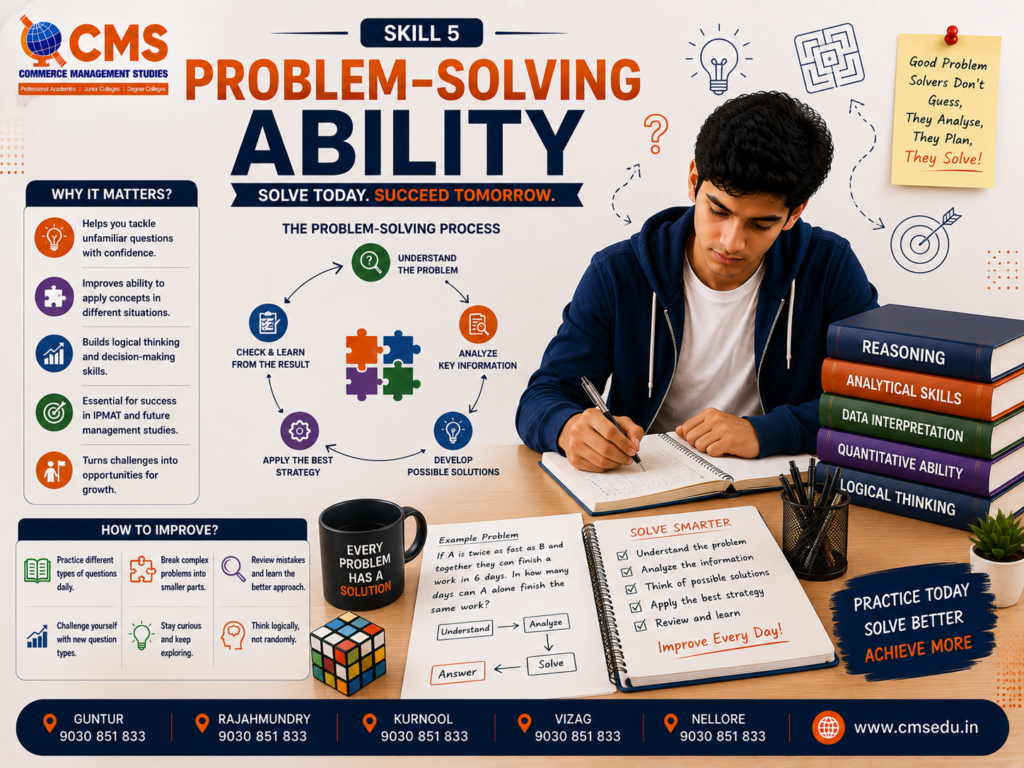
5. Problem-Solving Ability
Problem-solving is at the heart of aptitude-based examinations. IPMAT questions may require students to apply concepts rather than simply recall information. A student may know a mathematical formula or a reasoning principle but still need to determine how it should be used in a particular situation.
Students can improve problem-solving ability by practicing different question types and gradually increasing the difficulty level. They should also review questions they were unable to solve and understand the method used to reach the answer. Over time, exposure to different problems can help students become more flexible and confident in their approach.
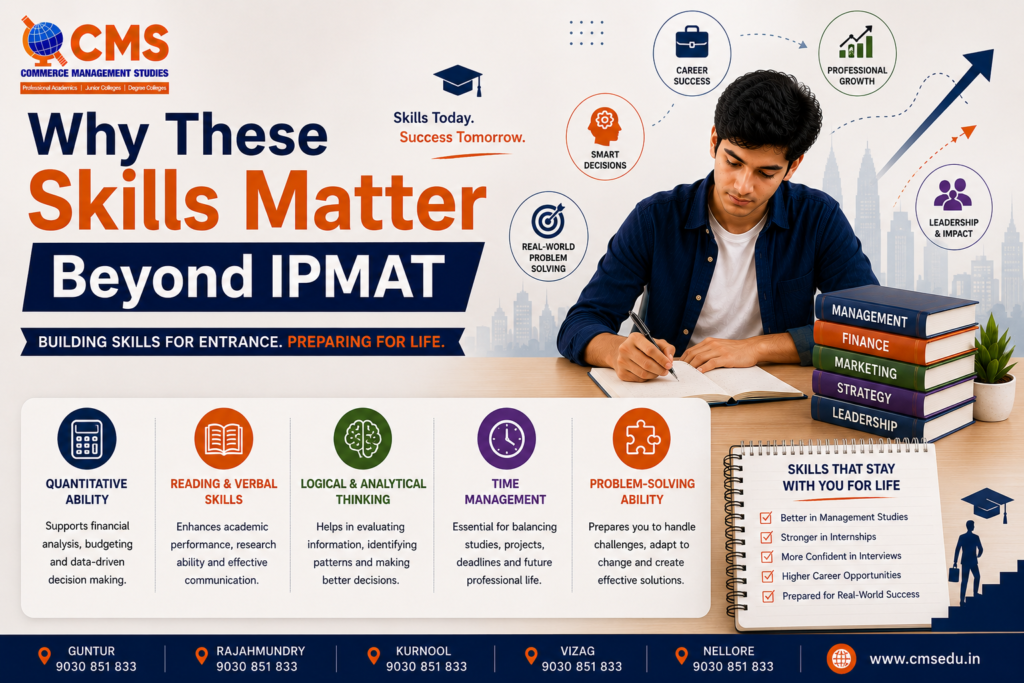
Why These Skills Matter Beyond IPMAT
The skills developed during IPMAT preparation are not limited to the entrance examination. Quantitative ability can support financial and business analysis, reading skills can improve academic performance, logical thinking can support decision-making, and problem-solving can help students handle real-world business situations.
Time management is equally valuable in management education and professional life. Students pursuing management programmes may need to balance assignments, presentations, projects, examinations, internships, and other responsibilities. Developing these habits early can make the transition to higher education smoother.
How MEC Can Support IPMAT Preparation
MEC, which includes Mathematics, Economics, and Commerce, can provide a useful academic foundation for students interested in management education. Mathematics can strengthen quantitative and analytical abilities, Economics can help students understand markets and business environments, and Commerce introduces them to fundamental business and financial concepts.
Students from MEC can use their Intermediate studies to strengthen the academic foundation required for entrance preparation. However, IPMAT preparation also requires dedicated practice in the examination-specific areas. Students should therefore combine their regular academic learning with aptitude practice, reading, reasoning exercises, and mock tests.
How CEC Students Can Prepare for IPMAT
CEC, which includes Civics, Economics, and Commerce, can also be considered by students interested in management pathways. Economics and Commerce provide exposure to business, markets, accounting, and economic concepts, while students can separately develop the quantitative ability required for aptitude-based examinations.
For CEC students, consistent Mathematics or quantitative aptitude practice can be particularly useful when preparing for IPMAT. Building this skill gradually during Intermediate can help students become more comfortable with numerical problems and reduce the need for rushed preparation later.
The Importance of Regular Practice
Skills such as quantitative ability, reading comprehension, and logical reasoning improve through consistent practice. Students should avoid depending entirely on last-minute preparation because aptitude skills require repeated exposure to different types of questions.
A regular practice routine can include:
- Daily quantitative problem-solving
- Reading and comprehension exercises
- Logical reasoning questions
- Vocabulary development
- Weekly topic-based tests
- Timed practice sessions
- Regular mock tests
- Analysis of mistakes
The goal is to make practice a consistent part of preparation rather than something students do only before the examination.
Using Mock Tests to Improve Performance
Mock tests allow students to experience the pressure of solving questions within a fixed time. They can help students understand their current level of preparation and identify areas that require improvement.
However, the score itself should not be the only focus. Students should analyze their performance after every mock test. Questions answered incorrectly, questions that took too long, and careless mistakes can all provide useful information. By identifying these patterns, students can adjust their preparation and focus more attention on their weaker areas.
Developing a Positive Preparation Mindset
IPMAT preparation can be challenging because students are balancing entrance preparation with Intermediate education. Students should therefore focus on steady improvement rather than expecting immediate perfection.
A difficult mock test or a low practice score should be treated as feedback rather than failure. If a particular topic is causing difficulty, students can return to the fundamentals, practice additional questions, and test themselves again. A patient and consistent approach can make preparation more sustainable.
Integrated IPMAT Preparation Alongside Intermediate
Preparing for IPMAT alongside Intermediate can help students develop entrance-oriented skills without putting their regular academic education aside. Concepts learned through Mathematics, Economics, and Commerce can be strengthened while students simultaneously work on aptitude, reasoning, reading, and time management.
At CMS IPMAT Coaching in Hyderabad, students can pursue MEC or CEC with integrated IPMAT preparation, allowing them to continue their Intermediate education while working toward their management entrance goals. A structured approach can help students organize their preparation, practice consistently, and gradually develop the skills required for aptitude-based examinations.
Conclusion
IPMAT preparation involves much more than memorizing concepts or completing a textbook syllabus. Students need to develop quantitative ability, verbal and reading skills, logical thinking, time management, and problem-solving ability. These skills improve gradually through regular learning, practice, revision, and performance analysis.
Starting to develop these abilities during Intermediate can give students more time to strengthen their fundamentals and become comfortable with different types of aptitude questions. Whether a student chooses MEC or CEC, a consistent preparation strategy combined with the right guidance can help build the academic and personal skills needed to approach IPMAT with greater confidence. Ultimately, the habits developed during preparation can continue to benefit students throughout their management education and future careers.