
Introduction
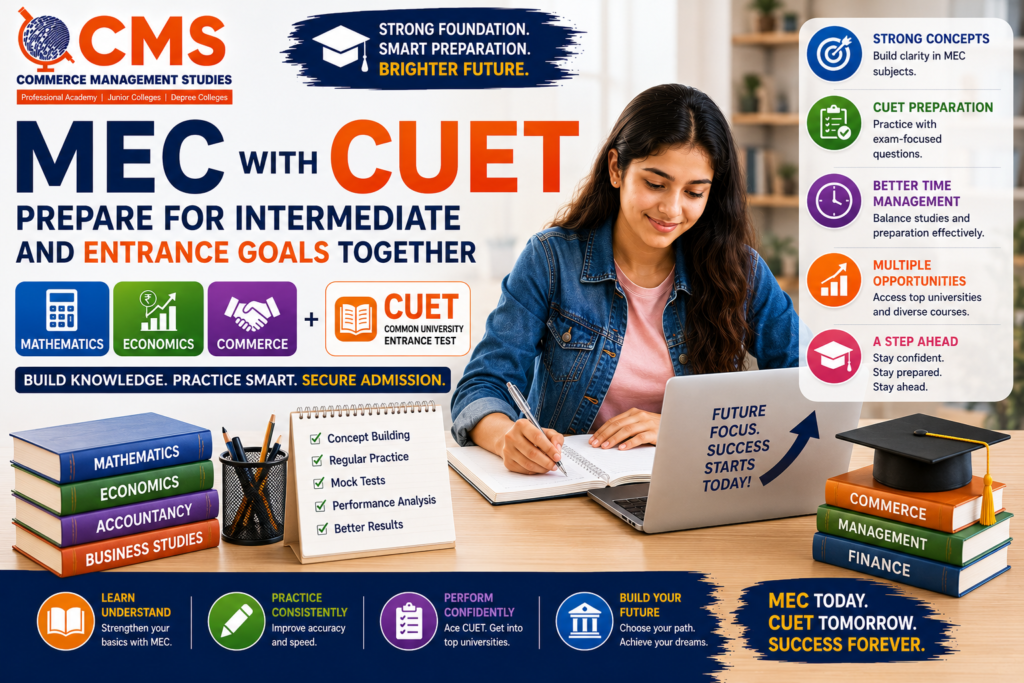
For students choosing their Intermediate stream, the years after Class 10 can be an important stage for building both academic knowledge and future career direction. MEC, which stands for Mathematics, Economics, and Commerce, is an option for students who are interested in business, finance, economics, management, and related fields. At the same time, students who plan to pursue undergraduate programmes after Intermediate may need to prepare for entrance examinations such as the Common University Entrance Test (CUET).
Combining MEC with CUET preparation can allow students to work toward their Intermediate academic goals and undergraduate entrance goals together. Instead of treating school or college studies and entrance preparation as two completely separate activities, students can build a structured routine where their academic concepts are strengthened alongside entrance-oriented practice. This approach can help students manage their time effectively while developing the knowledge and skills needed for their next stage of education.
Understanding MEC as an Intermediate Stream
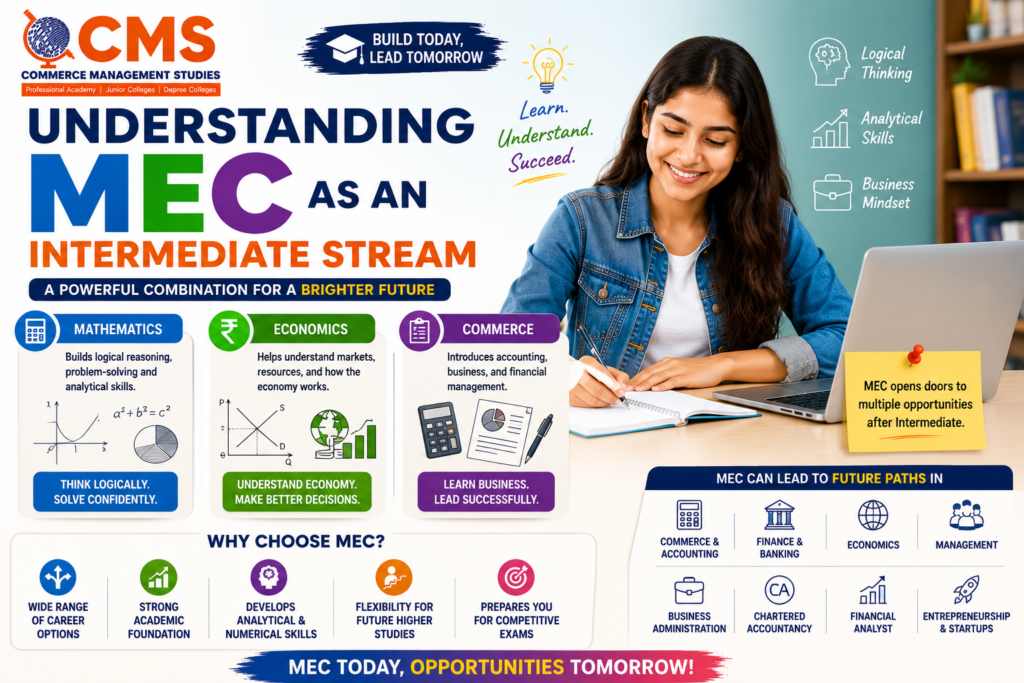
MEC combines Mathematics, Economics, and Commerce, giving students exposure to numerical, economic, and business-related concepts. Mathematics helps develop logical and analytical thinking, Economics introduces students to markets and economic systems, and Commerce provides a foundation in accounting and business concepts.
The combination can be useful for students who are considering future pathways in areas such as commerce, finance, economics, management, accounting, business, and related professional fields. Since these subjects are connected to several undergraduate disciplines, MEC can give students flexibility when exploring their options after Intermediate.
What is CUET?
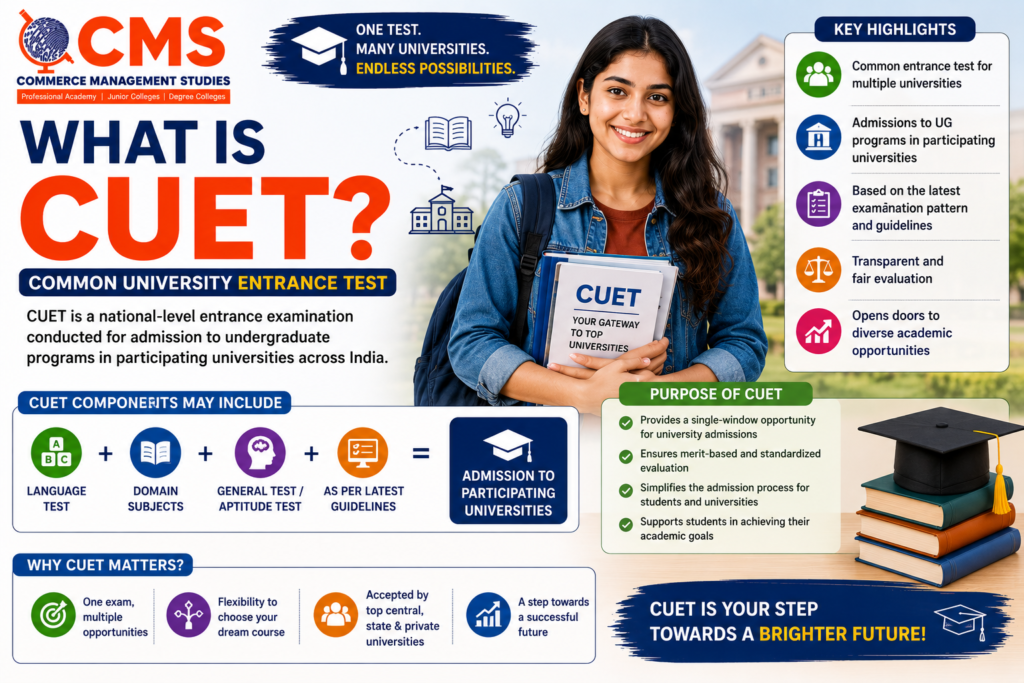
CUET, or the Common University Entrance Test, is a national-level entrance examination used by participating universities for admission to undergraduate programmes. It provides students with a common examination route for applying to various participating institutions, subject to each university’s programme-specific eligibility and admission requirements.
The CUET framework can include different components depending on the current examination structure and the programme a student is applying for. Students should therefore carefully check the latest official examination information and the eligibility and subject requirements of the universities and courses they are interested in before planning their preparation.
Why Combine MEC with CUET Preparation?
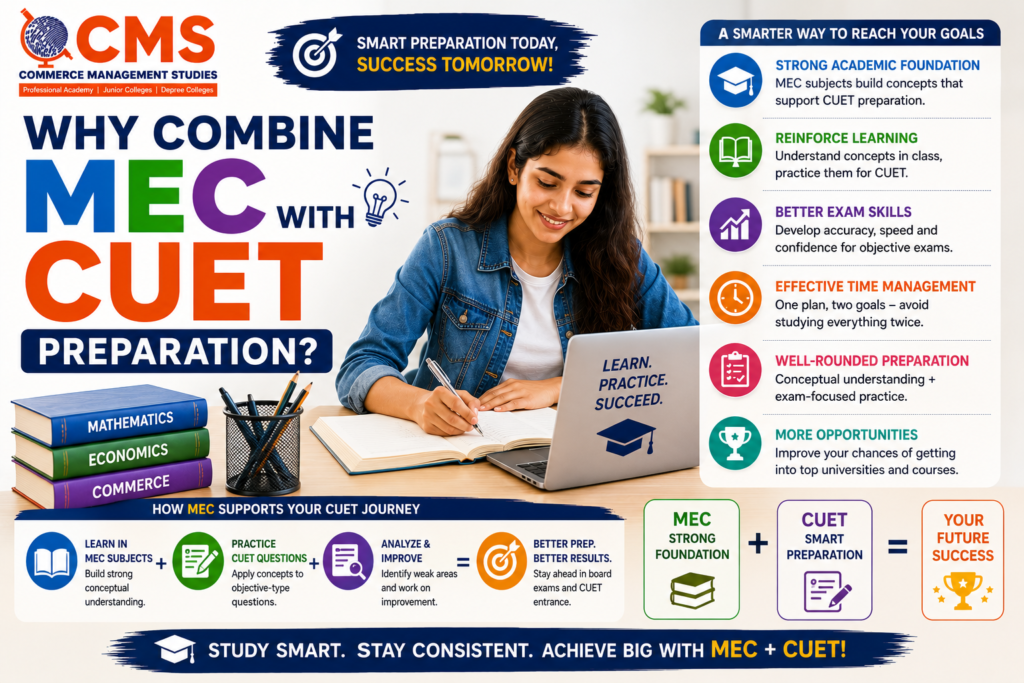
Preparing for CUET alongside MEC can help students connect their Intermediate learning with their entrance-examination preparation. Concepts studied in subjects such as Mathematics, Economics, and Commerce can provide an academic foundation for relevant entrance preparation, while objective-question practice can help students become more comfortable with competitive examination formats.
This integrated approach can also help students avoid unnecessary duplication of effort. Instead of studying the same concepts separately for Intermediate and CUET, students can first build a strong conceptual understanding through their academic subjects and then reinforce that knowledge through entrance-oriented questions and practice.
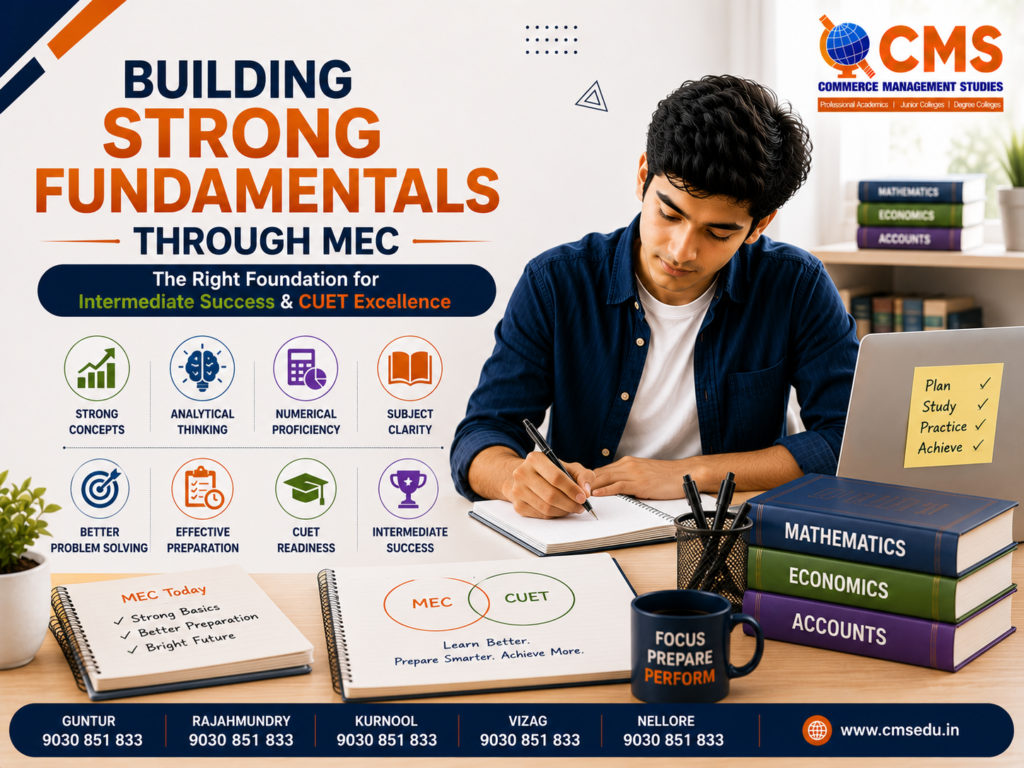
Building Strong Fundamentals Through MEC
Strong fundamentals are important for both academic examinations and entrance tests. MEC gives students the opportunity to develop knowledge across mathematics, economics, and commerce, which can become useful when exploring undergraduate courses related to business, finance, economics, accounting, and management.
Students should focus on understanding concepts rather than studying only for marks. For example, learning the reasoning behind a mathematical method, understanding why economic principles work in a particular situation, or knowing how accounting concepts are applied can make it easier to handle objective questions later.
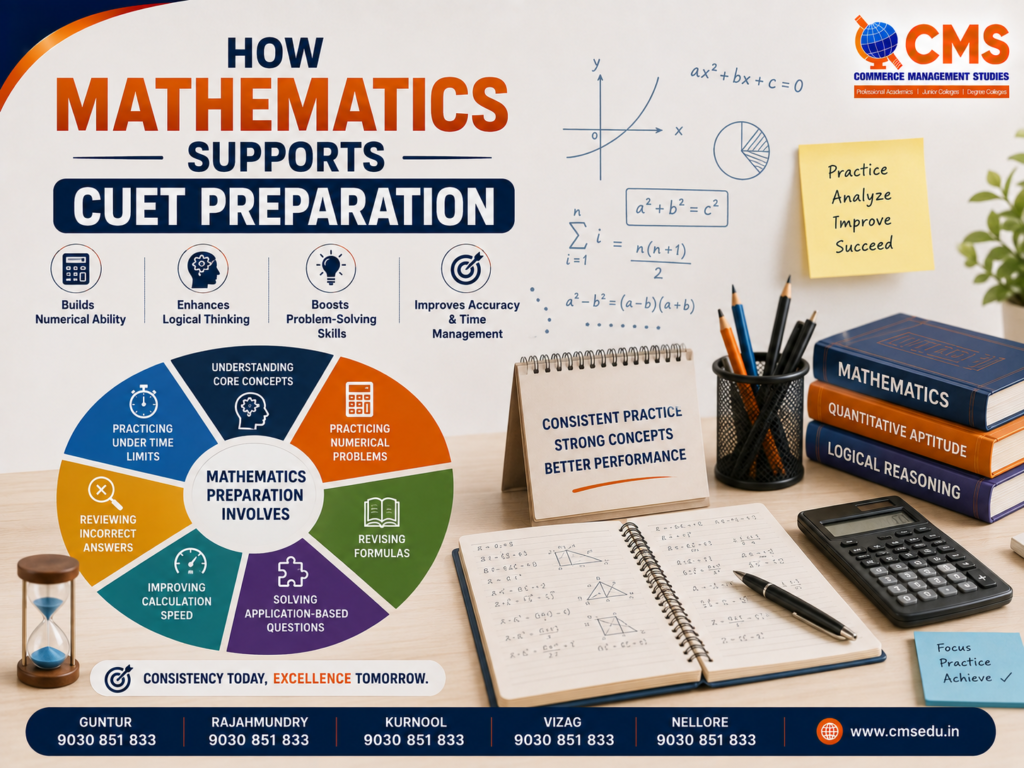
How Mathematics Supports CUET Preparation
Mathematics develops numerical ability, logical thinking, and problem-solving skills. Depending on the CUET subject combination and undergraduate programme selected, Mathematics can also be directly relevant to a student’s entrance preparation.
Regular mathematical practice can improve calculation accuracy and help students become more comfortable with solving problems under time constraints. Students can strengthen this foundation by solving different question types, reviewing errors, and gradually introducing timed practice.
Mathematics preparation can involve:
- Understanding core concepts
- Practicing numerical problems
- Revising formulas
- Solving application-based questions
- Improving calculation speed
- Reviewing incorrect answers
- Practicing under time limits
A consistent approach is generally more effective than attempting to improve speed through last-minute preparation.
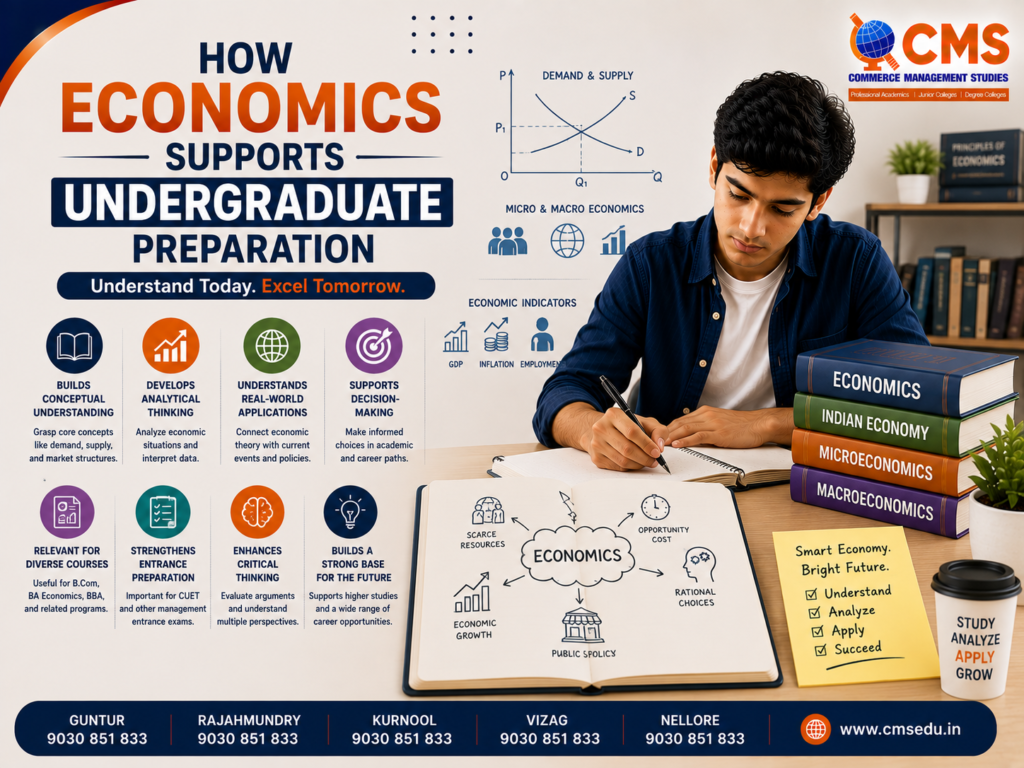
How Economics Supports Undergraduate Preparation
Economics introduces students to concepts related to demand and supply, markets, production, consumption, national income, inflation, economic policies, and resource allocation. These concepts can provide useful background for students planning to pursue undergraduate programmes related to economics, commerce, business, or management.
Studying Economics also encourages students to understand how real-world events can influence markets and businesses. Connecting textbook concepts with current economic developments can make learning more meaningful and help students develop a broader understanding of the subject.
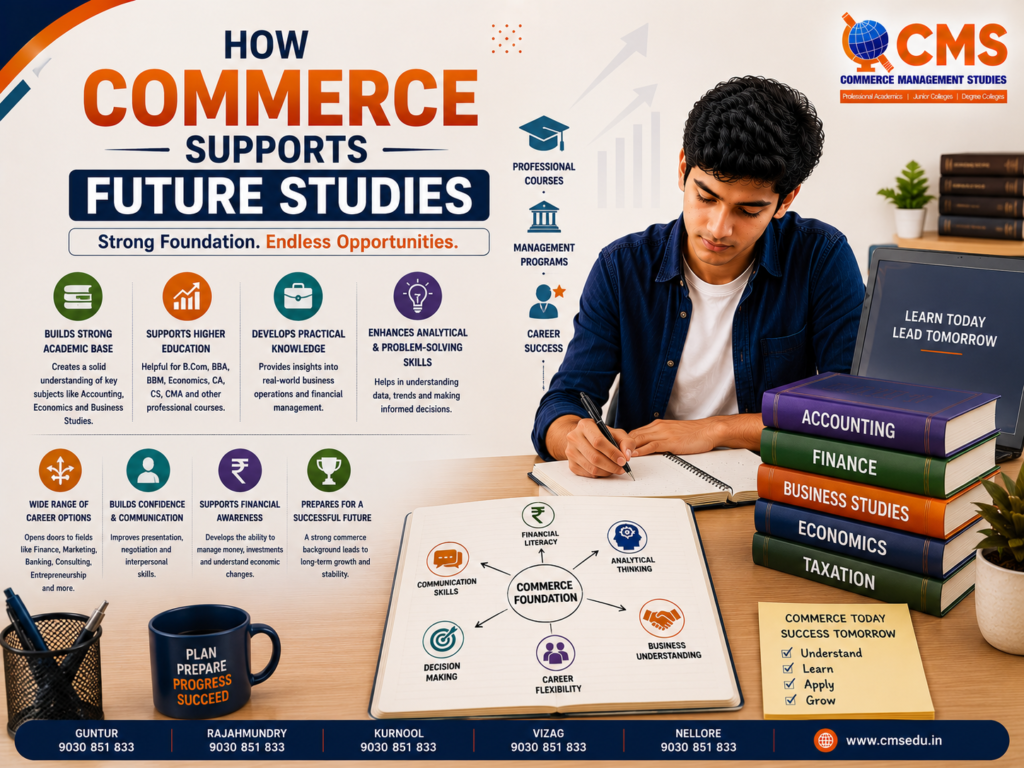
How Commerce Supports Future Studies
Commerce introduces students to accounting and business concepts that can be useful across many undergraduate programmes. Students become familiar with financial transactions, accounting principles, business activities, and other fundamentals that explain how organizations operate.
For students interested in areas such as accounting, finance, management, or commerce, this foundation can make the transition to undergraduate studies more comfortable. When combined with CUET-oriented practice, students can reinforce their academic knowledge while becoming familiar with objective and time-bound questions.
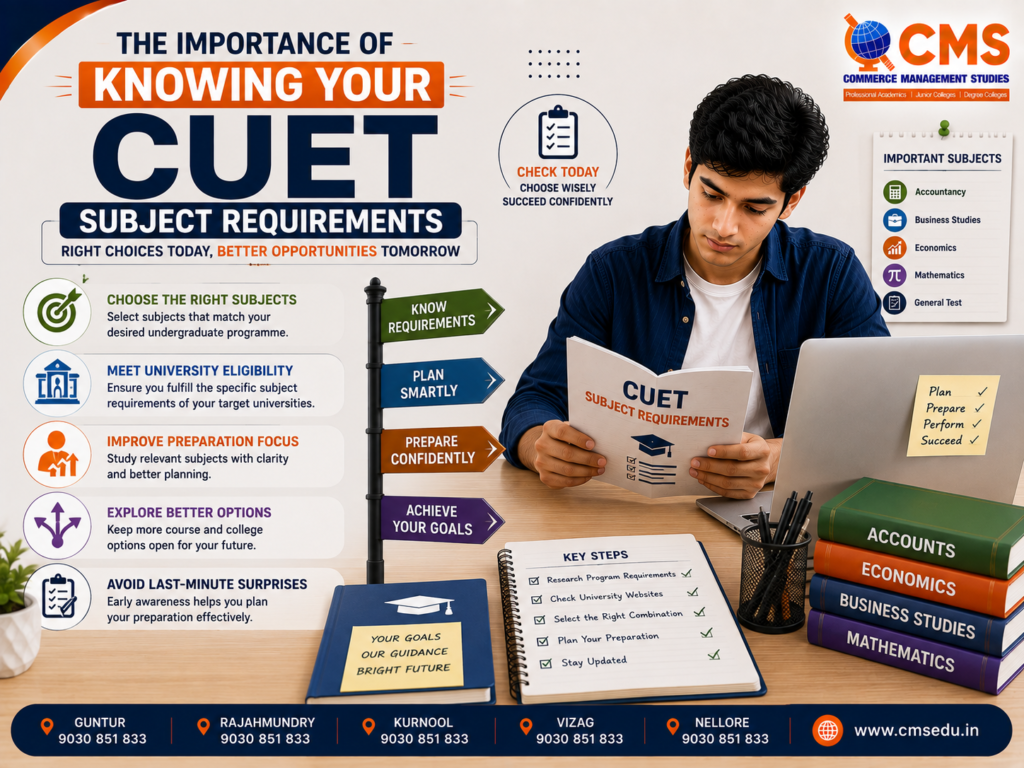
The Importance of Knowing Your CUET Subject Requirements
One of the most important aspects of CUET preparation is understanding the requirements of the undergraduate programmes a student wants to apply for. Different universities and programmes can have different eligibility conditions and subject combinations.
Students should therefore research their preferred programmes well before the examination. They should check the subjects required, eligibility criteria, admission rules, and the latest official information released by the relevant university and CUET authorities. This helps students avoid preparing for subjects that may not be relevant to their preferred programmes.
Developing a Balanced Study Routine
Managing Intermediate and CUET preparation together requires a realistic timetable. Students should allocate sufficient time for classroom learning, revision, entrance-oriented practice, mock tests, and rest.
A balanced routine could include:
- Daily revision of Intermediate concepts
- Regular CUET-oriented question practice
- Weekly topic-based assessments
- Dedicated reading and comprehension time where relevant
- Periodic mock tests
- Revision of mistakes
- Time for relaxation and adequate sleep
The purpose of a timetable is not to fill every hour of the day. It should help students organize their priorities and maintain consistent progress.
The Importance of Regular Practice
Entrance examinations require students to apply their knowledge quickly and accurately. Regular practice helps students become familiar with different question formats and understand how much time they need for different types of questions.
Students should not focus only on the number of questions they solve. They should also analyze their performance. If they repeatedly make mistakes in a particular topic, they can return to the underlying concept before attempting more questions. This creates a cycle of learning, practice, review, and improvement.
Using Mock Tests Effectively
Mock tests can help students understand how well they are able to manage questions under examination conditions. They can provide information about accuracy, speed, time management, and areas requiring additional revision.
However, completing a mock test is only the first step. Students should review their answers afterward and identify:
- Questions answered incorrectly
- Questions that took too much time
- Careless mistakes
- Topics requiring revision
- Areas where accuracy has improved
- Sections where time management needs attention
This analysis can make each mock test a useful part of the learning process.
Building Reading and Comprehension Skills
Depending on the student’s CUET subject requirements, reading and comprehension can also be important skills to develop. Regular reading can improve vocabulary, comprehension, concentration, and the ability to process information efficiently.
Students can read newspapers, informative articles, editorials, business-related content, and other quality material. Rather than simply reading quickly, they should practice identifying the central idea, important facts, arguments, and conclusions. These habits can be useful for entrance examinations as well as future undergraduate education.
MEC and CUET for Future Commerce and Management Pathways
MEC can be particularly relevant for students who are considering undergraduate pathways related to commerce, economics, finance, accounting, and management. CUET can provide an entrance route to participating universities and programmes, subject to their individual eligibility and admission requirements.
The combination therefore allows students to keep their Intermediate education connected to their future academic plans. However, students should not assume that every MEC-related undergraduate programme will have identical CUET requirements. Researching individual courses and universities is an essential part of planning.
How Integrated Preparation Can Help
An integrated approach can help students manage their Intermediate academics and CUET preparation more efficiently. Instead of studying two completely separate syllabuses, students can build their understanding through Intermediate subjects and then strengthen relevant areas through entrance-focused practice.
At CMS CUET Coaching in Hyderabad, students can pursue MEC with integrated CUET preparation, allowing them to work on their Intermediate curriculum while developing the skills needed for undergraduate entrance examinations. Structured classes, regular practice, assessments, and revision can help students maintain a consistent preparation routine.
Who Can Consider MEC with CUET?
MEC with CUET can be a suitable option for students who enjoy Mathematics, Economics, and Commerce and are considering undergraduate education in business, finance, economics, accounting, management, or related fields. It can also be useful for students who want to keep multiple academic and career options open after Intermediate.
Students should nevertheless make their decisions based on their own interests and future plans. Understanding the subjects involved, researching potential undergraduate programmes, and checking the latest entrance requirements can help them choose an appropriate path.
Long-Term Benefits of an Integrated Approach
Preparing for Intermediate and CUET together can help students develop more than examination-specific knowledge. Regular practice can improve time management, analytical thinking, problem-solving, reading ability, accuracy, and independent learning.
These skills can remain useful after the entrance examination as well. Undergraduate education often requires students to manage multiple subjects, complete assignments, understand new concepts, and work within deadlines. Developing disciplined study habits during Intermediate can therefore support students well beyond the CUET examination.
Conclusion
MEC with CUET can provide students with a structured way to prepare for both Intermediate academics and undergraduate entrance goals. Mathematics, Economics, and Commerce can establish a strong academic foundation, while CUET preparation can help students develop objective-question practice, time management, accuracy, and examination skills.
The key is to maintain a balanced and consistent approach. Students should understand their preferred undergraduate programmes, check the latest CUET eligibility and subject requirements, build strong fundamentals, practice regularly, and analyze their performance through assessments and mock tests. With the right planning, MEC and CUET preparation can work together to help students move confidently from Intermediate education toward their chosen undergraduate pathway.