
Introduction
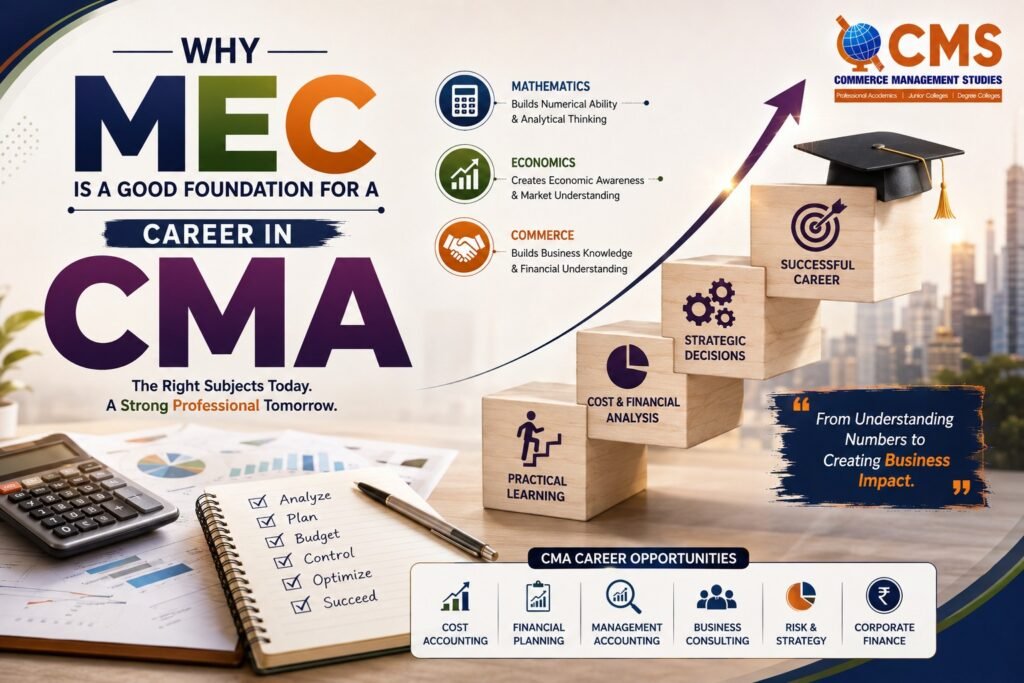
Choosing the right academic stream after Class 10 can play an important role in shaping a student’s future career. For students interested in accounting, finance, business management, and strategic decision-making, MEC, which includes Mathematics, Economics, and Commerce, can provide a broad academic foundation. The combination of these subjects helps students develop numerical ability, economic awareness, and an understanding of business and financial concepts. These skills can be particularly useful for students who later decide to pursue Cost and Management Accountancy (CMA).
CMA is a professional qualification that focuses on cost management, financial planning, budgeting, performance analysis, and strategic decision-making. Unlike careers that concentrate primarily on recording financial transactions, Cost and Management Accountants help organizations understand their costs, improve efficiency, control expenditure, and make better financial decisions. Since MEC introduces students to mathematics, economics, commerce, and business concepts, it can provide useful preparation for understanding several areas that become important during CMA studies.
Understanding the MEC Stream
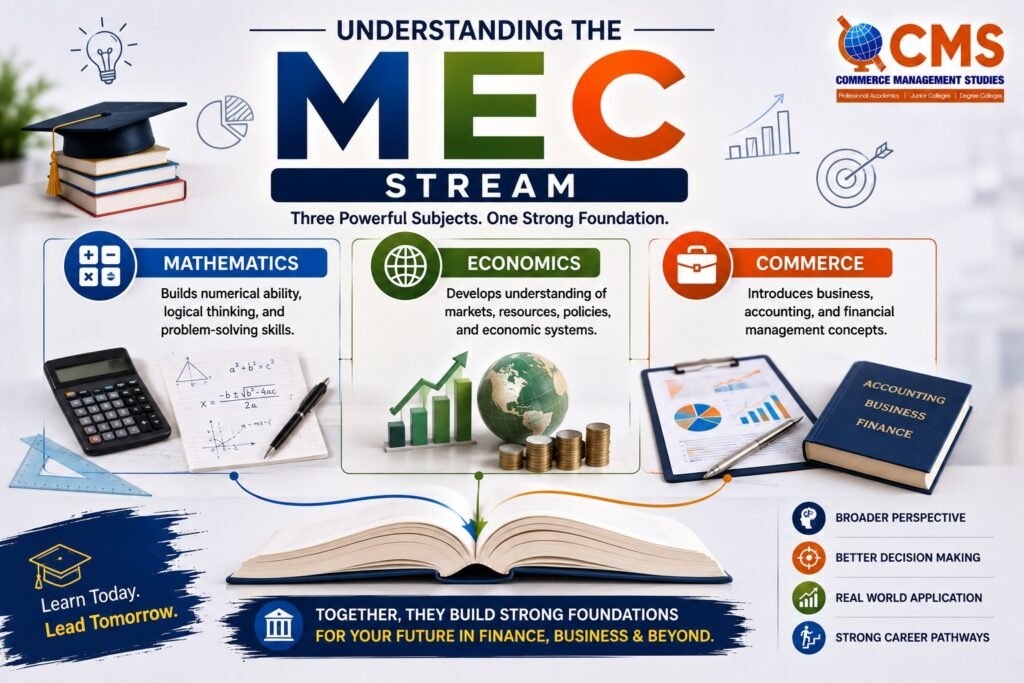
MEC combines Mathematics, Economics, and Commerce, giving students exposure to three areas that are closely connected to the functioning of modern businesses. Mathematics develops quantitative ability and logical thinking, Economics helps students understand markets and economic conditions, while Commerce introduces concepts related to accounting, business operations, and financial management. Together, these subjects create a balanced foundation for students interested in finance and business-oriented careers.
The advantage of this combination is that students are not learning numbers, economics, and business concepts in isolation. They can gradually understand how these areas influence one another. For example, business decisions can be affected by costs, market conditions, consumer demand, financial resources, and economic policies. Developing an understanding of these relationships can be useful for students who later enter professional courses such as CMA.
What is Cost and Management Accountancy?
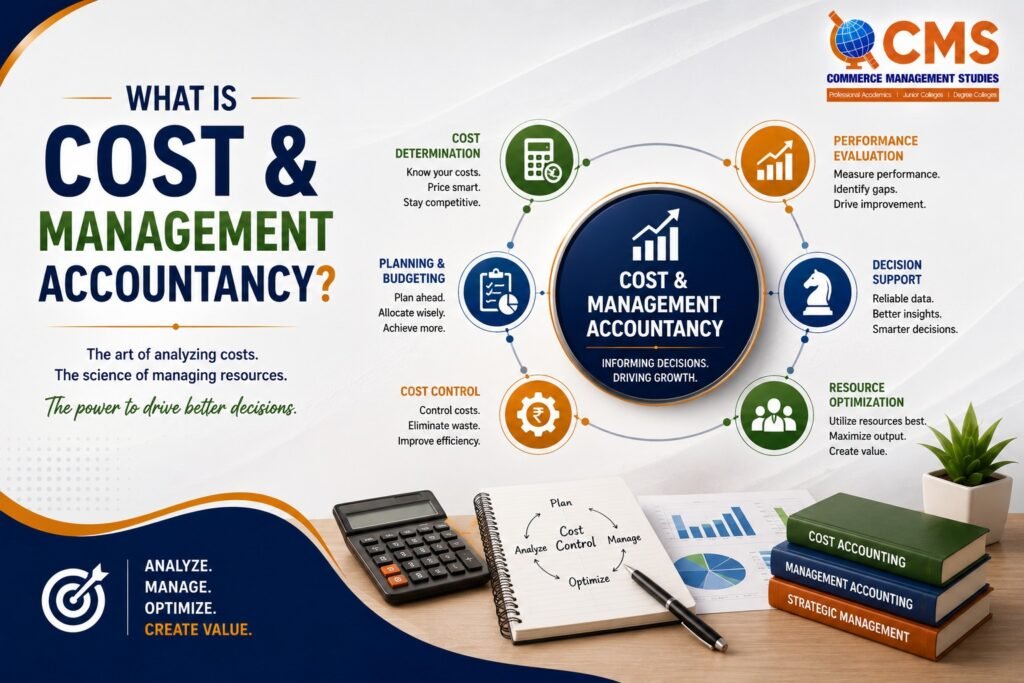
Cost and Management Accountancy is a professional qualification focused on understanding and managing the financial resources of an organization. Cost and Management Accountants analyze costs, prepare budgets, evaluate financial performance, support pricing decisions, and provide management with information needed for strategic planning. Their work can help organizations identify inefficiencies, control expenses, and improve profitability.
The role of a CMA extends beyond traditional accounting. Professionals may contribute to financial planning, cost control, risk assessment, performance evaluation, business strategy, and management decision-making. This makes the profession particularly relevant to students who are interested in understanding not only how financial information is recorded but also how that information can be used to improve business performance.
How Mathematics Supports CMA Preparation
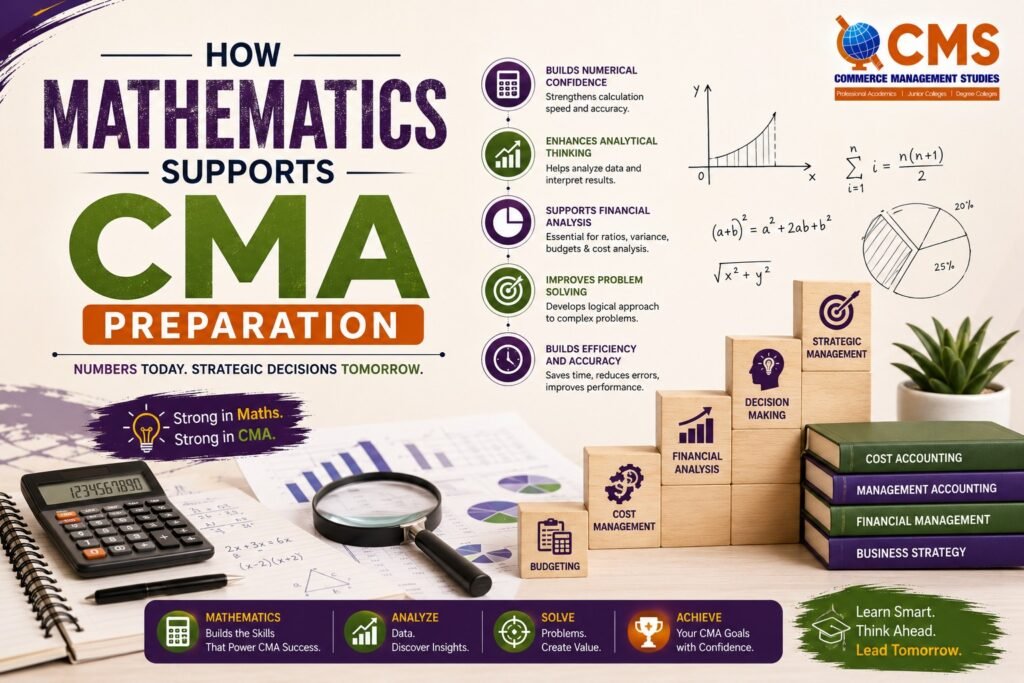
Mathematics is an important part of MEC because it develops numerical ability, logical reasoning, and systematic problem-solving. Students learn how to analyze information, identify patterns, work with numbers, and arrive at solutions through a structured process. These skills can be valuable when studying financial and cost-related concepts during professional education.
Cost management involves working with numerical information to understand expenses, profitability, budgets, and financial performance. Although CMA is not simply a mathematics-based qualification, comfort with numbers can make it easier for students to approach quantitative problems. The mathematical thinking developed during Intermediate can therefore provide a useful foundation for handling numerical aspects of professional studies.
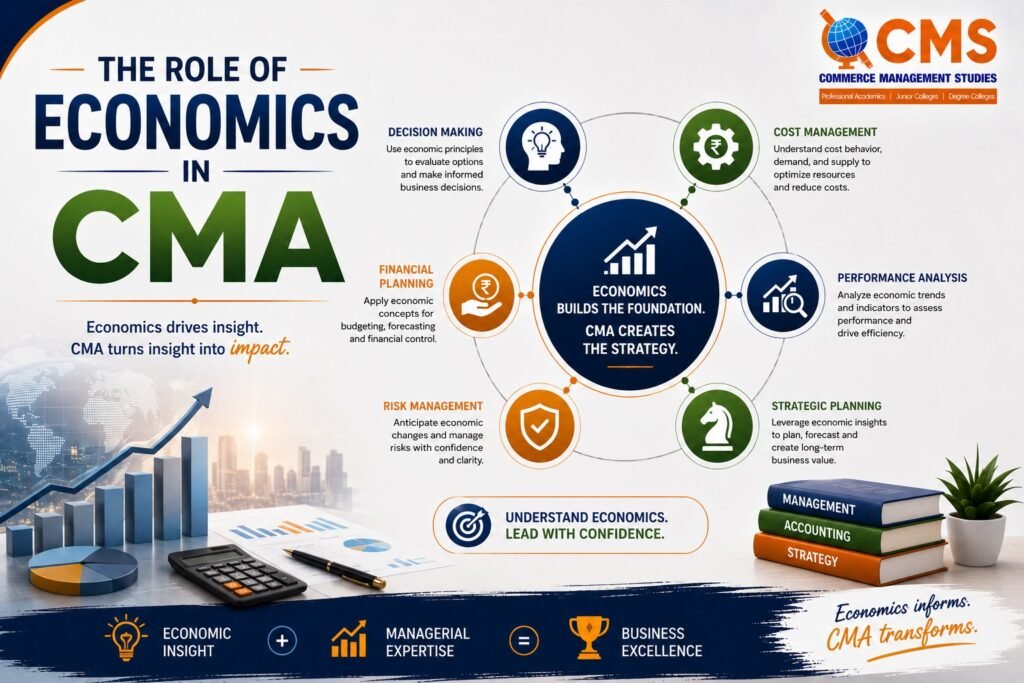
The Role of Economics in CMA
Economics helps students understand how markets, businesses, consumers, and governments make decisions about resources. Concepts such as demand and supply, production, market structures, inflation, economic growth, and government policies help students understand the environment in which businesses operate. This knowledge can be valuable when analyzing the factors that influence business costs and profitability.
For Cost and Management Accountants, understanding the economic environment is important because business decisions are rarely made in isolation. Changes in inflation, interest rates, consumer demand, government policies, and market conditions can affect production costs and business performance. An early understanding of economics can therefore help MEC students develop a broader perspective before entering professional CMA studies.
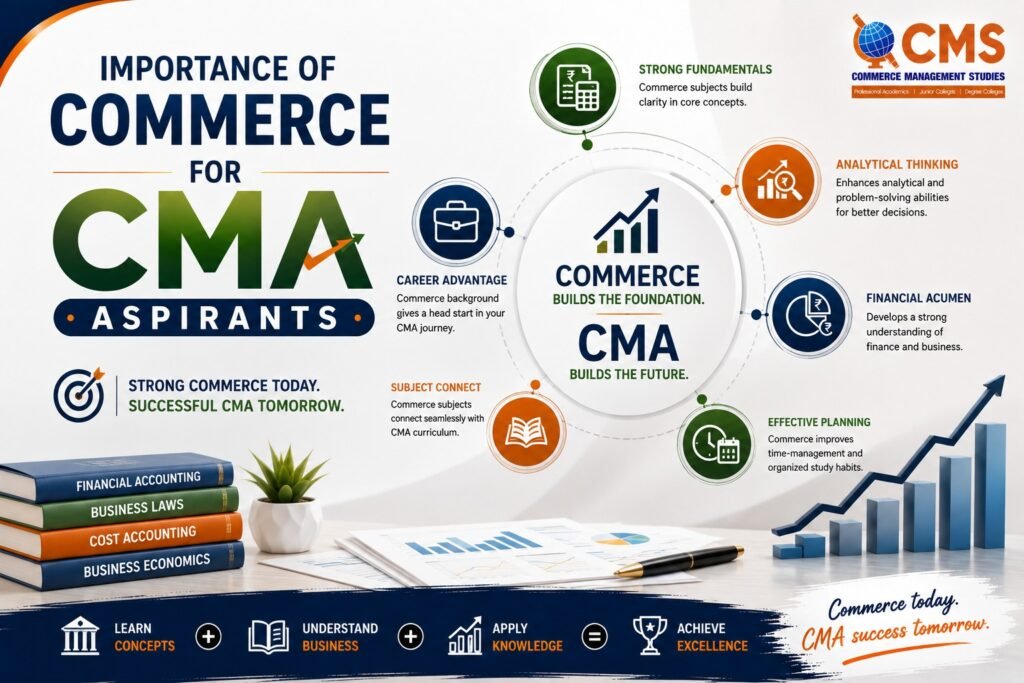
Importance of Commerce for CMA Aspirants
Commerce provides students with fundamental knowledge of accounting, business, and financial activities. Accounting introduces concepts such as transactions, assets, liabilities, income, expenses, financial statements, and business records. These fundamentals can help students understand the financial side of organizations and provide useful background knowledge for advanced professional studies.
CMA education involves understanding how costs are identified, classified, analyzed, and controlled. Students with a strong foundation in commerce can gradually become comfortable with financial terminology and business concepts. Rather than approaching professional subjects as completely unfamiliar topics, they can build upon knowledge developed during their Intermediate education.
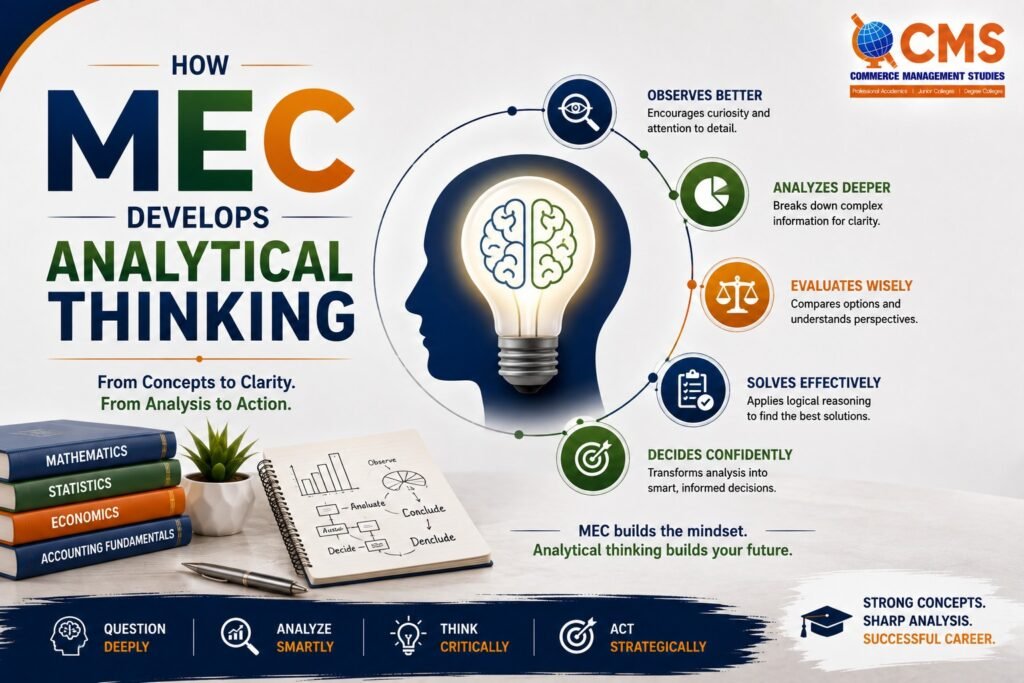
How MEC Develops Analytical Thinking
A successful CMA needs to analyze financial information and provide meaningful insights to management. This requires more than numerical knowledge; professionals must be able to identify patterns, compare alternatives, understand causes, and evaluate possible outcomes. MEC can contribute to these abilities by combining mathematical problem-solving with economic and business concepts.
Students can strengthen analytical thinking by working through numerical problems, interpreting economic information, studying business situations, and connecting theoretical concepts with real-world examples. These habits encourage students to look beyond individual figures and understand what the information means in a broader business context. Such thinking can become valuable throughout CMA education and professional practice.
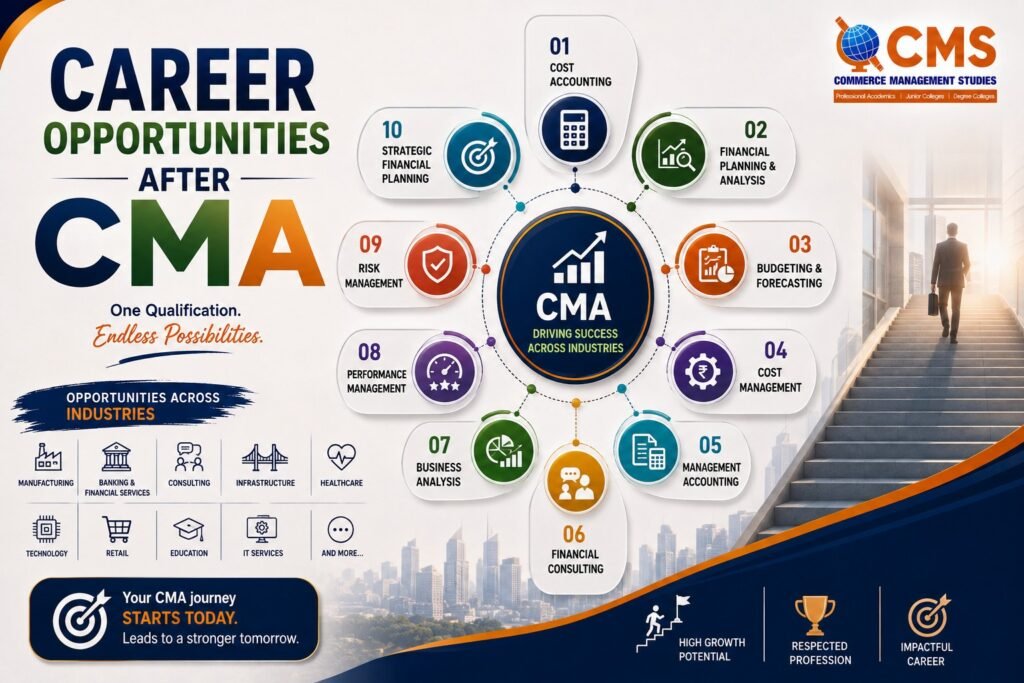
Career Opportunities After CMA
A CMA qualification can lead to opportunities across a wide range of industries because organizations of all sizes need professionals who understand costs, budgets, financial performance, and strategic planning. CMAs can work in manufacturing, banking, financial services, consulting, infrastructure, healthcare, technology, retail, and other sectors.
Some potential career areas include:
- Cost accounting
- Financial planning and analysis
- Budgeting and forecasting
- Cost management
- Management accounting
- Financial consulting
- Business analysis
- Performance management
- Risk management
- Strategic financial planning
The specific career path a professional chooses can depend on their interests, additional qualifications, experience, and area of specialization.
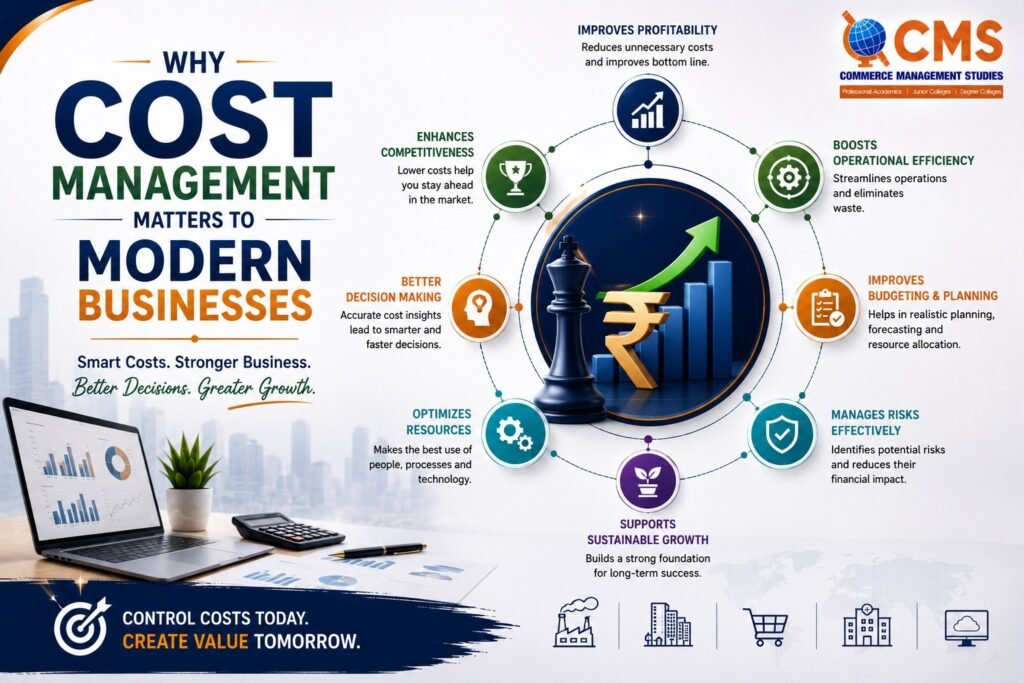
Why Cost Management Matters to Modern Businesses
Businesses operate in highly competitive markets where controlling costs while maintaining quality is essential. Rising operating expenses, changing consumer expectations, technological developments, and economic uncertainty can all influence profitability. Organizations therefore need professionals who can identify unnecessary expenditure, evaluate business processes, and recommend ways to use resources more efficiently.
Cost and Management Accountants contribute to this process by providing financial information that supports better decision-making. They can help management understand the cost of products and services, evaluate performance, prepare budgets, and assess the financial impact of different business strategies. This makes cost management an important function across both traditional and modern industries.
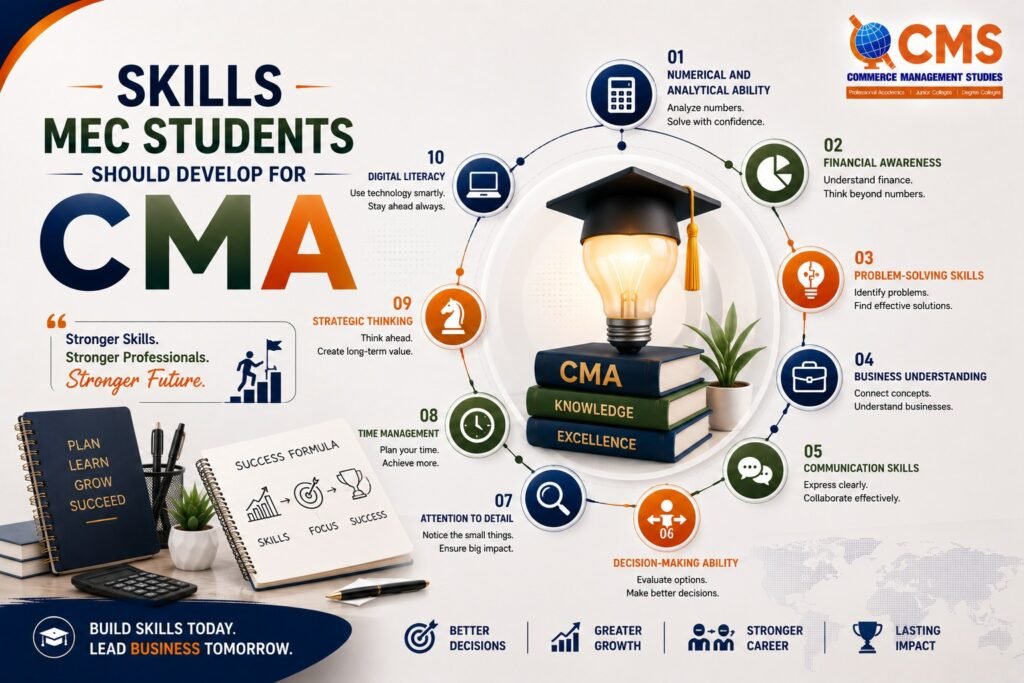
Skills MEC Students Should Develop for CMA
While an MEC background can provide a useful academic foundation, students also need to develop professional skills that extend beyond their Intermediate subjects. CMA professionals often work with managers, financial teams, auditors, business leaders, and other departments, making communication and collaboration important parts of the profession.
Students interested in CMA can gradually develop:
- Numerical and analytical ability
- Financial awareness
- Problem-solving skills
- Business understanding
- Communication skills
- Decision-making ability
- Attention to detail
- Time management
- Strategic thinking
- Digital literacy
Developing these skills early can help students become better prepared for professional education and the changing requirements of the modern workplace.
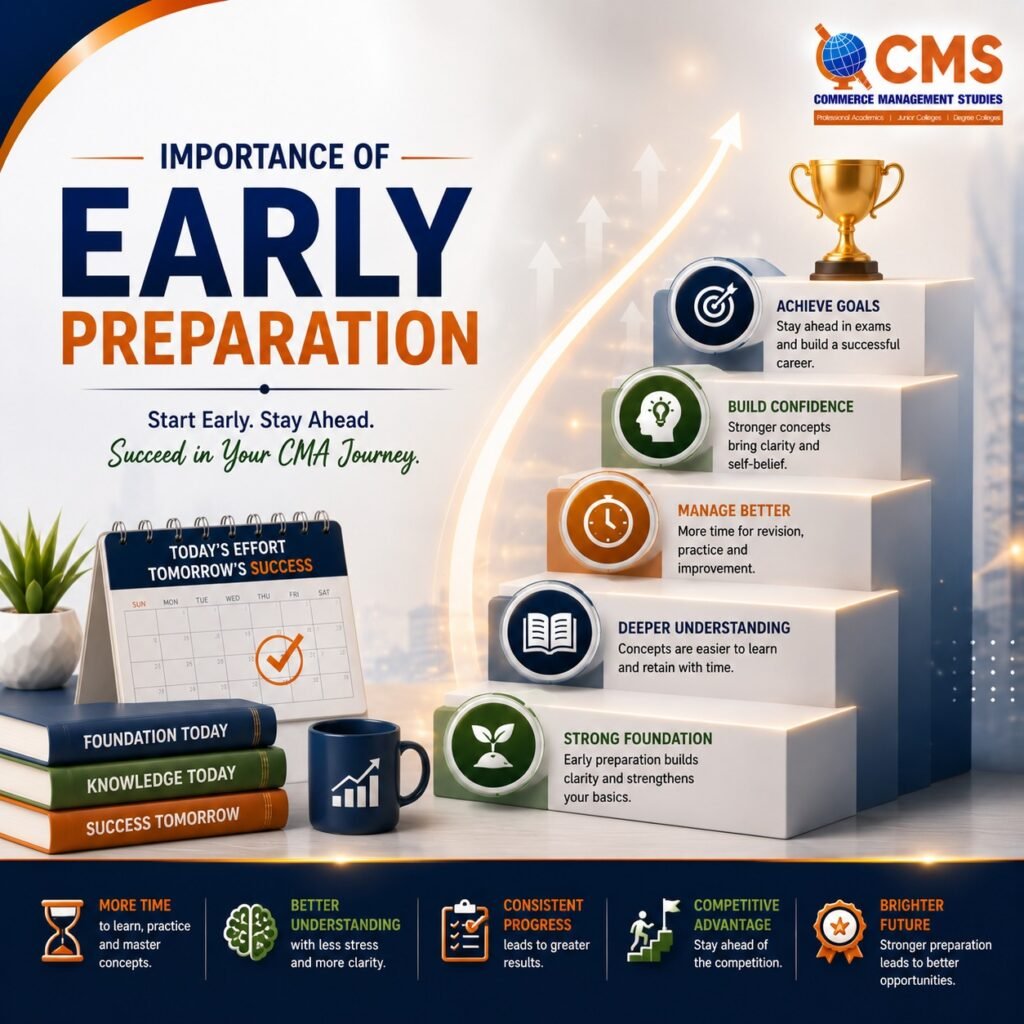
Importance of Early Preparation
Beginning to understand CMA as a possible career option during Intermediate can help students make informed decisions about their future. Early awareness gives students time to explore the profession, understand its responsibilities, identify their strengths, and gradually develop the academic skills required for professional studies. It also allows them to build consistent study habits instead of relying entirely on last-minute preparation.
Students do not necessarily need to begin advanced professional-level studies immediately. They can start by strengthening their Mathematics, Economics, and Commerce fundamentals and developing an interest in financial and business topics. This gradual approach can make the transition to professional education smoother while allowing students to maintain a healthy balance with their Intermediate academics.
MEC with Integrated CMA Preparation
Students who want to pursue CMA while completing their Intermediate education may benefit from an integrated academic approach. Connecting Intermediate subjects with professional preparation can help students understand how classroom concepts are applied in higher-level professional studies. It can also provide a structured routine for learning, practice, revision, and assessment.
At CMS MEC Coaching in Hyderabad, students can pursue their Intermediate education with integrated CMA coaching, allowing them to strengthen their academic fundamentals while developing knowledge relevant to their future professional qualification. Regular assessments, structured learning, and consistent practice can help students understand their strengths and identify areas where they need further improvement.
Who Should Consider CMA After MEC?
CMA can be a suitable option for MEC students who are interested in accounting, finance, business operations, cost management, and strategic decision-making. Students who enjoy working with numbers but also want to understand how businesses make financial decisions may find the profession particularly interesting. Curiosity about how organizations control costs and improve profitability can also be a useful indicator of interest in this field.
However, students should not choose CMA simply because it is associated with the commerce stream. A professional qualification requires sustained effort and commitment, so students should understand the nature of the profession and evaluate whether its subjects and career responsibilities match their interests. Exploring the course structure, professional roles, and long-term career opportunities can help students make a more informed decision.
Conclusion
MEC can provide a strong academic foundation for students considering a career in Cost and Management Accountancy because its three core subjects develop complementary abilities. Mathematics supports quantitative and logical thinking, Economics provides an understanding of markets and economic conditions, and Commerce introduces students to accounting and business fundamentals. Together, these areas can help students develop the knowledge and skills needed to approach professional CMA studies with greater confidence.
Choosing CMA after MEC can open the door to diverse opportunities in cost management, financial planning, business analysis, management accounting, consulting, and strategic decision-making. However, academic preparation is only one part of the journey. Consistent practice, analytical thinking, communication skills, professional awareness, and a willingness to keep learning are equally important. By building these foundations during Intermediate, MEC students can prepare themselves for a meaningful and adaptable career in Cost and Management Accountancy.