
Introduction
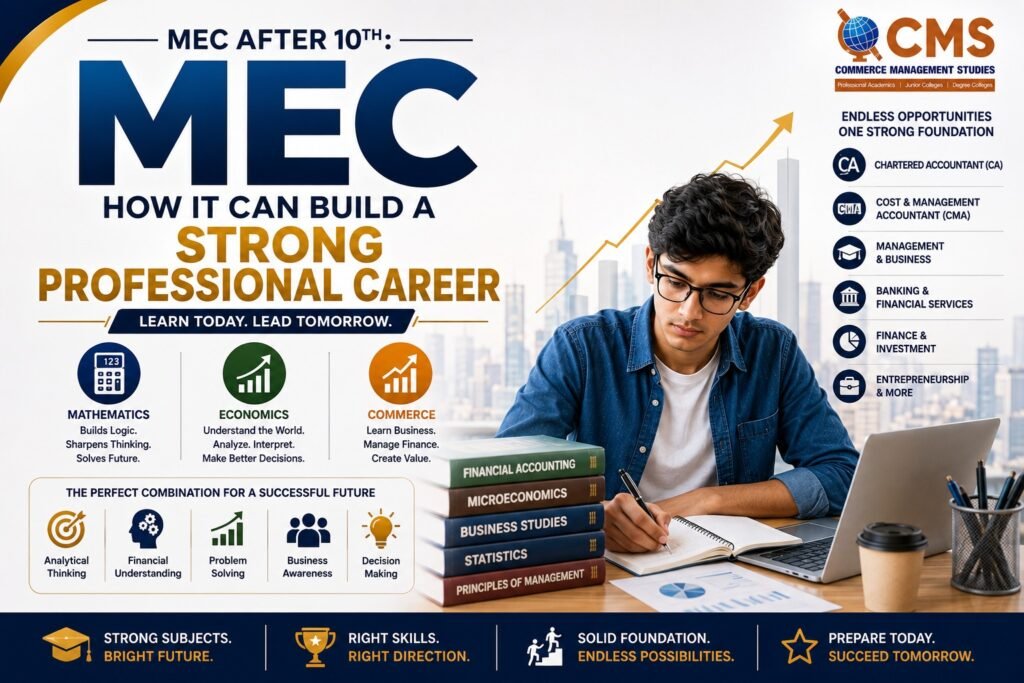
Choosing a stream after Class 10 is an important academic decision because it can influence the subjects students study and the professional pathways they explore in the future. MEC, which stands for Mathematics, Economics, and Commerce, is a popular choice for students who are interested in finance, accounting, business, economics, management, and other professional fields. The combination of these subjects provides students with a balance of numerical ability, economic understanding, and business knowledge, creating a broad foundation for higher education and professional courses.
One of the major advantages of MEC is that it does not restrict students to a single career. Students can explore professional qualifications such as Chartered Accountancy (CA) and Cost and Management Accountancy (CMA), as well as management, finance, economics, business, and several other fields. With the growing importance of financial literacy, data-driven decision-making, and business management, the skills developed through MEC can remain valuable across a wide range of industries. Understanding the possibilities available after choosing MEC can help students make a more informed decision about their academic and professional future.
What is MEC?
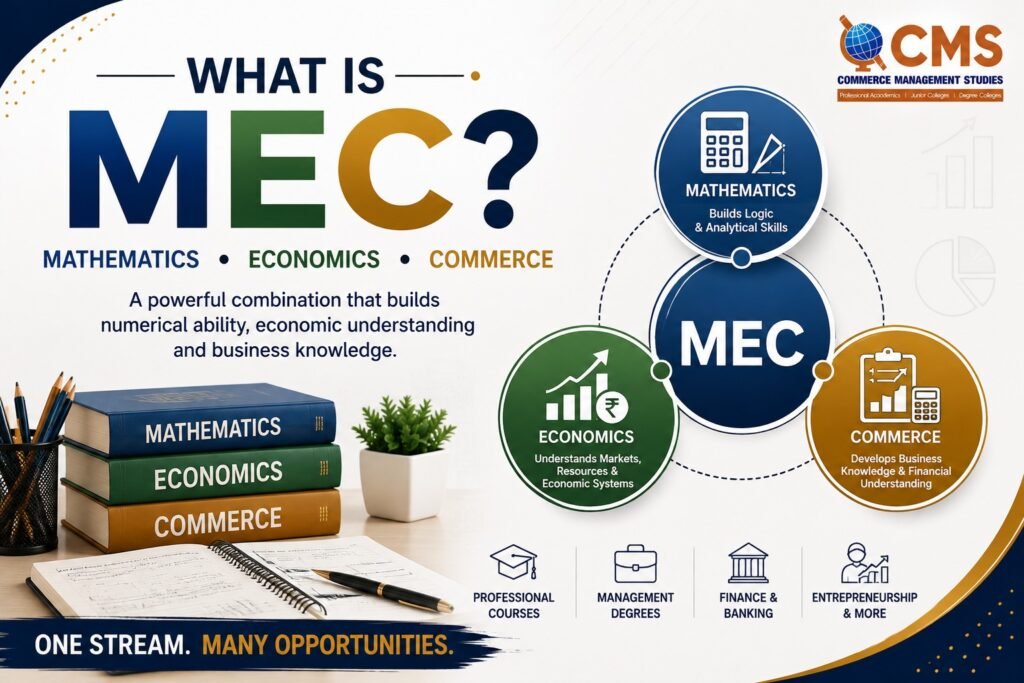
MEC combines Mathematics, Economics, and Commerce to provide students with knowledge across three closely connected areas. Mathematics develops numerical ability, logical thinking, and problem-solving skills. Economics helps students understand markets, resources, production, consumption, financial systems, and economic policies. Commerce introduces students to accounting, business activities, financial concepts, and the basic principles governing organizations.
The combination is particularly useful because modern careers often require professionals to understand both numbers and business concepts. A student studying MEC gets an opportunity to develop quantitative skills while also learning how businesses and economies operate. This interdisciplinary foundation can be useful when pursuing professional qualifications, undergraduate degrees, competitive examinations, or specialized careers after Intermediate.
Why MEC is a Strong Choice After Class 10
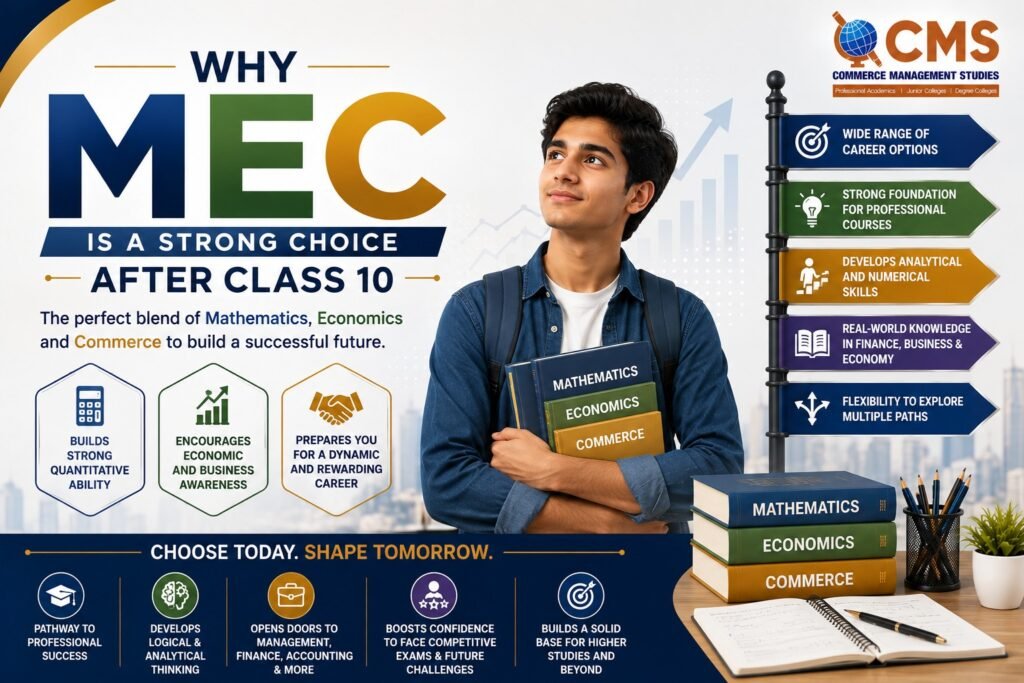
MEC can be a suitable choice for students who enjoy Mathematics and have an interest in business, finance, economics, or analytical subjects. Mathematics encourages students to approach problems systematically, while Economics and Commerce help them understand how financial and commercial decisions affect individuals, businesses, and economies. Together, these subjects can encourage students to develop both numerical and conceptual abilities.
Another important advantage is the flexibility MEC offers. Students can choose from several professional and academic pathways after completing Intermediate. They can pursue CA, CMA, management programmes, finance-related degrees, economics, business administration, banking, entrepreneurship, and other fields depending on their interests and academic strengths. This range of possibilities makes MEC a versatile option for students who want to keep multiple career opportunities open.
How Mathematics Strengthens Problem-Solving Skills
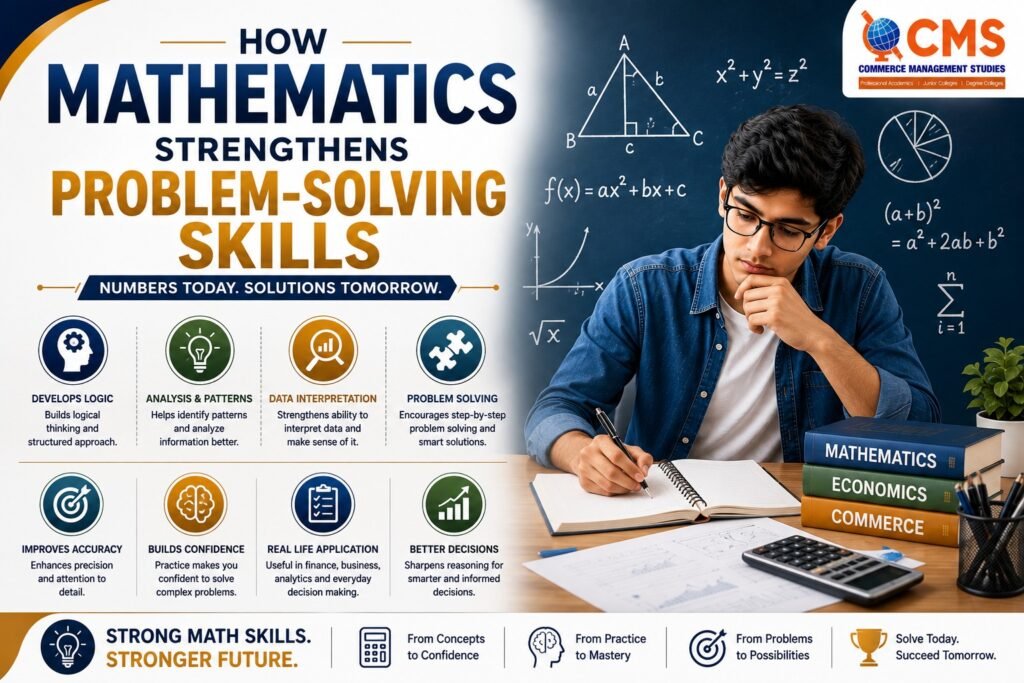
Mathematics is an important component of MEC because it develops the ability to work with numbers, identify patterns, analyze information, and solve problems systematically. These abilities are useful beyond academic examinations and can become valuable professional skills. Many careers in finance, accounting, economics, management, analytics, and business involve interpreting numerical information and making decisions based on data.
Regular mathematical practice also teaches students to approach complex problems step by step rather than relying on guesswork. This structured approach can be useful when students later prepare for professional examinations and entrance tests. Strong quantitative skills can also help students become more comfortable with financial calculations, statistics, data interpretation, and analytical tasks encountered in higher education and professional careers.
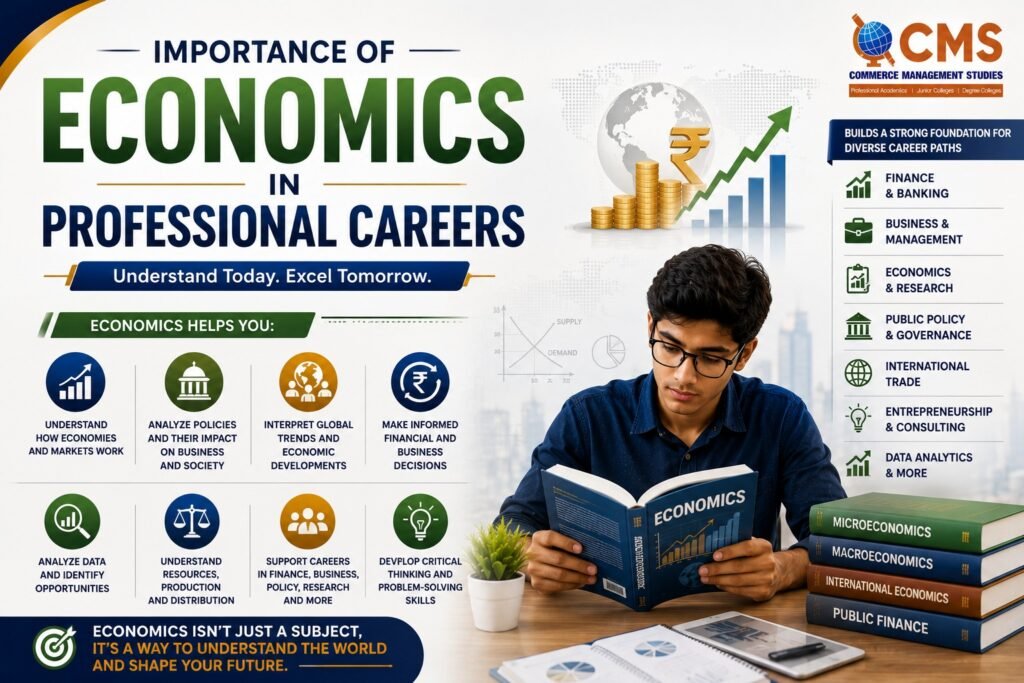
Importance of Economics in Professional Careers
Economics helps students understand how individuals, businesses, governments, and markets make decisions about limited resources. Concepts such as demand and supply, production, inflation, national income, markets, economic development, and government policies provide students with a basic understanding of how economies function. This knowledge becomes particularly relevant for students interested in finance, business, management, public policy, or entrepreneurship.
Understanding economics also helps students interpret real-world developments. Changes in interest rates, inflation, taxation, government policies, international trade, and market conditions can directly affect businesses and individuals. Students who develop economic awareness early can gradually learn to connect classroom concepts with real-world events, strengthening their analytical and decision-making abilities.
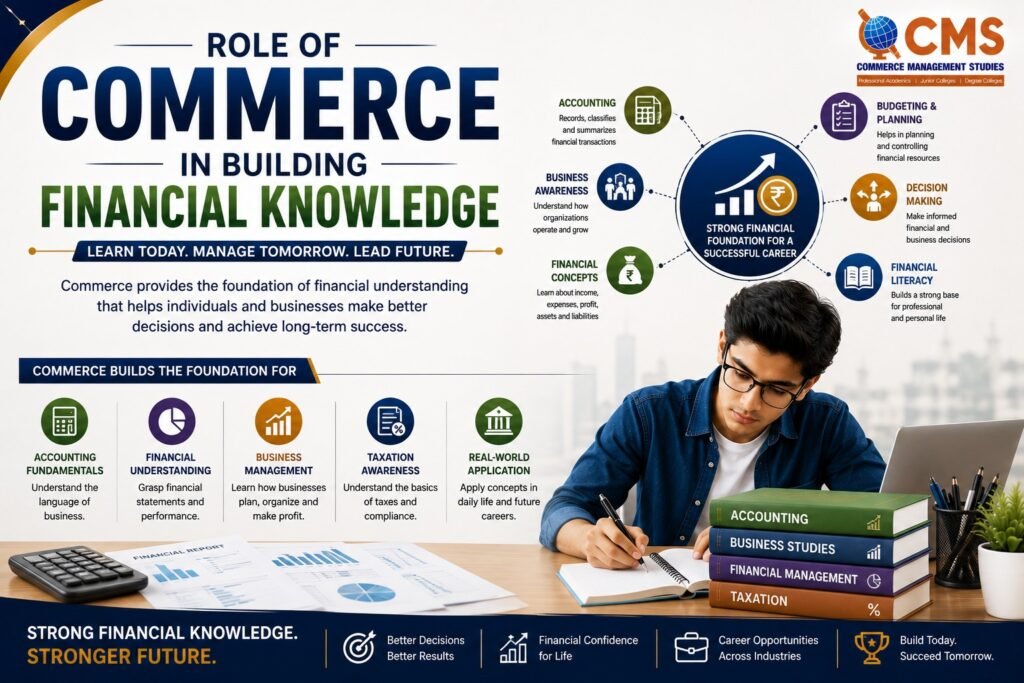
Role of Commerce in Building Financial Knowledge
Commerce introduces students to fundamental concepts related to accounting, business, finance, and organizational activities. Accounting helps students understand how financial transactions are recorded and interpreted, while business-related concepts introduce them to how organizations operate and make decisions. This knowledge provides an important foundation for students who later pursue professional qualifications in accounting and finance.
Commerce also develops financial awareness that can be useful in everyday life. Understanding revenue, expenses, profit, assets, liabilities, budgeting, and financial planning helps students appreciate how individuals and organizations manage money. For students planning careers in accounting, taxation, auditing, corporate finance, or business management, these fundamentals can become particularly important during higher studies.
Professional Courses After MEC
MEC provides a strong foundation for several professional courses. Students can select a pathway based on their interests, aptitude, and long-term career objectives rather than being limited to one particular profession. The combination of Mathematics, Economics, and Commerce can support both finance-oriented and management-oriented career paths.
Some options include:
- Chartered Accountancy (CA)
- Cost and Management Accountancy (CMA)
- Bachelor of Commerce (B.Com)
- Bachelor of Business Administration (BBA)
- Economics programmes
- Finance and investment programmes
- Management entrance examinations
- Banking and financial services
- Entrepreneurship
- Business analytics and related fields
The appropriate choice depends on the student’s interests, strengths, academic performance, and understanding of the career involved.
MEC and Chartered Accountancy
Chartered Accountancy is a natural professional pathway for many MEC students because the stream provides exposure to accounting, economics, and quantitative concepts. Students who enjoy financial statements, taxation, auditing, accounting principles, and financial analysis may find CA particularly suitable. The profession offers opportunities across auditing, taxation, financial reporting, consulting, corporate finance, and business advisory services.
Building strong fundamentals during Intermediate can make the transition to professional studies more manageable. Students can gradually strengthen their accounting concepts, numerical ability, analytical thinking, and time-management skills while continuing their Intermediate education. Dedicated CA preparation is still essential, but a strong academic foundation can help students approach professional-level concepts with greater confidence.
MEC and Cost and Management Accountancy
Cost and Management Accountancy is another professional pathway that aligns well with MEC. CMAs focus on areas such as cost analysis, budgeting, financial planning, performance evaluation, and strategic decision-making. Their work helps organizations understand costs, improve efficiency, control expenses, and make informed business decisions.
Students who are interested in understanding how businesses manage resources and improve profitability may find CMA an appealing career option. The Mathematics component of MEC can support quantitative thinking, while Economics and Commerce provide useful background knowledge for understanding business operations and financial concepts. As with CA, students benefit from consistent preparation and strong conceptual understanding.
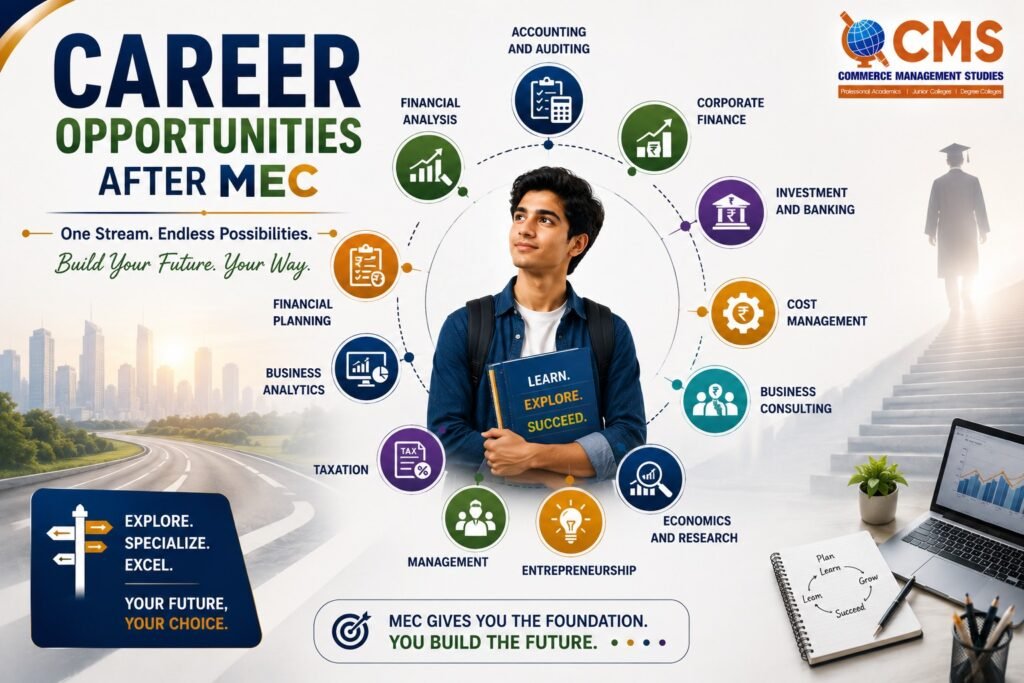
Career Opportunities After MEC
MEC can lead to careers across finance, accounting, management, economics, business, and entrepreneurship. The professional opportunities available depend on the higher education or professional qualification students choose after Intermediate. With additional specialization, students can develop expertise in areas ranging from financial analysis and auditing to management consulting and investment-related careers.
Some potential career areas include:
- Accounting and auditing
- Financial analysis
- Corporate finance
- Investment and banking
- Cost management
- Business consulting
- Economics and research
- Management
- Entrepreneurship
- Taxation
- Business analytics
- Financial planning
The flexibility of MEC allows students to explore these fields before eventually specializing according to their interests and professional goals.
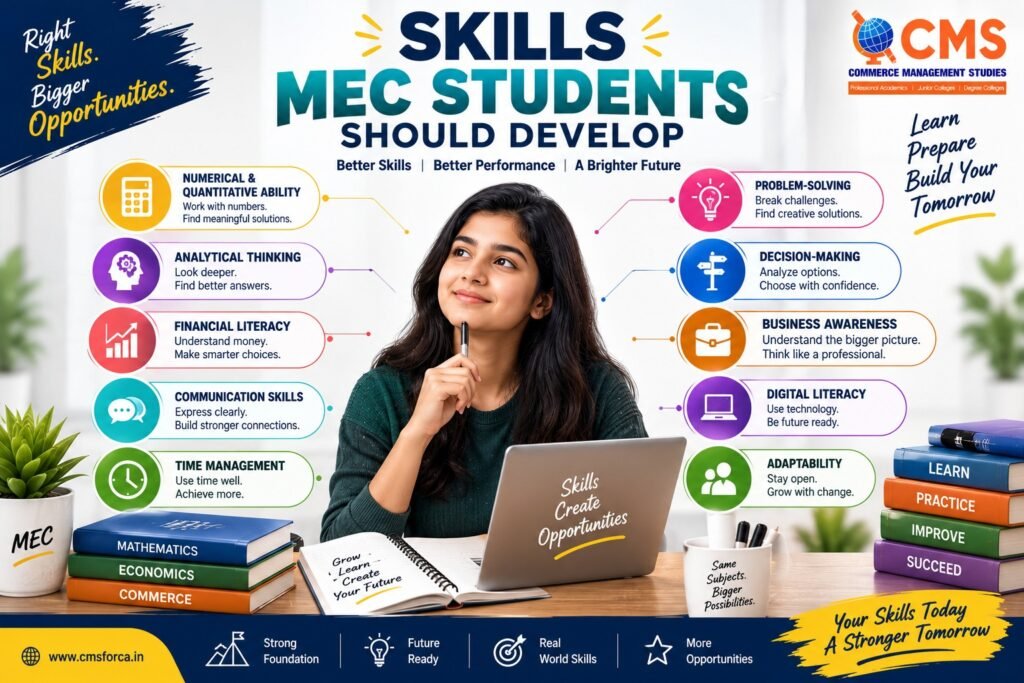
Skills MEC Students Should Develop
Academic subjects provide the foundation, but professional success also depends on transferable skills. Students who want to make the most of their MEC education should gradually develop communication, analytical thinking, problem-solving, time management, and digital skills. These abilities can improve both academic performance and future employability.
Important skills for MEC students include:
- Numerical and quantitative ability
- Analytical thinking
- Financial literacy
- Communication skills
- Problem-solving
- Decision-making
- Time management
- Business awareness
- Digital literacy
- Adaptability
Developing these skills during Intermediate can help students become better prepared for professional courses, entrance examinations, higher education, and future workplace responsibilities.
The Importance of Early Career Planning
Choosing MEC after Class 10 does not mean students need to decide their entire career immediately. However, understanding the major pathways available can help them make better academic decisions. Students can explore different professional courses, understand the nature of each career, and identify subjects or skills that match their interests before making a final choice.
Early planning also provides students with more time to build the necessary foundation. Instead of waiting until the final stage of Intermediate to think about professional courses, students can gradually improve their accounting, mathematics, reading, communication, and analytical skills. This approach can make future preparation more organized and reduce unnecessary academic pressure.
Integrated Learning for MEC Students
Students interested in professional courses often need to balance Intermediate academics with preparation for entrance examinations or professional qualifications. An integrated approach can help students manage these requirements by connecting their Intermediate subjects with the knowledge and skills required for their chosen professional pathway.
At CMS MEC Coaching in Hyderabad, MEC students can pursue Intermediate education alongside integrated preparation for professional pathways such as CA and CMA. Regular assessments, structured learning, conceptual support, and focused preparation can help students strengthen their academic foundation while working toward their long-term professional goals.
Conclusion
MEC after Class 10 can provide students with a strong and flexible foundation for a wide range of professional careers. The combination of Mathematics, Economics, and Commerce develops numerical ability, economic awareness, financial understanding, and analytical thinking. These skills can support students who later choose careers in Chartered Accountancy, Cost and Management Accountancy, finance, economics, business management, banking, entrepreneurship, and several other fields.
Ultimately, the success of an MEC student depends not simply on choosing the stream but on how effectively they use the opportunities it provides. Building strong fundamentals, developing practical skills, exploring career options early, and maintaining consistent academic preparation can help students progress confidently toward their chosen profession. With the right combination of education, discipline, and long-term planning, MEC can serve as a valuable foundation for building a successful and adaptable professional career.