
Introduction
Choosing a management career immediately after Intermediate can open several pathways for students who are interested in business, entrepreneurship, finance, economics, and leadership. One such pathway is the Integrated Programme in Management (IPM), a five-year undergraduate management programme offered by select institutions. Instead of completing a separate undergraduate degree first and then pursuing management education, an integrated programme allows students to begin their management education soon after Class 12 and progress through a structured five-year programme.
IPMAT, or the Integrated Programme in Management Aptitude Test, is associated with admission to IPM programmes at participating institutions, although the exact admission process and entrance requirements can differ from one institute to another. For example, IIM Rohtak’s 2026 admission process includes an aptitude test covering Quantitative Ability, Logical Reasoning, and Verbal Ability, followed by a Personal Interview for shortlisted candidates. This makes it important for students to understand what IPM involves and assess whether its learning style and career direction match their interests.
What is IPMAT?
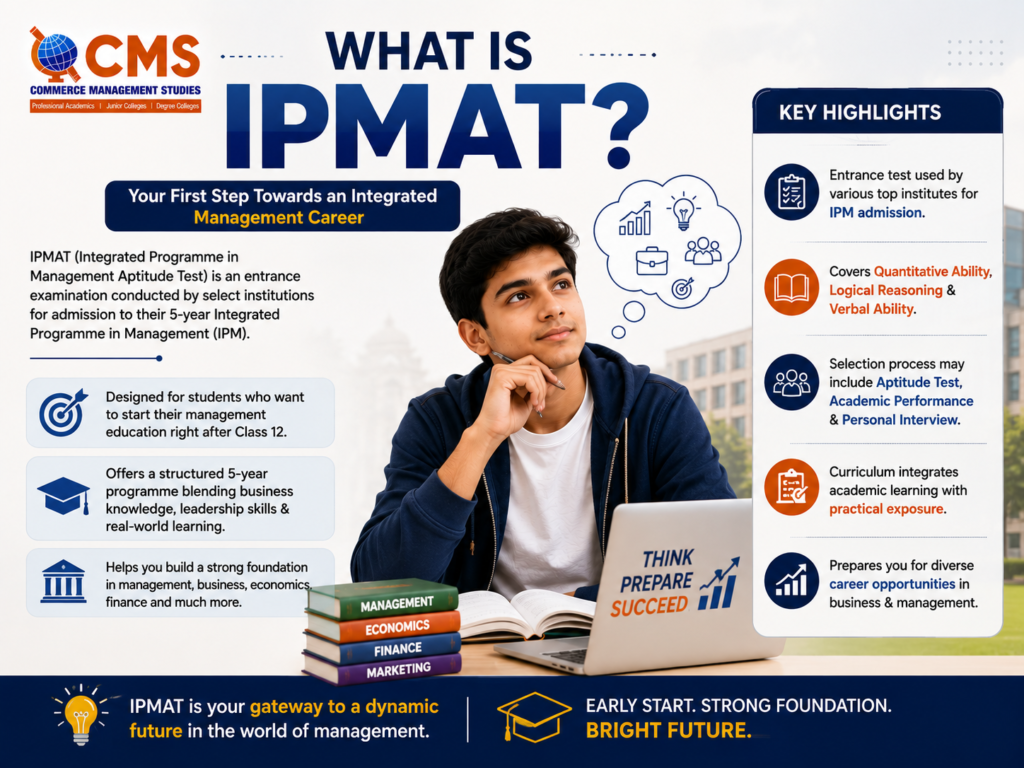
IPMAT is an entrance examination used by certain institutions as part of their admission process for integrated management programmes. These programmes are designed for students who want to begin studying management immediately after completing Class 12. Rather than waiting until graduation to enter management education, students can start developing knowledge in areas such as business, economics, finance, organizational behaviour, and management from the beginning of their undergraduate journey.
The exact examination pattern, eligibility criteria, selection process, and weightage can vary across institutions. IIM Rohtak, for instance, uses its IPM Aptitude Test along with past academic performance and a Personal Interview in its 2026 selection process. Its final merit calculation gives weightage to the aptitude test, Class 10 and Class 12 academics, and the interview. Students should therefore check the official admission information of each institution they are interested in rather than assuming that one IPMAT pattern applies everywhere.
Why Consider IPMAT After Intermediate?
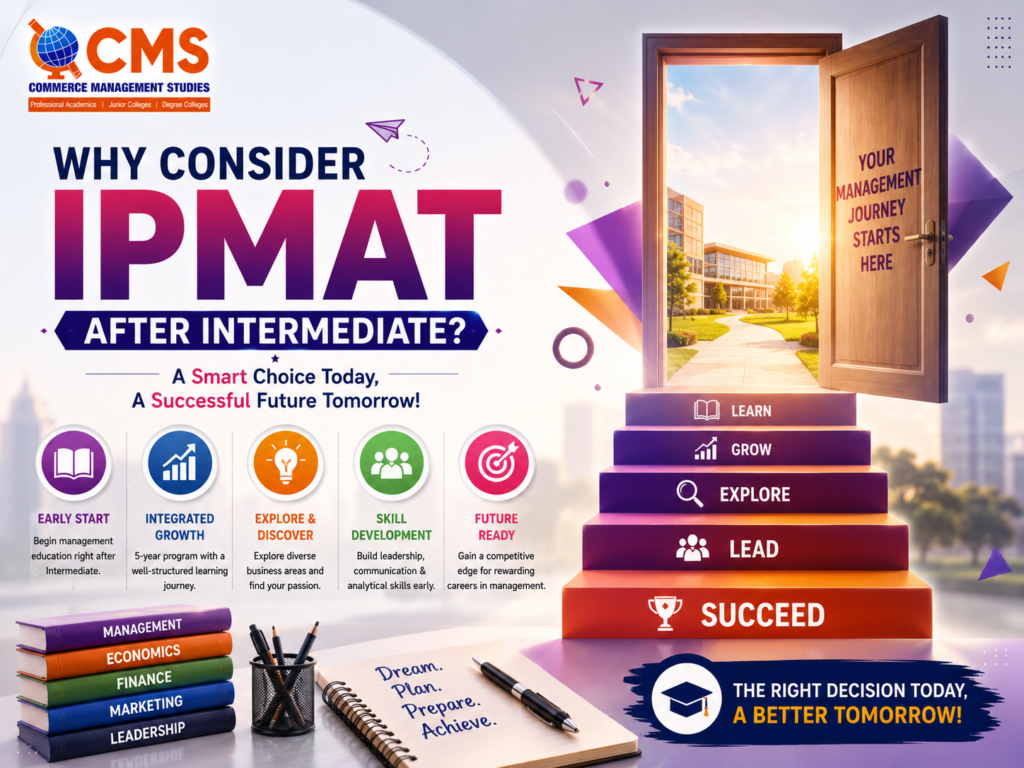
An integrated management programme can be an attractive option for students who already know that they want to explore management as a career. It gives them an opportunity to begin studying business and management concepts at an early stage instead of completing a general undergraduate degree before specializing in management. The longer integrated structure can also provide time for students to explore different areas of business and develop a broader understanding of the corporate environment.
Another advantage is that students can gradually develop professional skills alongside academic knowledge. Management education involves more than textbooks and examinations. Students may encounter presentations, group discussions, projects, case studies, quantitative analysis, communication activities, and business-related problem-solving. Beginning this learning journey after Intermediate can help students develop these abilities over several years.
Who Can Consider IPMAT?
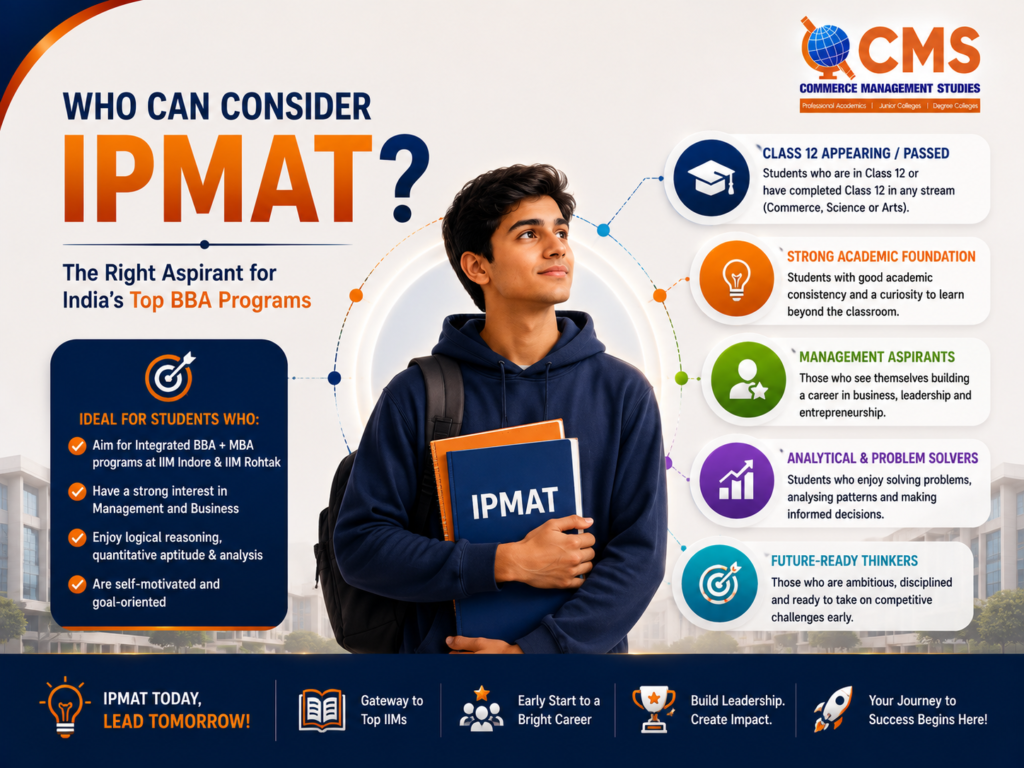
IPMAT can be worth considering for students who have a genuine interest in management, business, economics, entrepreneurship, finance, or leadership. Students who enjoy understanding how companies operate, how products and services are marketed, how businesses make decisions, and how organizations manage people and resources may find the field interesting.
It can also suit students who enjoy a combination of quantitative and verbal skills. The entrance examinations used by different institutions can involve areas such as Mathematics or Quantitative Ability, Logical Reasoning, and Verbal Ability. For example, IIM Rohtak’s 2026 IPM Aptitude Test includes Quantitative Ability, Logical Reasoning, and Verbal Ability. Students should therefore be comfortable developing both numerical and language-based abilities.
Is IPMAT Suitable for Commerce Students?
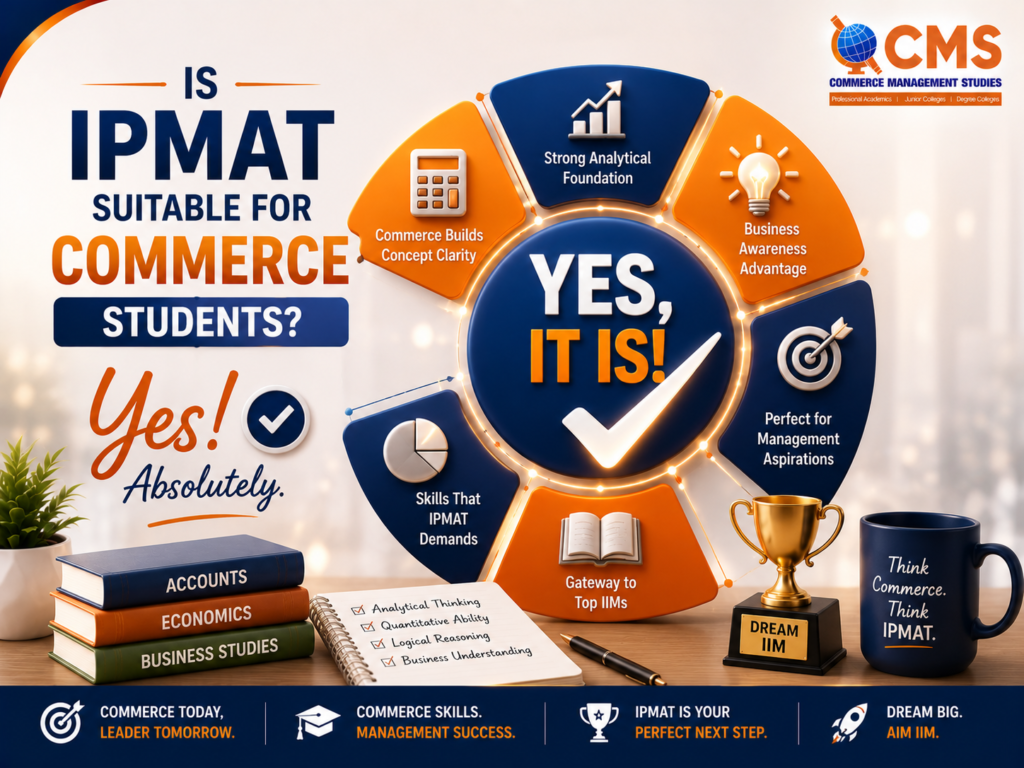
Commerce students can find IPM particularly relevant because their Intermediate education may already introduce them to areas such as Economics, Accountancy, Business Studies, and Mathematics, depending on their chosen stream. These subjects can provide useful background knowledge when students begin exploring management, finance, economics, and business-related concepts.
However, students from commerce backgrounds should not assume that their Intermediate subjects alone will be enough for an IPMAT entrance examination. Entrance preparation requires familiarity with the specific examination pattern, regular practice, logical reasoning, quantitative problem-solving, reading comprehension, and time management. Building these skills alongside Intermediate can therefore be a useful approach for students who are considering IPMAT.
How Mathematics Helps in IPMAT Preparation
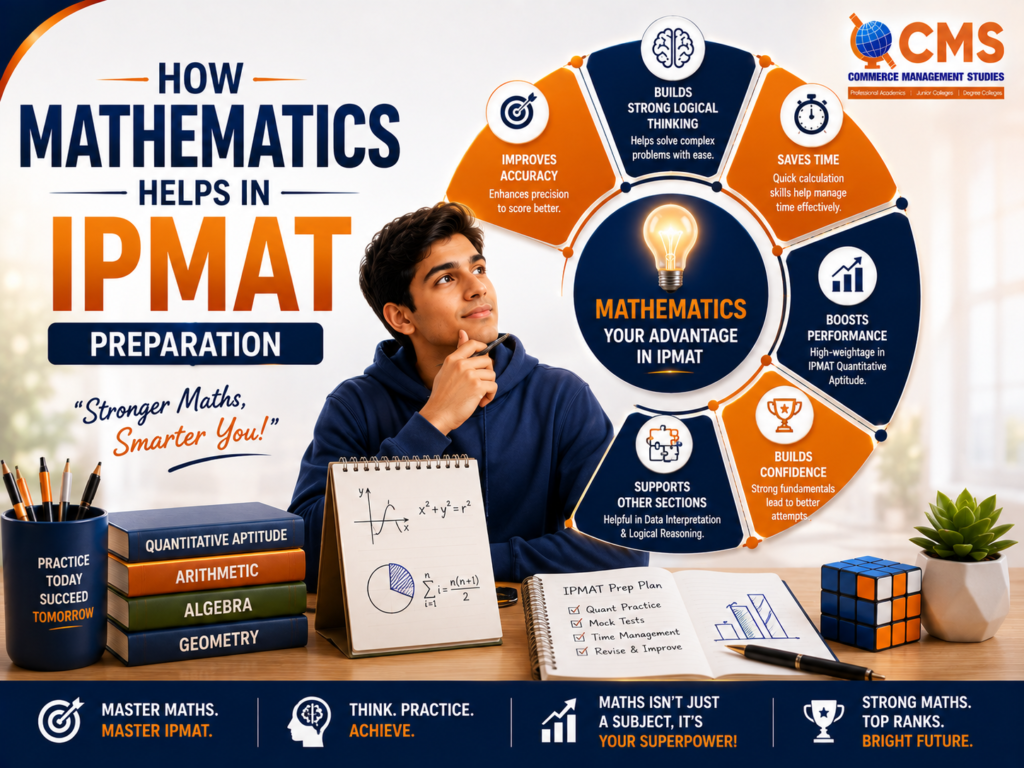
Quantitative ability is an important part of several management entrance examinations. Mathematics develops numerical confidence, logical thinking, calculation skills, and the ability to approach problems systematically. Students who regularly practice mathematics can gradually become more comfortable identifying patterns, interpreting numerical information, and solving problems within limited time.
For MEC students in particular, Mathematics can become a useful foundation for quantitative preparation. However, success in an aptitude examination requires more than simply knowing mathematical formulas. Students also need to develop speed, accuracy, question-selection skills, and the ability to apply concepts to unfamiliar problems.
Importance of Verbal Ability and Reading
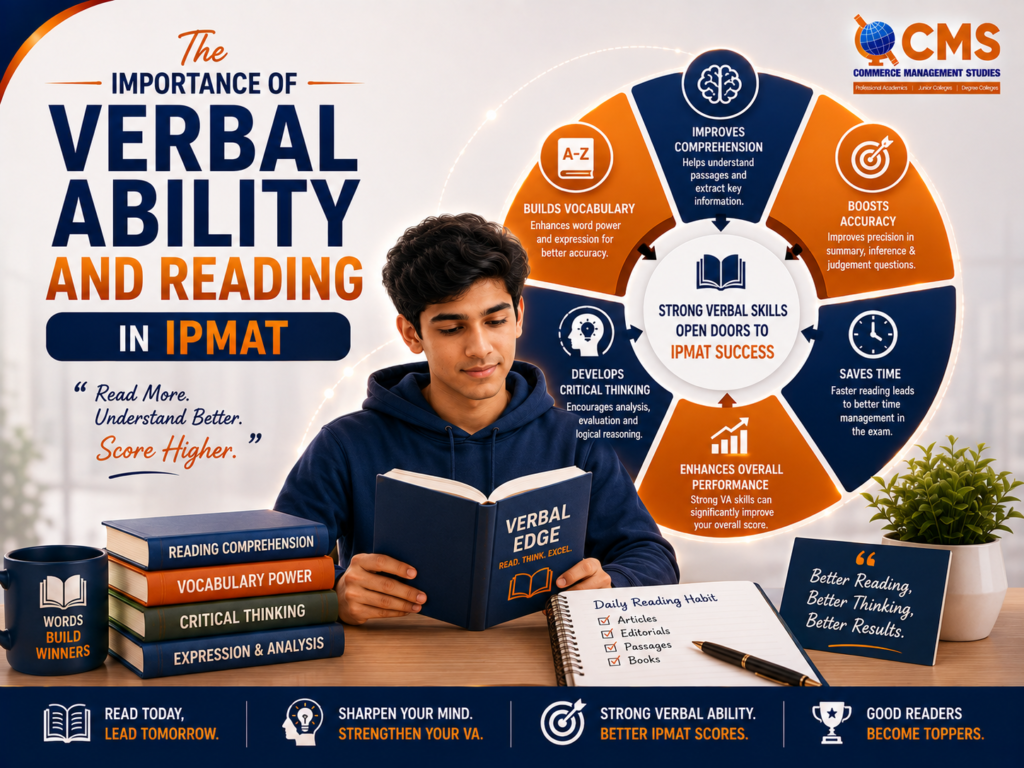
Management education requires students to communicate ideas clearly and understand information quickly. As a result, verbal ability and reading skills can be valuable both for entrance examinations and for the undergraduate programme itself. Students may eventually need to read business cases, reports, articles, research material, and other forms of professional communication.
Regular reading can help students improve vocabulary, comprehension, sentence interpretation, and awareness of different subjects. Reading newspapers, quality articles, business-related content, and well-written non-fiction can gradually improve these abilities. Consistent reading is particularly useful because language skills generally develop over time rather than through last-minute memorization.
Role of Logical Reasoning
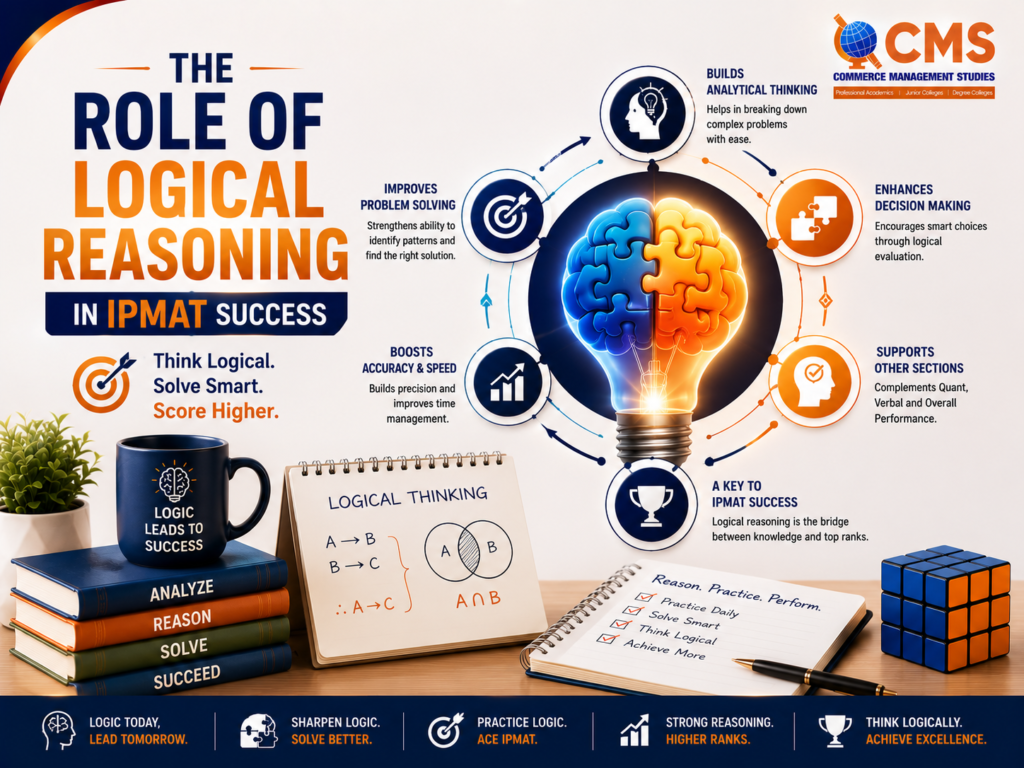
Logical reasoning evaluates how effectively students can identify relationships, patterns, sequences, assumptions, and conclusions. These abilities are useful in management because professionals frequently need to examine information, identify problems, compare alternatives, and make decisions based on available evidence.
Regular reasoning practice can help students become more comfortable with unfamiliar problems. Instead of memorizing a fixed set of answers, students learn to identify the underlying logic behind a question. This can also strengthen general problem-solving ability, which can be useful beyond the entrance examination.
Understanding the IPMAT Selection Process
Students should understand that getting into an IPMAT programme may involve more than simply taking an aptitude test. The selection process depends on the institution. Some institutions may consider aptitude-test performance, academic records, interviews, or other components when preparing the final merit list.
For example, IIM Rohtak’s 2026 admission process considers IPMAT performance, Class 10 and Class 12 academics, and Personal Interview performance. The institute assigns 55% weightage to the aptitude test, 15% to the interview, 10% to Class 10 academics, and 20% to Class 12 academics. This demonstrates why students should take their Intermediate academics seriously even while preparing for the entrance examination.
Skills Students Can Develop Through IPMAT Preparation
Preparing for IPMAT can help students develop several transferable skills that are useful beyond the entrance examination. Quantitative practice can strengthen numerical reasoning, while reading and verbal preparation can improve comprehension and communication. Logical reasoning can encourage structured thinking and problem-solving.
Some important skills include:
- Quantitative reasoning
- Logical thinking
- Reading comprehension
- Communication
- Time management
- Problem-solving
- Decision-making
- General awareness
- Analytical thinking
- Confidence in competitive examinations
These skills can become useful throughout undergraduate education and later professional life, particularly in business and management-oriented careers.
What Students Learn During an Integrated Management Programme
An IPMAT is not simply an extended entrance-examination preparation programme. Once admitted, students enter a structured academic programme designed to introduce them to management and related disciplines. The curriculum can expose students to areas such as economics, finance, accounting, marketing, organizational behaviour, quantitative methods, communication, and business strategy, depending on the institution.
The integrated nature of the programme can also give students time to explore different aspects of management before deciding where they want to specialize or develop deeper expertise. This can be valuable for students who are interested in business but have not yet decided whether they prefer finance, marketing, consulting, entrepreneurship, human resources, operations, or another area.
Career Opportunities After an IPMAT
An integrated management education can prepare students for a variety of business and management-related career paths. After completing the programme, students may explore opportunities in areas such as consulting, finance, marketing, business analytics, operations, product management, human resources, and entrepreneurship, depending on their specialization, skills, and career interests.
Some possible career areas include:
- Management consulting
- Finance and financial analysis
- Marketing
- Business development
- Business analytics
- Operations management
- Product management
- Human resources
- Entrepreneurship
- Strategy and corporate management
The career outcome depends on several factors, including the institution, academic performance, internships, skills, specialization, and professional experience.
How to Decide Whether IPMAT is Right for You
The decision should begin with understanding your interests rather than simply focusing on the reputation of management institutions. Students should ask themselves whether they enjoy business-related subjects, problem-solving, communication, teamwork, leadership activities, and understanding how organizations work. They should also be willing to develop quantitative and verbal skills for entrance examinations.
It is equally important to understand that IPM is a long-term commitment. A student choosing an integrated management programme is beginning a management-focused academic journey immediately after Intermediate. Therefore, students should research the programme structure, curriculum, admission requirements, fees, campus environment, and career opportunities before making a decision.
How to Prepare Alongside Intermediate
Students interested in IPMAT can begin preparation gradually while continuing their Intermediate education. A balanced approach can involve strengthening academic fundamentals while dedicating regular time to quantitative aptitude, logical reasoning, reading comprehension, and general awareness. This prevents entrance preparation from becoming an entirely separate burden and allows students to build skills progressively.
At CMS IPMAT Coaching in Hyderabad, students can pursue Intermediate education with integrated IPMAT preparation, helping them work on their academic subjects while developing the aptitude and reasoning skills required for management entrance examinations. A structured approach involving regular practice, assessments, revision, and time management can help students become more familiar with competitive examination requirements.
Conclusion
IPMAT and integrated management programmes can be an exciting pathway for students who want to begin their management education immediately after Intermediate. The five-year integrated structure provides an opportunity to study management from an early stage while developing quantitative, analytical, communication, and business skills. For students who already have an interest in management, business, finance, entrepreneurship, or leadership, it can be a pathway worth exploring.
However, deciding whether IPMAT is right for you requires more than looking at the name of the examination or institution. Students should understand the entrance requirements, assess their strengths, explore the programme curriculum, and consider their long-term career interests. With strong Intermediate academics, consistent aptitude preparation, regular reading, and a clear understanding of the management field, students can make an informed decision about whether an integrated management programme is the right next step for their career.