

Completing Intermediate is an important milestone for students preparing to enter undergraduate education. After Class 12, students have several options to explore, including degree programmes in commerce, management, economics, humanities, sciences and other professional fields. However, choosing a suitable course and identifying the right university requires careful planning. The Common University Entrance Test (CUET) has become an important admission route for undergraduate programmes offered by participating universities. Understanding how CUET works, which subjects students need to select and how university admission requirements differ can help Intermediate students make informed decisions about their future.
For students pursuing MEC, CEC and ACE, beginning CUET preparation during Intermediate can provide an opportunity to explore undergraduate courses while continuing their board education. At CMS, students can pursue Intermediate education alongside integrated CUET coaching, helping them become familiar with entrance examination preparation and university admission planning. With a clear understanding of the admission process, students can identify their academic interests, research eligible courses and prepare for the next stage of their education with greater confidence.

1. Understanding CUET and Its Role in University Admissions
CUET is a common entrance examination conducted for admission to undergraduate programmes offered by participating universities. It provides students with an opportunity to apply to multiple participating institutions through an entrance examination framework. Instead of depending entirely on separate admission examinations for every participating university, students can use their CUET performance when applying to eligible programmes, subject to each university’s admission requirements.
Understanding the role of CUET helps students begin their university planning during Intermediate. The examination is not a guarantee of admission to every university or course. Universities determine their own programme eligibility, subject requirements, admission criteria and counselling procedures. Students should therefore research the institutions and undergraduate programmes they are interested in before making decisions about their CUET preparation.
Important aspects of CUET that students should understand include:
- Participating Universities: CUET scores are used by participating universities for admissions to eligible programmes.
- Undergraduate Courses: Students can explore different degree programmes based on their academic interests and eligibility.
- Entrance Examination: CUET assesses students through the subjects and examination components prescribed for the relevant examination year.
- University-Specific Requirements: Institutions may have different subject combinations, eligibility conditions and admission procedures.
- Admission Process: Students generally need to complete the relevant application, score submission, counselling or university admission steps as applicable.
Understanding these aspects gives students a clearer idea of how CUET fits into their higher education plans. It also helps them avoid choosing subjects without checking whether those subjects are accepted for their preferred courses. Since admission requirements can change between universities and academic years, students should refer to the latest official CUET information and the admission guidelines published by their target institutions before finalising their preparation.

2. Choosing the Right Undergraduate Course Before CUET Preparation
Selecting an undergraduate course is one of the most important steps in the CUET admission journey. Students should begin by identifying their interests, strengths and long-term academic goals rather than choosing a course only because it is popular. Intermediate provides an opportunity to explore different subjects and understand which areas students enjoy studying. This can help them make a more informed decision about the degree programme they want to pursue after Class 12.
Students can start their course selection process by considering the following factors:
- Academic Interests: Identify subjects and areas of study that students genuinely enjoy.
- Career Goals: Explore how different undergraduate programmes connect with future career opportunities.
- Course Structure: Understand the subjects, specialisations and learning requirements of each degree.
- University Options: Research institutions offering the preferred undergraduate programme.
- Eligibility Requirements: Check the academic qualifications and CUET subject combinations required for admission.
A clear course preference can help students organise their university research and prepare more effectively for CUET. For example, students interested in commerce-related degrees may explore programs such as B.Com, Economics or management-related courses, depending on their interests and eligibility. Students should not assume that every university accepts the same subject combination for a particular degree. Checking the official admission requirements before choosing CUET subjects is essential to ensure that their preparation aligns with their intended course.

3. How MEC, CEC and ACE Students Can Explore CUET Opportunities
Intermediate streams help students develop subject knowledge and explore different undergraduate pathways. MEC, CEC and ACE provide a commerce-oriented academic background, but students may have different interests when choosing their degree programmes. Some may prefer accounting and finance, while others may be interested in economics, business management, humanities or interdisciplinary courses. Understanding these possibilities during Intermediate can help students identify suitable university programmes and plan their CUET preparation accordingly.
Students from different Intermediate streams can begin exploring undergraduate opportunities in the following ways:
- MEC Students: Explore programmes related to commerce, economics, mathematics, finance and management, subject to university eligibility.
- CEC Students: Research undergraduate courses in commerce, economics, business, humanities and related areas.
- ACE Students: Explore commerce-related and other eligible undergraduate programmes based on their academic background and university requirements.
- Course-Specific Research: Identify the subjects and qualifications required for admission to each preferred programme.
- University Comparison: Compare course structures, eligibility conditions and admission procedures across participating institutions.
Students should remember that their Intermediate stream alone does not determine eligibility for every undergraduate programme. Universities may prescribe specific CUET domain subjects, language requirements, minimum academic qualifications or other admission conditions. Therefore, students from MEC, CEC and ACE should check the requirements of their preferred university and course before finalising their CUET subject selection. This approach helps them make decisions based on actual admission criteria rather than assumptions about which courses are available to them.
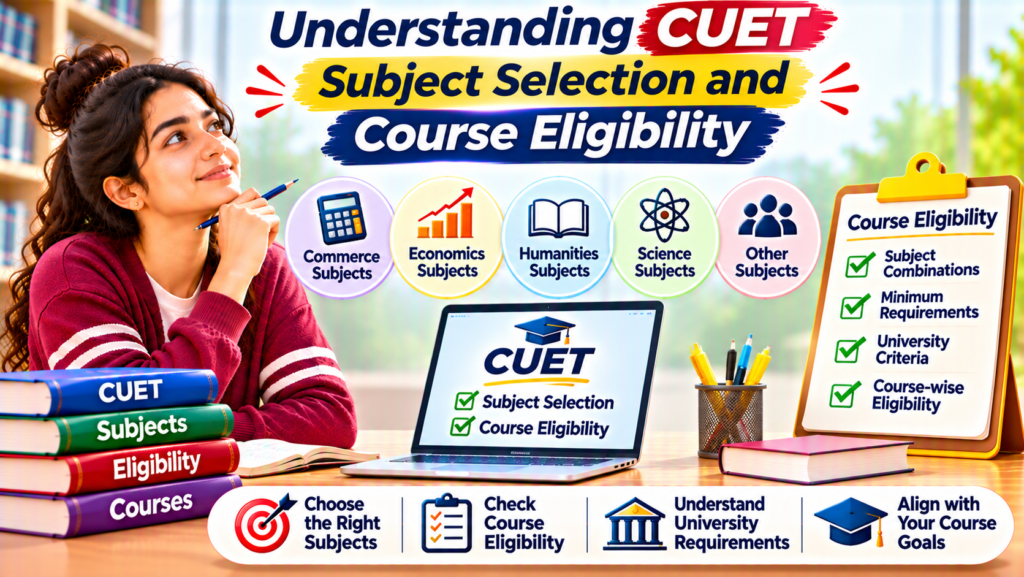
4. Understanding CUET Subject Selection and Course Eligibility
CUET subject selection is an important part of the university admission journey because the subjects students choose may influence the undergraduate programmes for which they can apply. Different universities can prescribe different subject combinations for the same or similar courses. Students should therefore avoid selecting CUET subjects only because they are familiar with them or because they are included in their Intermediate stream.
Before selecting subjects, students should carefully research their preferred undergraduate programmes.
- Check Course Requirements: Identify the CUET subjects required for the undergraduate course.
- Review University Guidelines: Compare subject combinations and eligibility conditions across institutions.
- Understand Domain Subjects: Check whether the course requires specific subjects or permits alternative combinations.
- Consider Language Requirements: Review whether a language test is required for the preferred programme.
- Confirm Academic Eligibility: Check minimum marks, qualifying subjects and other admission conditions.
- Keep Alternative Options: Research additional eligible courses and universities before finalising preferences.
A well-planned subject selection process helps students align their CUET preparation with their academic goals. For example, a student interested in Economics should check whether the preferred university requires Mathematics, Economics or another specific CUET subject combination. Similarly, students interested in commerce or management programs should verify the requirements of each institution instead of assuming that all universities follow the same admission criteria. Reviewing official university information can help students avoid subject selection mistakes and prepare for the programs they genuinely want to pursue.
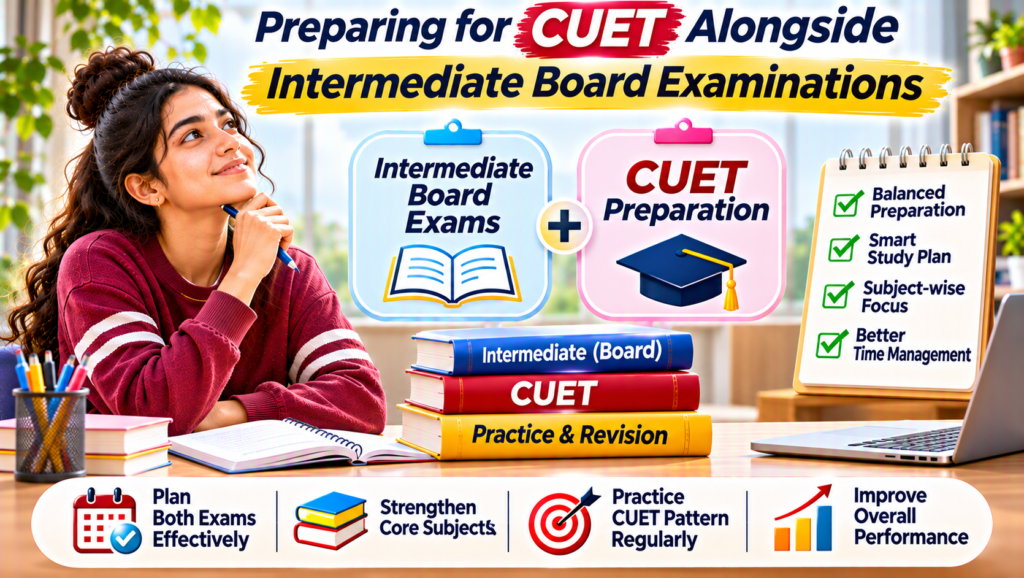
5. Preparing for CUET Alongside Intermediate Board Examinations
Intermediate students need to manage their board examinations while preparing for CUET. Although both require academic effort, their preparation methods may differ. Board examinations focus on the prescribed Intermediate syllabus, while CUET preparation depends on the examination subjects and components selected by students. Maintaining a balanced study routine can help students continue their regular academic work while developing the skills required for university entrance.
Students can organise their preparation through a practical study plan.
- Understand Both Syllabuses: Review the Intermediate board syllabus and the CUET subjects selected for preparation.
- Create a Weekly Schedule: Allocate time for board subjects, CUET concepts and practice.
- Study Consistently: Develop a regular routine instead of postponing entrance preparation.
- Practise Questions: Solve relevant CUET questions and review incorrect answers.
- Revise Important Topics: Strengthen understanding through regular revision.
- Monitor Progress: Use assessments and practice tests to identify areas requiring improvement.
Starting preparation during Intermediate can give students time to become familiar with the examination format and develop confidence in their chosen subjects. However, students should avoid creating an unrealistic study schedule that affects their board preparation. A balanced approach allows them to maintain academic progress while gradually improving their CUET readiness. As examinations approach, students can adjust their study priorities according to their syllabus completion, performance and the official examination schedule.
6. How Students Can Research Universities and Admission Requirements
Choosing a university involves more than identifying a familiar institution or selecting a course based on its name. Students should understand the academic structure, eligibility requirements and admission process of the universities they are considering. CUET provides an entrance examination route for participating institutions, but each university may have its own admission rules and procedures. Researching these details early can help students make informed decisions and prepare for the application process.
Students can use the following steps to research university options:
- Identify Participating Universities: Check which institutions accept CUET scores for the preferred programme.
- Explore Undergraduate Courses: Review the available degree programmes and specialisations.
- Check Eligibility: Understand the academic qualifications and subject requirements.
- Review Admission Criteria: Examine how CUET scores and other eligibility conditions are considered.
- Understand Application Procedures: Check application dates, counselling processes and required documents.
- Compare Course Options: Evaluate programmes based on academic interests and future plans.
University research helps students create realistic course preferences and understand the admission process before applying. It also gives them an opportunity to identify alternative programmes that match their interests and qualifications. Students should rely on official university admission notices and the latest CUET information because eligibility rules, subject combinations and admission procedures can change. Keeping track of these requirements during Intermediate can make the transition to undergraduate education more organised.
7. How Integrated CUET Coaching at CMS Supports Intermediate Students
Integrated coaching can help students prepare for CUET while continuing their Intermediate education. At CMS, MEC, CEC and ACE students can pursue integrated CUET coaching alongside their board studies. This provides an opportunity to become familiar with entrance examination preparation, understand important subject concepts and develop a structured study routine during Intermediate.
An organised coaching approach can support students through different stages of preparation.
- Faculty Guidance: Support in understanding CUET subjects and examination requirements.
- Structured Preparation: A planned approach to covering important topics and maintaining progress.
- Regular Assessments: Opportunities to evaluate subject understanding and identify learning gaps.
- Practice Questions: Exposure to examination-style questions and subject-based practice.
- Performance Feedback: Guidance on areas that need additional attention.
- Study Planning: Support in balancing Intermediate board preparation with CUET coaching.
At CMS, integrated CUET Coaching in Hyderabad gives students an opportunity to work towards their Intermediate education and university entrance goals within a planned academic approach. Students can gradually develop familiarity with CUET preparation, practise relevant questions and evaluate their progress through assessments. By combining regular academic learning with entrance examination preparation, they can use their Intermediate years to explore undergraduate opportunities and prepare for the next stage of their education.
Conclusion
The journey from Intermediate to university requires students to understand their academic interests, explore suitable undergraduate courses and prepare for the admission requirements of participating institutions. CUET can provide an important entrance examination route for students interested in undergraduate education, but choosing the right subjects and understanding university-specific eligibility conditions are essential parts of the process. MEC, CEC and ACE students should research their preferred courses, compare admission requirements and plan their preparation according to the subjects prescribed by their target universities.
Starting CUET preparation during Intermediate can help students develop a consistent study routine, become familiar with examination requirements and explore their university options before completing Class 12. With careful subject selection, regular practice and appropriate academic guidance, students can prepare for both board examinations and university entrance. At CMS, integrated CUET coaching alongside MEC, CEC and ACE provides students with an opportunity to work towards their Intermediate education and future undergraduate admission goals through a structured preparation approach.