

For students interested in pursuing law after Intermediate, preparing for the Common Law Admission Test (CLAT) can be an important part of their academic planning. CLAT is an entrance examination used by participating National Law Universities for admission to eligible undergraduate law programmes. While many students begin thinking about law entrance examinations towards the end of Class 12, exploring CLAT preparation during Intermediate can provide more time to develop essential skills, understand the examination pattern and build a consistent study routine.
Starting early does not mean students need to spend every day preparing for a competitive examination. Instead, it gives them an opportunity to develop reading comprehension, logical reasoning, legal reasoning and awareness of current affairs gradually, alongside their regular academic subjects. For students pursuing MEC, CEC or ACE, understanding how CLAT preparation fits into their Intermediate schedule can help them plan their next steps with greater confidence. CMS offers integrated CLAT coaching options for these Intermediate streams, allowing students to explore entrance preparation alongside their academic studies.
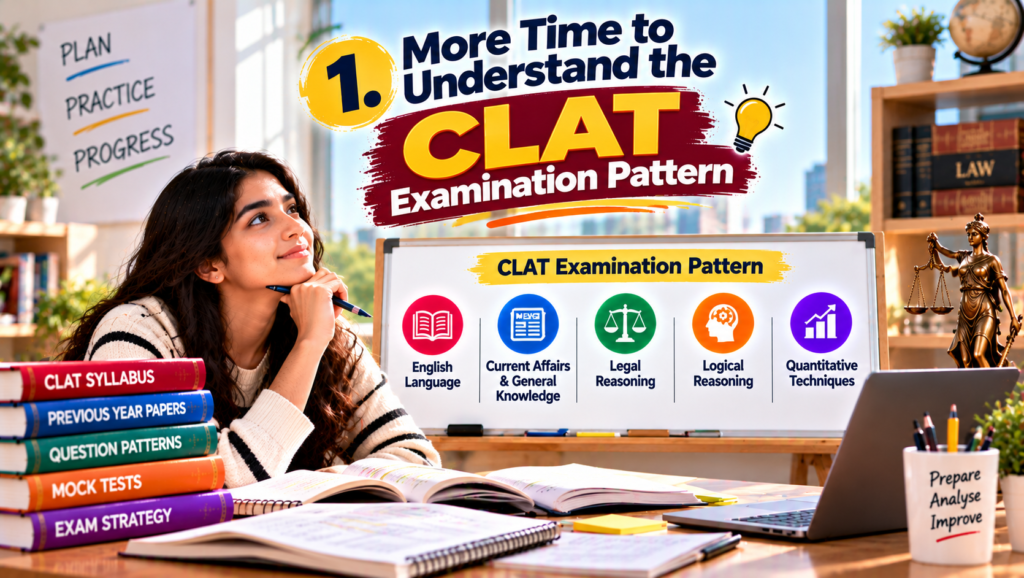
1. More Time to Understand the CLAT Examination Pattern
One advantage of beginning CLAT preparation during Intermediate is that students have more time to become familiar with the examination. CLAT-UG assesses skills across areas such as English language, current affairs including general knowledge, legal reasoning, logical reasoning and quantitative techniques. The examination uses comprehension-based questions, so students need to understand passages, identify relevant information and apply reasoning rather than rely entirely on memorisation.
Students who explore the examination early can gradually understand the nature of each section and identify the skills they need to improve. They can also become familiar with the official syllabus, question formats and examination requirements. This early understanding makes it easier to plan preparation systematically instead of trying to learn everything shortly before the examination. Aspirants should check the official CLAT notification for the relevant admission year, as examination details and requirements may change.
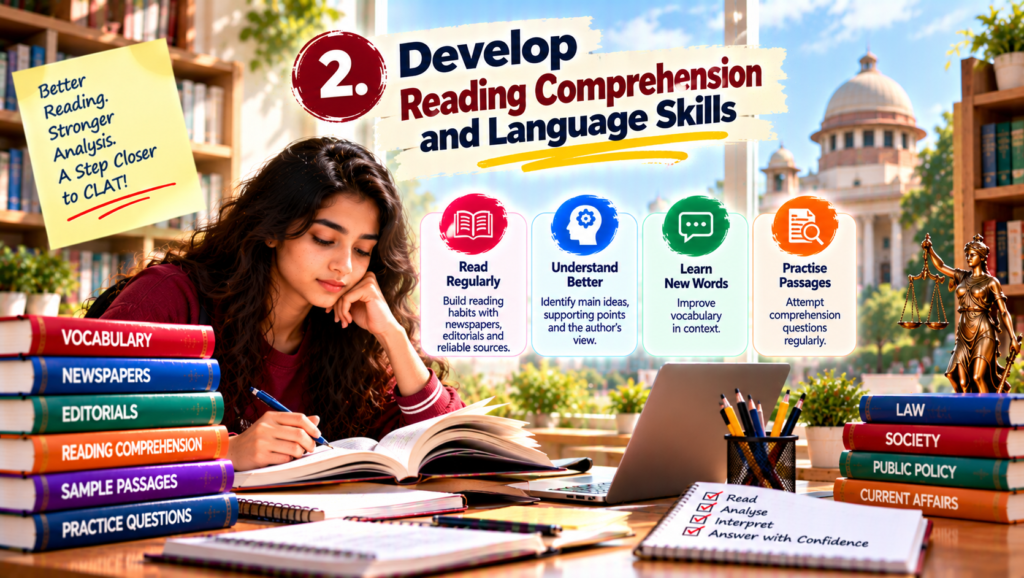
2. Develop Reading Comprehension and Language Skills
Reading comprehension is an important part of CLAT preparation because students must interpret passages, identify central ideas and understand the relationships between statements. Strong reading skills also help students process information efficiently and answer questions based on the material provided. These abilities develop through regular practice rather than last-minute revision.
Intermediate students can begin by reading newspapers, editorials, reliable news reports and other suitable reading material. They should focus on understanding the main argument, identifying supporting points and learning unfamiliar words in context. Summarising a passage in their own words and answering comprehension questions can also improve accuracy. Building these habits over time can make reading-based questions more manageable when students begin attempting CLAT practice papers.
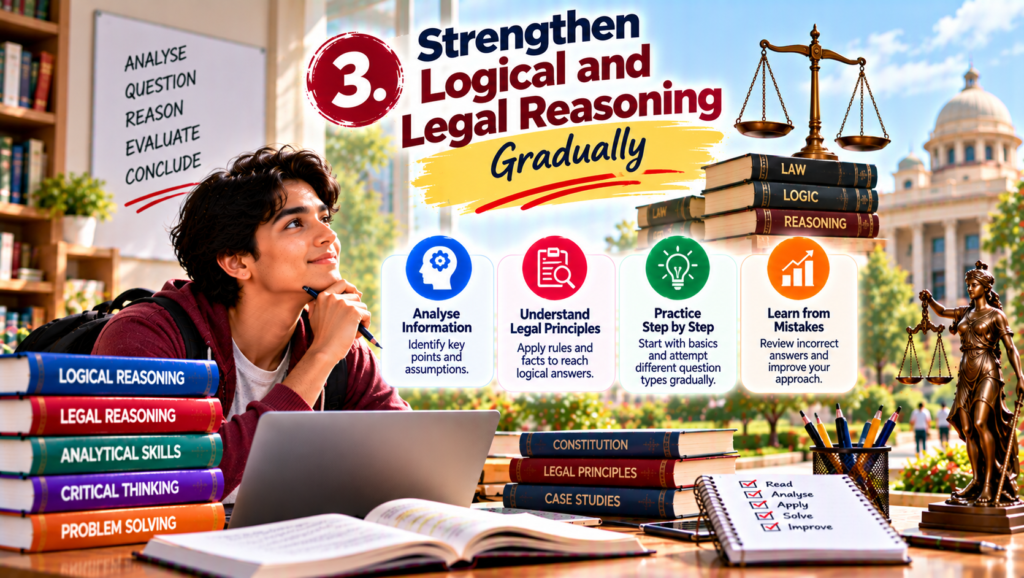
3. Strengthen Logical and Legal Reasoning Gradually
CLAT preparation requires students to analyse information, identify assumptions, evaluate arguments and draw conclusions from passages. Legal reasoning introduces students to legal principles and situations in which they must apply the information provided to reach a logical answer. Students do not necessarily need prior formal legal education to begin developing these skills, but they do need regular practice in reading carefully and reasoning systematically.
Starting during Intermediate allows students to practise different types of reasoning questions without rushing through every topic. They can learn how to distinguish relevant information from distracting details, understand the relationship between facts and principles, and evaluate answer choices. Over time, reviewing incorrect answers can help students identify whether their difficulties arise from misunderstanding a passage, overlooking a detail or applying a reasoning principle incorrectly.

4. Build a Consistent Current Affairs Preparation Habit
Current affairs and general knowledge form another important part of CLAT-UG preparation. Students need a practical method for following important national and international developments, understanding significant legal and public-policy issues, and revising the information they have learned. Trying to collect a large amount of current affairs information just before an examination can make preparation stressful and difficult to manage.
Students can use their Intermediate years to develop a manageable daily or weekly reading routine. They can maintain short notes on important developments, review major events periodically and focus on understanding why an event matters rather than memorising isolated facts. Regular revision helps students retain information and connect related developments. The preparation strategy should follow the official examination pattern for the relevant year, including the role of current affairs and general knowledge in the test.
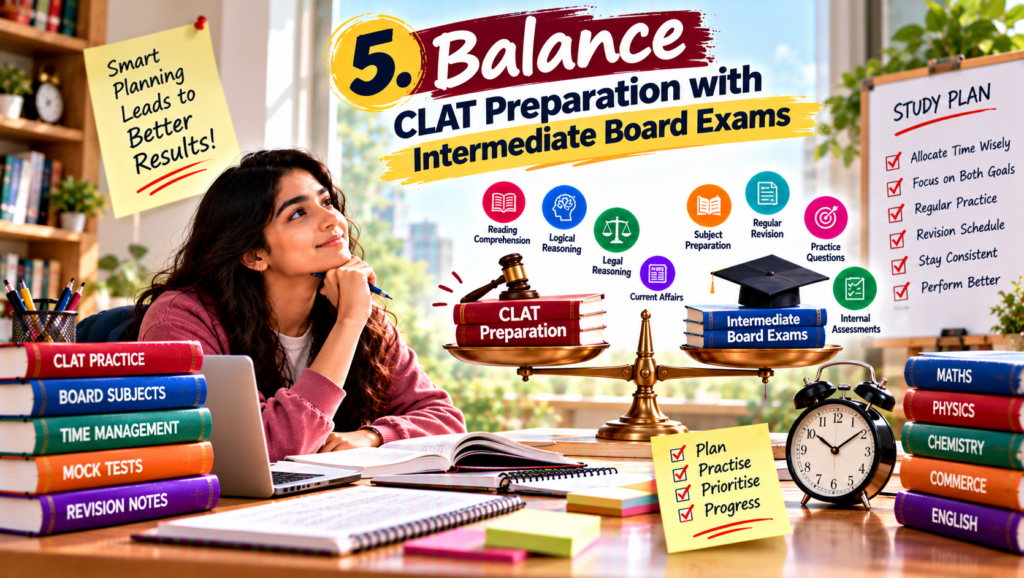
5. Balance CLAT Preparation with Intermediate Board Exams
One common concern among students and parents is whether preparing for CLAT during Intermediate will affect board examination performance. The key is to establish a balanced timetable that gives sufficient attention to school or college subjects while allowing regular time for entrance preparation. Since students must also manage assignments, internal assessments and examinations, a realistic schedule is more useful than an excessively demanding study plan.
Students can divide preparation into manageable sessions throughout the week. For example, they might practise reading comprehension on some days, work on reasoning questions on others and set aside a regular period for current affairs revision. As board examinations approach, they can adjust the timetable to prioritise academic revision while maintaining shorter CLAT practice sessions where practical. A balanced approach helps students develop their entrance examination skills without neglecting their Intermediate studies.
6. Use Mock Tests to Identify Strengths and Weaknesses
Mock tests are useful because they help students understand how well they can apply their knowledge under examination-like conditions. They can also reveal whether students are spending too much time on particular questions, misinterpreting passages or making avoidable errors. However, attempting mock tests without analysing the results may limit their usefulness.
Students who begin preparing during Intermediate have more opportunities to practise, review their performance and make adjustments. They can start with section-wise exercises before progressing to full-length mock tests as their preparation develops. After each test, they should examine incorrect answers, identify recurring difficulties and practise the relevant skills. Performance feedback and a record of progress can help students focus on improvement rather than simply counting the number of tests completed.
7. Explore Law as a Career Before Making a Final Decision
CLAT preparation can also help students explore whether legal education aligns with their interests. Law involves reading, analysing arguments, interpreting information and understanding how rules and institutions affect people and society. Students who enjoy discussions about public affairs, legal issues, social questions and logical arguments may find it worthwhile to investigate law as a potential academic pathway.
Beginning this exploration during Intermediate gives students time to research undergraduate law programmes, understand the admission process and learn about the different areas of legal practice. They can also speak with teachers, counsellors and people familiar with legal education to gain a realistic understanding of the subject. Although CLAT is an important route to participating National Law Universities, students should also research other law entrance examinations and institutions if they want to consider a broader range of options.
8. Can MEC, CEC and ACE Students Prepare for CLAT?
Students from MEC, CEC and ACE can explore CLAT preparation while pursuing Intermediate, provided they meet the eligibility requirements for the relevant admission year. CLAT-UG eligibility is generally based on qualifying Class 12 or an equivalent examination, rather than requiring students to have studied a particular Intermediate stream. Students should always confirm the current official eligibility criteria before applying.
Each stream can offer a different academic experience, but students can develop the reading, reasoning and analytical skills needed for CLAT alongside their regular studies. MEC students may already be working on quantitative problem-solving, while CEC and ACE students may develop other subject strengths relevant to their interests. Regardless of stream, successful preparation requires familiarity with the examination format, regular reading, practice and a clear understanding of the skills being assessed.
9. How Integrated CLAT Coaching Can Support Intermediate Students
Preparing for board examinations and CLAT simultaneously can be easier to organise when students follow a structured learning plan. Integrated coaching can help bring entrance examination preparation into the Intermediate routine, giving students planned opportunities to practise relevant skills while continuing their academic studies. When evaluating a programme, students and parents should look for clear topic coverage, regular assessments, mock tests, performance feedback and guidance on areas that need improvement.
CMS offers integrated CLAT Coaching in Hyderabad alongside its MEC, CEC and ACE Intermediate streams. This gives students an opportunity to explore law entrance preparation during their two-year Intermediate journey rather than treating it as a completely separate task after Class 12. Students should understand the programme structure, the balance between board and entrance preparation, and the support available before selecting a course. The goal is to establish consistent preparation habits while maintaining a manageable academic workload.
Conclusion
Starting CLAT preparation during Intermediate can give students more time to develop reading comprehension, logical reasoning, legal reasoning and current affairs knowledge. It also allows them to become familiar with the examination pattern, practise mock tests, understand their strengths and weaknesses, and explore whether a law degree suits their interests. Beginning early is not about studying for longer hours every day; it is about building skills consistently and planning preparation sensibly.
Students considering law after Class 12 can use their Intermediate years to create a strong foundation while keeping their board examination goals on track. By choosing a suitable stream, following a realistic timetable and researching the official admission requirements, they can approach CLAT preparation with greater clarity. With integrated CLAT coaching available alongside MEC, CEC and ACE, CMS provides an option for students who want to plan their Intermediate education and law entrance preparation together.