
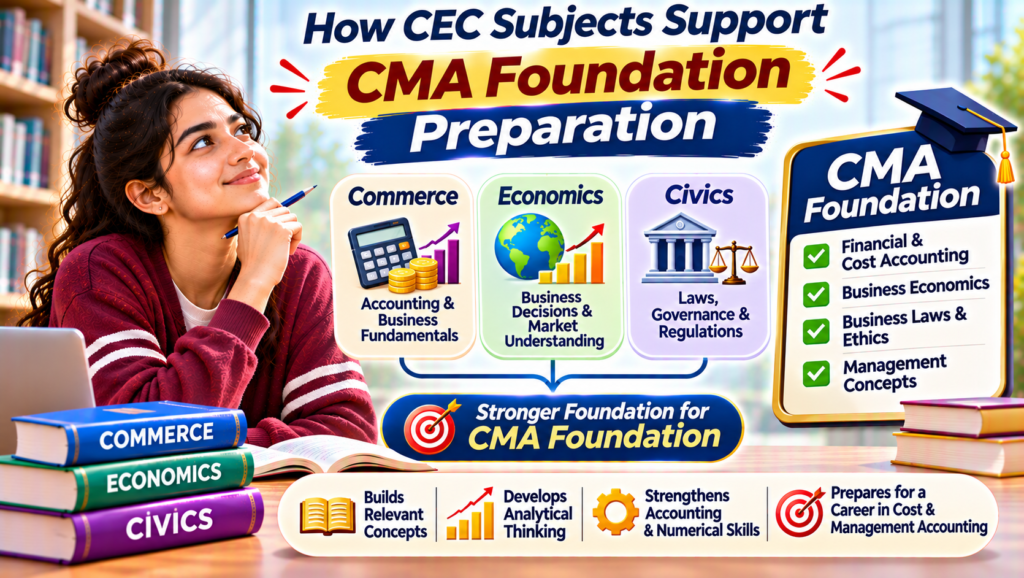
Choosing the right Intermediate stream can help students build a foundation for their future academic and professional goals. For students interested in Cost and Management Accounting, Commerce, Economics and Civics (CEC) provide an introduction to several concepts related to business, finance, accounting and governance. The CMA course focuses on areas such as financial accounting, business economics, business laws, management and cost accounting. Studying CEC during Intermediate gives students an opportunity to understand how businesses operate, how financial information is used and how economic factors influence business decisions. This early exposure can help students become familiar with commerce-related concepts before beginning their professional CMA preparation.
At CMS, students can pursue CEC Intermediate education alongside integrated CMA coaching, helping them work towards their board examinations and professional course goals together. This approach allows students to connect their Intermediate subjects with the concepts they encounter during CMA preparation. Although CEC does not cover the complete CMA Foundation syllabus, it can provide useful background knowledge and help students develop an interest in accounting, business management and financial decision-making. With a structured preparation plan, students can gradually strengthen their understanding of professional subjects while continuing their Intermediate education.
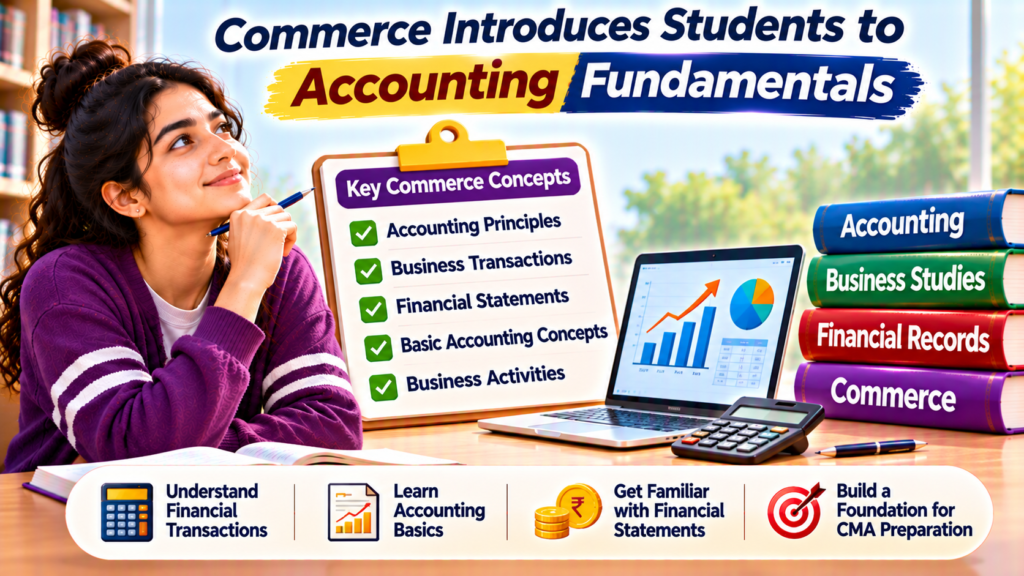
1. Commerce Introduces Students to Accounting Fundamentals
Commerce is one of the most relevant subjects for students planning to pursue Cost and Management Accounting. It introduces students to business activities, financial transactions, accounting principles and the importance of maintaining financial records. Students begin understanding how businesses record transactions, classify financial information and prepare accounts. This knowledge provides an initial introduction to the financial side of business operations and helps students become familiar with accounting terminology.
Some important Commerce concepts that can support CMA Foundation preparation include:
- Accounting Principles: Understanding the basic rules and concepts used to record financial transactions.
- Business Transactions: Learning how purchases, sales, expenses and other activities affect financial records.
- Financial Statements: Becoming familiar with the purpose of preparing financial information and understanding business performance.
- Basic Accounting Concepts: Developing an understanding of assets, liabilities, income and expenses.
- Business Activities: Learning how accounting information supports the daily operations of an organisation.
CMA Foundation includes Financial and Cost Accounting, which requires students to understand accounting principles and apply them while solving problems. Students who have studied commerce-related concepts during Intermediate may find some introductory topics familiar when they begin professional preparation. This familiarity can help them understand new accounting concepts more comfortably, develop confidence in solving numerical questions and gradually strengthen the accuracy required for professional examinations. However, CMA Foundation includes its own prescribed syllabus, so students must prepare all relevant topics separately.
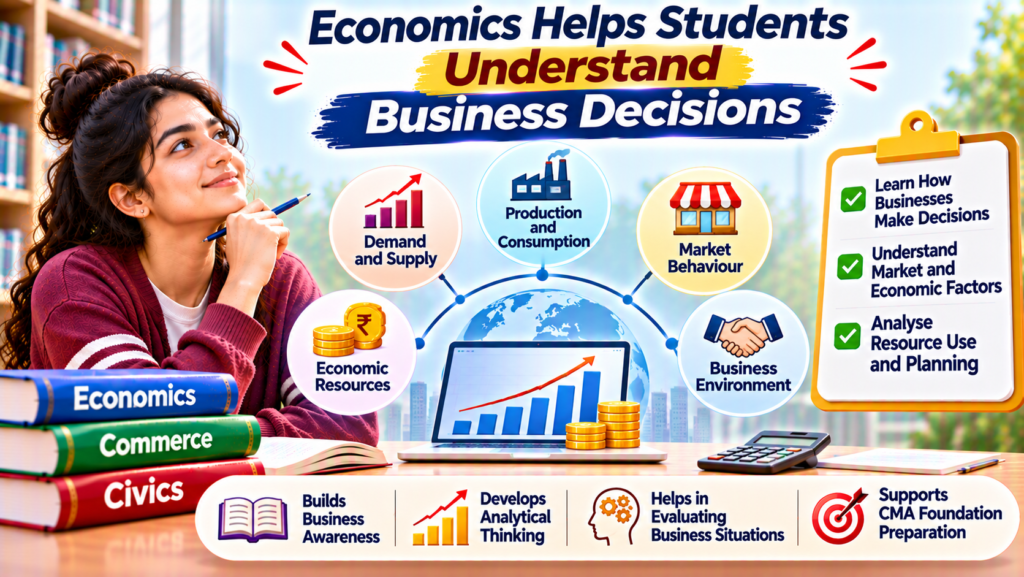
2. Economics Helps Students Understand Business Decisions
Economics introduces students to how individuals, businesses and markets make decisions. Through topics such as demand, supply, production, consumption and economic activity, students learn how different factors influence business operations. They also begin understanding how prices change, how resources are allocated and why businesses need to consider market conditions when making decisions. These concepts encourage students to develop a broader understanding of the economic environment in which organisations operate.
Some Economics topics that provide useful background for CMA Foundation include:
- Demand and Supply: Understanding how consumer demand and product availability influence markets.
- Production and Consumption: Learning how goods and services are produced, distributed and used.
- Market Behaviour: Exploring how businesses and consumers respond to changes in economic conditions.
- Economic Resources: Understanding how limited resources influence business decisions.
- Business Environment: Learning how economic factors affect business activities and planning.
Business Economics and Business Management are important areas in CMA Foundation preparation. Economics studied during Intermediate can provide students with a useful starting point when they begin learning about market behaviour, business decisions and economic principles. They can connect familiar concepts with professional-level applications and understand why businesses consider demand, costs, resources and market conditions while planning their activities. This background can make certain topics easier to approach, but students still need to study the complete CMA syllabus and practise applying economic concepts to examination questions.
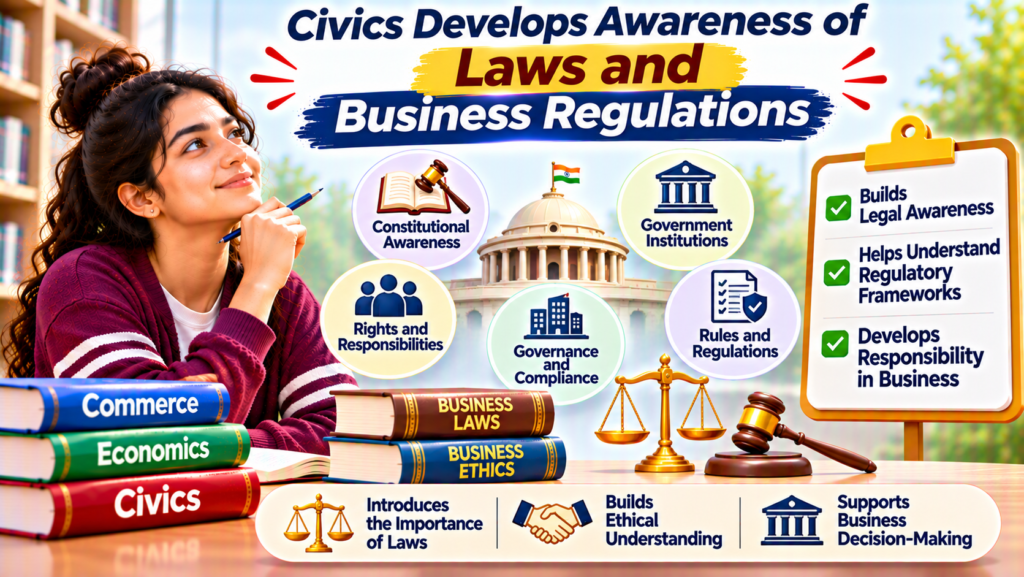
3. Civics Develops Awareness of Laws and Business Regulations
Civics helps students understand the functioning of government institutions, constitutional principles, rights, responsibilities and governance. It introduces the importance of rules and regulations in maintaining an organised society and encourages students to understand how institutions operate. This subject also provides general awareness of the role of laws, procedures and responsibilities in different areas of public life.
The following areas of Civics can provide a general foundation for understanding legal and regulatory concepts:
- Constitutional Awareness: Learning about the Constitution and the principles that guide the country.
- Government Institutions: Understanding the roles and responsibilities of different government bodies.
- Rights and Responsibilities: Becoming familiar with individual rights and duties.
- Rules and Regulations: Understanding why laws are necessary for maintaining order and accountability.
- Governance: Learning how institutions and established procedures support the functioning of society.
CMA Foundation includes Business Laws and Business Ethics, which introduce students to legal principles and ethical responsibilities relevant to business activities. Civics does not directly cover the CMA Foundation Business Laws syllabus, but its general exposure to governance and legal systems can help students approach the subject with an initial understanding of why rules and regulations matter. Students must still study the prescribed business laws and ethical concepts separately, understand their applications and practise answering questions based on the CMA examination requirements.
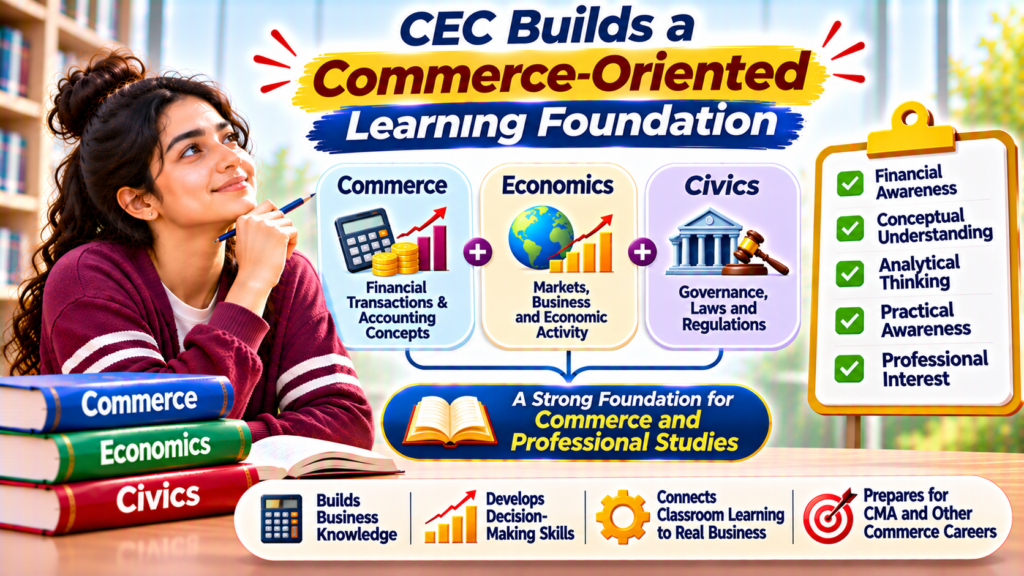
4. CEC Builds a Commerce-Oriented Learning Foundation
CEC brings together subjects that help students understand different aspects of business and economic activity. Commerce introduces financial transactions and accounting concepts, Economics explains how markets and businesses function, and Civics develops awareness of governance and regulations. Studying these subjects during Intermediate gives students an opportunity to explore commerce-related areas before entering professional education.
CEC can help students develop several useful learning skills:
- Financial Awareness: Becoming familiar with basic accounting and business concepts.
- Conceptual Understanding: Learning the principles behind a topic instead of relying only on memorisation.
- Analytical Thinking: Examining business and economic situations and understanding the factors involved.
- Practical Awareness: Connecting classroom concepts with everyday business activities.
- Professional Interest: Exploring accounting, finance, business management and related career opportunities.
This combination can help students approach professional commerce education with a broader understanding of business-related subjects. Instead of encountering every concept for the first time after Intermediate, they may already have some background knowledge to build upon. However, CMA is a specialised professional course that includes topics beyond the Intermediate curriculum. Students need to develop their understanding through dedicated coaching, prescribed study materials, regular practice and revision to prepare effectively for the Foundation examination.
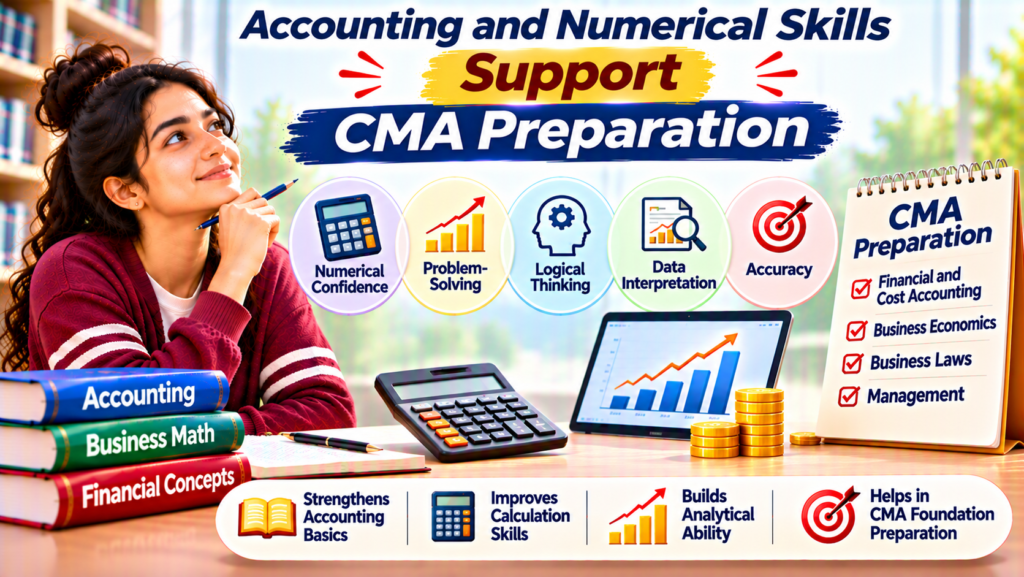
5. Accounting and Numerical Skills Support CMA Preparation
CMA preparation involves understanding financial information, applying accounting principles and solving numerical problems accurately. Students need to develop the ability to interpret figures, understand transactions and apply suitable methods to arrive at answers. Commerce-related learning during Intermediate can provide an introduction to these skills and encourage students to become more comfortable working with financial information.
Some skills that can support CMA Foundation preparation include:
- Numerical Confidence: Becoming comfortable with calculations and financial figures.
- Problem-Solving: Breaking down questions into smaller steps and applying suitable methods.
- Logical Thinking: Understanding relationships between different accounting and business concepts.
- Data Interpretation: Reading financial information and identifying meaningful details.
- Accuracy: Checking calculations and applying accounting rules correctly.
- Time Management: Practising questions within a reasonable time to improve examination readiness.
CMA Foundation includes accounting and other subjects that require students to apply concepts rather than simply memorise definitions. Students can strengthen their preparation by practising numerical questions regularly, reviewing their mistakes and improving their understanding of accounting methods. Even if students have studied Commerce during Intermediate, they should not assume that all CMA topics will be familiar. A consistent practice routine and dedicated preparation are important for developing the accuracy and confidence required for professional examinations.
6. Starting CMA Preparation During Intermediate Gives Students More Time
Beginning CMA preparation during Intermediate gives students an opportunity to become familiar with professional subjects before completing their board examinations. Instead of waiting until after Class 12 to explore the CMA course, students can gradually develop their concepts alongside their regular academic studies. This early exposure can help them understand the professional examination structure, identify challenging topics and become familiar with the type of preparation required.
Students can make the most of their preparation period by following a few important practices:
- Create a Study Schedule: Allocate time for Intermediate subjects and CMA preparation.
- Understand the Fundamentals: Build a clear understanding of concepts before moving to advanced topics.
- Practise Regularly: Solve questions frequently to strengthen subject knowledge.
- Revise Consistently: Review previously studied topics to improve retention.
- Take Mock Tests: Become familiar with examination-style questions and time management.
- Review Performance: Identify difficult topics and work on improving them.
A balanced study routine is important because students need to prepare for both Intermediate board examinations and CMA Foundation. They should avoid neglecting their regular academic subjects while beginning professional preparation. With proper planning, students can gradually develop their understanding of CMA concepts, practise regularly and become more familiar with the professional course without creating unnecessary academic pressure.
7. How Integrated CEC and CMA Coaching at CMS Supports Students
Integrated coaching can help students pursue Intermediate education and professional CMA preparation within a structured academic environment. At CMS CEC Junior Colleges in Hyderabad, CEC students have the opportunity to study Intermediate subjects alongside integrated CMA coaching. This allows them to work towards their board examinations while becoming familiar with the professional course subjects and learning requirements. It also gives students an opportunity to connect their classroom learning with their future goals in accounting and management.
Some important aspects of an organised integrated coaching approach include:
- Faculty Guidance: Support from faculty members in understanding Intermediate and CMA-related subjects.
- Structured Learning: A planned approach to covering concepts and maintaining academic progress.
- Regular Assessments: Opportunities to evaluate subject understanding and identify areas for improvement.
- Mock Tests and Practice: Exposure to examination-style questions and time-based practice.
- Performance Feedback: Understanding strengths and areas that require additional attention.
- Consistent Preparation: Developing a regular study routine for board subjects and CMA Foundation.
Through integrated CEC and CMA coaching, CMS aims to help students build their academic foundation while preparing for the next stage of their professional journey. Regular practice, subject guidance and performance-based feedback can help students understand their progress and work on areas that need improvement. This approach also gives students an opportunity to become familiar with professional examination preparation during Intermediate, helping them plan their academic journey more effectively.
Conclusion
CEC can be a useful Intermediate stream for students interested in Cost and Management Accounting because its subjects introduce them to important areas such as commerce, accounting-related concepts, economics and governance. Commerce provides an introduction to financial transactions and accounting principles, Economics helps students understand business decisions and market behaviour, and Civics develops general awareness of laws and institutions. This early exposure can help students become familiar with several concepts that they will encounter during CMA Foundation preparation.
However, CMA Foundation requires dedicated preparation beyond Intermediate subjects. Students must study the complete prescribed syllabus, practise numerical questions, develop conceptual understanding and revise regularly. For students planning to pursue Cost and Management Accounting, choosing CEC and beginning structured CMA preparation during Intermediate can be a practical way to work towards their professional goals. With consistent effort, appropriate academic guidance and a balanced study plan, students can build a foundation for their future in the accounting and management field.