
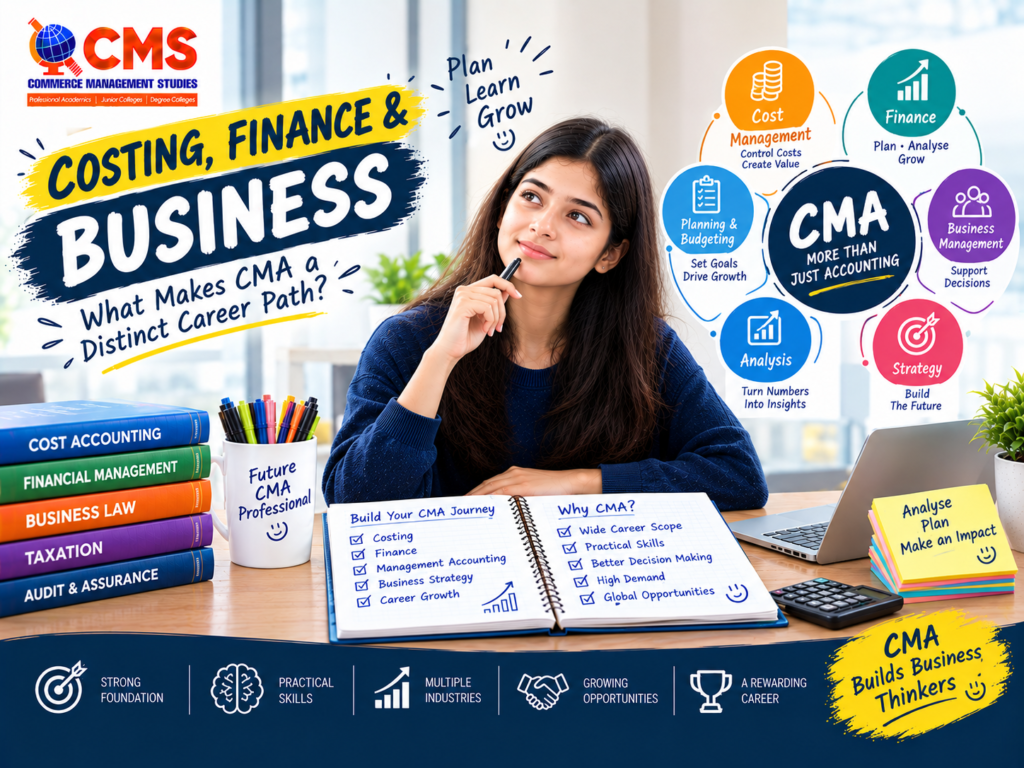
Choosing a professional career in commerce can lead students toward several different paths, each with its own areas of focus and opportunities. Among these, Cost and Management Accountancy (CMA) stands out because it connects accounting and finance with the practical side of business management. While accounting often focuses on recording and reporting financial information, the CMA profession places significant emphasis on understanding costs, improving efficiency, analysing financial performance, and supporting business decisions.
The distinct nature of CMA becomes clearer when we look beyond the traditional idea of accounting. Businesses need professionals who can understand where money is being spent, how products and services are priced, whether operations are efficient, and how financial information can support future planning. This combination of costing, finance, analysis, and business strategy gives CMA a broader management-oriented character and makes it an interesting career path for students who enjoy working with numbers as well as understanding how businesses operate.
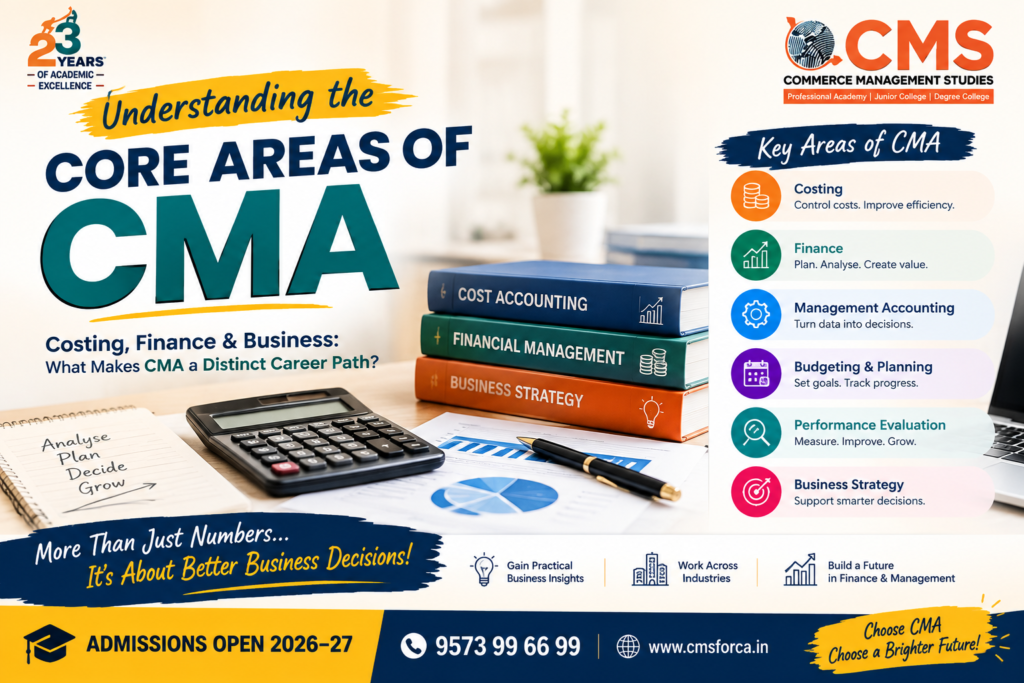
Understanding the Core Areas of CMA
One of the defining features of CMA is its strong focus on cost management. Every organisation has costs associated with production, employees, technology, operations, logistics, marketing, and other activities. Understanding these costs helps businesses determine whether resources are being used efficiently and where improvements may be possible. Cost accounting therefore goes beyond simply calculating expenses; it involves analysing the reasons behind those expenses and understanding their impact on business performance.
Finance is another important part of the CMA pathway. Financial information helps organisations assess profitability, manage resources, plan investments, and evaluate financial performance. A CMA professional can work with financial data to identify patterns, compare actual results with budgets, and provide insights that can support management decisions. This combination of cost knowledge and financial understanding creates a strong foundation for working in management-oriented roles.
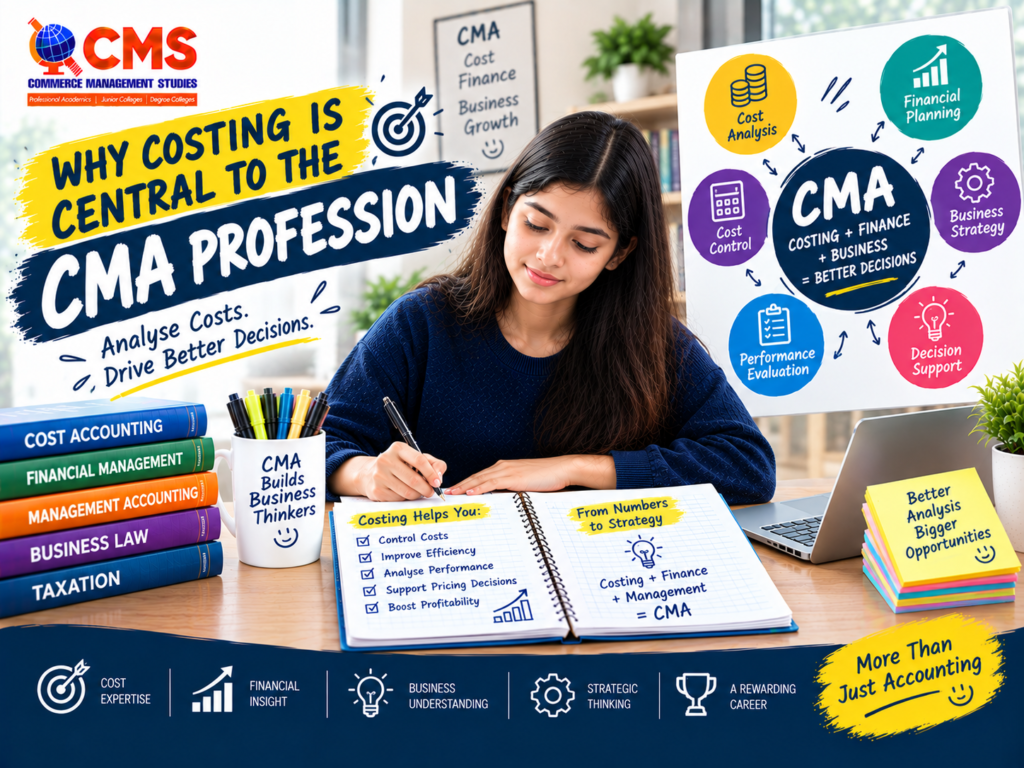
Why Costing Is Central to the CMA Profession
Costing plays a particularly important role in industries where controlling expenses can directly influence profitability. Manufacturing companies, for example, need to understand the cost of raw materials, labour, machinery, production processes, storage, and distribution. Service organisations also need cost analysis to understand the resources required to deliver their services. A detailed understanding of these costs can help management evaluate pricing and operational efficiency.
CMA professionals can contribute by analysing cost structures and identifying areas where resources may be used more effectively. They may compare planned costs with actual costs, examine variations, and help management understand the reasons for differences. This makes costing a practical business function rather than merely an academic accounting subject.
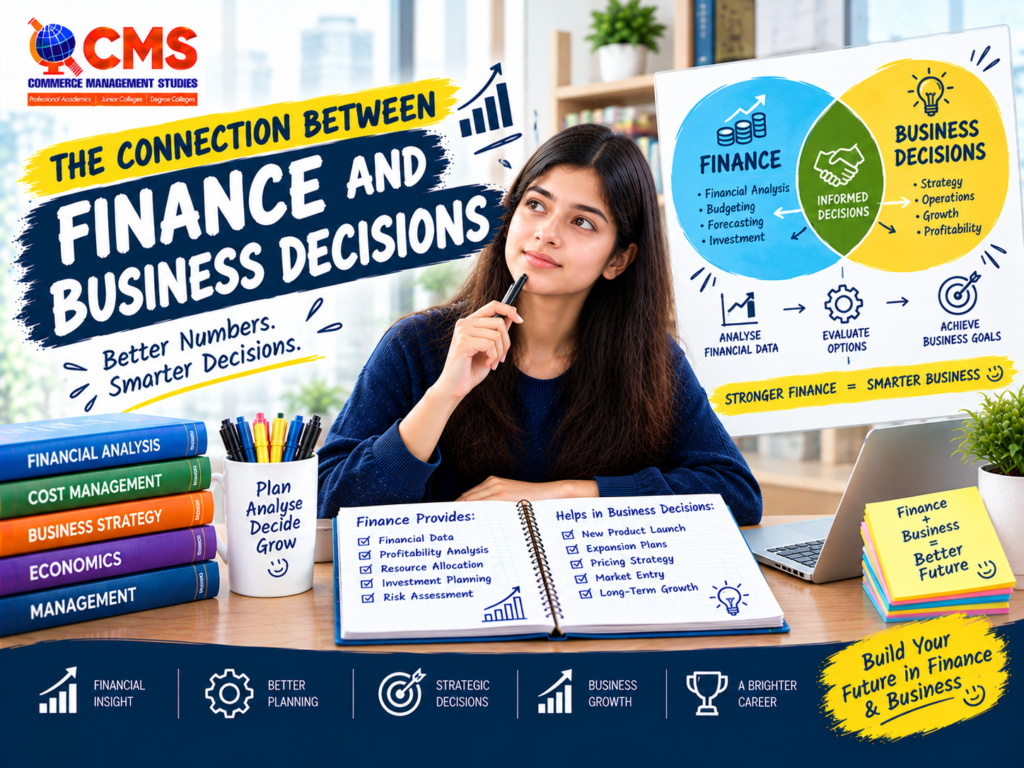
The Connection Between Finance and Business Decisions
Financial information becomes more useful when it helps answer business questions. Management may need to decide whether to launch a new product, expand an existing operation, invest in new equipment, outsource a particular activity, or enter a new market. Such decisions require an understanding of both financial consequences and business objectives.
CMA’s finance-oriented learning helps professionals interpret financial information in the context of these decisions. Instead of looking only at historical numbers, they can examine budgets, forecasts, profitability, investment considerations, and financial performance to support planning. This decision-support aspect is one of the characteristics that differentiates management accounting from purely record-keeping functions.
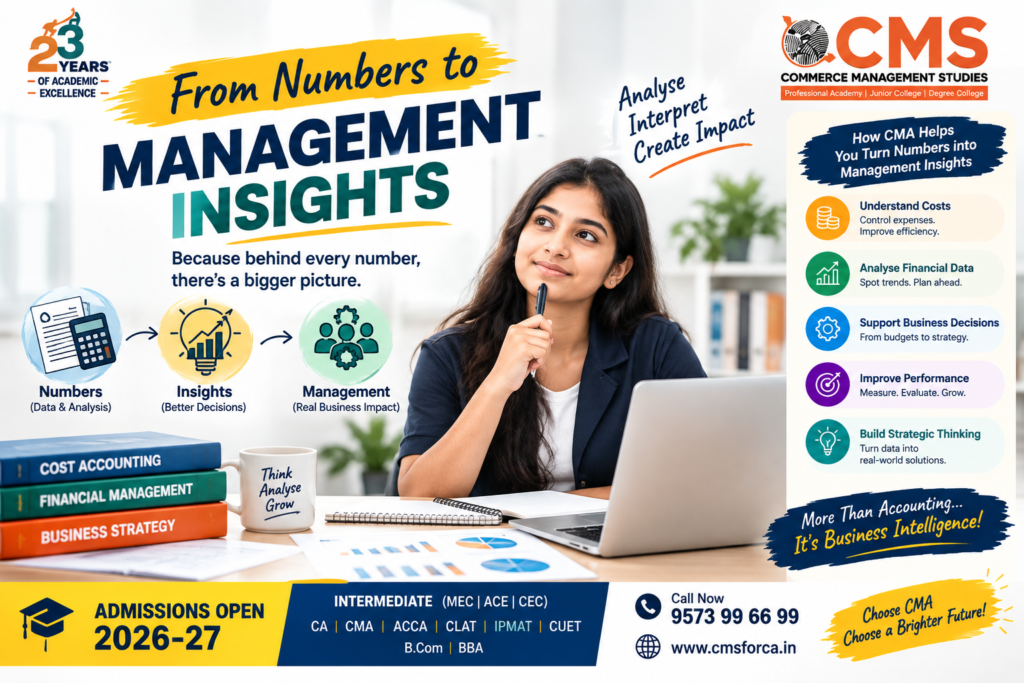
From Numbers to Management Insights
A major distinction of management accounting is the ability to convert numbers into useful information for decision-makers. A financial report may show that a company’s expenses have increased, but management may need to know why they increased, whether the increase is temporary or structural, and what actions could address it. Analytical thinking becomes important at this stage.
CMA professionals therefore need more than numerical accuracy. They need to interpret information, identify relationships between financial and operational factors, and communicate their findings clearly. The ability to explain what financial data means for a business can be valuable in areas such as budgeting, cost control, performance evaluation, and strategic planning.
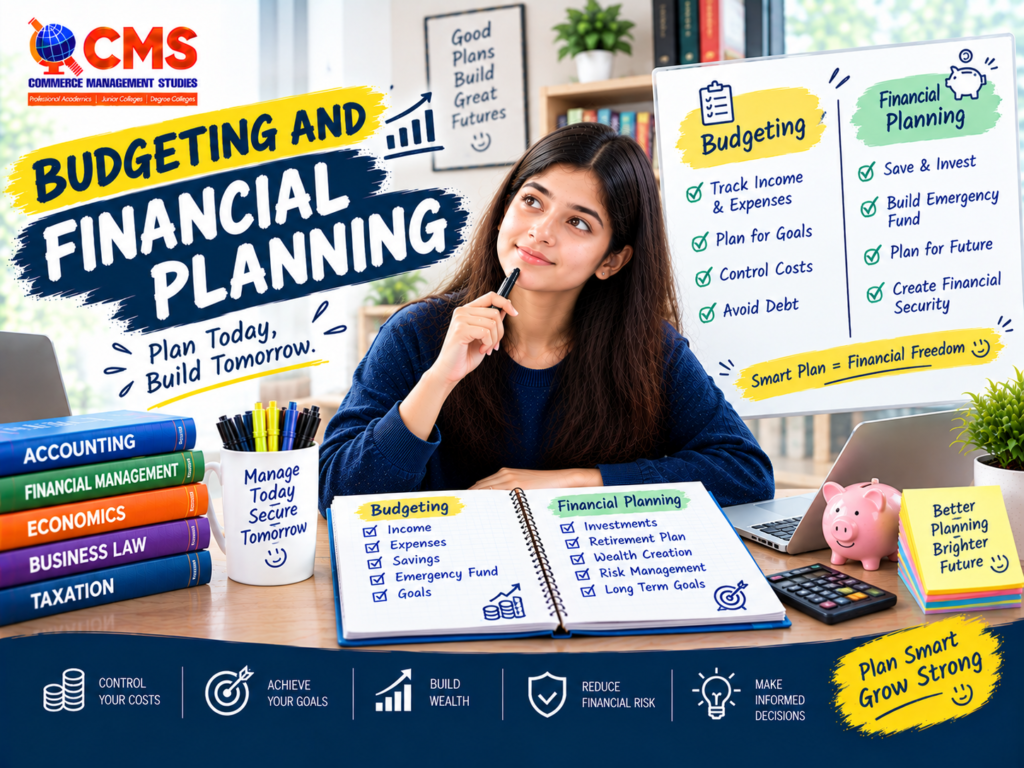
Budgeting and Financial Planning
Budgeting is another area in which management accounting has a direct connection with business operations. Organisations use budgets to estimate expected revenue, expenses, investments, and resource requirements. Comparing actual performance with budgets can help management understand whether operations are progressing according to plan.
CMA professionals may be involved in preparing and analysing budgets and studying variations between expected and actual results. This requires an understanding of both financial data and operational realities. For example, an increase in production costs may be related to changes in raw-material prices, production volumes, labour requirements, or supply-chain conditions. Looking at these factors together creates a more meaningful financial analysis.
CMA and Performance Evaluation
Businesses need ways to measure whether different departments, products, projects, or operations are performing effectively. Financial and non-financial performance indicators can provide management with a clearer picture of organisational performance. CMA professionals can contribute to this process by analysing relevant data and helping management understand performance trends.
Performance evaluation can involve comparing current results with budgets, previous periods, targets, or other benchmarks. The objective is not simply to identify whether performance improved or declined, but to understand the reasons behind the change. This analytical approach can help organisations identify strengths, recognise inefficiencies, and make more informed decisions about future actions.
Where CMA Knowledge Can Be Applied
The skills associated with CMA can be relevant across different industries because almost every organisation needs financial planning, cost control, budgeting, and performance analysis. The nature of the work can vary depending on the organisation, industry, and role.
Some areas where CMA-related skills can be useful include:
- Cost accounting and cost analysis
- Management accounting
- Budgeting and financial planning
- Financial analysis
- Performance management
- Internal control
- Business planning
- Pricing analysis
- Corporate finance
- Risk and operational analysis
- Strategic decision support
This variety means that CMA is not limited to one specific type of organisation. Professionals can develop expertise in different sectors while continuing to use the same fundamental principles of cost, finance, analysis, and business management.
Skills That Help Students Build a CMA Career
A strong interest in numbers can certainly help students pursuing CMA, but professional success requires a wider range of abilities. Analytical thinking is particularly important because management accounting frequently involves interpreting information rather than simply calculating it. Students should gradually develop the habit of asking why a number changed, what caused the change, and what it could mean for the organisation.
Communication and problem-solving are equally valuable. Financial information often needs to be explained to people who may not have an accounting background. A professional who can analyse a problem and communicate the findings clearly can make financial information more useful to management. Students can begin developing these skills during their academic preparation through regular practice, case-based questions, financial analysis, and discussions about real-world businesses.
How CMA Differs from Traditional Accounting Roles
Traditional accounting functions are essential to every organisation and generally involve maintaining financial records, preparing statements, ensuring accuracy, and supporting compliance and reporting requirements. Management accounting shares some of these foundations but places greater emphasis on using financial information internally for planning and decision-making.
This difference does not mean that one area is more important than the other. Instead, they serve different purposes within an organisation. Financial accounting is largely concerned with communicating financial information through established reporting frameworks, while management accounting can focus more heavily on internal analysis, planning, costing, budgeting, and performance evaluation. CMA therefore appeals particularly to students who are interested in how financial information can influence business decisions.
The Growing Importance of Business Understanding
Modern businesses operate in environments where costs, competition, technology, customer expectations, and market conditions can change rapidly. Financial professionals therefore benefit from understanding more than accounting principles alone. They need to appreciate how operational decisions affect financial performance and how financial constraints can influence business strategy.
This broader perspective makes business awareness an important part of developing as a CMA professional. Understanding industries, business models, supply chains, pricing strategies, technology, and market trends can help professionals interpret financial information more effectively. A strong CMA career can therefore involve continuous learning beyond textbooks and examinations.
Building the Foundation During Intermediate
Students interested in CMA can begin developing relevant skills well before entering the professional course. Subjects such as Mathematics, Economics, and Commerce can help students become familiar with numerical reasoning, economic concepts, accounting principles, and business fundamentals. Building a strong academic foundation can make it easier to understand more advanced concepts later.
For students pursuing MEC at the Intermediate level, these subjects can provide useful exposure to the numerical and commercial concepts associated with professional commerce careers. At CMS CMA Coaching in Hyderabad, students can explore Intermediate-level commerce pathways alongside integrated preparation for professional courses such as CMA, allowing them to understand the connection between their academic subjects and longer-term career goals.
Why CMA Can Be a Distinct Career Choice
The distinctiveness of CMA comes from the way it brings several business functions together. Costing explains how resources are consumed, finance provides insight into the organisation’s financial position and future requirements, and management accounting connects this information with planning and decision-making. Together, these areas create a profession that sits close to the operational and strategic side of business.
For students who enjoy numbers but also want to understand the reasoning behind business decisions, CMA can offer an interesting professional direction. It provides an opportunity to develop expertise in accounting and finance while also learning how organisations plan, control costs, measure performance, and use information to make decisions. The combination of technical knowledge and business understanding is what gives CMA its distinct identity.
Conclusion
CMA is more than a career focused on calculations and financial statements. Its core areas—costing, finance, management accounting, budgeting, analysis, and performance evaluation—are closely connected to the way organisations operate. By understanding both financial information and the business activities behind that information, CMA professionals can contribute to planning and decision-making across different functions.
For students considering a professional commerce career, understanding this broader role can help them make an informed choice. CMA can be particularly relevant for those who want to combine financial knowledge with analytical thinking and business understanding. As organisations continue to focus on efficiency, financial planning, and informed decision-making, these skills remain important across a wide range of industries.