
Introduction
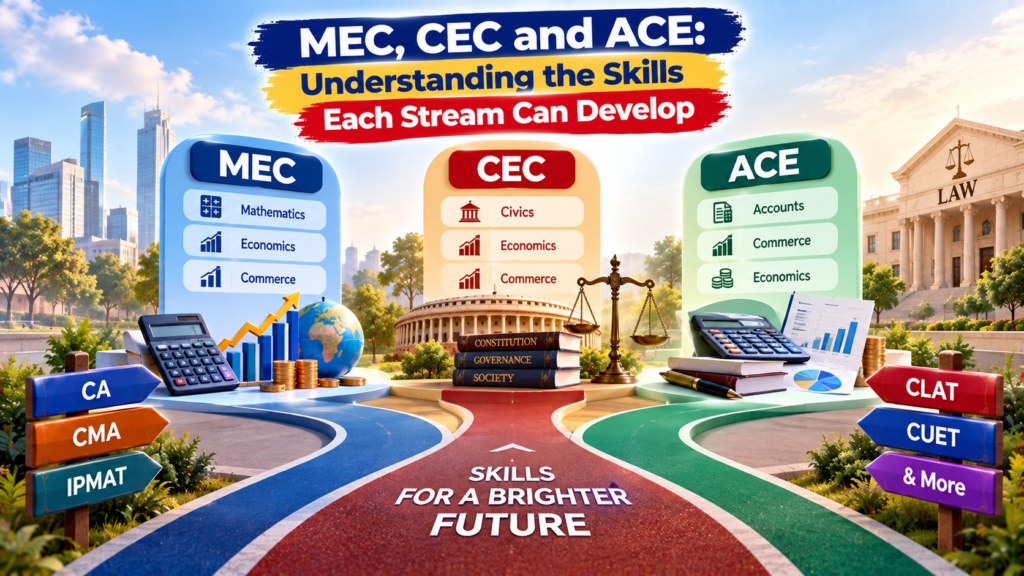
Choosing an Intermediate stream is an important academic decision because the subjects students study during these two years can influence the knowledge, skills, and interests they develop for higher education. In commerce education, streams such as MEC, CEC, and ACE provide students with different combinations of subjects, each offering its own academic exposure. Understanding these differences can help students make a more informed choice based on their interests and the areas they may want to explore after Intermediate.
MEC, CEC, and ACE should not be viewed simply as combinations of subjects. Each stream can encourage students to develop different ways of thinking and working. Mathematics can strengthen quantitative and problem-solving abilities, Civics can introduce students to governance and institutions, while Accounts, Commerce, and Economics can build financial and business understanding. These skills can later be useful across professional courses and entrance pathways such as CA, CMA, CLAT, IPMAT, and CUET, depending on the student’s interests and eligibility requirements.
Understanding the MEC Stream
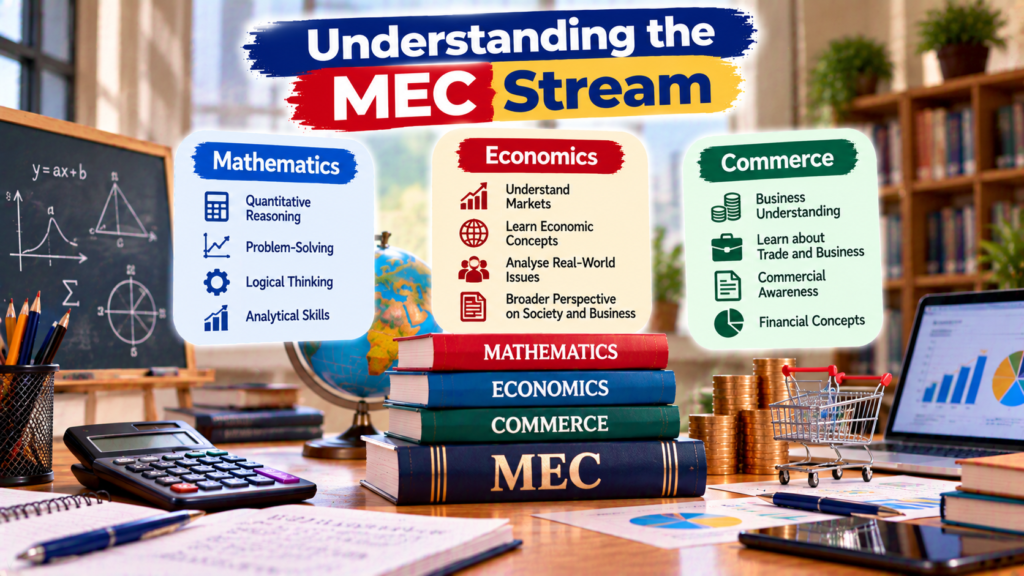
MEC generally refers to Mathematics, Economics, and Commerce. It combines quantitative learning with economic and commercial concepts, giving students exposure to numbers, business, markets, and financial ideas.
The combination can be useful for students who enjoy working with numbers but also want to understand how businesses and economies function. MEC can provide a broad academic foundation that students may later connect with areas such as professional accounting courses, management education, economics, finance, business studies, and various undergraduate programmes.
Skills Students Can Develop Through MEC
One of the major skills that MEC can help develop is quantitative reasoning. Mathematics requires students to understand relationships between numbers, apply concepts systematically, and solve problems using logical steps.
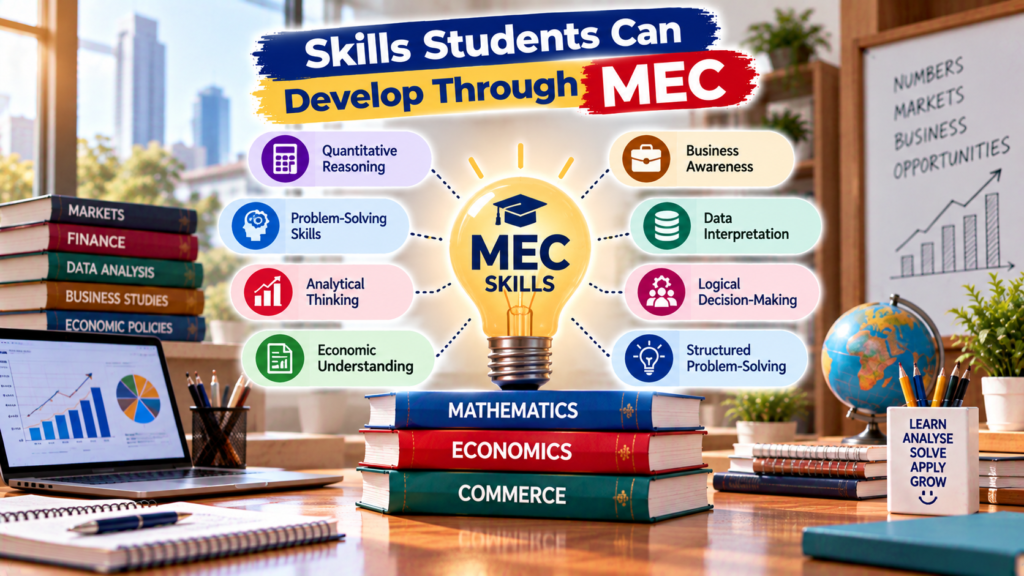
Economics and Commerce add another dimension by requiring students to understand concepts and apply them to business and economic situations. As a result, MEC students can develop a combination of numerical ability, analytical thinking, commercial awareness, and structured problem-solving.
Students can gradually develop skills such as:
- Quantitative reasoning
- Numerical problem-solving
- Analytical thinking
- Economic understanding
- Business awareness
- Data interpretation
- Logical decision-making
Mathematics and Problem-Solving
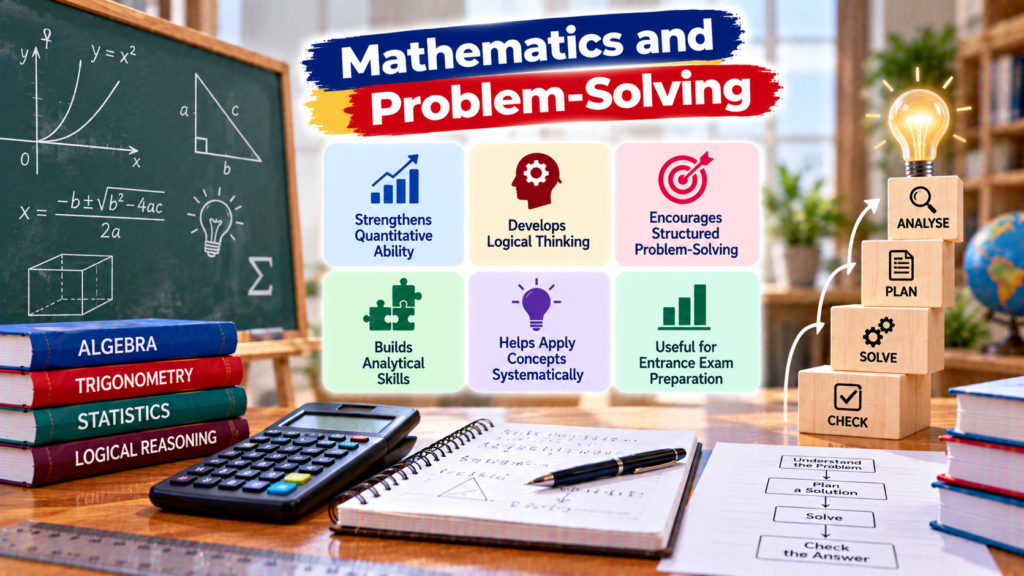
Mathematics can encourage students to approach problems systematically. Instead of relying on memorisation alone, students generally need to understand the information provided, identify the appropriate method, and work towards a solution.
This type of structured problem-solving can be useful beyond Mathematics itself. Students preparing for aptitude-based examinations such as IPMAT or certain sections of other entrance examinations may benefit from having a strong quantitative foundation. It can also support the numerical and analytical aspects of professional studies.
Economics and Understanding the Real World
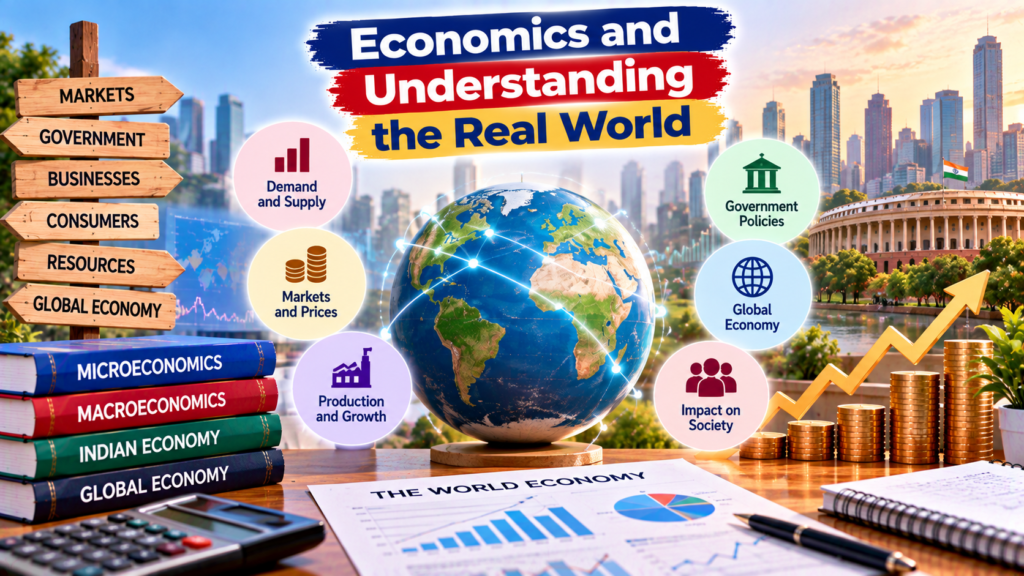
Economics helps students understand how individuals, businesses, markets, and governments make decisions about resources. Concepts such as demand, supply, production, inflation, markets, and economic growth can help students understand developments taking place around them.
For students preparing for management, commerce, or law-related pathways, this broader understanding can be valuable. Economic concepts can also encourage students to think about cause-and-effect relationships and analyse why a particular change may influence businesses, consumers, or society.
Commerce and Business Understanding
Commerce introduces students to the way businesses and commercial activities operate. Depending on the curriculum, students may encounter concepts related to trade, business organisations, finance, accounting, and other commercial activities.
This foundation can be particularly useful for students considering professional pathways such as CA or CMA. It can also provide useful background for students who later study management, finance, business administration, corporate law, or related areas.
Understanding the CEC Stream
CEC generally refers to Civics, Economics, and Commerce. This combination provides students with exposure to government and institutions through Civics, economic concepts through Economics, and business-related concepts through Commerce.
CEC can be particularly interesting for students who enjoy understanding society, government, public institutions, economics, and business. The stream can also help students develop reading, interpretation, awareness, and analytical skills that may be useful for areas such as law, civil services, management, commerce, and other fields.
Skills Students Can Develop Through CEC
CEC can encourage students to look at issues from social, economic, institutional, and commercial perspectives. Civics can help students understand how governments and institutions function, while Economics and Commerce provide exposure to markets and business activities.
Through this combination, students can work on skills such as:
- Reading and interpretation
- Awareness of institutions
- Analytical thinking
- Economic understanding
- Business awareness
- Communication
- Understanding different perspectives
- Structured argument-building
Civics and Understanding Institutions
Civics introduces students to concepts related to government, democracy, institutions, rights, responsibilities, and the functioning of public systems. This can help students understand the relationship between citizens and institutions.
This knowledge can be useful for students considering law or civil services because both fields involve understanding how institutions function and how rules and policies affect society. However, students interested in these careers should also develop skills beyond their Intermediate syllabus, such as reading, reasoning, communication, and current-affairs awareness.
Economics and Commerce in CEC
The combination of Economics and Commerce gives CEC students an opportunity to understand both economic activity and business operations. Students can learn how markets function, how businesses operate, and how economic factors influence commercial decisions.
This combination can also provide flexibility for students who are still exploring their future direction. A student may become interested in law, management, finance, business, economics, or other related fields after gaining exposure to these subjects.
Understanding the ACE Stream
ACE refers to Accounts, Commerce, and Economics. The stream focuses strongly on financial, commercial, and economic concepts and can be suitable for students interested in understanding how money, businesses, and economic systems work.
Accounts can develop numerical and systematic thinking, Commerce can introduce business concepts, and Economics can help students understand broader economic relationships. Together, these subjects can create a foundation that connects naturally with several commerce-related professional and undergraduate pathways.
Skills Students Can Develop Through ACE
ACE can help students develop a strong understanding of financial and commercial concepts. Accounts requires attention to detail and accuracy, while Commerce and Economics require students to understand business processes and economic relationships.
Students can gradually develop:
- Accounting and numerical skills
- Financial awareness
- Business understanding
- Economic reasoning
- Attention to detail
- Analytical thinking
- Problem-solving
- Commercial awareness
Accounts and Attention to Detail
Accounts requires students to work systematically with financial information. Accuracy is important because a small error in one stage of a calculation or recording process can affect subsequent results.
This can help students develop patience, attention to detail, and structured working habits. These qualities can be useful for students considering CA, CMA, finance, accounting, banking, or other commerce-related fields.
Commerce and Understanding Business
Commerce can help students understand how businesses function in practical terms. Students may learn about business activities, trade, organisations, financial concepts, and other aspects of commercial operations.
This knowledge can provide a useful starting point for students who later explore professional courses or undergraduate programmes related to business and management. It can also help students understand how classroom concepts connect with real organisations and markets.
Economics Connects All Three Streams
Economics appears in MEC, CEC, and ACE, although the overall subject combination differs. Its presence across these streams highlights how useful economic understanding can be across different career areas.
Whether a student is interested in management, finance, law, business, or public policy, understanding how markets and economic factors interact can provide useful context. Students can strengthen this knowledge by connecting classroom concepts with current economic developments and real-world examples.
MEC and CA or CMA Preparation
MEC can provide useful foundations for students considering professional courses such as CA or CMA. Mathematics can strengthen quantitative ability, while Economics and Commerce introduce students to business and financial concepts.
Professional-course preparation involves more than Intermediate subjects, so students need to follow the relevant syllabus and examination requirements separately. However, the academic foundation developed through MEC can help students become familiar with several concepts that they may encounter later.
CEC and CLAT Preparation
CEC can provide a natural environment for students interested in law because Civics introduces institutional and governance concepts, while Economics and Commerce provide broader social and commercial awareness.
Students preparing for CLAT also need to develop skills such as reading comprehension, legal reasoning, logical reasoning, current-affairs awareness, and quantitative techniques. CEC can complement these skills, but students should build the examination-specific abilities through dedicated preparation as well.
MEC and IPMAT Preparation
MEC can be relevant for students interested in management entrance examinations because Mathematics provides regular exposure to quantitative concepts. Economics and Commerce can additionally introduce students to business and economic ideas.
However, IPMAT preparation requires more than Intermediate Mathematics. Students may also need to work on verbal ability, reading comprehension, speed, accuracy, and aptitude-based problem-solving depending on the examination they are targeting. A combination of academic learning and entrance-specific practice can therefore be useful.
MEC, CEC, ACE and CUET
Students from MEC, CEC, and ACE can explore undergraduate opportunities through entrance routes such as CUET, depending on the programme and university requirements. The relevant subjects and eligibility conditions can vary between programmes, so students should check the current official requirements before selecting their subjects and preparation strategy.
The important advantage of building a strong Intermediate foundation is that students can approach entrance preparation with greater familiarity with the subjects they have studied. Regular revision and practice can then be combined with examination-specific preparation.
Choosing a Stream Based on Skills and Interests
Students should not choose a stream simply because one combination is perceived to be more successful than another. Different students have different interests, strengths, and long-term plans.
A student who enjoys Mathematics and business concepts may find MEC interesting. Someone who is particularly interested in government, society, economics, and commerce may prefer CEC. A student who enjoys accounting, business, and economics may find ACE more suitable. The decision should also take into account the eligibility requirements of future courses the student may be considering.
Building Skills Beyond the Syllabus
Regardless of the stream chosen, students can strengthen their preparation by developing skills beyond textbook learning. Reading regularly, following relevant current affairs, practising problem-solving, improving communication, and learning to analyse information can benefit students across different career pathways.
For example, an MEC student preparing for IPMAT can develop reading and verbal skills alongside Mathematics. A CEC student interested in CLAT can strengthen logical reasoning and comprehension. An ACE student considering CA or CMA can combine accounting fundamentals with numerical and analytical practice.
How CMS Connects Intermediate With Future Pathways
Students who are considering professional courses and entrance examinations alongside Intermediate may benefit from an integrated academic approach. CMS offers MEC Coaching in Hyderabad, CEC, and ACE-related programmes with integrated preparation options for pathways such as CA, CMA, CLAT, IPMAT, and CUET. This allows students to continue building their Intermediate subject knowledge while developing skills relevant to their selected professional or entrance pathway.
An integrated approach can also help students understand how their Intermediate subjects connect with future areas of study. Instead of treating Intermediate and entrance preparation as completely separate activities, students can gradually develop academic knowledge, reasoning ability, examination skills, and career awareness together.
No Stream Limits a Student to One Career
Choosing MEC, CEC, or ACE does not automatically determine a student’s entire professional future. Higher education options depend on eligibility requirements, academic performance, entrance examinations, and the student’s decisions after Intermediate.
The stream can provide a foundation, but students can continue developing new skills and exploring different fields as they progress. A student who begins with one academic interest may discover another area through college, entrance preparation, internships, reading, or exposure to different subjects.
Conclusion
MEC, CEC, and ACE each provide a different combination of academic exposure and can help students develop valuable skills. MEC can strengthen quantitative reasoning, economics, and business understanding; CEC can develop awareness of institutions, economics, commerce, and analytical reading; while ACE can build foundations in accounts, commerce, economics, and financial understanding.
The most important factor is not simply the name of the stream but how students use their Intermediate years to build knowledge and skills. By combining classroom learning with reading, problem-solving, communication, reasoning, current-affairs awareness, and consistent practice, students can prepare themselves for a variety of future pathways, including CA, CMA, CLAT, IPMAT, and CUET. The right stream is ultimately one that aligns with a student’s interests, abilities, and the courses they may want to explore after Intermediate.