
Introduction
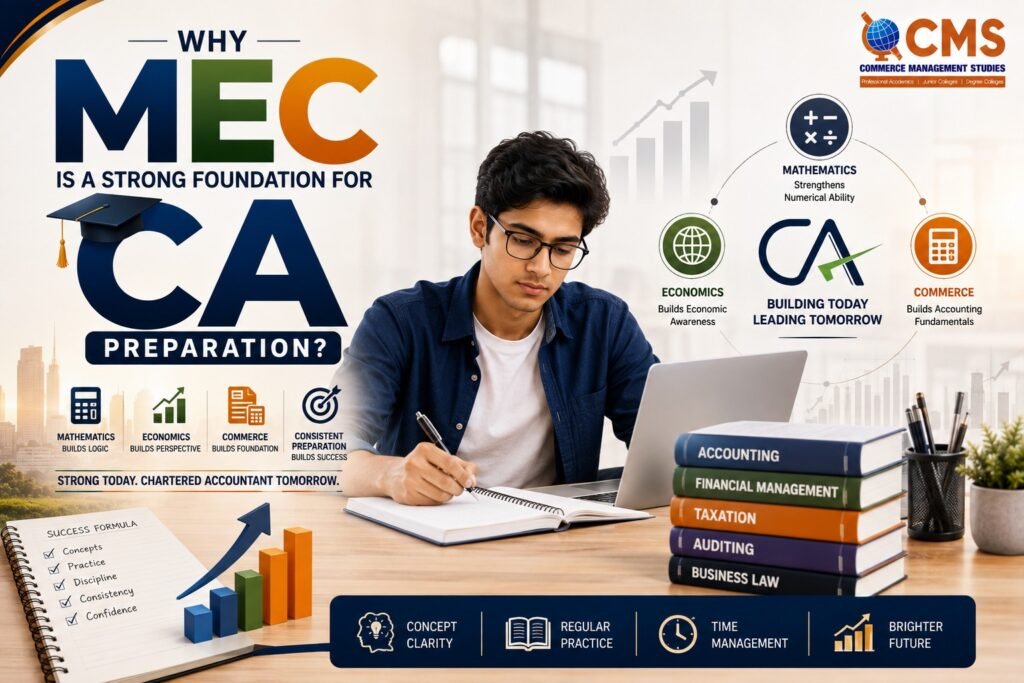
Choosing a career path after Class 10 is an important decision for commerce students because the subjects they study during Intermediate can influence the professional courses they pursue later. MEC, which includes Mathematics, Economics, and Commerce, provides students with a combination of numerical, economic, and business knowledge. For students who are interested in Chartered Accountancy, this combination can provide a useful academic foundation because CA requires strong conceptual understanding of accounting, economics, financial management, taxation, and related areas.
Starting CA-oriented preparation during Intermediate can also help students become familiar with professional-level concepts and examination requirements at an earlier stage. Instead of treating Intermediate education and CA preparation as completely separate journeys, students can gradually connect what they learn in their academic subjects with the concepts required for their future professional qualification. This approach can help develop stronger fundamentals, better study habits, and greater confidence before students progress into advanced stages of Chartered Accountancy.
Understanding the MEC Stream
MEC combines Mathematics, Economics, and Commerce to give students a broad understanding of quantitative concepts, economic principles, and business fundamentals. Mathematics develops numerical ability and logical thinking, Economics helps students understand markets and economic systems, while Commerce introduces concepts related to accounting, business activities, and financial management. Together, these subjects create an academic foundation that can be useful for students considering several professional courses.
For aspiring Chartered Accountants, the combination can be particularly relevant because professional accounting involves more than simply understanding numbers. CAs need to interpret financial information, understand business operations, analyze financial performance, and apply accounting and regulatory principles. The different subjects in MEC can therefore contribute to the development of several skills that students may use later in their professional studies.
Why Start CA Preparation Early?
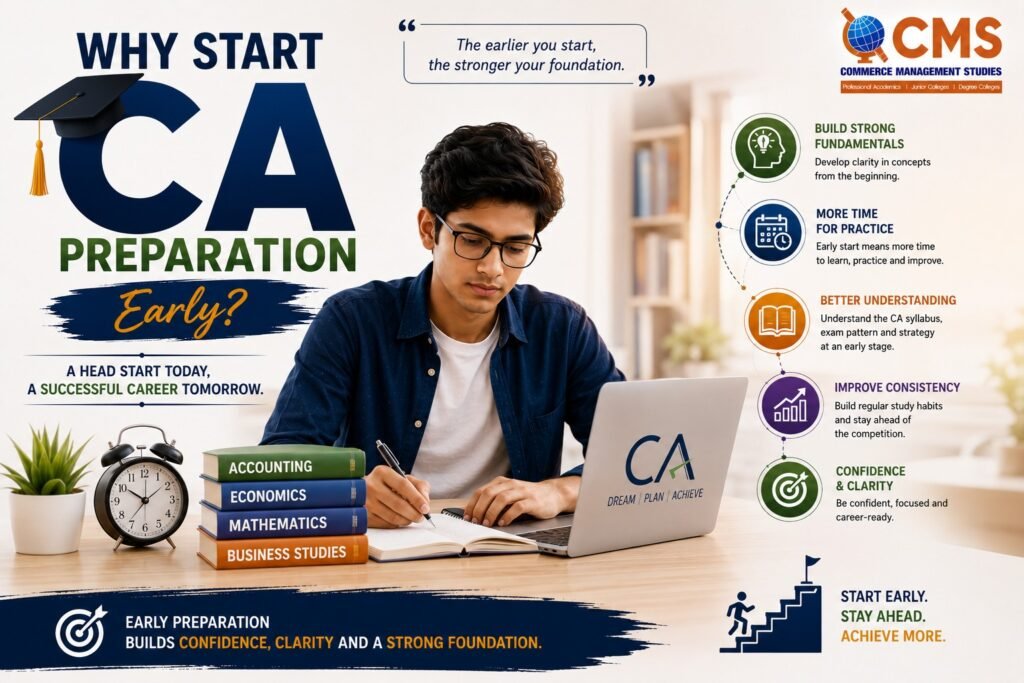
Chartered Accountancy is a professional qualification that requires consistent preparation, conceptual clarity, and disciplined study habits. Students who begin developing these habits during Intermediate have more time to understand the nature of the profession and gradually strengthen their academic foundation. Early exposure can also help students become familiar with accounting concepts and the type of analytical thinking required in professional examinations.
Starting early does not mean students need to study advanced CA material from the beginning. Instead, it means developing the right fundamentals and understanding how Intermediate subjects connect with professional education. Students can focus on strengthening accounting, economics, mathematics, reasoning, and time-management skills while gradually becoming familiar with the CA pathway.
How Mathematics Supports CA Preparation
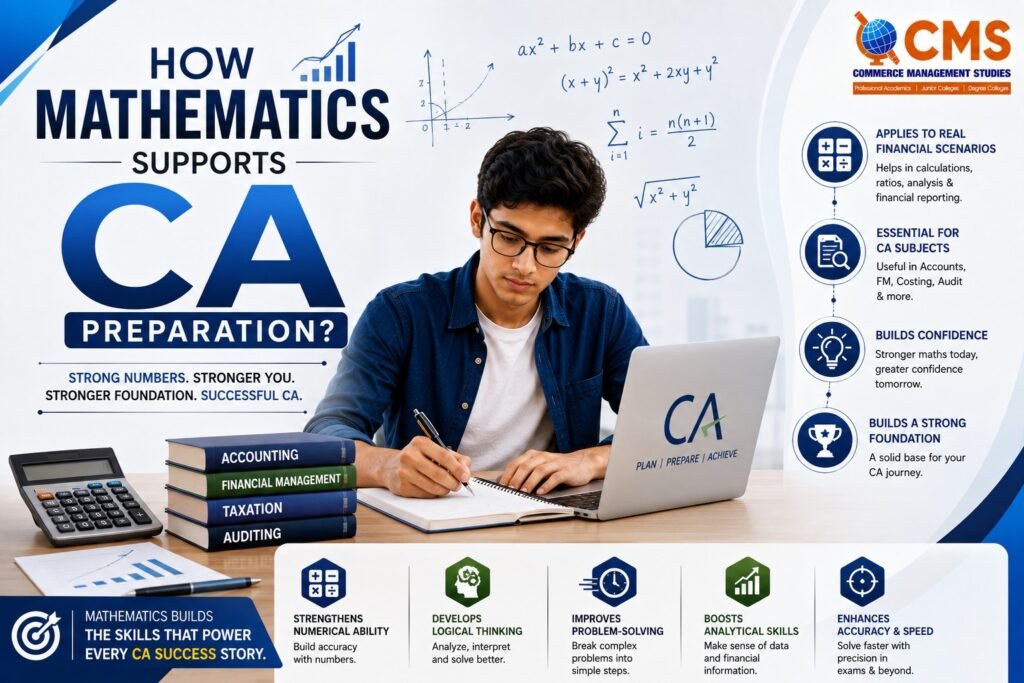
Mathematics develops numerical ability, logical reasoning, and structured problem-solving. Students learn to break complicated problems into smaller steps, identify relevant information, and arrive at accurate solutions. These habits can be valuable in professional examinations where students need to interpret numerical information and solve problems within a limited amount of time.
Mathematical thinking can also improve accuracy and efficiency. While CA is not simply a mathematics-based profession, Chartered Accountants frequently work with financial figures, ratios, calculations, data, and analytical information. Developing comfort with numbers during Intermediate can therefore help students approach quantitative aspects of their professional studies with greater confidence.
Role of Economics in CA Foundation
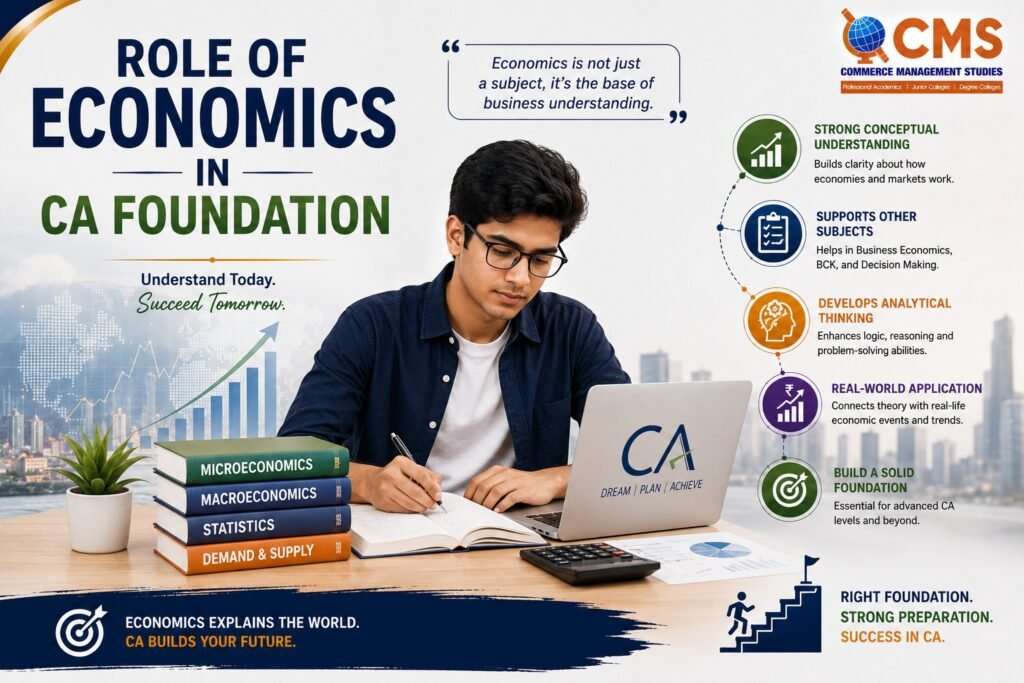
Economics provides students with an understanding of how markets, businesses, consumers, governments, and economies interact. Concepts such as demand and supply, market structures, inflation, national income, and economic policies help students understand the broader environment in which businesses operate. This knowledge becomes useful when analyzing business decisions and financial developments.
For future Chartered Accountants, economic awareness can provide important context for financial and business decisions. A company’s performance can be influenced by inflation, interest rates, taxation, government policies, consumer demand, and broader economic conditions. Understanding these relationships helps students develop a more complete perspective rather than viewing accounting and finance as isolated subjects.
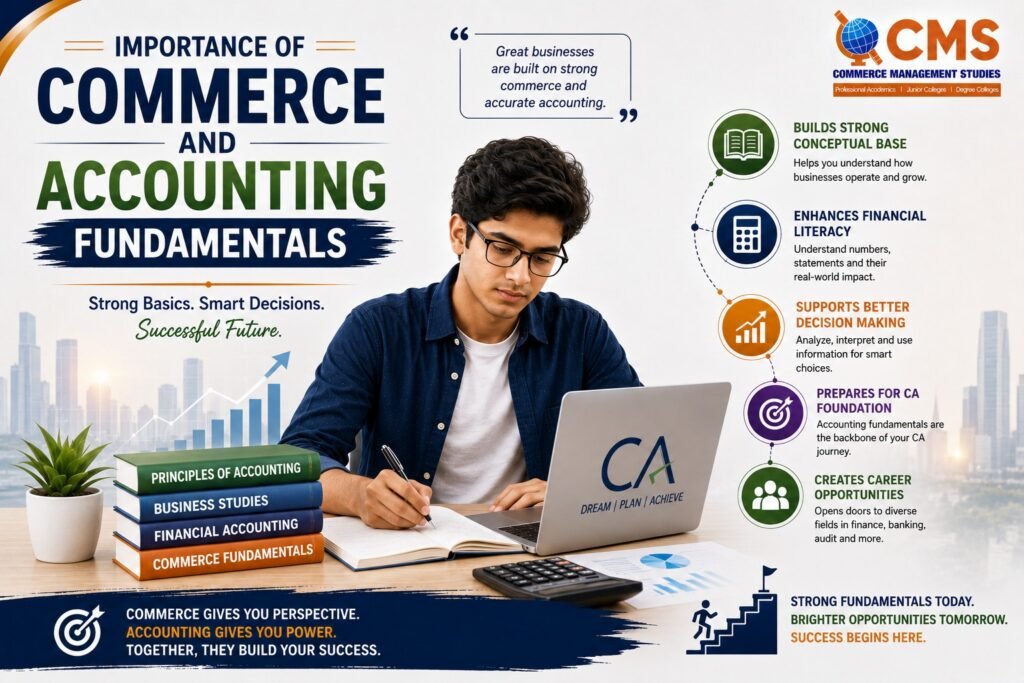
Importance of Commerce and Accounting Fundamentals
Commerce provides one of the most directly relevant foundations for students aspiring to pursue CA. Accounting introduces students to concepts such as transactions, journal entries, ledgers, financial statements, assets, liabilities, income, and expenses. Developing clarity in these fundamental concepts can make advanced accounting topics easier to understand later.
Strong accounting fundamentals are particularly important because professional-level studies require students to apply accounting principles to increasingly complex situations. Students who understand why accounting treatments are used, rather than simply memorizing procedures, are better positioned to handle unfamiliar problems. Building this conceptual foundation during Intermediate can therefore provide long-term academic benefits.
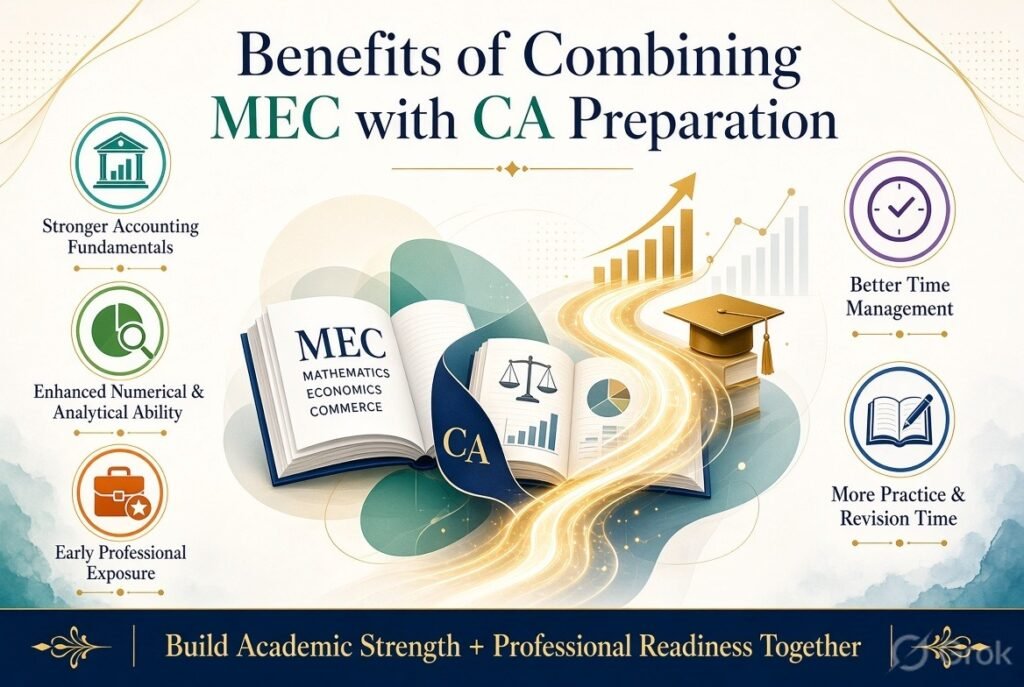
Benefits of Combining MEC with CA Preparation
Combining MEC education with CA preparation can allow students to develop their academic and professional foundations simultaneously. Instead of waiting until Intermediate is completed to become familiar with professional studies, students can gradually understand the expectations of CA education and develop suitable study habits.
Some potential benefits include:
- Stronger accounting fundamentals
- Better numerical and analytical ability
- Early familiarity with professional-level concepts
- Improved time-management skills
- Greater awareness of the CA career path
- Regular exposure to examination-style questions
- More time for revision and practice
- Better understanding of business and economic concepts
The effectiveness of this approach ultimately depends on consistent effort and maintaining a healthy balance between Intermediate academics and professional preparation.
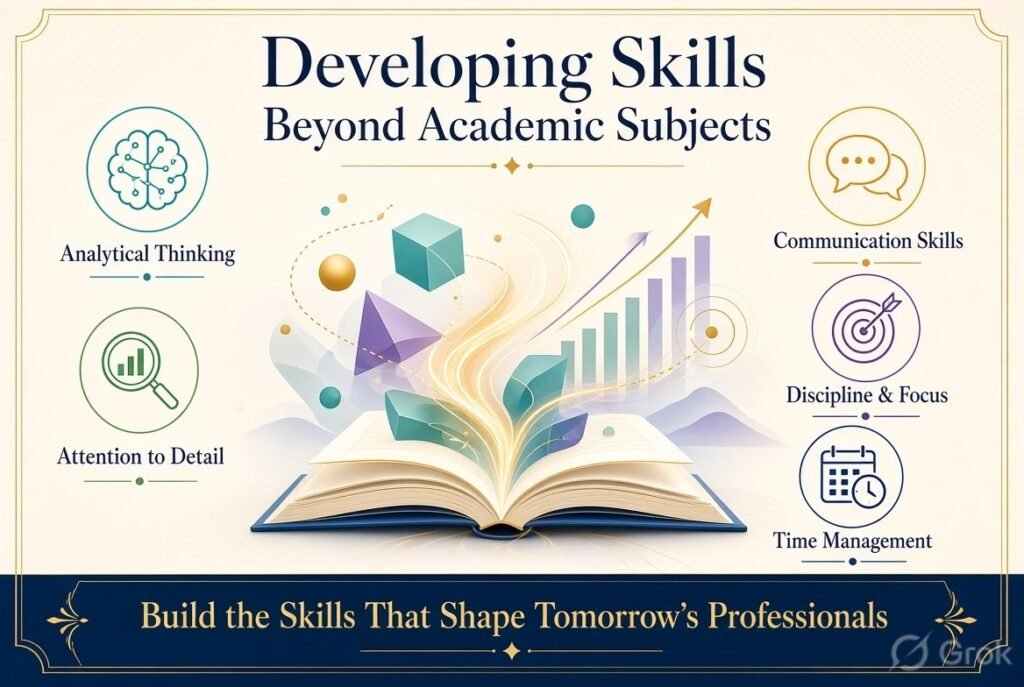
Developing Skills Beyond Academic Subjects
Success in Chartered Accountancy requires more than subject knowledge. Students also need analytical thinking, attention to detail, communication skills, discipline, and the ability to manage their time effectively. Developing these skills during Intermediate can make professional studies more manageable and help students become better prepared for future workplace responsibilities.
Students can gradually develop these abilities through regular practice, reading, solving numerical problems, participating in discussions, reviewing mistakes, and maintaining a structured study schedule. These habits are useful not only for CA examinations but also for other professional and academic challenges students may encounter later.
The Importance of Consistent Practice
Professional examinations require students to apply concepts rather than simply recall information. Regular practice allows students to understand how theoretical knowledge is used to solve numerical and practical problems. It also helps identify areas where additional study or clarification is required.
Consistent practice should include solving different types of questions, revising previously studied concepts, analyzing mistakes, and taking periodic assessments. Students who practice regularly can gradually improve their accuracy and speed while becoming more comfortable with examination conditions. This approach is generally more effective than relying heavily on last-minute preparation.
Managing Intermediate and CA Preparation Together
One of the challenges of combining Intermediate education with CA preparation is managing time effectively. Students need to give adequate attention to their regular academic syllabus while also preparing for professional-level requirements. Without proper planning, attempting to handle both simultaneously can become stressful.
A structured timetable can help students divide their study time between Intermediate subjects, CA-oriented preparation, revision, practice, and rest. The objective should not be to study continuously but to maintain consistency. Setting realistic daily and weekly goals can help students make steady progress without compromising their academic performance or well-being.
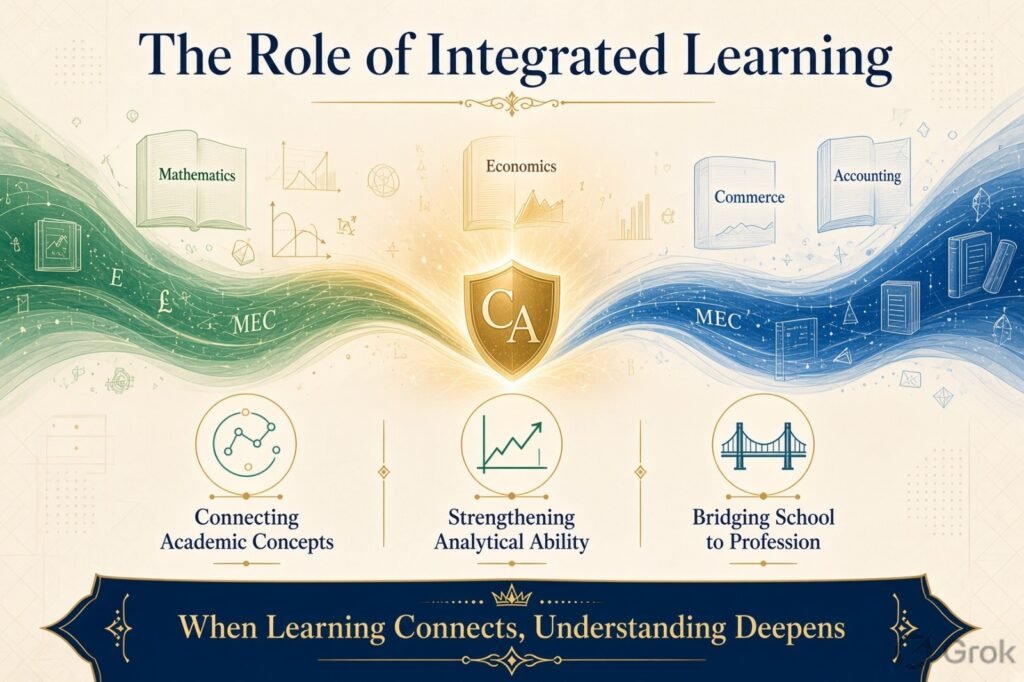
The Role of Integrated Learning
An integrated approach can make it easier for students to connect their Intermediate education with professional preparation. When related concepts are taught together, students can understand how academic subjects contribute to future professional studies. For example, accounting concepts learned during Intermediate can be connected with the broader principles required in CA preparation, while economics and mathematics can strengthen related analytical abilities.
At CMS MEC Coaching in Hyderabad, students pursuing MEC can combine their Intermediate education with integrated CA coaching. This approach helps students strengthen their academic fundamentals while developing the knowledge, problem-solving ability, and examination skills required for their future CA journey through structured learning and regular assessments.
Who Should Consider MEC + CA?
MEC + CA can be particularly suitable for students who enjoy working with numbers, have an interest in accounting and business, and are willing to commit to consistent long-term preparation. Students who enjoy analyzing financial information, understanding how businesses operate, and solving structured problems may find the combination aligned with their interests.
However, students should choose CA based on their own interests and career aspirations rather than selecting it simply because it is considered a popular professional qualification. Understanding the responsibilities of Chartered Accountants, exploring different career opportunities, and assessing personal strengths can help students make a more informed decision about whether CA is the right professional path for them.
Conclusion
MEC combined with early CA preparation can provide students with a strong foundation for a career in accounting, finance, taxation, auditing, and business advisory. Mathematics develops quantitative and logical abilities, Economics provides an understanding of broader economic forces, and Commerce builds fundamental knowledge of accounting and business. When these academic foundations are developed alongside systematic CA preparation, students can gradually build the knowledge and skills required for professional education.
Starting early does not guarantee success, but it can provide students with more time to develop conceptual clarity, practice consistently, identify weaknesses, and build effective study habits. With disciplined preparation, appropriate academic guidance, and a clear understanding of their career goals, students can use their MEC years to establish a strong foundation for the CA journey and approach their future professional studies with greater confidence.