
Introduction
Chartered Accountancy is one of the most respected professional career paths for students interested in accounting, finance, taxation, auditing, and business. For students who decide to pursue CA after Class 10, understanding the complete journey early can make the process more organized and easier to plan. The CA pathway involves multiple stages, examinations, practical training, and professional development, so having a clear idea of what lies ahead can help students prepare with realistic expectations.
Students from commerce backgrounds often begin exploring CA during Intermediate because subjects such as Accountancy, Economics, and Mathematics can provide useful academic foundations. However, CA is not limited to simply being good at accounting. The profession requires analytical thinking, discipline, problem-solving ability, attention to detail, and the willingness to continuously learn. Starting to understand these requirements after Class 10 can help students make an informed decision and gradually build the skills needed for the journey.
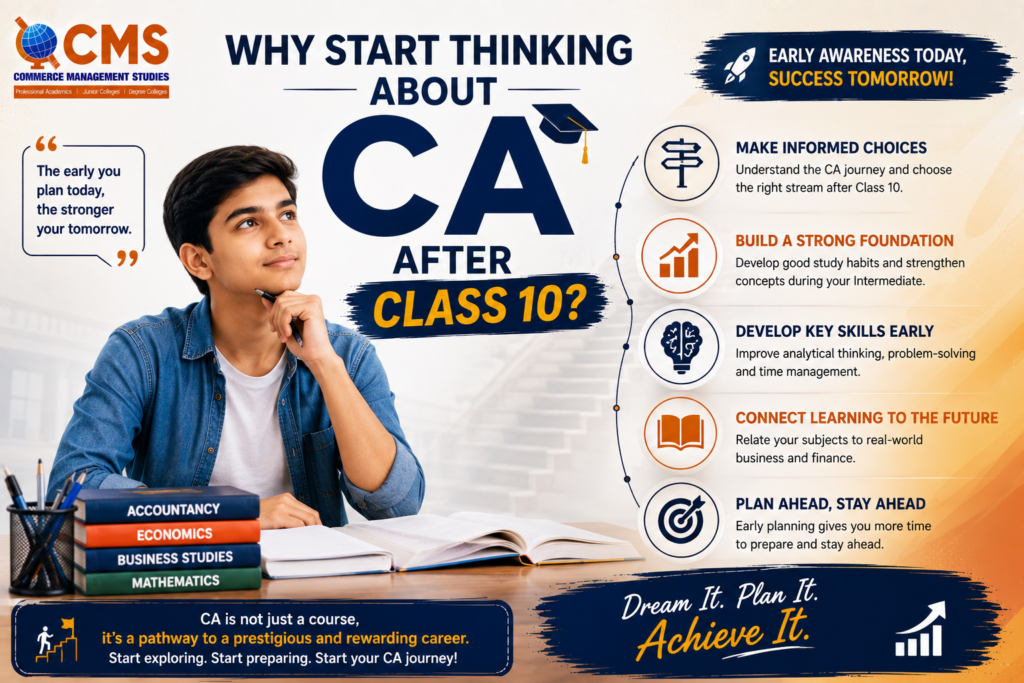
Why Start Thinking About CA After Class 10?
Class 10 is an appropriate stage for students to begin exploring career options, even though they do not need to make every career decision immediately. Understanding professional courses such as CA at this stage allows students to learn about the subjects involved, the stages of the qualification, and the type of work Chartered Accountants perform. This early awareness can help students choose their Intermediate stream with a better understanding of how it connects to their long-term goals.
Early planning can also help students develop useful academic habits before professional-level studies begin. Regular study, conceptual learning, numerical practice, reading, and time management can become part of their routine during Intermediate. Rather than approaching CA preparation suddenly after completing Class 12, students can gradually build the foundation required for the professional journey.
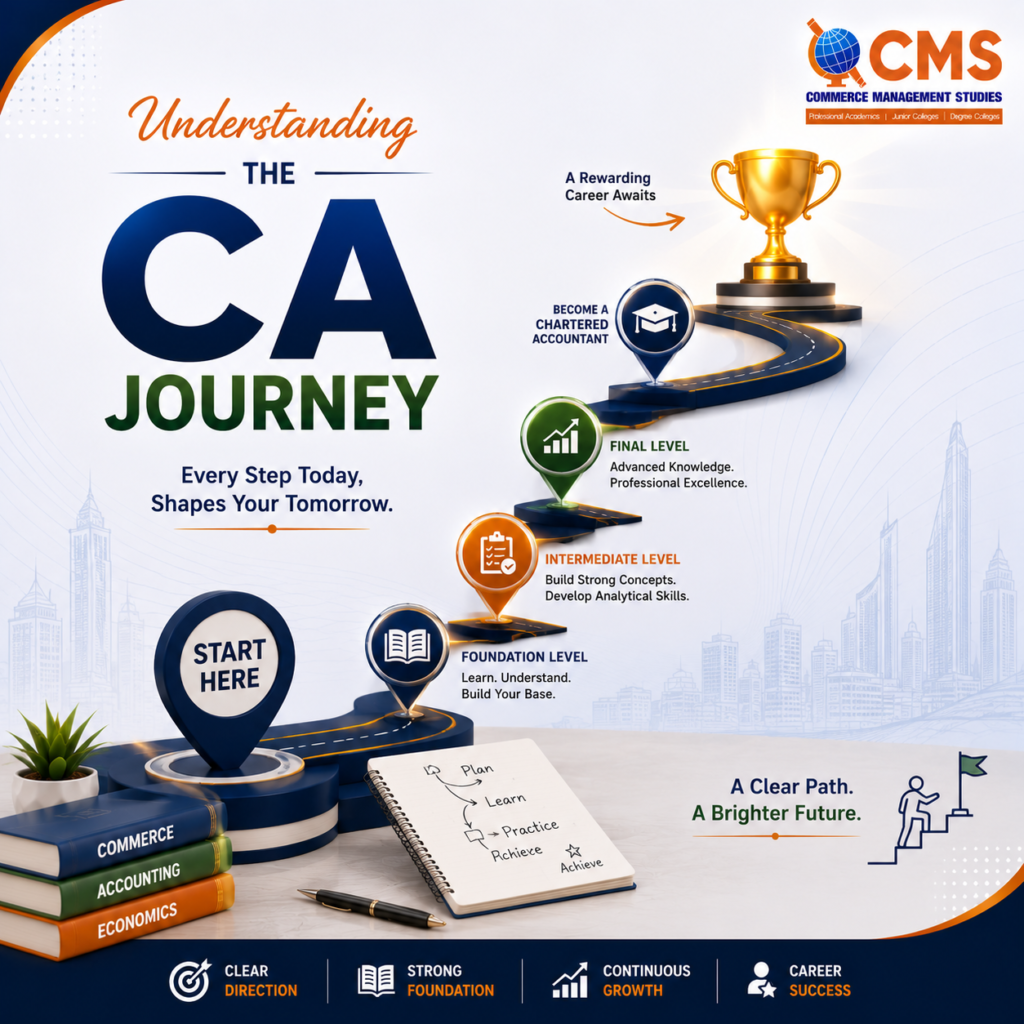
Understanding the CA Journey
The Chartered Accountancy qualification in India is governed by the Institute of Chartered Accountants of India (ICAI). The pathway includes different levels of examinations along with practical training and other requirements prescribed by ICAI. Students should always refer to the latest ICAI announcements and regulations because the structure, eligibility requirements, examination schedules, and training requirements can be updated over time.
At a broad level, students progressing through the current CA pathway move through Foundation, Intermediate, and Final stages, along with practical training and other prescribed requirements. Understanding the overall structure helps students see CA as a long-term professional journey rather than a single examination. Each stage builds upon the knowledge and skills developed at the previous stage.
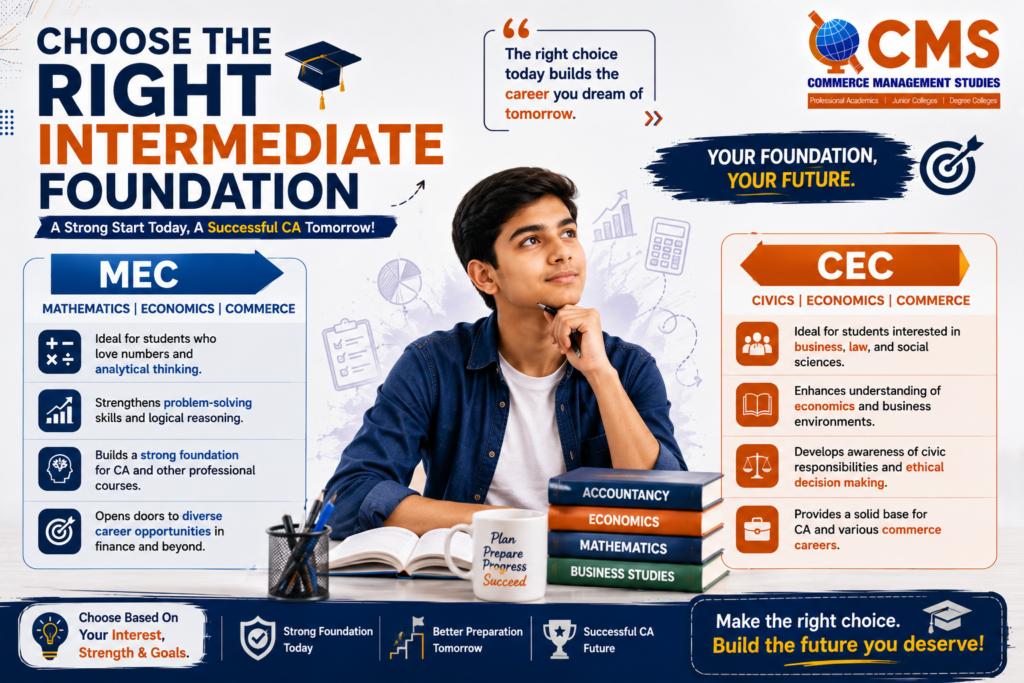
Step 1: Choose the Right Intermediate Foundation
After Class 10, students interested in CA commonly consider commerce-oriented Intermediate streams because they provide exposure to subjects that are relevant to accounting, economics, and business. MEC, which includes Mathematics, Economics, and Commerce, can be particularly useful for students who enjoy numbers and analytical subjects. CEC, which includes Civics, Economics, and Commerce, can also provide a strong commerce foundation for students interested in accounting and business-related careers.
The choice between streams should ultimately depend on the student’s interests, strengths, and future plans. Students should not select a stream solely because they believe it guarantees success in CA. A strong understanding of fundamental concepts, consistent academic performance, and genuine interest in the subjects are more important for building a sustainable foundation.
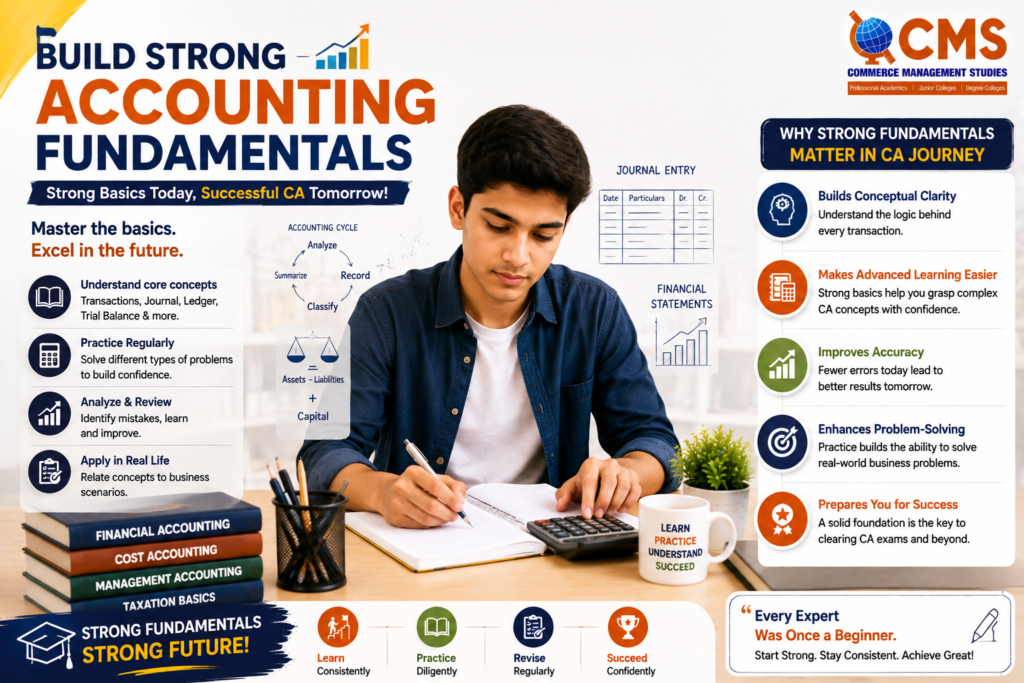
Step 2: Build Strong Accounting Fundamentals
Accounting is one of the most important areas for students considering Chartered Accountancy. During Intermediate, students can focus on understanding fundamental concepts such as transactions, journal entries, ledgers, trial balances, financial statements, assets, liabilities, income, and expenses. The objective should be to understand the logic behind accounting treatments rather than simply memorizing procedures.
Strong fundamentals can make advanced professional-level concepts easier to approach later. Students should practice different types of accounting problems, review mistakes, and clarify doubts regularly. A student who develops conceptual clarity during Intermediate can enter professional education with greater confidence and a better understanding of the financial language used in business.
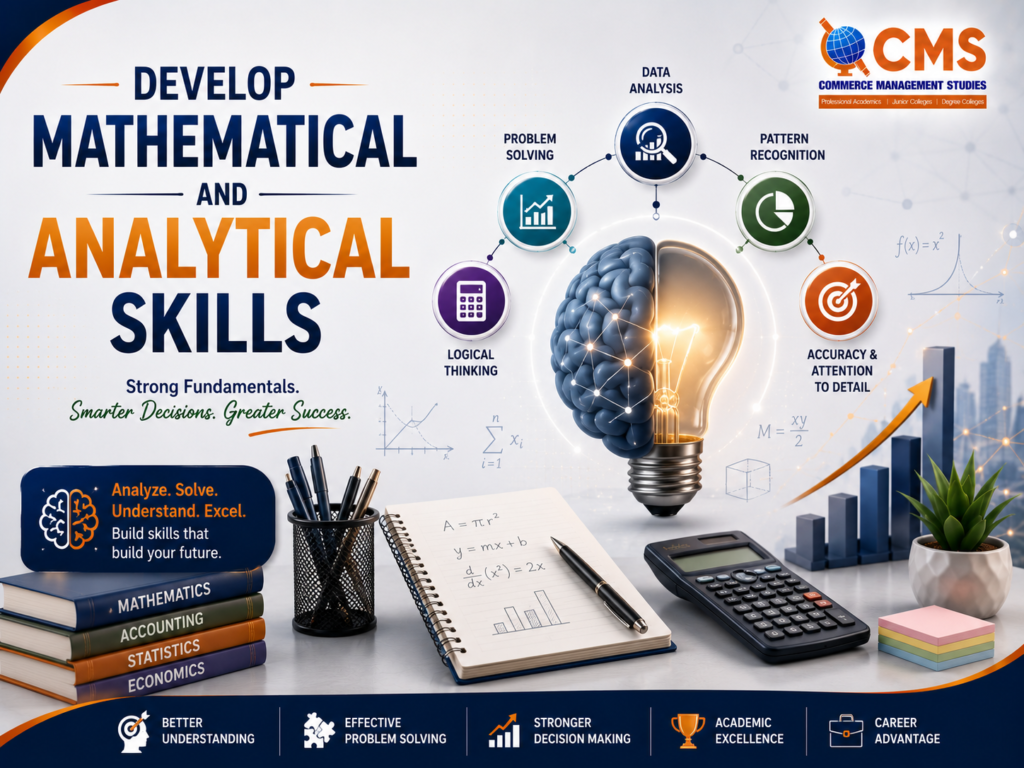
Step 3: Develop Mathematical and Analytical Skill
CA preparation involves more than accounting knowledge. Students need to interpret information, solve problems, analyze financial situations, and make logical decisions. Mathematics can help develop numerical confidence, structured problem-solving, and analytical thinking, particularly for students pursuing MEC.
Analytical ability can also be developed through activities beyond mathematics. Students can practice interpreting graphs, understanding economic information, reading business news, comparing financial data, and solving application-based questions. These habits encourage students to look at information critically rather than simply memorizing facts.
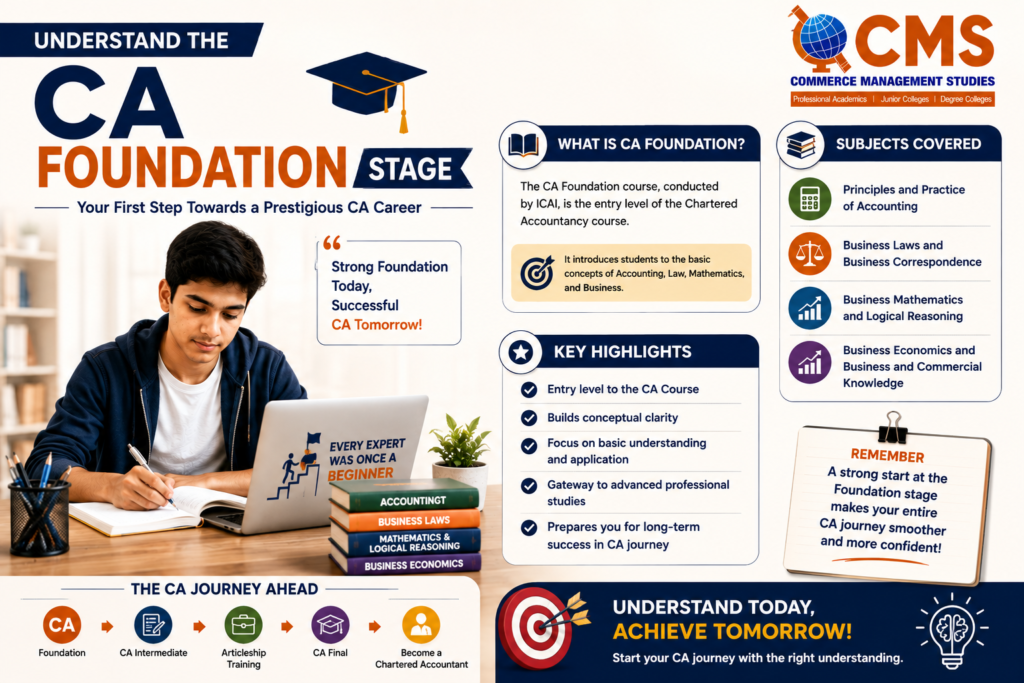
Step 4: Understand the CA Foundation Stage
After completing the required eligibility criteria following Class 12, students can progress to the CA Foundation stage as per the applicable ICAI rules. The Foundation level introduces students to important areas that form part of their professional education. It is therefore useful for students to understand the syllabus, examination requirements, registration process, and preparation expectations well in advance.
The transition from Intermediate education to professional studies can require students to adjust their study methods. Professional examinations demand conceptual understanding, regular practice, revision, and effective time management. Students who develop these habits during Intermediate can find the transition more manageable.
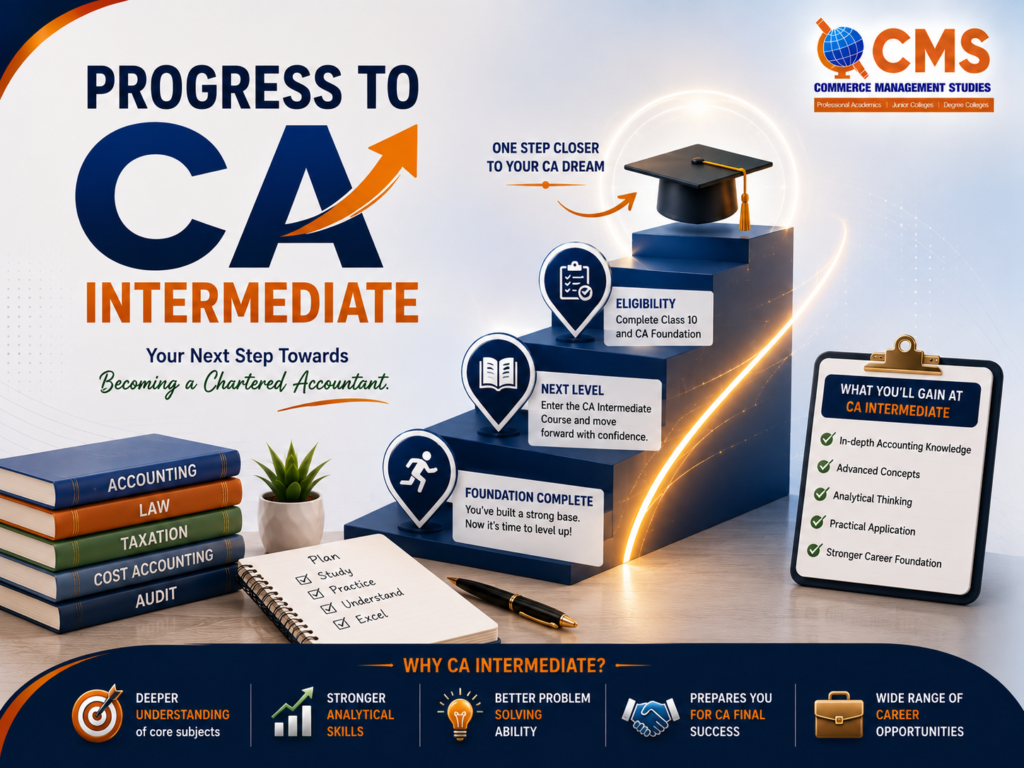
Step 5: Progress to CA Intermediate
After completing the Foundation stage and meeting the applicable requirements, students progress to CA Intermediate. The level introduces more advanced professional concepts and requires a deeper understanding of accounting, law, taxation, costing, financial management, auditing, and related areas as prescribed under the applicable scheme.
CA Intermediate represents a significant progression from school-level learning. Students need to become comfortable with lengthy concepts, application-based questions, professional terminology, and extensive revision. Consistency becomes particularly important at this stage because attempting to cover the syllabus only toward the end can make preparation difficult.
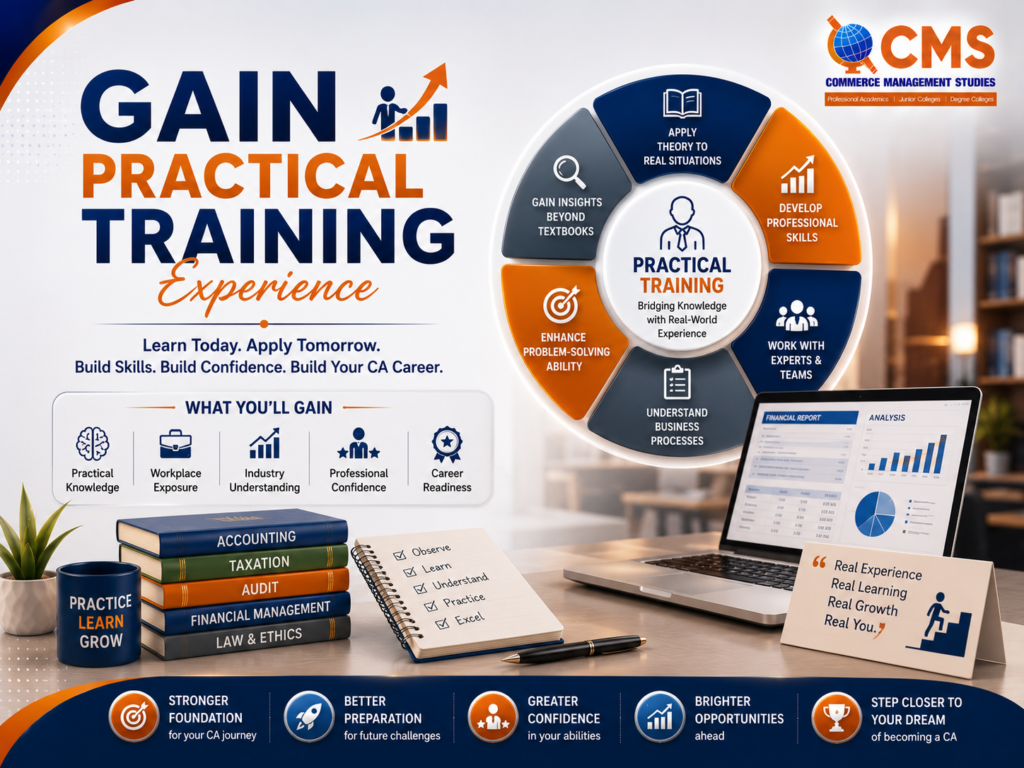
Step 6: Gain Practical Training Experience
Professional education in Chartered Accountancy is not limited to classroom learning and examinations. Practical training provides students with exposure to how accounting, auditing, taxation, compliance, and financial processes operate in real organizations. This experience helps bridge the gap between theoretical knowledge and professional responsibilities.
During practical training, students can develop workplace skills such as communication, documentation, professional conduct, problem-solving, teamwork, and time management. They also gain an opportunity to understand how financial concepts are applied in actual business situations. This practical exposure is an important part of developing into a well-rounded finance professional.
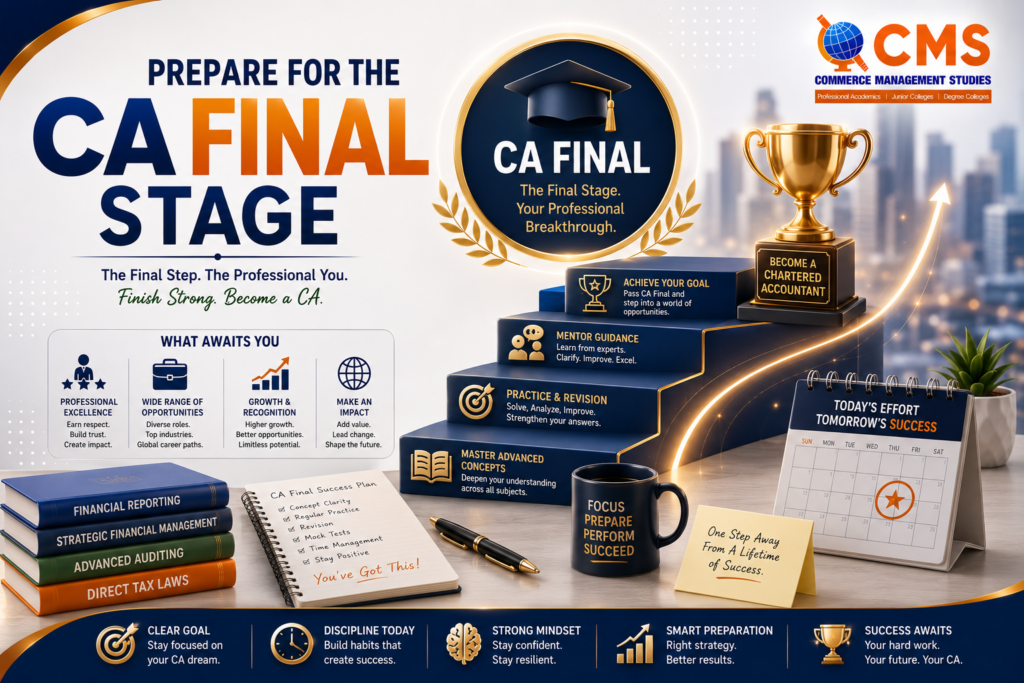
Step 7: Prepare for the CA Final Stage
The CA Final stage represents an advanced level of professional education. Students are expected to demonstrate deeper knowledge and the ability to apply concepts to complex professional situations. Preparation at this stage requires strong conceptual foundations, extensive practice, revision, and an understanding of how different areas of finance and business connect with one another.
By the time students reach this stage, the study habits developed during Intermediate and earlier professional levels can make a significant difference. Regular revision, disciplined preparation, analysis of practice-test performance, and the ability to manage a demanding syllabus become essential. Students also need to stay updated with applicable professional developments and requirements.
Skills Every Future Chartered Accountant Should Develop
Academic knowledge is only one part of becoming a successful Chartered Accountant. Modern CAs work in areas ranging from auditing and taxation to corporate finance, consulting, risk management, financial analysis, and business advisory. These roles require professionals to communicate effectively, interpret information, solve problems, and adapt to changing business and technological environments.
Students can gradually develop the following skills throughout their academic journey:
- Analytical thinking
- Numerical ability
- Problem-solving
- Communication skills
- Attention to detail
- Time management
- Financial awareness
- Business understanding
- Digital literacy
- Professional discipline
- Decision-making ability
- Continuous learning
Developing these skills early can benefit students not only during CA examinations but also throughout their professional careers.
Career Opportunities After Becoming a CA
Chartered Accountants can work across a wide range of industries and professional roles. The qualification can provide opportunities in accounting, auditing, taxation, financial planning, corporate finance, consulting, risk management, and business advisory. Some professionals also establish their own practices or move into senior management and leadership positions.
Potential career areas include:
- Statutory and internal auditing
- Taxation and tax advisory
- Corporate finance
- Financial reporting
- Management consulting
- Risk management
- Investment and financial analysis
- Business advisory
- Forensic accounting
- Entrepreneurship and independent practice
The career path can vary significantly depending on a professional’s interests, experience, specialization, and additional skills.
Why Consistent Preparation Matters
CA is a long-term professional journey, and consistency is often more valuable than short periods of intense preparation. Students who maintain regular study routines can gradually strengthen their concepts and reduce the need for last-minute learning. Consistent practice also makes it easier to identify weaknesses and work on them before they become major challenges.
A productive preparation routine can include learning new concepts, solving questions, revising previous topics, taking assessments, analyzing mistakes, and maintaining concise notes. Students should also ensure that their preparation includes adequate breaks and rest. Sustainable study habits are more effective than attempting to study continuously without proper recovery.
MEC with Integrated CA Preparation
For students who are confident that they want to pursue Chartered Accountancy, combining Intermediate education with CA preparation can provide a structured way to build their foundation early. Concepts from Mathematics, Economics, and Commerce can be connected with professional preparation, helping students understand how their Intermediate studies relate to future CA education.
At CMS MEC Coaching in Hyderabad, MEC students can pursue Intermediate education with integrated CA coaching. This approach allows students to strengthen their academic concepts while gradually developing the knowledge, problem-solving skills, and examination habits required for the CA pathway. Regular assessments and structured preparation can help students monitor their progress and build confidence over time.
Conclusion
Becoming a Chartered Accountant after Class 10 is a long-term journey that begins with making informed academic choices and building strong fundamentals during Intermediate. Students need to understand the different stages of the professional qualification, develop conceptual clarity, practice consistently, and gradually build the analytical, communication, and professional skills required in the field. Choosing an appropriate Intermediate stream can provide a useful foundation, but sustained effort and genuine interest remain central to the journey.
Students considering CA should view the pathway as an opportunity to develop both professional knowledge and practical abilities rather than focusing only on examinations. With early awareness, strong fundamentals, disciplined preparation, regular practice, and a willingness to keep learning, students can progress step by step toward a career in Chartered Accountancy and the diverse professional opportunities that come with it.