
Introduction
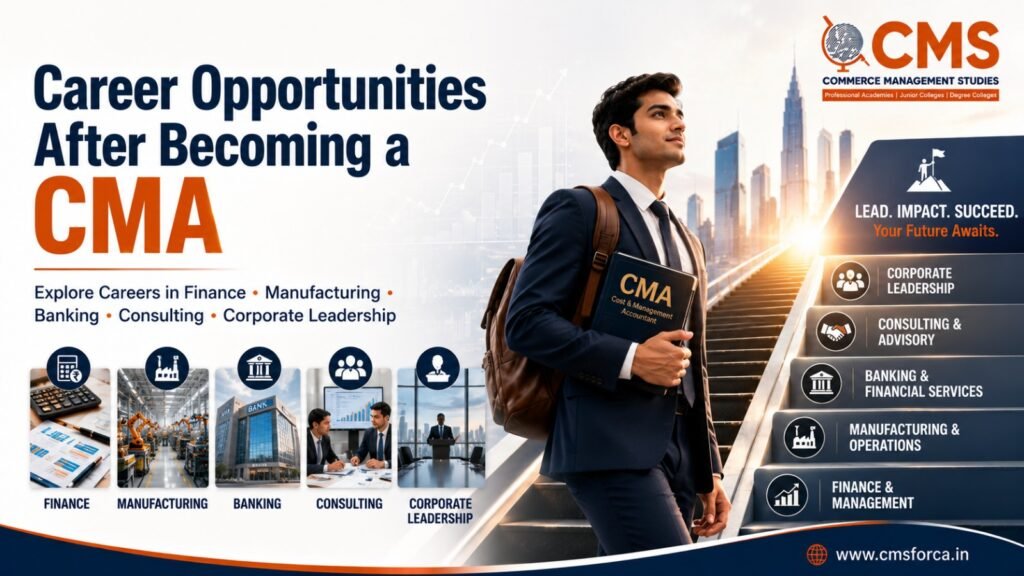
Cost and Management Accountancy (CMA) has emerged as one of the most respected professional qualifications in the commerce and finance sector. As businesses become increasingly focused on improving profitability, managing costs, optimizing resources, and making data-driven decisions, the demand for qualified Cost and Management Accountants continues to grow across industries. A CMA professional possesses specialized knowledge in cost accounting, financial planning, budgeting, performance management, and strategic decision-making, making them an invaluable asset for organizations of all sizes. Whether working in manufacturing, healthcare, information technology, banking, or consulting, CMAs play a significant role in enhancing financial efficiency and supporting long-term business growth.
Many students considering commerce after Class 10 or Intermediate often wonder whether pursuing CMA offers diverse career opportunities. The answer is yes. Unlike the common misconception that CMAs are limited to cost accounting roles, they have access to a wide range of careers in finance, management, consulting, business strategy, and corporate leadership. This article explores the various career opportunities available after becoming a Cost and Management Accountant and explains why this qualification is becoming an increasingly popular choice among aspiring commerce professionals.
What Does a CMA Do?
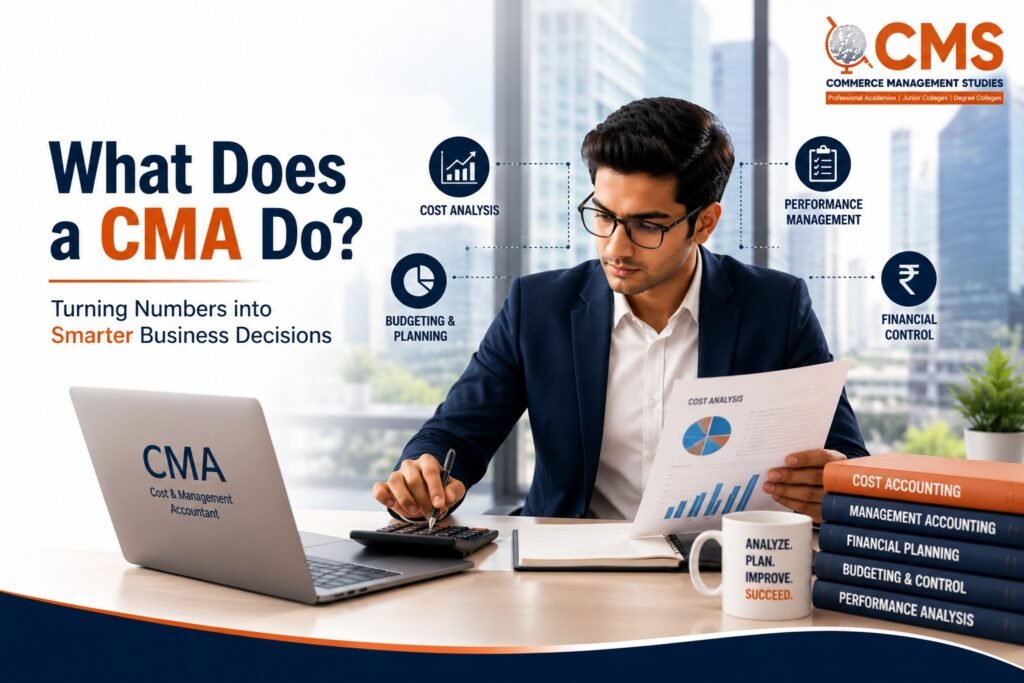
A Cost and Management Accountant specializes in analyzing financial information to help organizations improve operational efficiency and maximize profitability. Rather than focusing only on recording financial transactions, CMAs evaluate production costs, prepare budgets, analyze financial performance, manage risks, and provide strategic recommendations that assist business leaders in making informed decisions. Their work directly influences organizational planning and long-term financial success.
CMAs work closely with senior management to monitor expenses, identify areas where costs can be reduced, improve resource utilization, and ensure that financial objectives are achieved. Their expertise is valuable across various departments because effective cost management impacts pricing strategies, investment decisions, inventory control, and overall business performance. As organizations increasingly emphasize financial efficiency, the role of a CMA has become more important than ever before.

Opportunities in Manufacturing Companies
Manufacturing remains one of the largest employment sectors for Cost and Management Accountants. Manufacturing organizations constantly monitor production costs, raw material expenses, labor costs, inventory, and operational efficiency. CMAs play a central role in analyzing these factors and helping management reduce unnecessary expenses while improving productivity. Their recommendations contribute directly to increasing profitability without compromising product quality.
Within manufacturing companies, CMAs participate in cost planning, inventory valuation, budget preparation, pricing decisions, and profitability analysis for different products. They also assist management in evaluating investments in machinery, production technologies, and expansion projects. Their financial insights help organizations make informed decisions that support sustainable business growth while maintaining cost competitiveness in the market.
Career Opportunities in Corporate Finance
Corporate finance is another major career avenue for Cost and Management Accountants. Companies require finance professionals who can manage budgets, forecast financial performance, evaluate investment opportunities, and support strategic planning. CMAs possess the technical knowledge necessary to analyze financial information and recommend strategies that improve business performance while minimizing financial risks.
In corporate finance roles, professionals work with senior executives to prepare financial forecasts, evaluate mergers and acquisitions, assess capital investments, and monitor organizational performance. Their analytical skills enable businesses to allocate financial resources efficiently and maintain long-term financial stability. As companies expand globally, the demand for finance professionals with strategic decision-making abilities continues to increase.
Opportunities in Banking and Financial Services
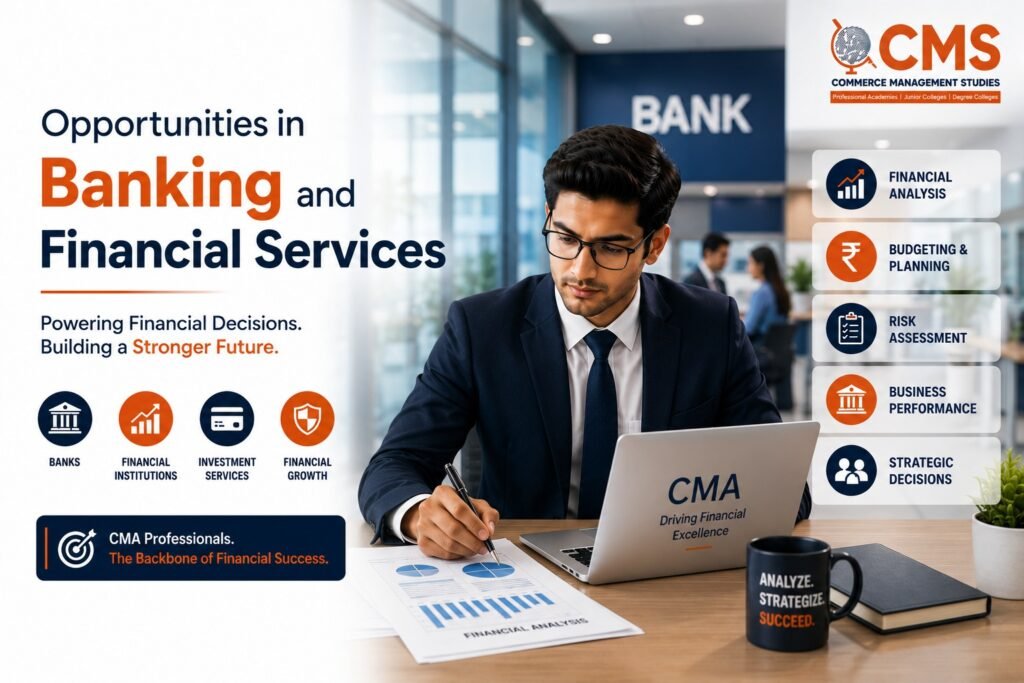
Banks and financial institutions increasingly recruit CMA professionals because of their expertise in financial analysis, budgeting, risk assessment, and management accounting. These organizations require professionals who can evaluate financial performance, prepare business reports, monitor operational costs, and assist management in making informed financial decisions. CMAs contribute to improving organizational efficiency while ensuring effective utilization of financial resources.
Within the banking and financial services sector, CMA professionals may work in areas such as financial planning, credit analysis, budgeting, investment evaluation, internal controls, and business performance management. Their ability to analyze financial data and identify opportunities for improvement makes them valuable contributors to both private and public financial institutions.
Opportunities in Government and Public Sector Organizations
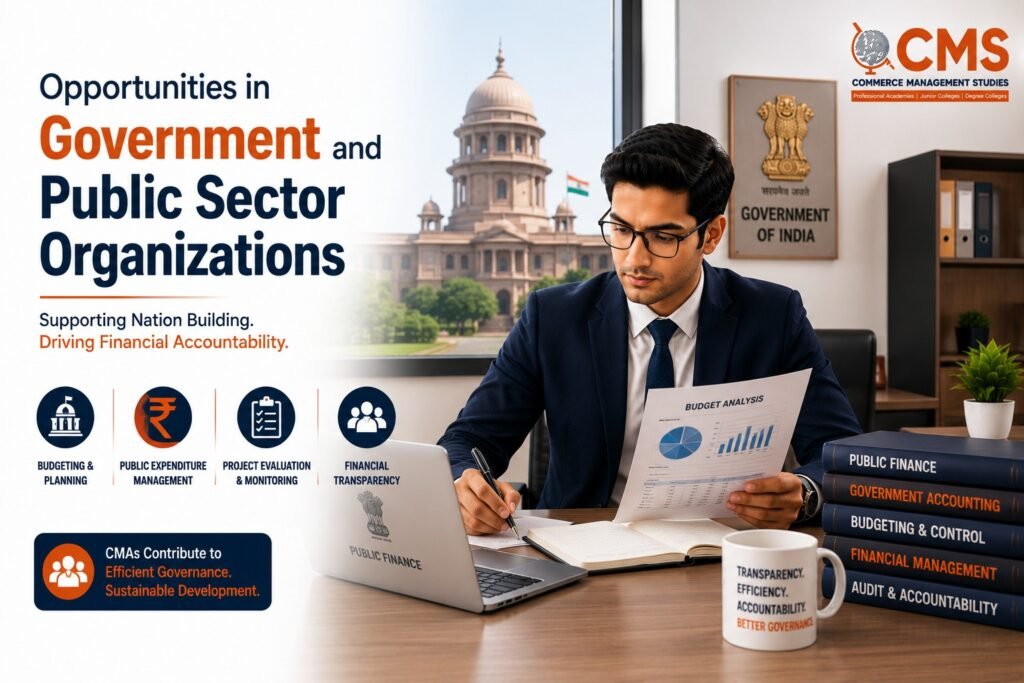
Government departments and Public Sector Undertakings (PSUs) also recruit Cost and Management Accountants for various financial and administrative roles. Public sector organizations require professionals who can prepare budgets, monitor public expenditure, conduct cost analysis, evaluate projects, and ensure efficient utilization of public resources. CMAs contribute to financial transparency and effective resource management within these organizations.
Working in government organizations offers professionals the opportunity to participate in large-scale infrastructure projects, public finance management, budgeting exercises, and financial policy implementation. The combination of financial expertise and strategic planning skills makes CMAs valuable assets in ensuring accountability and operational efficiency within the public sector.
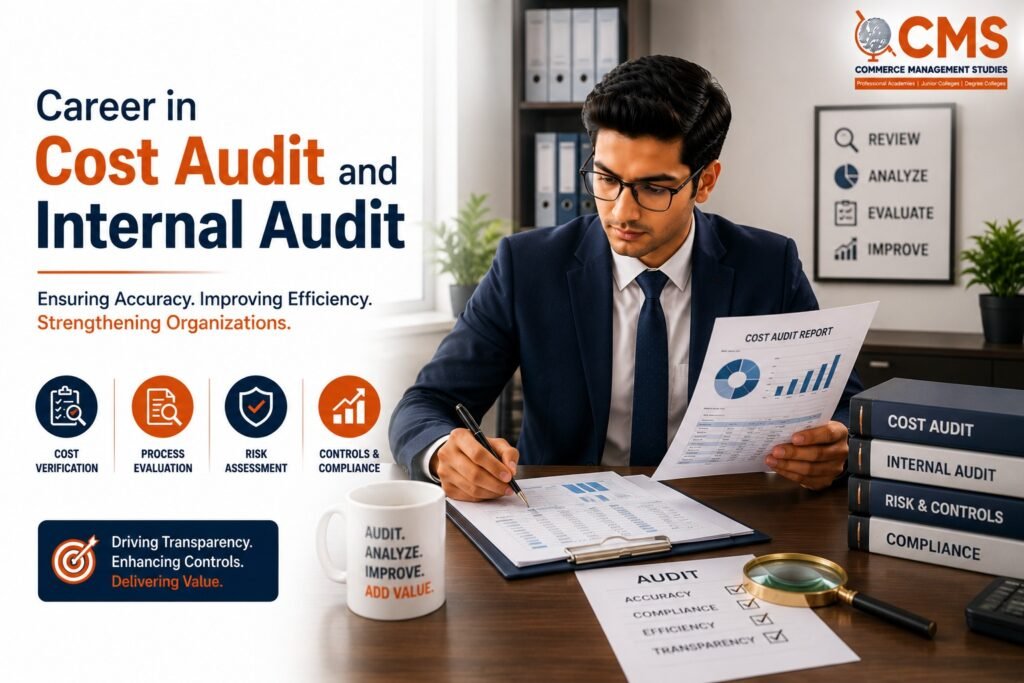
Career in Cost Audit and Internal Audit
One of the specialized career paths available to CMA professionals is cost auditing and internal auditing. Cost audits help organizations verify whether production costs have been accurately determined and whether resources are being utilized efficiently. Internal audits evaluate business processes, identify operational weaknesses, and recommend improvements that strengthen organizational performance and financial control.
Professionals working in these areas analyze operational procedures, evaluate compliance with internal policies, identify financial risks, and recommend corrective measures. Their work supports better governance, improves efficiency, and helps organizations maintain strong financial controls. As regulatory requirements continue to evolve, the importance of auditing professionals has increased significantly across industries.
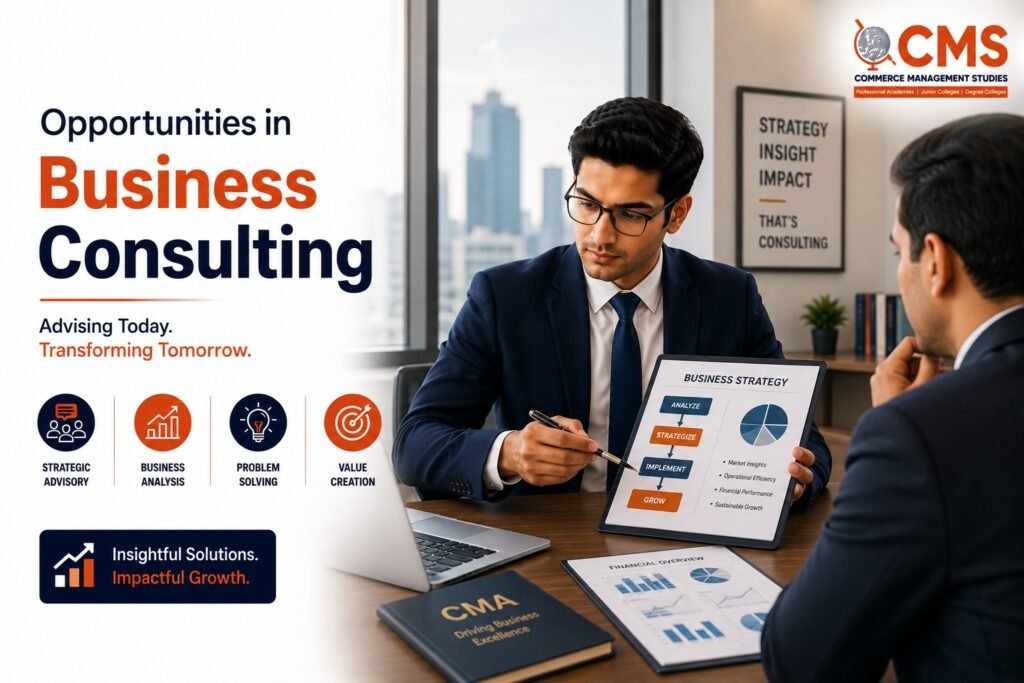
Opportunities in Business Consulting
Business consulting has become an attractive career option for Cost and Management Accountants because organizations increasingly seek expert advice on improving operational efficiency and profitability. Consultants analyze financial performance, identify cost-saving opportunities, recommend pricing strategies, and develop business improvement plans that help companies achieve their financial objectives. Their expertise allows businesses to make informed strategic decisions in competitive markets.
CMA professionals working as consultants often collaborate with organizations across different industries, gaining exposure to diverse business challenges and operational models. This variety enhances professional growth while allowing consultants to develop specialized expertise in areas such as cost optimization, financial restructuring, business transformation, and performance management.

Career Opportunities in Financial Planning and Budgeting
Financial planning and budgeting are among the core strengths of Cost and Management Accountants. Organizations depend on professionals who can prepare realistic budgets, forecast revenues and expenses, monitor financial performance, and recommend corrective actions whenever deviations occur. Effective budgeting enables businesses to utilize resources efficiently while achieving long-term financial goals.
CMAs working in financial planning collaborate with management teams to prepare annual budgets, evaluate departmental performance, analyze financial trends, and support investment decisions. Their ability to interpret financial information and provide actionable recommendations contributes significantly to organizational stability and sustainable growth.
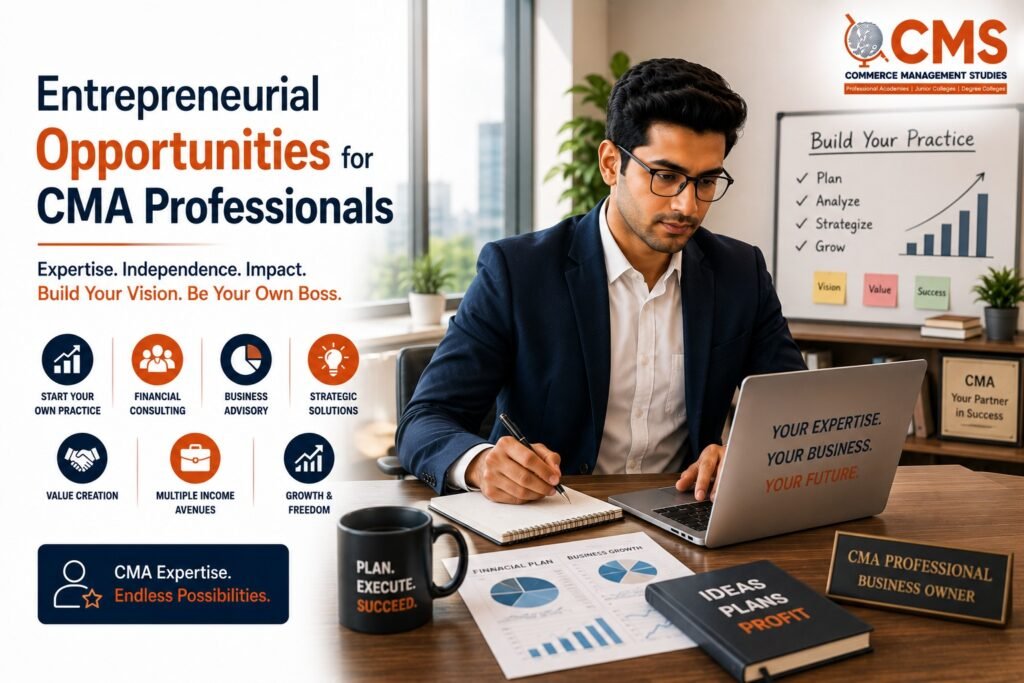
Entrepreneurial Opportunities for CMA Professionals
Many qualified Cost and Management Accountants choose entrepreneurship instead of traditional employment. Their expertise in accounting, financial management, taxation, budgeting, and business strategy enables them to establish successful consulting firms or financial advisory services. Entrepreneurs with CMA qualifications often provide cost management solutions, financial planning services, budgeting assistance, and business consulting to startups, small businesses, and established organizations.
Starting an independent practice also allows professionals to work with clients across multiple industries while continuously expanding their expertise. As businesses increasingly seek specialized financial guidance, entrepreneurial opportunities for CMA professionals continue to grow, offering both professional independence and long-term financial rewards.

Skills That Enhance Career Growth for CMA Professionals
While earning a CMA qualification provides strong technical knowledge, continuous skill development plays an equally important role in career advancement. Employers value professionals who combine financial expertise with communication skills, leadership qualities, analytical thinking, and technological proficiency. Developing these competencies enables CMA professionals to progress into senior managerial and executive leadership positions over time.
Some important skills that support long-term career growth include:
- Analytical and critical thinking
- Financial planning and forecasting
- Cost analysis and budgeting
- Problem-solving abilities
- Communication and presentation skills
- Leadership and team management
- Business strategy and decision-making
- Data analysis and financial reporting
- Time management
- Adaptability to changing business environments
Students exploring professional commerce education often research for institutions offering the Best CMA Coaching in Hyderabad to build strong conceptual knowledge and prepare systematically for future career opportunities in finance and management. CMS is one of the best institutes offering CMA coaching in integration with MEC, CEC & ACE courses.

Conclusion
Cost and Management Accountancy offers far more than traditional accounting careers. Qualified CMA professionals contribute to business success by improving operational efficiency, controlling costs, supporting strategic planning, and helping organizations make informed financial decisions. From manufacturing and corporate finance to banking, consulting, government services, entrepreneurship, and financial planning, the qualification opens doors to a wide range of rewarding career opportunities across industries.
Students interested in finance, business strategy, and management should consider CMA as a professional qualification that combines technical expertise with practical business applications. With consistent preparation, strong analytical skills, and continuous professional development, Cost and Management Accountants can build successful careers while contributing significantly to organizational growth and economic development. As businesses continue to prioritize financial efficiency and strategic decision-making, the demand for skilled CMA professionals is expected to remain strong for years to come.